

Halloween marketing ideas: Top 6 campaign tips for 2026
Make the most of the Halloween shopping season with six practical marketing ideas for 2026. Learn how personalization, omnichannel messaging, automation, urgency, user-generated content, and AI-powered experiences can help turn seasonal interest into action.

Halloween marketing ideas work best when they turn a short seasonal period into clicks, opt-ins, and purchases. For marketers, eCommerce teams, and CX leaders, that means going beyond simply getting attention and creating a connected journey that moves customers from discovery to action.
Connect, engage, and convert this Halloween
That connected approach matters even more as customers move between channels throughout the buying journey. According to Infobip’s Messaging Trends Report 2026, 97.7% of traffic came from customers using multiple, showing why seasonal campaigns are more effective when the experience feels connected rather than isolated.
Halloween shoppers are also making decisions quickly and buying for different reasons, from costumes and candy to decorations, parties, and themed experiences. In 2025, 73% of U.S. consumers celebrated Halloween, while total spending reached $13.1 billion, according to the National Retail Federation consumer survey. With so many different purchase motivations, the strongest campaigns are the ones that deliver the right message, through the right channel, at the right moment.
This guide explores six ways to make Halloween marketing campaigns more timely, useful, and easy to act on, whether you sell costumes, candy, decorations, experiences, rooms, or bookings.
6 Halloween marketing ideas to improve campaigns
These tactics work best when they’re connected. A good Halloween campaign starts with relevance, then uses channel choice, timing, and automation to move people toward action.
1. Recommend costumes based on browsing behavior
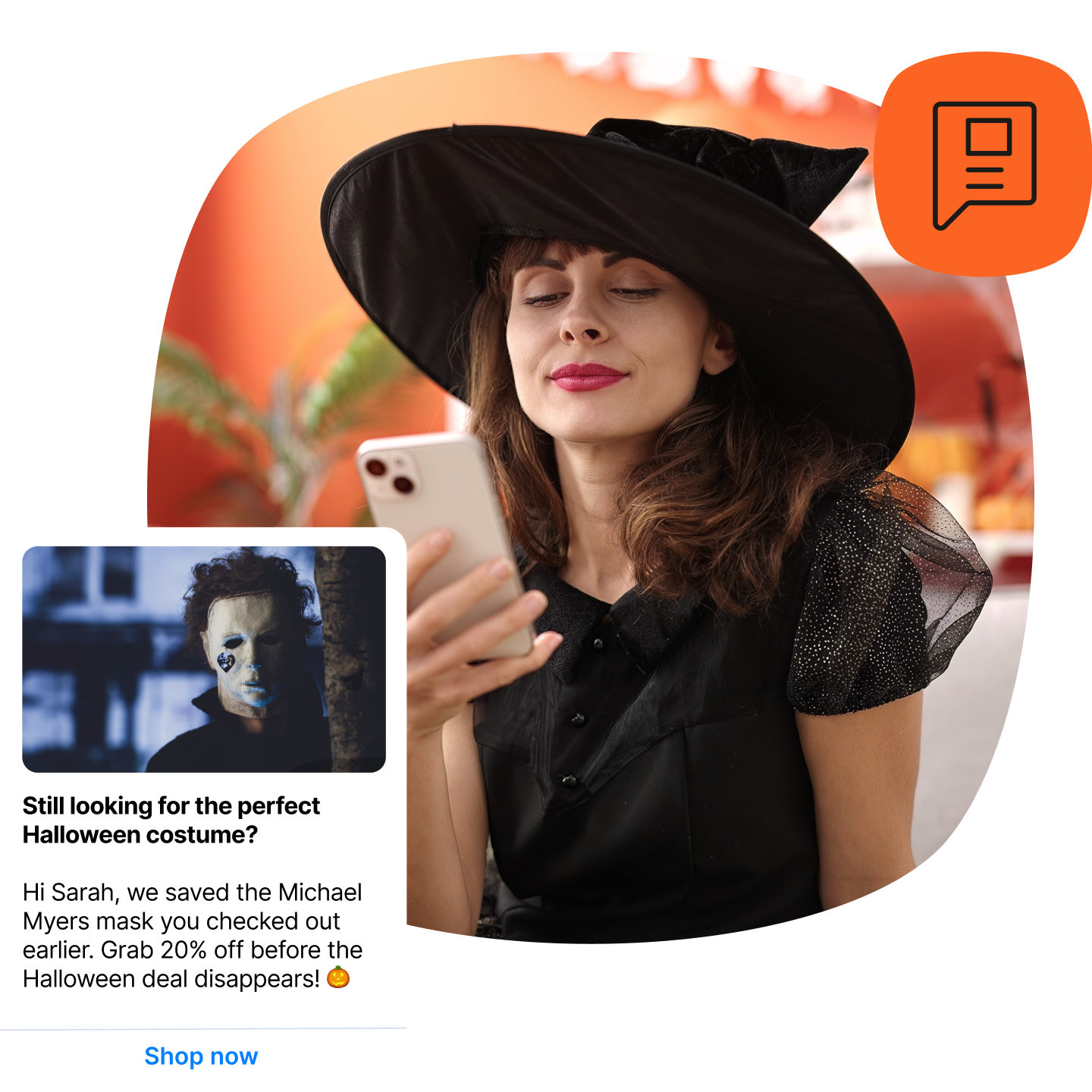
Halloween campaigns convert better when they reflect what the customer has already shown interest in. Use browse history, past purchases, wishlists, cart activity, and location to tailor the message instead of sending the same generic offer to everyone.
Match the message to the motive behind the purchase. If the customer wants convenience, make the next step simple. If they want fun, show the most visual option first. If they want a quick replacement, lead with what is in stock now.
For example, a shopper who viewed a mask twice does not need a broad costume roundup. They need a message that shows the exact item, the matching accessories, or a relevant alternative if the product won’t be restocked in time. A family that bought decorations last year should see new decorations or a bundle that fits the same style.
Use customer data platform when you want those signals to stay connected across channels and teams.
2. Build a connected Halloween campaign across channels
Halloween shoppers move fast, and they don’t stay in one channel for long. They might discover a product on Instagram, click through to a landing page, get a reminder by SMS, and finish the purchase in email or WhatsApp. The message should feel like one journey, not four separate campaigns. If your campaign only lives in one place, it misses the way people actually move.
Omnichannel works when each channel has a clear job:
- Email can handle richer storytelling and product bundles.
- SMS works well for reminders and shipping cut-offs.
- RCS and WhatsApp can support quick interactions, while mobile push and in-app messaging keep existing customers engaged.
- Social posts and shoppable content can spark discovery when they fit the channel.
The customer shouldn’t have to repeat themselves or restart the journey every time they change channels. They should feel like the brand already knows what they want and what happens next. Explore journey orchestration when you need to keep those touchpoints aligned in one flow.
3. Automate last-minute costume and delivery questions
Halloween brings a predictable spike in last-minute questions. Customers ask about delivery cutoffs, store hours, product availability, size guidance, pickup options, and returns. Automation keeps those answers moving quickly so the campaign does not stall out when interest is highest.
Use AI agents or chatbots to handle the routine questions first, then hand off to a human when the answer needs context or judgment. An AI agent can confirm order status, point customers to the right product page, or explain a shipping cut-off without making them wait. Human support still matters for edge cases, but it shouldn’t have to handle every basic question.
Journey orchestration and AgentOS keep AI and people working together so routine questions get answered fast and the tricky ones reach the right team with the full context attached. That saves time and cuts down on the back-and-forth that slows support down.
For Halloween, the best automated replies are short and practical. They should answer the question, show the next step, and keep the customer moving toward purchase or booking;
- Delivery by Friday? Show the cutoff time and the fastest shipping option.
- Need a different size? Offer the next-best fit or a related product.
- Is it in stock nearby? Show the closest store and the quickest pickup option.
- Need help after hours? Let the bot handle the initial request and route anything more complex to the right team.
Watch this one-minute video to take a closer look at the Halloween shopping journey and see how shoppers make their choices:
4. Use Halloween delivery deadlines instead of generic discounts
Halloween is one of the easiest seasons for urgency marketing, but urgency works best when it feels specific. Use countdowns, low-stock messages, back-in-stock alerts, and delivery cutoffs to help shoppers act before the holiday passes.
If a shopper is interested in a product that will not restock before Halloween, do not stop there. Offer a clear alternative: the same brand, a similar style or color, a previous version, or a product other customers bought instead. Visuals make this even stronger, especially in WhatsApp or RCS, where images and short videos can show the substitute in context.
A stronger urgency message is often the one that removes uncertainty, not the one that cuts the price the deepest.
- Use a delivery cutoff to turn browsing into buying.
- Use a low-stock note only when the inventory is genuinely tight.
- Use back-in-stock alerts to recover shoppers who already showed intent.
- Use visual alternatives when the first choice will not arrive in time.
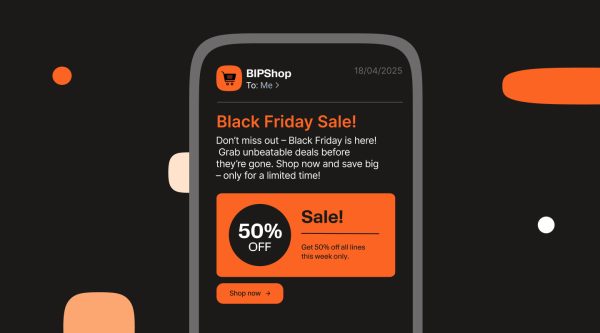
For example, a campaign might feature a special set of Halloween costumes with a countdown timer, driving urgency and increasing the chances that customers will make a purchase immediately. Adding phrases like “while supplies last” or “limited edition” keeps your audience engaged and eager to act. Here is an example:
Hi Mark! Transform your home this Halloween with our limited-edition decorations. Get them before they’re gone: [short URL]
5. Run a costume reveal or decoration challenge
User-generated content gives Halloween campaigns a social layer that paid ads can’t fully replicate. People love posting costumes, decorations, party setups, and spooky product shots when the theme gives them something fun to show off. Brands can use that energy by asking customers to share, tag, and vote.
Short-form video works especially well here. A quick costume reveal, a before-and-after decoration clip, or a creator-style product demo can feel more authentic than a polished brand spot. That content can then be reused in ads, email, and landing pages to strengthen social proof.
Brands in retail, hospitality, events, and beverage can all use the same idea, just with different prompts: a costume reveal, a party table, a room setup, or a seasonal drink moment.
Let the NIVEA customer story help you see how encouraging user-generated content can drive engagement, build lasting connections, and achieve 207% of their campaign reach target. Take inspiration to apply the same approach in your Halloween campaign.
6. Turn Halloween campaigns into interactive experiences
If you want your Halloween campaign to feel different from the usual stream of messages, add a voice experience with Vocalize. A short interactive call can turn a promotion into something playful: a riddle, a quiz, a scavenger hunt clue, or a callback that reveals the next step.
Voice works especially well when you want the campaign to capture attention and create interaction. It can drive lead capture, call-backs, reminder flows, or simple promotional games that end with a useful action, such as claiming a reward or speaking to an agent.
Keep the experience short, clear, and easy to complete. The goal is to make the interaction memorable, not complicated.
- Reveal a discount after one quick answer.
- Route the winner to a booking or purchase step.
- Let the experience hand off to a live agent if the customer wants help.
- Use the same seasonal message across voice and messaging channels.
See how to support guided voice experiences when a seasonal campaign needs a more memorable touchpoint:
Conclusion: Halloween marketing ideas for seasonal success
Halloween marketing campaigns are an opportunity to connect with customers, drive sales, and create memorable experiences.
Personalizing campaigns, using omnichannel communication, offering limited-time deals, encouraging user-generated content, and automating customer support can help your business make the most of the Halloween season.
If you want your Halloween marketing campaign to drive sales, delight customers, and leave a lasting impression, now is the time to plan. With the right strategies and tools, you can turn this Halloween into one of your most successful yet.
FAQs
The strongest ideas feel useful right away. Personalization, omnichannel messaging, limited-time offers, user-generated content, and AI-powered games all work better when they solve clear customer needs.
The best channels are the ones your audience already uses. Email, SMS, WhatsApp, RCS, push, in-app messaging, and social each do a different job, so the strongest campaigns mix them instead of relying on just one.
Automation keeps the campaign moving when traffic spikes. It can answer common questions, route people to the right content, and hand off to human support when a conversation needs more context.
Halloween has a short buying period, so people respond quickly to deadlines and low-stock cues. Clear timing gives them a reason to act now instead of waiting.
Personalization makes Halloween offers feel relevant instead of generic. Browse history, past purchases, and cart activity can all help you match the message to what each shopper is most likely to want.
It gives people a reason to post, share, and vote. That kind of content adds social proof and can be reused across ads, email, and landing pages.
Yes. The same tactics work for ecommerce, CPG, beverage, hospitality, travel, and events. Any brand with a seasonal offer can benefit from personalization, omnichannel messaging, and fast follow-up.
Turn your Halloween marketing ideas into action
Explore how AgentOS helps orchestrate Halloween campaigns.