


Dialog Health: The platform chosen by Fortune 500 health systems and plans with 96% SMS reach rates
96%+
patient reach rate
55%
patient response rate for appointment confirmations
$500K+
potential revenue from an SMS recall campaign
CHALLENGE
Healthcare consumers expect retail-level convenience, but compliance and scale stand in the way
Dialog Health‘s platform powers two-way SMS between healthcare providers and patients across the full patient journey. Its client base includes Fortune 500 health plans, large health systems, and ambulatory surgery centers across the USA.
Patients today are healthcare consumers. They expect the same ease, convenience, and trust from their healthcare providers as they do from retail and banking. They want appointment reminders on their phone, pre-op instructions they can pull up with a tap, and they want to communicate with their providers on their own time. All of these conveniences are what can make patient adherence and engagement stronger and hassle-free.
SMS is the highest-reach channel available to enable these kinds of interactions, but in healthcare, mobile communication comes with uniquely regulatory friction for platforms:
- Compliance at every layer. TCPA and HIPAA regulations, 10DLC and short code registration requirements, and carrier-level content filtering all govern healthcare messaging. Each new client needs compliant brand and campaign registration before a single message goes out.
- Content filtering that blocks legitimate clinical information. Carrier and aggregator spam filters flag words like “marijuana” as prohibited. In healthcare, that same word appears in pre-operative instructions warning patients not to use it before anesthesia. Blanket message filtering doesn’t account for clinical context.
- Platform scale with granular personalization. A patient preparing for a colonoscopy needs different instructions than one arriving for an MRI. A facility with a small waiting room staggers arrivals differently than a large hospital. Scaling that level of personalization across thousands of patients and dozens of facilities takes serious infrastructure flexibility.
- Two-way communication, not broadcast. Patients respond. They ask questions, confirm appointments, and request clarification on post-op care. Every inbound message needs to reach the right staff member quickly, and that staff member needs a prompt to respond without checking the platform every few minutes.
Dialog Health needed a messaging infrastructure partner that could handle these challenges at scale, one with reliability, compliance tooling, and carrier relationships to match healthcare’s growing demands.
SOLUTION
Tier-1 messaging infrastructure built for healthcare
Dialog Health’s relationship with Infobip began when Infobip acquired their previous messaging provider. What kept them was the scalability of the platform and direct connections with all major operators to support quality and deliverability of messaging. Tier 1 carrier aggregation, consistent cross-carrier delivery, and self-service compliance tooling gave Dialog Health the infrastructure backbone to serve Fortune 500 health plans and large health systems without worrying about reliability at scale.
Compliance and client onboarding
Every new Dialog Health client starts with number registration. With guidance from Infobip’s compliance and messaging experts, Dialog Health’s customer success team handles 10DLC and short code registration through the self-service portal, positioning themselves as the compliance experts so their clients don’t have to be.
They collect the necessary documentation, register the brand and campaign, and the client is ready to send. The tooling has matured to the point where the team rarely needs support. Infobip also provides number lookup services to verify SMS eligibility before messages are sent, reducing wasted sends and carrier penalties.
For healthcare-specific content that triggers carrier spam filters (like with the word “marijuana”), Infobip works directly with Dialog Health to whitelist templates, so important clinical information reaches patients without getting blocked.
SMS across the patient journey
Dialog Health’s platform automates patient communication from the moment an appointment enters the system. EMR and practice management system integrations feed patient and appointment data into the platform, which builds a personalized message sequence: strategically timed reminders, confirmations, preparation instructions, day-of updates, and post-appointment follow-ups. What used to require phone calls from staff now runs automatically.
The use cases span the full care journey:
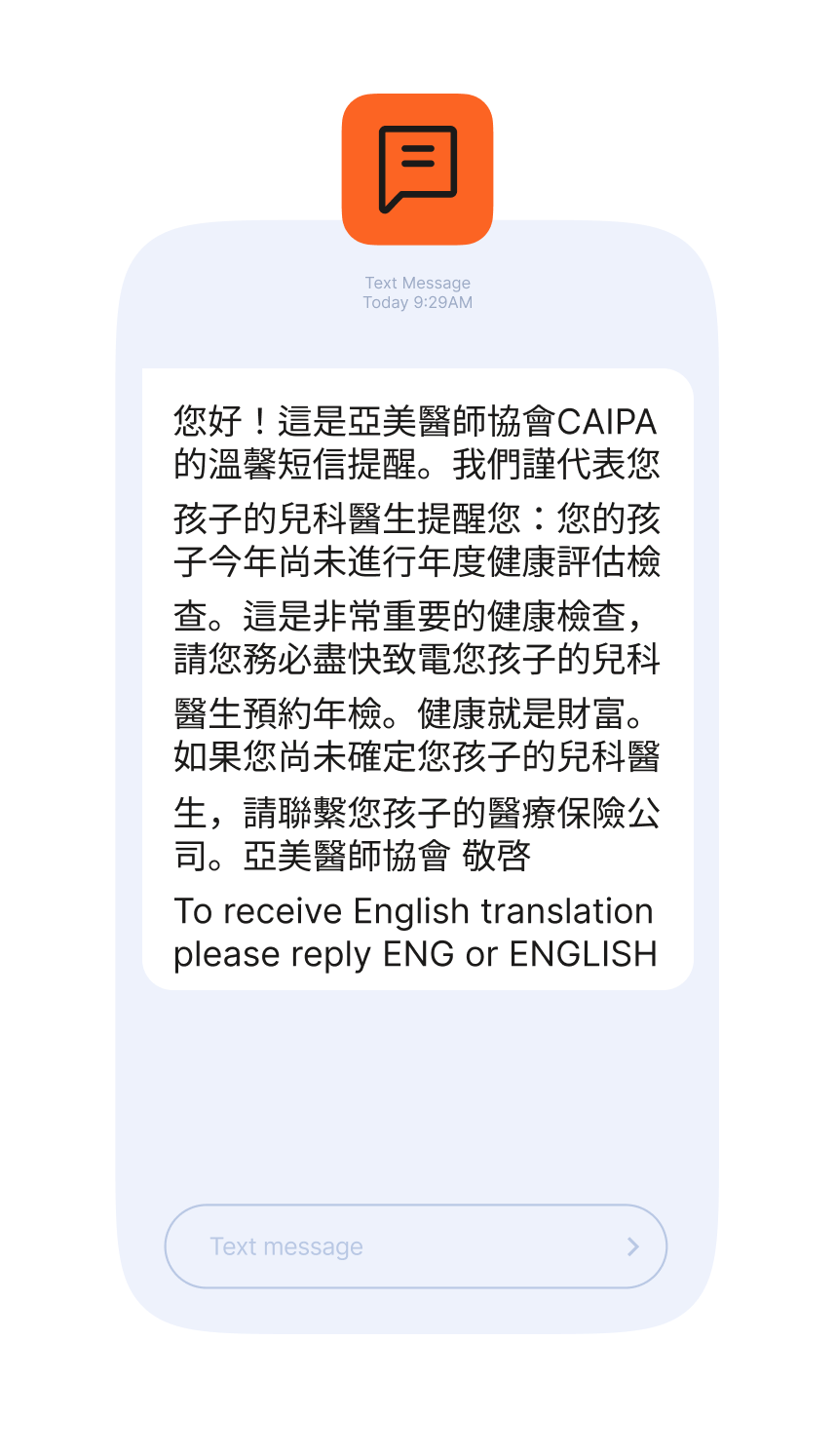
- Pre-appointment: Reminders, confirmations, and pre-op preparation instructions delivered in the patient’s preferred language
- Day-of: Wayfinding links so patients know exactly where to go, plus tailored arrival times based on appointment type and facility size
- Post-appointment: Surveys, post-op care instructions, and follow-up check-ins. Patients frequently re-click instruction links days later to review care details, turning a single SMS into an ongoing resource.
- Revenue cycle: Bill pay notifications that integrate with existing billing tools
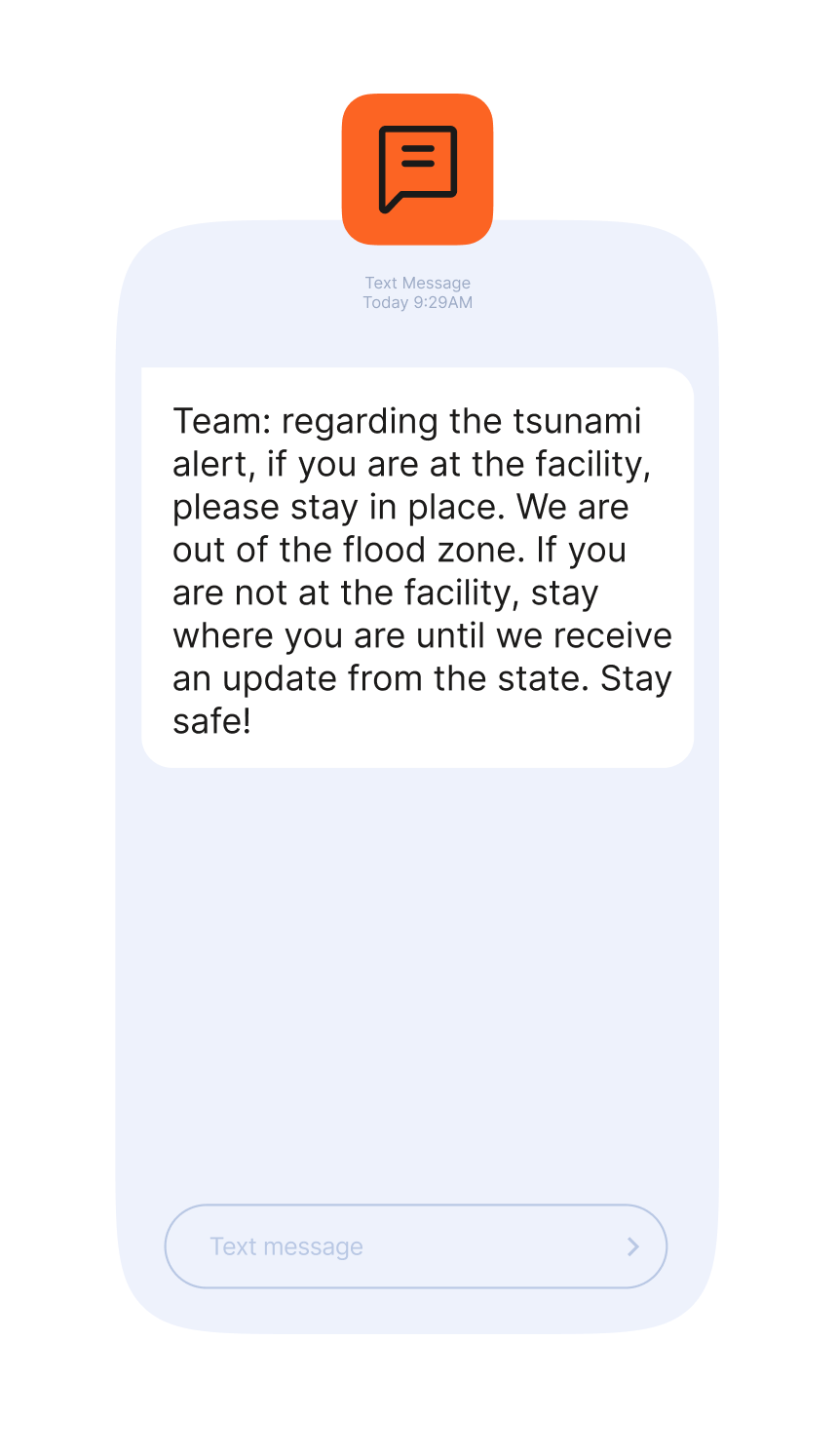
- Emergency and Ad Hoc: One-to-many broadcasts for facility closures, weather events, or schedule changes, reaching both patients and staff within minutes
What separates Dialog Health from other patient engagement platforms is the granularity. Each patient follows a tailored journey based on their specific appointment type, facility, and provider. Messages aren’t capped at 160 characters – Infobip’s infrastructure supports longer SMS, so providers can include the detail patients actually need.
Email as the staff engagement layer
While SMS handles the patient-facing side, Infobip’s Email service powers the internal loop. Dialog Health uses it for two-factor authentication when healthcare staff log into the platform, and as a notification hook: when a patient responds to a message, the assigned staff member receives an email prompting them to log in and reply. This keeps two-way conversations moving without requiring staff to monitor the platform constantly. Dedicated IPs through Infobip ensure these operational emails land in inboxes, not spam folders.
Analytics powered by delivery data
Infobip sends delivery receipts back to Dialog Health for every message, with greater detail available on short codes than 10DLCs. Dialog Health has built an analytics layer on top of this data, giving clients visibility into reach rates, response rates, click-through rates, and response times. These are the numbers clients share with their leadership as direct proof of ROI.
RESULT
Measurable impact across the care continuum
The combination of Dialog Health’s patient engagement platform and Infobip’s SMS service produces results that healthcare organizations can measure and act on:
- Reach rate: Consistently above 96% on an annual basis
- Response rate: 40% average globally when Dialog Health is explicitly expecting a response. For certain message types, such as appointment confirmations, those rates climb closer to 55%
Infobip powers the communication layer behind our platform. From onboarding new clients and registering campaigns to sending traffic, delivery reporting, and troubleshooting, they support us across the entire journey. That means we can focus on building a better experience for our healthcare clients, not managing messaging infrastructure

Thomas Pflipsen,
Senior Product Manager, Dialog Health
Compare that to phone calls, where most patients won’t pick up an unknown number. SMS reaches patients where they already are, and the data proves it year after year.
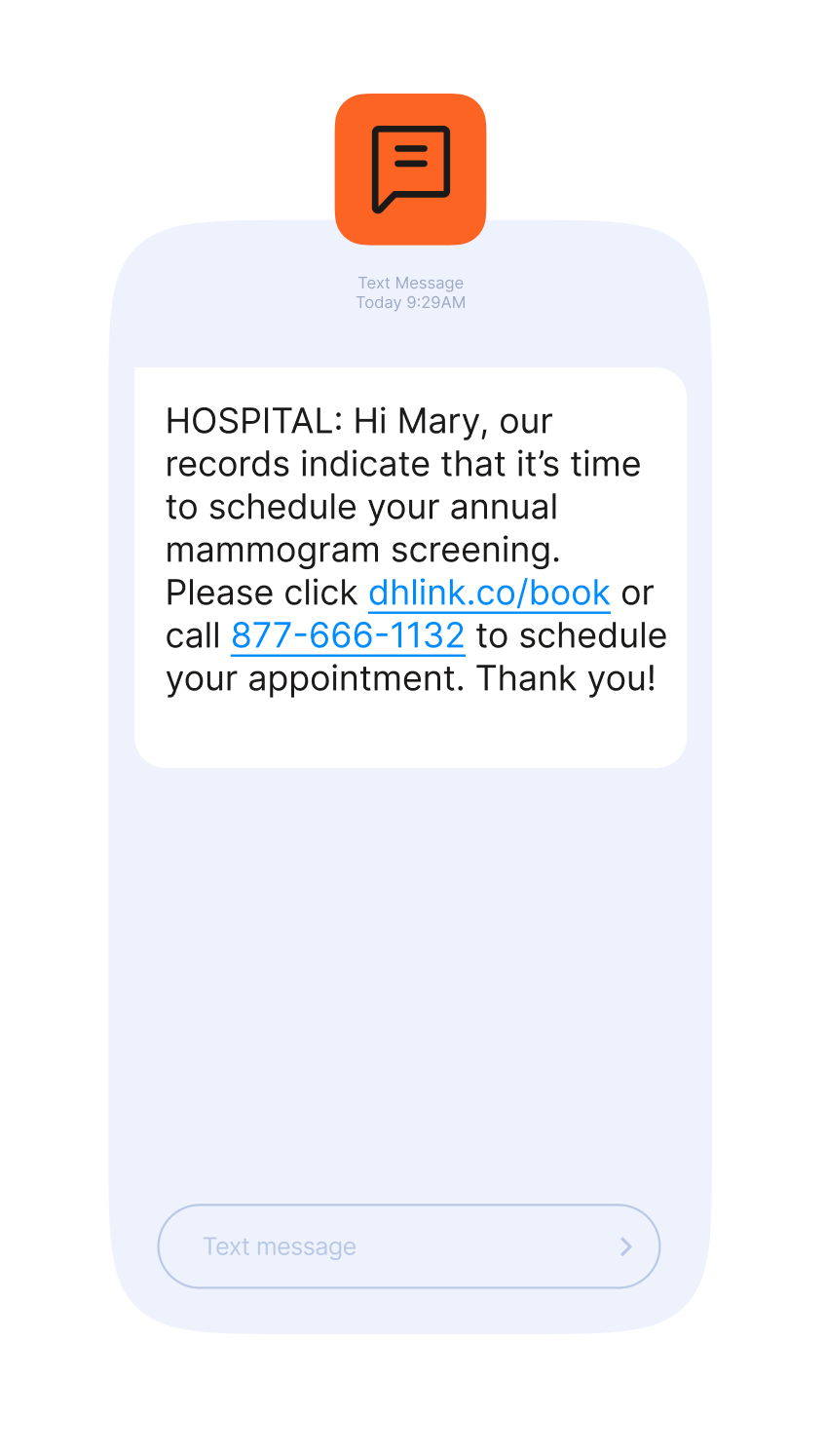
But the numbers only tell part of the story. Three use cases from Dialog Health’s client base show what this infrastructure looks like in practice.
How healthcare messaging is evolving
These stories are part of a broader shift. Over the last five years, Dialog Health has tracked clear changes in how healthcare organizations message their patients:
- Message length: increased by 16.2%, as healthcare organizations increasingly direct patients to digital resources via links. Content distribution through SMS is becoming the norm.
- Multi-language messaging: Up 2.5x, a trend expected to accelerate further in 2026 with the launch of Dialog Health’s AI Translator.
- Emoji usage: Up 5.6x, reflecting a meaningful shift in how healthcare organizations communicate with patients and how patients respond in return.
Patients are already pushing healthcare communication toward richer, more personal, and more conversational experiences. That trajectory points directly to what Dialog Health is building next.
What’s next: RCS and the future of patient trust
Dialog Health always aims to align healthcare with the latest texting trends. Most recently, this involves their positioning as one of the first healthcare companies in the United States to deploy RCS for patient communication. To do this, they are building on the same Infobip infrastructure that already powers its SMS and email operations and has unmatched RCS deliverability in the USA, thanks to direct connections to the four major US carriers.
As patients expect richer, more branded communication from their providers, RCS delivers. Verified sender profiles display the healthcare provider’s name, logo, and branding directly in the message thread, giving patients immediate recognition and reinforcing the trust healthcare organizations have already built through SMS.
RCS also unlocks deeper analytics. Read receipts show not just that a message was delivered, but that a patient read it, giving healthcare providers a more complete picture of engagement alongside reach, response, and click-through data.
Patient trust is at the core of everything we do. RCS enhances this. Verified sender profiles lets patients see exactly who’s contacting them, and that trust opens the door to deeper engagement.
Thomas Pflipsen,
Senior Product Manager, Dialog Health
COMPANY PROFILE
Dialog Health is a US-based patient engagement platform that enables two-way communication between healthcare organizations, their patients, and staff. Founded in 2012, the company serves Fortune 500 health plans, large health systems, and ambulatory surgery centers, as well as HR and Contact Centers. Dialog Health is driven by a focus on adopting the latest communication technologies to meet the specific demands of US healthcare.