






Product Updates Q3 2026
Welcome to our Q3 2026 Product Update. This quarter brings smarter testing, more control over costs and number reputation, and cleaner data across the channels teams rely on every day.
More Trust, More Control, Less Friction Across Every Channel
Q3 is about helping teams trust what they send and stay in control of how they run it.
We’re introducing silent call monitoring and automated A/B testing in AgentOS, Number Reputation for Voice, and Max-Price for WhatsApp, plus more AgentOS updates for contact centers and campaigns, faster RCS onboarding, and updates across Messenger, LINE, Mobile Identity, Analyze, Subscriptions and Numbers & Compliance.
Here’s where Q3 made the biggest difference:
Quarterly Highlights
In the video below, Lea will walk you through the four biggest releases that defined Q3:
AgentOS
-
Silent Call Monitoring for Supervisors:
Supervisors can quietly step into a live call and, with whisper coaching, guide the agent in real time while the customer hears nothing. Agents see a clear sign that their supervisor is helping, which makes it easier to handle objections, stay compliant, and ramp up new hires. The payoff is better first-call resolution and more consistent conversations. -
Automated A/B Tests in Journeys:
Journeys can now compare up to four message versions, then automatically send the winning one to the rest of your audience. Choose the audience split, the winning metric (open or click rate), and the test duration, across SMS, Mobile Push, Viber, Email, RCS, WhatsApp, Apple Messages, and LINE.
Voice: Number Reputation
- Number Reputation, powered by Hiya, helps legitimate outbound calls get answered instead of ignored or flagged as spam. Register your business and numbers in the Infobip Portal, then check each number’s score across maturity, desirability, engagement, and reaction. Registration shows whether your numbers are visible, and scoring shows how they’re performing right now.
WhatsApp: Max-Price
- Instead of paying the same flat cost for every marketing message, you now set a ceiling per delivered message. Use it to lower costs at similar delivery rates, reach high-value customers at key moments like shopping season, or re-engage new opt-ins and dormant contacts affordably. You never pay above your limit, and messages that would cost more are simply not sent.
Below you’ll find the remaining updates that shipped this quarter.
AgentOS: More Control For Contact Centers And Campaigns
Capacity Calculation Across Channels
AgentOS now offers a new Channel Type Capacity model alongside the existing Combined Capacity model. It lets you set separate workload limits for channels like chat, email, and messaging, so one full channel no longer blocks agents from receiving work on another.
Key benefits:
- Accurate distribution: assign conversations according to an agent’s actual capacity
- Better utilization: keep agents available on channels where they still have room
- Shorter waits: reduce customer wait times
Historical Analytics for Multi-Agent Call Scenarios
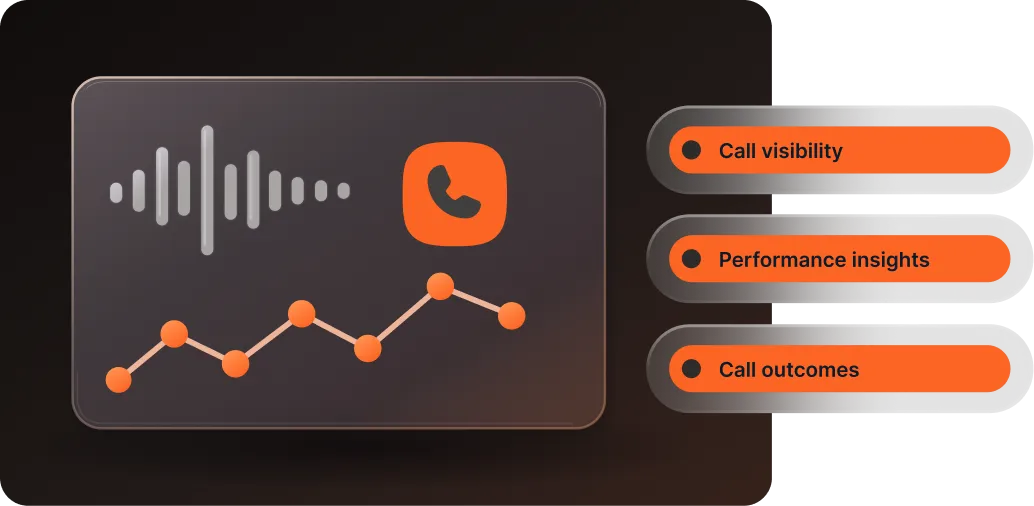
Teams can now review what happened during transferred, consultative, warm-transfer, and group calls, including agent performance and call outcomes. This gives teams a clearer view of how agents use call controls during live interactions.
Key benefits:
- Full call visibility: review transferred, consultative, warm-transfer, and group calls
- Agent performance insight: see how agents handle each call scenario
- Clear call outcomes: understand how complex calls ended
- Better coaching and reporting: use data to coach agents and improve operations
Expanded AND/OR Segmentation Logic
Audience segments can now combine several customer attributes and behaviors using flexible AND/OR rules, instead of being limited to simpler conditions.
Key benefits:
- More precise audiences: combine several attributes and behaviors in one segment
- Flexible logic: use AND/OR rules to define exactly who qualifies
- Better targeting: reach the right customers with the right message
RCS for Business: Improved Onboarding With Less Rework
Customers can now update an existing sender launch request instead of starting over, including when they receive carrier feedback or want to adjust information themselves. Structured, field-level feedback and standardized error codes make it clearer what needs to be fixed.
As RCS connectivity expands and new carriers become available, customers are also automatically informed and can easily extend an existing sender to newly supported networks.
Key benefits:
- Update, don’t restart: edit an existing launch request when changes are needed
- Clearer guidance: field-level feedback and standard error codes show exactly what to fix
- Fewer review cycles: reduce unnecessary back-and-forth with carriers
- Easier network expansion: extend existing senders to new networks as coverage grows
Messenger: Marketing Messages Now Available in Broadcast
Messenger Marketing Messages in Broadcast
Marketing teams can now create and send Messenger campaigns directly from Broadcast, without API integration or developer support. Existing Messenger Marketing Messages API support remains available.
Broadcast supports Rich Card and Carousel formats, visual configuration and preview, and scheduling through existing workflows. Audience segments can be targeted directly from Broadcast, and subscribed audiences can be exported via the Infobip Portal.
Key benefits:
- Campaigns without developers: plan, preview, and launch Messenger campaigns with no code
- Richer formats: use Rich Card and Carousel messages to tell more of the story
- One place to manage: create, preview, and manage campaigns in Broadcast
- Consistent experience: work with Messenger the same way as with other channels
LINE: Standalone API For Two-Way Messaging
LINE OA Standalone API
LINE Official Account two-way messaging is now available through a standalone API. Previously, it was available only through the web interface or products like Conversations.
Key benefits:
- Independence from platform tools: use LINE OA in your own systems without relying on Infobip platform tools
- API-first flexibility: support API-first implementations and custom workflows
- Embedded where you work: bring LINE OA into CRM, order management, and support systems
- Consistent API experience: work with LINE the same way as with other Infobip channels
Mobile Identity: SIM-based Number Verification Without the OTP
SIM-based Number Verification
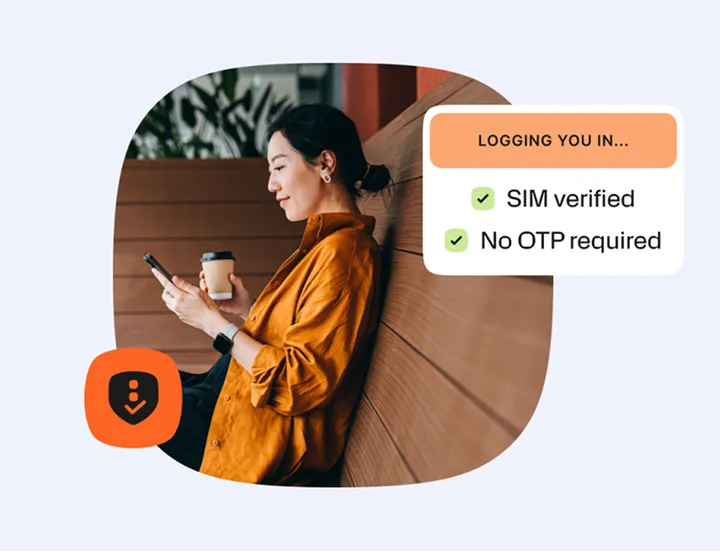
Enterprises verify phone numbers to confirm a customer controls the number they claim — at sign-up, at login, at account recovery, and before a payment or a profile change. Today that usually means sending an SMS code. SIM-based Number Verification asks the operator instead.
The check confirms that the number a customer presents is the one held on the SIM in their device. The number is read from the SIM through the device — not typed in, not sent as a code — so there is nothing to intercept, forward, or talk a customer into reading out.
Because the check reads the SIM rather than the data session, it works over Wi-Fi, VPN, and while roaming. The customer sees a consent prompt and, on a handset with two SIMs, chooses which one to verify — so the check stays visible and under their control. Where it cannot run — an ineligible SIM, an unsupported app environment, or an operator that has not yet connected — the journey falls back to OTP, so a coverage gap never becomes a dead end.
Benefits for enterprises:
- Take the code out of the journey. No SMS to deliver, no code to enter, nothing to read out. Fewer steps where customers drop off.
- Verify in the background. Run the check during onboarding, login, account recovery, and step-up checks, without asking the customer to fetch a code.
- A code can be intercepted or talked out of a customer. A SIM check gives an attacker nothing to ask for.
Benefits for telecom operators:
- Turn SIM authentication into a service. Your network already authenticates every SIM that attaches to it. SIM-based Number Verification packages that into an API your enterprise customers can buy.
- Answer demand OTP cannot. As regulators and standards bodies move away from SMS OTP, enterprise buyers are looking for an alternative that is not just another app.
- One capability, more conversations. The same check supports onboarding, login, recovery, and step-up, so you can monetize it across an enterprise customer’s whole journey rather than a single use case.
Analyze: Signals Reporting Now Part of the Dashboard
Signals in Analyze
Signals reporting is now integrated into the Analyze dashboard, replacing the standalone Signals dashboard with a more intuitive and scalable reporting experience. Before, Signals had a detached dashboard with limited functionality. Now it sits alongside the rest of your reporting in Analyze, with better filtering and stronger fraud analysis capabilities all in one place.
Key benefits:
- One dashboard: view Signals reporting in Analyze without switching between tools
- Better filtering: narrow down your data more easily
- Reliable, faster reports: get more dependable data access and quicker report generation
- Stronger fraud analysis: work in a more intuitive experience built for the job
Subscriptions: More Flexible Webhook Delivery
Subscription Groups for Multiple Webhooks
You can now deliver the same event, such as a delivery report or an inbound message, to more than one webhook. Create several subscriptions for the same channel and event, place each one in a different subscription group, and Infobip delivers a copy of the event to every group. The group is an optional setting in the Subscriptions API and the web interface.
Before, each event went to a single subscription, so customers who needed it in more than one system, such as an analytics platform and an audit archive, had to build their own forwarding layer.
Key benefits:
- One event, several destinations: send each event to up to 10 webhooks, one per subscription group
- No forwarding layer: Infobip delivers each copy, so there is nothing to build or maintain
- Independent delivery: each group has its own delivery and retries, so a slow endpoint doesn’t delay the others
- Format per destination: each subscription can use its own event format
Bot Click Events for Email
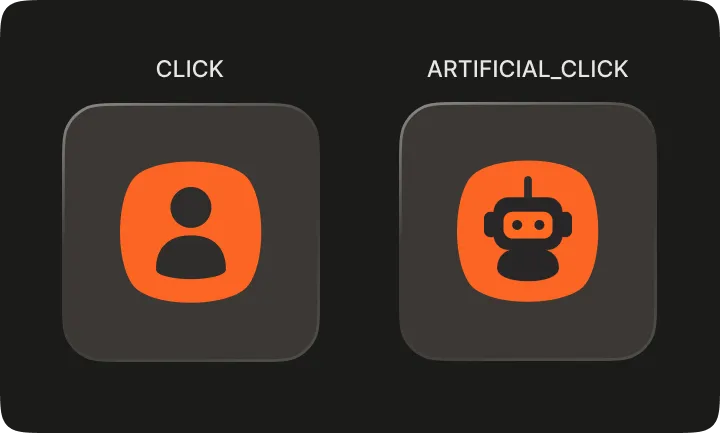
Email senders can now subscribe to bot click events to see which clicks in their tracking data came from automated systems, rather than from real people. Bot clicks were already detected and excluded from CLICK events, but that information used to be dropped. It is now delivered as a separate ARTIFICIAL_CLICK event that you can subscribe to through Webhook Subscriptions.
Key benefits:
- Visibility: see bot clicks instead of having them silently dropped
- Real engagement metrics: measure human clicks without false clicks triggering re-engagement flows
- Unchanged reporting: CLICK events keep reporting human clicks only, so current reports and automations aren’t affected
Numbers and Compliance: Self-service Number Porting
Number Porting for the US
Customers can now port US numbers themselves, directly in the Infobip Portal, instead of relying on Infobip’s Registrations team to submit on their behalf. At launch, it covers US local numbers (10DLC) and Voice.
Key benefits:
- Self-service submission: submit port requests yourself in the Infobip Portal
- Enter details once: no re-entering on our side and fewer back-and-forth clarifications
- Live status: follow progress in the portal, with notifications along the way
- Accurate details, faster ports: speed depends on the quality of your data, not on hand-offs
And that’s a wrap!
With the busiest season of the year around the corner, Q3 gives teams more ways to be recognized, spend wisely, and learn what works before it counts. Pick the update that fits your next campaign and give it a try.
Be trusted, stay in control, and make every message count.
Visit the Product Updates Hub for a quick overview of the past quarterly updates and stay tuned for what’s coming next.
See you in January 2027!