

6 personalization best practices for omnichannel marketing
Omnichannel personalization starts with customer data and AI that can act on it in real time.

Discount codes are everywhere, and most of them are easy to ignore. When a promotional email looks no different from the next three in your inbox, adding a first name to the subject line does little to make it feel personal. Real omnichannel personalization works differently. It uses customer behavior across channels to make each interaction more relevant, whether that happens on a website, in an app, over email, or on WhatsApp.
That distinction is becoming harder for brands to ignore. From our CX Maturity report, 96% of brands automate customer interactions in some way, but only 58% say their channels are fully integrated. AI now helps brands use customer data in real time, making it easier to personalize messages, recommendations, and support across channels.
In this guide, we look at what omnichannel personalization requires, the data behind it, six best practices for making it work, the governance needed to support it, and examples of brands doing it well.
What is omnichannel personalization?
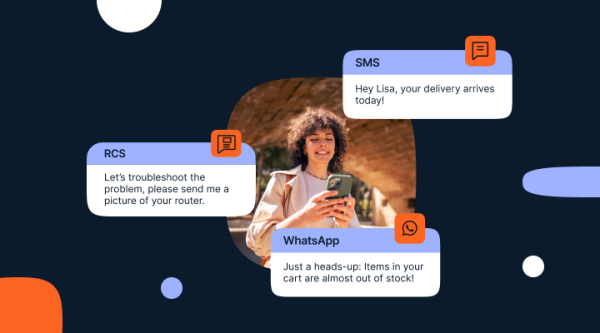
Omnichannel personalization means creating a consistent, relevant experience for customers across every channel they use. That could include website, mobile app, email, SMS, RCS, WhatsApp, voice, or support chat. It’s not the same message copied to five channels. It’s one customer journey, expressed differently depending on where the customer is standing.
The omnichannel part is about consistency across channels, platforms, and devices. The personalization part is about relevance. If a customer abandons a cart on your website, the follow-up email or WhatsApp message should reflect that action rather than ignore it or send something unrelated.
Doing this well means unifying customer data across every touchpoint, not just each channel’s own history. A customer who browsed a product on mobile, asked a question via chatbot, and then went quiet should be recognized as one person with one story, not three disconnected sessions. When this works, customers receive more useful and timely interactions instead of disconnected marketing messages.
The role of AI in omnichannel personalization
AI makes omnichannel personalization work at scale. It helps brands understand customer behavior across channels, spot patterns in browsing and buying, and predict what a customer may need next. Machine learning finds those patterns. Natural language processing helps chatbots understand intent. Generative AI shapes the copy, offer, or response, so the next interaction feels relevant instead of scripted.
Before AI can personalize anything, it needs one customer’s view instead of five fragmented ones. AI pulls signals from web, app, store, and support into a single profile, so a purchase in-store and a browse on mobile count as the same person, not two data points that never connect. That single view is what makes the next two things possible.
AI also connects those signals in real time. A browsing session, a support chat, or a cart abandonment can trigger the next message while it is still relevant, not a day later in a batch email. And because AI spots patterns across that history, it can act before the customer asks: suggesting a reorder, flagging a relevant offer, or routing a query to the right channel before friction builds.
When data, AI, and channels work together, brands move from static segments to live journeys that respond as the customer acts.
Benefits of personalizing omnichannel marketing
Here are the benefits you get when you implement personalized omnichannel marketing with AI. Personalization done well changes four things: how customers experience your brand, how often they buy, what you spend to reach them, and how well you understand them.
- Better customer experience: Consistent, relevant messaging at every touchpoint builds trust. Customers do not have to repeat themselves or re-explain context when they switch from app to email to chat, and that continuity supports lifetime value.
- Higher conversion rate: Customers who feel understood buy more readily. A recommendation or offer that reflects actual browsing or purchase behavior converts better than a generic blast, because it answers a need the customer already has.
- Lower acquisition and messaging costs: Precise targeting means fewer wasted sends. Instead of messaging your entire list, you reach the subset actually likely to respond, which cuts both message volume and paid acquisition spend.
- Smart segmentation: AI can group customers by real behavioral patterns rather than broad demographic guesses. This can improve segmentation, but the outputs should still be reviewed for bias and accuracy.
- Faster response to intent: AI helps brands react when a customer abandons a cart, asks a question, or shows buying intent. That lets the next message reach them while the moment still matters.
- Better retention and loyalty: Relevant journeys keep customers engaged after the first purchase. That makes repeat action more likely and helps turn one-time buyers into regular ones.
- Richer customer insight: Connected data shows how customers respond across channels, which gives teams a clearer view of what to improve nexConnected data shows how customers respond across channels. That gives teams a clearer view of what to improve in the next journey.
6 best practices to implement personalization in omnichannel marketing
Here are six best practices to help brands make omnichannel personalization work with AI and connected customer data.
1. Unify customer data across channels
Personalization is only as good as the data behind it. Four data types matter most:
- Behavioral data: Page views, searches, app interactions, chatbot conversations.
- Transactional data: Purchase history, cart activity, order value, and frequency.
- Preference and consent data: Channel opt-ins, communication preferences, and explicit interests a customer has shared.
- Cross-channel engagement history: What a customer has opened, clicked, or ignored on each channel, tied to one customer profile, not one per channel.
Without a single customer view, omnichannel personalization is really just several channels running their own separate personalization. A WhatsApp service interaction should inform the next email campaign, not sit in a system the email tool never sees.
2. Use AI for dynamic content
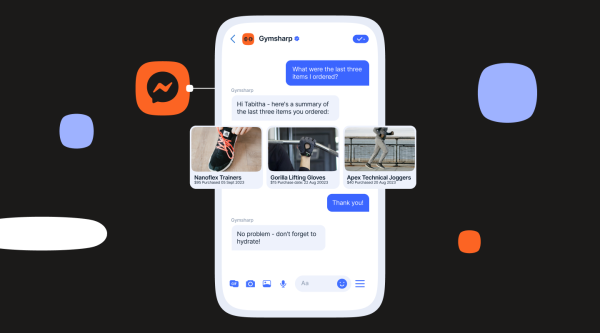
AI can support real-time personalization by using conversation history, order details, preferences, and recent behavior to tailor messages or responses. This goes beyond inserting a name or product image. It means the content and the recommended next step can adapt to what the customer needs at that moment.
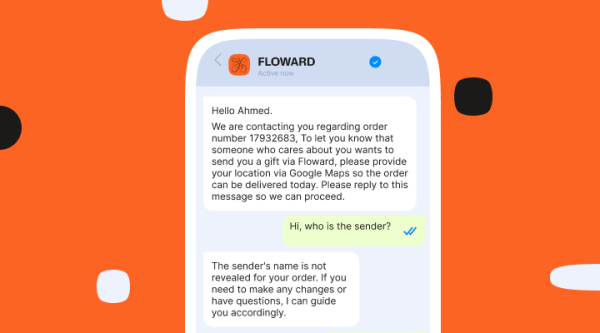
Online flowers and gifting company Floward partnered with Infobip to use AgentOS to manage context-aware customer journeys on WhatsApp. AI agents distinguish between senders, recipients, and new customers, using CRM data and a knowledge base to answer questions, collect delivery details, and recommend relevant actions. Infobip reports that Floward reduced peak staffing needs by 45%, lowered customer-service costs by 15%, and increased containment from 64% to 81%.
3. Deploy predictive and real-time personalization
Static segments update weekly or monthly. Real-time personalization updates the moment a customer acts: abandon a cart and the next message reflects that within minutes, not days. Predictive models go a step further, using past behavior patterns to anticipate what a customer may be interested in next.
This requires infrastructure that can process behavioral signals and trigger a response across channels immediately, not a batch job that runs overnight. Instead of sending weekly customers who bought X also bought Y emails, brands can respond when a customer’s behavior shows immediate intent.
4. Personalize recommendations and offers
Use behavioral and transactional data to shape both what you recommend and when you send it. A chatbot can suggest products or content a customer has already viewed, while email can follow up with the right offer when browsing pattern or purchase intent shows they are close to buying. The goal is to make the next message feel useful, not random.
If someone visits the same product page several times, adds an item to cart, or keeps opening similar content, that should change the next message they see. In a conversational channel, that might mean a product suggestion or a guided next step. In email, it might mean a timely reminder, a discount, or a content recommendation that matches their interest.
5. Deploy AI-powered conversational channels
Chatbots built on natural language processing can proactively reach out when a customer’s on-site behavior signals they need help, rather than waiting for the customer to open a chat window first. McKinsey estimates that generative AI could increase sales productivity by 3% to 5%, but chatbot results still depend heavily on use case, data quality, and journey design.
The value is not the channel itself. It is that a conversational interface can respond to context, such as time on page, cart contents, and past questions, in a way a static page cannot.
6. Govern data use and AI decisions
None of this works without trust, and trust depends on how you handle data. Three things belong in every omnichannel personalization program:
- Consent management: Track what each customer has actually opted into, per channel, and personalize only within those boundaries. A customer who consented to email offers hasn’t automatically consented to WhatsApp marketing.
- Data privacy and compliance: Personalization relies on customer data, which means it’s subject to regulations like GDPR. Build in data minimization (collect what you need, not everything you can) and clear retention policies from the start, not as an afterthought.
- Responsible AI use: Review outputs for bias, and keep humans able to explain or override decisions when neededAs AI plays a larger role in segmentation and recommendations, review outputs for bias and keep humans able to explain or override decisions when needed. Third-party cookie deprecation also means leaning more on first-party, consented data more important than data collected through indirect tracking.
Skipping governance does not just create compliance risk. It erodes the trust that makes customers willing to share the data personalization depends on in the first place.
Use cases and success stories
The benefits of implementing personalization and AI into omnichannel marketing apply across several industries, including retail, automotive, finance, and telecommunications.
Retail
Alyasra Fashion runs over 60 premium brands across 270 stores in six Gulf countries. Its WhatsApp marketing database mapped almost exactly to its existing customer base, since numbers were collected at the point of sale. The company needed a way to reach new customers, not just repeat ones, and to remove the friction of sending shoppers to a separate website or app.
Alyasra used click-to-WhatsApp ads on Facebook and Instagram to send new prospects straight into a WhatsApp conversation instead of a landing page. Under Meta’s terms, a user who starts that conversation gives the brand permission to keep their number, building the opt-in list Alyasra needed. From there, a chatbot built on the WhatsApp Business Platform and AgentOS walked customers through a 30-product catalogue and a full checkout, without leaving the chat.
The WhatsApp checkout connected directly to Shopify, so orders landed in Alyasra’s existing back-end systems like any other sale. Infobip’s destination scoring also prioritized sends to numbers with a higher delivery probability, lifting delivery rates by 8 to 10 percentage points in Kuwait and from 65% to 70% to 84% in Saudi Arabia. A DKNY pilot campaign generated 3,700 bot sessions and 1,500 new customer contacts. Alyasra’s tracked WhatsApp marketing ROI reached 30x, against 13x on SMS, and tracked sales ROI across stores and e-commerce hit 18x, prompting Alyasra to move all outbound marketing from SMS to WhatsApp.

Automotive
KIA Italia wanted to create a more direct path from digital advertising to car sales. Customers in automotive usually compare models, ask questions, review financing options, visit dealerships, and follow up several times before making a purchase. KIA Italia needed a way to capture interest at the moment it appeared and move potential buyers toward a quote or test drive without adding friction.
The company connected Facebook and Instagram ads directly to WhatsApp, where an AI agent engaged prospects in conversation. The agent qualified leads, answered questions about pricing, features, availability, trim options, and financing, and directed high-intent shoppers to their nearest dealership for a quote or test drive. Instead of completing a static form and waiting for a callback, prospective buyers could ask questions and provide their details within the same WhatsApp conversation.
The experience was integrated with Salesforce, allowing lead information collected in WhatsApp to be automatically created in KIA Italia’s sales process. In a four-week campaign, KIA Italia generated 144 qualified leads, 116 quote requests, and eight direct car sales. The campaign also achieved a 40x return on ad spend and a 53% lower cost per car sold.

Finance
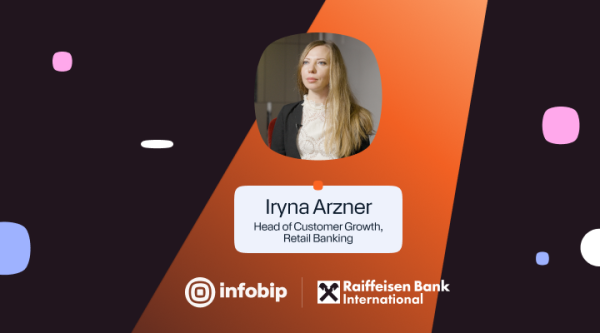
Raiffeisen Bank International wanted to modernize customer engagement across its Central and Eastern European markets while preserving the trust, empathy, and advice associated with traditional banking. As customers moved toward digital channels, RBI needed to provide convenient self-service and messaging-based support without removing human advisers from the relationship.
RBI’s digital engagement strategy evolved from SMS and Viber notifications into two-way messaging, chatbots, and remote collaboration tools embedded in digital banking journeys. AI-powered self-service handles routine requests and helps customers find information quickly. For more complex needs, relationship managers can use messaging, screen sharing, and document exchange to provide personalized advice remotely.
RBI has enabled remote collaboration across seven markets and is rolling out these tools to approximately 10,000 agents and advisers. The approach combines automated digital engagement with human support, helping the bank scale its customer experience without losing the personal element that customers expect from financial services.
Telecommunications
Telekom Deutschland wanted to cross-sell and promote a free trial of Spotify in Germany. To do that, it needed a digital channel that would attract customers, encourage conversions, and match the interactive nature of Spotify.
Infobip helped Telekom Deutschland create rich media messages through RCS to promote the Spotify offer. Alongside RCS, Infobip used Moments to set up flows, automate the campaign, and ensure each message was sent at the right time. Conversations let customers contact an agent from the RCS message to enquire about the offer and activate their Spotify membership if they chose to.
Compared to SMS, the RCS for Business campaign performed two times better, allowing customers to engage with the chatbot and fulfill the goal of subscribing to Spotify.

Conclusion: Omnichannel personalization is a step every marketer must take
Omnichannel personalization works when three things come together: connected customer data, real-time activation, and clear governance.
When brands understand customer behavior across channels, they can respond at the right moment with the right message. AI can help deliver these interactions at scale, but it depends on accurate data, clear consent, and proper governance.
Brands that get this right are in a stronger position to improve engagement, conversion, and long-term loyalty.
Ready to turn customer data into more relevant journeys? Explore how Infobip helps brands use AI and connect customer data to deliver more relevant experiences across every channel.
FAQ’s
Omnichannel personalization means using connected customer data to make every channel feel relevant, consistent, and aware of what the customer has already done. It is not the same message copied across channels. It is one customer journey, expressed in the channel the customer is already using.
They improve engagement by using shared data and AI to send more relevant messages at the right time on the right channel. That can mean a better offer after cart abandonment, a more useful chatbot response, or an email that reflects what a customer has already browsed or bought.
AI processes the volume of cross-channel data that manual personalization cannot handle. It spots patterns in browsing and buying, predicts what a customer needs next, and shapes the offer, response, or message in real time, so personalization keeps up as the customer moves between channels instead of running rules set weeks earlier.
The most useful inputs are behavioral data, transactional data, preference and consent data, and cross-channel engagement history. Together, they show what the customer did, what they bought, what they allow you to send, and how they already responded.
Channel-level personalization happens inside one channel only. Omnichannel personalization connects customer data across channels so the next message reflects the full journey, not a single interaction.