


Retailtainment 101: How to create immersive customer experiences
Retailtainment helps transform the retail industry from a place of transaction to a hub of experience. Join us as we explore the strategies, examples, and benefits and help you discover how to create an entertainment-rich environment that captivates your customers.

You go to the mall and before you’ve even checked out, you’re texting the group chat a picture of some display you just fell in love with. Not just a bath bomb, a whole seasonal wonderland. Not just a skirt, but a display that knew your favorite era better than you did (hello, 90s).
Or maybe it’s you buying two vinyls at a pop-up shop because the guy behind the counter slides you a card with your receipt: congrats, you just won two tickets to tonight’s secret show. You didn’t even know there was a secret show. Now you’re the friend who has a story for the next decade.
Either way, here’s what we’ve found to be true: this is what we are shopping for. Not just the product. The feeling. The experience. Because we can all buy something, but not everyone gets to be there for moments like these. And what an opportunity that is now that we found 45% of shoppers say they plan to spend more this season than last.
So the real question for brands becomes: how do you turn a store into a moment worth texting about? Forget another display table, think bigger. A cosmetics counter where you don’t just grab a product and go, but sit down for an actual makeover. A bookstore that doesn’t just sell you a mystery novel, but locks you inside one.
That’s retailtainment. A store that stops being somewhere you pass through and becomes somewhere you fall for.
This blog is your meet-cute with it: what it looks like, why it works, and how to build a little of that spark into your own brand.
What is retailtainment?
Definition of retailtainment: Retailtainment is a fusion of retail and entertainment that transforms stores into vibrant, engaging destinatio ns. American sociologist George Ritzer coined the term, describing it as “the use of sound, ambiance, emotion, and activity to get customers interested in the merchandise and in the mood to buy.”
Retailtainment is also sometimes called “inspirational retailing” or “entertailing”.
Types of retailtainment campaigns
Retailtainment campaigns are as diverse as the brands that implement them, but they generally fall into several key categories, such as:
Experiential pop-ups
Pop-ups are retail spaces or installations designed to create unique, limited-time experiences. They often focus on a specific theme, product launch, or brand message.
Key features:
- Short term
- Highly themed
- Interactive
- Tests new concepts
Interactive installations and displays
These campaigns use technology to create interactive experiences, often involving touchscreens, motion sensors, augmented reality (AR), or virtual reality (VR).
Key features:
- Technology-driven (AR/VR)
- Tells brand stories
- Customer participation
In-store events and workshops
Hosting scheduled events that provide entertainment, education, or hands-on, personalized experiences helps build community, foster relationships, and create a sense of belonging.
Key features:
- Scheduled events with a defined agenda
- Educational, entertaining, or both
- Building relationships with customers
Immersive themed environments
Immersive themed environments transform retail stores into a cohesive, multi-sensory experience, engaging sight, sound, smell, touch, and taste.
Key features:
- Escapism and fantasy
- Tells brand stories
- Memorable experiences
Gamification and challenges
Gamification turns shopping into a playful adventure with game-like elements. Points, badges, leaderboards, and challenges encourage participation and competition.
Key features:
- Game mechanics: points, leaderboards, badges
- Drives engagement
- Increases dwell time
Live performances and entertainment
Live performances provide a platform for the brand to connect with new audiences, effectively extending its fan base.
Key features:
- Performance
- Social event
Phygital experiences
Phygital experiences integrate digital and physical into one cohesive omnichannel journey.
Key features:
- Bridges the gap between online and offline
- Interactive technology
- Personalization
How does retailtainment drive consumer experience?
How does retailtainment create a superior customer experience that leaves a lasting impression? It boils down to a few key principles:
Creating immersive experiences
Retailtainment activates multiple senses through interactive displays, themed environments, and engaging activities. Your customers can step into a world crafted just for them, a place where every day fades away.
Emotional connection and storytelling
Retailtainment taps into emotions by creating experiences that resonate with customers on a personal level. Storytelling plays a crucial role, weaving narratives into the retail environment to create a sense of connection.
Active participation
Interactive elements like games, virtual reality experiences, and hands-on activities directly engage customers. Active participation can evoke strong emotions, whether it’s the thrill of winning a game, the wonder of exploring a VR world, or the satisfaction of creating something unique.
Social interaction and shared experiences
Retailtainment often fosters social interaction, creating opportunities for customers to connect with each other. Shared experiences, like group workshops or live performances, build a community around your brand.
Surprise
Retailtainment introduces elements of novelty and surprise, breaking the monotony of traditional shopping. The urgency of a limited-time event or the exclusivity of a pop-up creates a sense of ‘I have to be there!’ If you’re not in on the experience, you’re missing out. And nobody wants to be the one scrolling through their feed, watching everyone else have an amazing time. Fear of missing out (FOMO) is a potent driver of participation.
How can retailtainment be tailored to different customer demographics?
When done right, retailtainment can resonate with a wide range of customers. There’s no one-size-fits-all approach, and while many factors play a role, let’s explore how to effectively tailor retailtainment experiences to different generations.
Gen Alpha (2010-2024)

Retailtainment strategies for Gen Alpha:
- Incorporate augmented reality (AR) and virtual reality (VR) experiences
- Gamify shopping experiences with interactive displays and challenges
- Focus on personalized, digital-first experiences through apps or interactive kiosks
- Use interactive robots or AI assistants
Retailtainment ideas:
- AR treasure hunts within stores: Use a store app to find hidden virtual objects
- Virtual try-ons or interactive product demos
Gen Z (1997-2009)

Retailtainment strategies for Gen Z:
- Create FOMO with TikTokable moments and experiences
- Integrate live streaming and social media into the shopping experience
- Offer interactive workshops and events that align with social values
Retailtainment ideas:
- Pop-up shops with exclusive, limited-edition merchandise
- Interactive art installations
- Events with social media influencers
Millennials (1981-1996)

Retailtainment strategies for Millennials:
- Design physical spaces that transport them to a different world or time
- Offer mobile ordering, in-store navigation, and personalized digital content
- Create spaces for gathering and interaction, like cafes, lounges, or event spaces
Retailtainment ideas:
- In-store cafes
- Interactive workshops
Gen X (1965-1980)

Retailtainment strategies for Gen X:
- Offer high-quality entertainment, such as live music
- Provide educational workshops and demonstrations
Retailtainment ideas:
- Live jazz or blues performances
- Improvement workshops
Baby Boomers (1946-1964)

Retailtainment strategies for Baby Boomers:
- Organize events that encourage social interaction and community building
- Host lectures, demonstrations, or guided tours related to their interests
Retailtainment ideas:
- Guided tours with history lectures on your brand
- Comfortable seating areas for social interaction
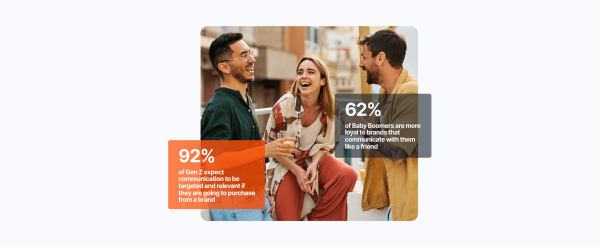
While this overview provides valuable examples and strategies for tailoring retailtainment to different age demographics, remember that these are just starting points.
Benefits of retailtainment
By embracing retailtainment, brick-and-mortar stores are investing in their long-term viability, ensuring they remain relevant and engaging for generations to come. Here’s why businesses should prioritize retailtainment in their marketing mix:
Increased foot traffic
Creating engaging experiences will attract customers and keep them lingering longer. More time in your store means more opportunities to connect, showcase products, and, ultimately, make a sale.
Enhanced customer engagement
Retailtainment focuses on getting customers involved. Interactive experiences spark conversations, create memories, and build stronger emotional connections. When customers actively participate, they’re more likely to remember your brand and return for more.
Boosted brand loyalty and advocacy
Happy customers are your best advocates. When you create unique and enjoyable experiences, you’re also building relationships. Those satisfied customers will share your brand on social media, recommend it to a friend, spread the word, and attract new business.
Increased sales and revenue
When discussing numbers, longer dwell times and engaged customers naturally lead to more sales. Experiential elements can also drive impulse purchases and increase average transaction values. It’s a win-win: happy customers and a healthier bottom line.
Competitive advantage
Customers are used to similar messages from different brands. How do you stand out in the crowd? Retailtainment helps you offer unique experiences specific to your brand that competitors can’t replicate.
Improved brand perception
Retailtainment experiences are made for sharing. They generate social media buzz, increase brand visibility, and create positive brand sentiment. And today, social proof is everything.
Data collection and customer insights
Interactive experiences provide a goldmine of data on customer preferences and behaviors. This valuable information can be used to personalize future experiences, refine marketing strategies, and make smarter business decisions.
10 examples of brands leveraging retailtainment
From pop-up shops to immersive installations, retailtainment offers a multitude of avenues for customer engagement. Here are a handful of examples of brands leveraging retailtainment to transform customer journeys:
Tiffany and Co.
Tiffany & Co. has brought the iconic Breakfast at Tiffany’s dream to life, allowing customers to enter a scene straight from the beloved 1961 film. The Blue Box Cafe, bathed in Tiffany’s signature blue tones and adorned with herringbone marble and amazonite stone, perfectly mirrors the film’s sophisticated ambiance. Here, guests can indulge in a refined New York-inspired breakfast, coffee, and croissant in hand, living out a cherished fantasy just like Audrey Hepburn.
IKEA place
Recognizing that shopping for home goods can be a lengthy affair, IKEA has intelligently integrated elements of play and convenience. Their stores are designed as immersive showrooms, actively encouraging customers to envision their dream spaces while providing practical solutions.
Play areas for children allow parents to browse at ease, while in-store cafes and restaurants provide affordable and family-friendly dining options. Interactive room displays and strategically placed shortcuts throughout the store turn the shopping journey into a treasure hunt.
Harry Styles’ travelling pop-up
Touring alongside his “Together, Together” tour, PleasingLand turns a beauty pop-up into a full sensory playground. Visitors play a scent-matching arcade game that leads them through an “intuition-led journey” ending with an “olfactory oracle” pointing them toward their perfect Pleasing fragrance, wander through an immersive audio-visual installation, and stop at a bespoke photo booth on the way out. Decked out in maximalist primary colors, mirrors, and carnival details, it’s free to enter, no ticket required, and fans still queue for hours.
It doesn’t sell the product first. It sells the discovery of the product, turning a simple “which scent is right for me” decision into a game people want to play and post about. The free entry and no-ticket policy also lower the barrier just enough that curiosity (and FOMO) does the rest.
Netflix House
Netflix has taken “watch it at home” and flipped it into “come live inside it.” Netflix House in Philadelphia (with a second location in Dallas and a third planned for Las Vegas) spans over 100,000 square feet of escape rooms, immersive quests, and games built around its biggest shows, from a Stranger Things escape experience to a One Piece villain chase, alongside Netflix-themed mini golf, VR games, a full restaurant, and a 200-seat theater for premieres and trivia nights. It turns passive fandom into active participation. You don’t just recognize the Stranger Things logo, you’re dodging Vecna inside it. That’s the difference between brand recognition and brand devotion, and it gives fans a physical reason to keep the show alive between seasons.
Nike’s House of Innovation
Customers in Nike’s House of Innovation in New York City can explore interactive try-on zones, where digital displays showcase products in dynamic ways. They can also personalize their footwear in dedicated studios or craft unique pieces that reflect their individual style. The store also features sports-themed challenges and experiences, inviting customers to actively engage with the brand.
LEGO stores
Stepping into a LEGO Store is akin to entering a world of limitless imagination, where colorful bricks and boundless possibilities take center stage. Central to their retailtainment strategy is interactive building stations, where customers can unleash their inner architect and construct their LEGO creations. Their stores incorporate interactive digital displays that bring LEGO sets to life, allowing customers to explore virtual worlds and engage with characters. LEGO’s success lies in its ability to tap into the essence of its brand: creativity, imagination, and play.
Rhode Summer Station tour
Hailey Bieber’s Rhode skincare brand has been running a traveling pop-up, the Summer Station, through cities across North America and Europe, stopping for just a few days at a time in places like Newport, Vancouver, Dallas, and Copenhagen. Each stop offers the current seasonal collection in person, limited-edition merch you can’t get online, and “surprise treats,” with lines forming well before doors open and stock capped daily.
Lancôme’s flagship on the Champs-Élysées
At Lancôme’s Paris flagship, visitors are greeted with a small, unexpected gift: a robotic arm plucks and scents a rose just for them before they leave. It sits alongside other high-touch details like a UV printer for engraving gifts on the spot and a ceiling of thousands of rose petals framing the entrance.It’s a gift with zero strings attached, no purchase required, which makes the gesture feel generous rather than transactional. That small, sensory surprise (something you can smell and keep) is exactly the kind of detail people remember and repeat to friends, long after they’ve forgotten what else was in the store.
Sephora
Sephora’s in-store Beauty Hub is an interactive learning center that hosts workshops, tutorials, and events led by beauty experts. These sessions provide hands-on experience with new products and techniques. Customers can participate in live demonstrations, receive personalized advice, and connect with fellow beauty enthusiasts. At the same time, digital tools like the Skin Analysis tool and Virtual Artist allow customers to explore products and techniques in a tailored way. These technologies provide instant feedback, personalized recommendations, and virtual try-ons.
Kiko Milano’s lipstick engraving
At Kiko Milano’s flagship near the Duomo, shoppers can engrave their lipstick or lip gloss with a name, a heart, or the Duomo itself, previewed live in 3D on a screen before an in-store printer produces it in minutes. It turns a €10 lipstick into a souvenir you couldn’t have bought anywhere else, for the same price as the original product. That’s retailtainment’s most efficient trick: adding almost no cost to make something feel priceless.
What about your retailtainment strategy?
To truly excel at retailtainment, you must understand your specific target audiences. This involves actively listening to customer feedback, analyzing their behaviors, and staying attuned to their evolving preferences. Authenticity is paramount. Copying other brands or implementing generic strategies will likely fall flat. Instead, you should leverage your unique identity and values to create retailtainment experiences that genuinely resonate with your customers.

FAQs
Experiential marketing is a broader term encompassing any marketing strategy emphasizing customer experiences. It includes various tactics, from in-store events and workshops to interactive displays and personalized services. Retailtainment falls under the umbrella of experiential marketing.
An experience store is a retail space designed primarily to provide customers with immersive, interactive, and memorable experiences rather than solely focusing on product transactions.
You might be interested in:
Optimizing retail touchpoints for elevated customer journeys.
Learn how to optimize retail touchpoints across the customer journey, from discovery to post-purchase, to improve experiences and conversions.
The complete guide to retail customer engagement.
Win your customers’ hearts! Learn about customer engagement in retail and how to build the ideal customer engagement strategies for your business.
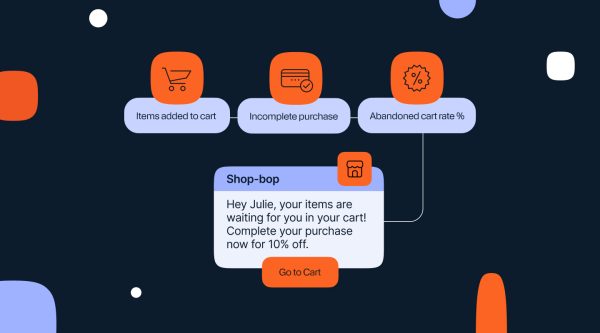
How to calculate cart abandonment rate .
Cart abandonment is one of the clearest signs that checkout friction is slowing sales. Once you calculate it, you can see whether the biggest issue is pricing, checkout friction, or weak follow-up.
Cart abandonment: How to reduce lost sales.
Losing customers at checkout? Discover the most common reasons behind cart abandonment and practical ways to turn abandoned carts into completed purchases.

Shifts in retail: Why generational targeting isn't working.
We surveyed 2,000 retail consumers in the UK to find out how they prefer to communicate with brands. Dive into the findings that challenge traditional retail targeting practices.

eCommerce cart abandonment solutions and best practices.
Explore powerful alternatives to boosting abandoned cart recovery rates to improve conversion rates and bottom lines.