




Collections email templates that actually get opened (and paid)
From pre-due reminders to final demands, collections email templates that keep communication professional and payments moving.

Most collection emails get ignored. Not because people do not owe money but because the email feels like a threat, not a conversation.
According to Reuters, global household debt sits at around 64 trillion USD, roughly 57% of global GDP. Household debt includes mortgages, credit cards, car loans, student loans, and personal loans. In Brazil alone, around 81 million consumers are currently in default. Every one of them is receiving messages from collectors. The ones that recover debt are not the loudest, they are the most trusted.
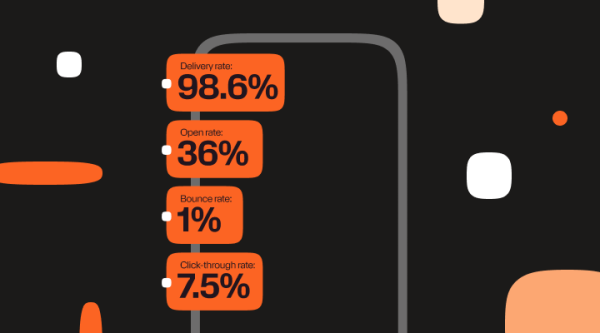
Email is still one of the most powerful recovery channels available. Infobip customers in the collections sector achieve a 99.4% delivery rate, over 20% open rate, and more than 2% click-through rate. But those numbers only happen when the email program is built right, starting with the templates.
This guide gives you ready-to-use collections email templates for every stage of the debt lifecycle, plus the strategic framework to deploy them effectively.
8 collections email templates ready to use
Use these as starting points. Adapt names, amounts, brand voice, and legal language to fit your organization.
1. Welcome email: Setting the tone from day one
Use this before any collection message goes out. Trust starts here.
Subject: A quick note from [Company Name]
Hi [First Name],
Welcome. We are [Company Name], and we will be managing your account on behalf of [Creditor Name].
We are here to help you find a path forward, not to add pressure. Over the next few weeks, we will send you personalized options based on your situation.
A few things to know:
- We will only contact you [frequency, e.g. twice a week]
- Every message comes from this address. Never click links from unknown senders.
- You can update your preferences or contact us anytime at [link/email]
We look forward to working with you.
[Company Name] Team
2. First notice: Early stage (collaborative tone)
Send within the first days of delinquency as a payment reminder. Assume good faith. Make it easy to act.
Subject: Your account, a quick heads up, [First Name]
Hi [First Name],
We noticed an amount due of [amount] on your account (invoice number: [##]) with [Creditor Name], due on [payment date].
These things happen. If you would like to review your payment options or set up a payment plan, we have made it simple:
[CTA: See my options]
Questions? Reply to this email or call us at [phone number].
[Company Name] Team
3. Second notice: Follow-up (advisory tone)
Send 7 to 14 days after the first payment reminder if no action was taken. Introduce mild urgency without pressure.
Subject: Still here if you need us, [First Name]
Hi [First Name],
We reached out a couple of weeks ago about your balance of [amount] with [Creditor Name].
We understand life gets busy. Your personalized repayment offer is still available, and we can work around your schedule.
Payment options available to you:
- Pay in full: [invoice amount]
- Payment plan: from [minimum instalment]/month
- Negotiate a settlement: [link]
[CTA: Review my options]
This offer is valid until [date].
[Company Name] Team
4. Payment plan offer: Reducing friction
Use when the full balance is a barrier. A partial commitment is better than no commitment.
Subject: A payment plan built around you, [First Name]
Hi [First Name],
We know [amount] is not easy to pay all at once. That is why we have created a few flexible payment options:
- [X] monthly instalments of [amount/month
- [Y] monthly instalments of [amount/month]
- Custom plan: tell us what works for you
You can pay using your preferred payment method, including credit card, bank transfer (or other available options). Agreeing to a plan today means no further escalation and a clear path to resolution.
[CTA: Choose my plan]
Any questions, we are here.
[Company Name] Team
5. Settlement offer: Opportunity-driven
Subject: [First Name], a limited offer to resolve your balance
Hi [First Name],
We have an offer for you, available until [expiry date].
Settle your outstanding invoices totalling [original amount] for just [reduced amount].
This is a one-time offer to help you move forward. Once the deadline passes, standard recovery procedures will resume.
[CTA: Accept offer]
No judgement. Just a way forward.
[Company Name] Team
Use at mid-to-late stage. Frame it as an opportunity, not a concession.
6. Third notice: Past due (firm, professional)
By this stage, the tone needs to shift. Be clear and direct, but stay professional.
Subject: Important: Your account requires attention, [First Name]
Hi [First Name],
Your balance of [amount] with [Creditor Name] is now [X] days past due.
To avoid further action, please resolve your account by [date].
Your payment options:
- Pay in full: [link]
- Set up a payment plan: [link]
- Contact us to discuss your situation: [phone/email]
[CTA: Resolve my account]
If you have already made a payment, please disregard this message.
[Company Name] Team
7. Final demand: Last chance before escalation
Use only after multiple unanswered attempts. Keep it factual and clear.
Subject: Final notice: Action required, [First Name]
Hi [First Name],
This is a final notice regarding your outstanding balance of [amount] with [Creditor Name].
Despite previous communications, this balance remains unresolved. If you have not resolved this matter by [final date], your account will be referred for [escalation process, e.g. credit bureau reporting / legal action].
To resolve this today:
[CTA: Resolve now]
If your circumstances have changed and you need support, please contact us immediately at [phone/email]. We are still willing to work with you.
[Company Name] Team
8. Re-engagement: Winning back silent contacts
For contacts who have not opened or clicked in 60+ days. Change the approach before removing from the active list.
Subject: We have been quiet. Are you still there, [First Name]?
Hi [First Name],
We have not heard from you in a while. We understand these conversations can be difficult.
We are not here to pressure you. We would like to know if there is a way we can help, whether that is a different payment plan, a different channel, or just a conversation.
If email is not the best way to reach you, let us know how you prefer to communicate:
- WhatsApp: [link]
- Phone: [number]
- SMS: [link]
[CTA: Tell us how to reach you]
[Company Name] Team
How to sequence your collections emails
Templates are only as good as the sequence they sit in. Here is a proven step-by-step flow for a standard collection journey:
| Day | Tone | Goal | |
|---|---|---|---|
| Day 1 | Welcome email | Warm, credible | Build trust. Set expectations. |
| Day 3 | First notice | Collaborative | Prompt first action with low friction. |
| Day 10 | Second notice + payment plan | Advisory | Introduce flexible options. |
| Day 20 | Settlement offer | Opportunity-driven | Motivate with a time-limited incentive. |
| Day 30 | Third notice | Firm, professional | Signal escalation risk clearly. |
| Day 45 | Final demand | Direct, factual | Last chance before escalation. |
| Day 60+ | Re-engagement | Empathetic | Recover silent contacts before removal. |
Key rule: if a contact opens, clicks, or converts at any stage, reset the sequence to match their behavior. Someone who viewed a payment plan on Day 10 should not receive a third notice on Day 30.
Tone guidance by debt stage
The most common mistake in collections emails is using the same tone throughout the whole journey. Tone should evolve with the relationship.
| Stage | Recommended tone | Language examples |
|---|---|---|
| Early stage (0–15 days) | Collaborative | “Review your options” / “We are here to help” / “A quick heads up” |
| Mid stage (15–45 days) | Advisory | “Your offer is still available” / “Avoid further action” / “Let us find a way forward” |
| Late stage (45–60 days) | Opportunity-driven | “Limited offer” / “Resolve today” / “Before [date]” |
| Final stage (60+ days) | Direct, factual | “Final notice” / “Action required” / “Referred for escalation” |
| Re-engagement | Empathetic | “We have not heard from you” / “We understand” / “Tell us how to reach you” |
Subject lines that work
Use these patterns, and avoid anything that sounds automated or aggressive:
- “Review your repayment options” (not “Pay off your debt now”)
- “A limited offer to resolve your balance, [First Name]”
- “Still here if you need us”
- “Important: your account requires attention”
- “[First Name], your personalized offer expires [date]”
- “Resolve your balance” (not “Final warning”)
In the body, lead with empathy before asking for action. Acknowledge the situation before presenting a solution.
The strategy behind email templates
1. Build trust before you ask for anything
The welcome email is not optional. It is the foundation. Without it, every subsequent message lands in a context of suspicion.
A strong welcome email:
Lead acquisition in collections costs between 3 USD and 15 USD per contact. The welcome journey is how you protect that investment.
2. Go beyond collection messages
High-performing programs not only send payment requests. If a contact has opted in, use that relationship to build trust, which will improve engagement and recovery rates over time.
Value-add content that works in collections:
- Financial education: tips on budgeting, managing cash flow and improving credit scores
- Process transparency: explain what happens at each stage of negotiation
- Credit score awareness: how resolution affects their financial future
- Fraud prevention guidance: reinforces your legitimacy as a sender
3. Segment and personalize
Sending the same message to your entire database is how you end up in spam. Mature programs segment across three dimensions:
Debt lifecycle stage:
- Early delinquency
- Long-term delinquency
- Recurring delinquency
Behavioral signals:
- Opened but did not click
- Clicked but did not convert
- Started a simulation but dropped off
Relationship history:
- First-time negotiation
- Previously negotiated
- Repeat defaulter
At the individual level: use first name in subject lines and bodies, reference previous interactions, and offer channel alternatives (WhatsApp, SMS) for contacts who do not engage with email.
4. Time it right
When you send matters almost as much as what you send.
Higher-performing send windows:
- First week of the month (post-salary cycle)
- Sunday afternoons (week planning)
Lower-performing send windows:
- Monday mornings
- Late evenings
- End of the month (high financial stress)
Deliverability: The silent performance driver
Great templates mean nothing if they land in spam. Deliverability is not a technical nicety; it determines whether your email program is viable at all.
Without engagement, mailbox providers classify messages as irrelevant, divert them to spam, and progressively erode ROI. In collections, this dynamic is intensified by emotional factors: anxiety, shame, distrust, and fear of fraud all reduce open rates.
- Warm up IPs and domains gradually when launching or migrating ESPs
- Monitor delivery rate, open rate, click rate, and sender reputation continuously
- Prioritize highly engaged users in the early stages of any warmup
- Remove bounces and opt-outs immediately
- Validate new contacts before sending using an Email Validation tool
- Ask recipients to whitelist your sender domain
- Always include a visible, easy unsubscribe option
- If someone tries to unsubscribe, offer an opt-down first: reduced frequency, different channel, or a different send day
Infobip Email Validation cleans your database before a single message is sent, catching invalid, risky, or duplicate addresses before they can damage your sender reputation.
Bottom line
Email still works in collections. But only when it is built on trust, personalization, and the right message at the right moment.
The templates above are your starting point. The sequence and strategy behind them is what separates a program that recovers debt from one that gets marked as spam.
If you want to see how Infobip email infrastructure, combined with deliverability tools and multi-channel orchestration, performs for collections organizations, talk to us.
Collections email template FAQs
A typical sequence includes 4 to 6 emails across 30 to 60 days before escalation. Start with a welcome email, then progress through collaborative, advisory, and firm tones. If a contact engages at any stage, reset the sequence to match their new status rather than continuing the countdown.
Infobip customers in the collections sector see over 20% open rates and more than 2% click-through rates, with a 99.4% delivery rate. These numbers require proper domain authentication, list hygiene, and a well-structured email sequence — not just good subject lines.
No. Tone should evolve across the debt lifecycle. Start collaborative and empathetic in early stages, shift to advisory as time passes, and only adopt a firm tone in final notices. Using the same aggressive tone throughout reduces engagement and increases spam complaints.
Focus on deliverability fundamentals: authenticate your domain (SPF, DKIM, DMARC), warm up new IPs gradually, validate email addresses before sending, remove bounces immediately, and always include an easy unsubscribe option. Tools like Infobip Email Validation catch invalid addresses before they damage your sender reputation.