


Sagent Group: Building customer engagement strategies that start with outcomes
See how Sagent Group helps trusted advisors and enterprises design customer engagement strategies by putting outcomes first and bringing Infobip solutions to market through a white-glove, customer-centric approach.

Sagent Group is a technology services distributor built around a simple idea: customer engagement works best when it starts with the needs of the end-user, not the product.
Based in Delray Beach, Florida, Sagent Group operates as a Technology Services Distributor (TSD), working closely with trusted advisors across the US. Rather than using customer engagement platforms internally, the company focuses on helping advisors and enterprises choose and implement the right solutions for the brands they serve and the end-users those brands engage.
What differentiates Sagent Group is how closely the team stays involved throughout the engagement lifecycle. From enterprise workshops to strategic planning sessions, Sagent Group takes a hands-on, white-glove approach that prioritizes long-term relationships over transactional delivery.
For Brian Miller, Head of Sagent Group, that involvement is intentional.
“Our role is to reduce friction for the advisor and the business,” Brian said. “We help them choose the right solution stack for what they are actually trying to achieve.”
Quality over quantity in the channel
Many distributors compete on volume. Sagent Group deliberately does not.
Instead of offering hundreds of suppliers, Sagent Group curates a focused ecosystem of strategic partners and works hands-on with advisors to understand brand needs by starting with the end-user experience.
This approach changes how advisors engage with brands. They are encouraged to think in terms of outcomes.
Our partners go into conversations asking what outcome the customer needs, not what feature they want to sell. That puts the trusted advisor in a position to be successful for their customer.
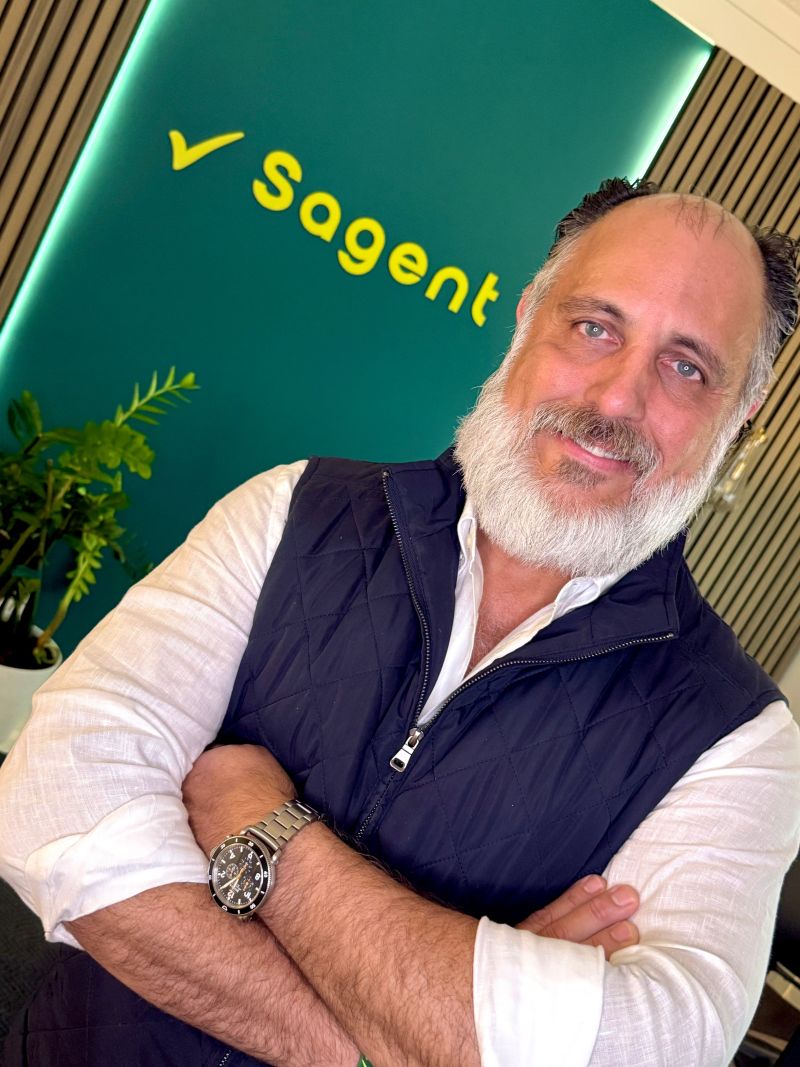
Bryan Miller
President at Sagent Group
Meeting rising customer expectations
End-user expectations around engagement continue to rise. Immediacy, personalization, and consistency across channels are no longer optional.
End-users expect immediacy and personalization, and that is difficult to deliver consistently.
Bryan Miller
President at Sagent Group
Fragmented tools and disconnected channels often make the problem worse. Many brands rely on separate systems for messaging, voice, customer data, and analytics, with limited data sharing between them. As a result, end-user context is lost between interactions, processes slow down, and technical teams are required to manually support campaigns and ongoing conversations.
This fragmentation becomes more visible as end-user expectations change. Many brands struggle to mature their customer engagement strategies fast enough, especially as immediacy, personalization, and consistency across channels become baseline expectations. Adding isolated capabilities, such as a chatbot on top of a legacy system, rarely addresses the underlying problem.
True customer experience maturity requires unified data, integrated channels, and orchestration across the entire engagement journey. It also requires detailed CX consulting to align technology choices with how brands actually want to engage their end-users.
For Sagent Group, solving this challenge means helping brands identify platforms that support unified orchestration, shared customer context, and scalable engagement across voice, messaging, and digital channels.
Why Infobip fits the customer-first model
Sagent Group partnered with Infobip in 2024 because the platform aligns with this customer-first philosophy.
“Infobip delivers a streamlined way to engage customers across channels,” Brian said. “It makes it easier for our partners to deliver what customers actually want.”
As a TSD partner, Sagent Group sells the full Infobip portfolio through its advisor ecosystem, positioning Infobip as a core customer experience platform rather than a single-channel solution. The portfolio includes omnichannel messaging, voice, contact center capabilities, and conversational AI, all built on a shared data and orchestration layer that supports consistent engagement across the end-user journey.
The strongest adoption has come from Infobip’s CX and omnichannel capabilities, including conversational AI, messaging, and voice. Infobip’s goal is to help brands move beyond isolated interactions and design engagement that feels connected, consistent, and human across every channel.
Through the partnership, Sagent Group advisors have helped brands use Infobip to unify communication across regions and channels, while maintaining shared context at every touchpoint. This allows brands to shift from transactional exchanges to ongoing relationships that end-users recognize and trust.
“It is not just about messaging. It is about creating a connection that turns into a relationship.”
Bryan Miller
President at Sagent Group
Strategic customer outcomes at scale
Sagent Group’s approach has enabled some of Infobip’s largest and most strategic enterprise engagements.
In many cases, large enterprises began with voice-only use cases, such as SIP connectivity and toll-free traffic. Over time, those deployments evolved into fully contextual contact center and omnichannel messaging solutions, supporting consistent end-user experiences across multiple brands and channels.
“Those opportunities happened because of how strategic the advisors were with the business,” Brian said. “They were not transactional. They were focused on solving the right problems first.”
Each phase of the rollout was designed to prove value, build trust, and incrementally mature customer experience capabilities, ensuring integrations, data flows, and engagement models were in place before scaling conversational and omnichannel experiences.
Preparing customers for what comes next
Sagent Group is also helping brands prepare for the next phase of customer engagement, including agentic AI use cases, where Infobip’s solutions are being used to support more advanced, AI-driven engagement models.
Many brands deploy chatbots as part of their engagement strategies. According to CX maturity research, a large majority of brands have adopted chatbots, but most interactions still require human agent involvement because traditional chatbots follow predefined rules and limited scripts.
Agentic AI approaches differ from rule-based chatbots. Rather than relying solely on static flows, agentic methods are designed to work with broader context, coordinate actions across channels and systems, and support more complex interaction patterns. This allows brands to move beyond simple automation toward experiences where AI supports both end-users and human agents more effectively.
Sagent Group works with advisors and brands that are thinking ahead. Instead of layering isolated features onto legacy systems as a short-term fix, the focus is on designing engagement models that support unified data, integration, and scalable conversational experiences. This strategic planning helps brands grow their customer experience capabilities over time without frequent rework.
They are planning ahead. They are thinking about what engagement looks like in the future, not just today.
Bryan Miller
President at Sagent Group
This future-oriented approach aligns with Sagent Group’s broader strategy of helping brands adopt platforms and engagement models that can evolve as end-user expectations, AI capabilities, and overall customer experience maturity continue to change.
Partnership defined by trust
For Brian, partnership is not about incentives or volume.
“Partnerships mean transparency, trust, and shared outcomes,” he said.
That mindset defines Sagent Group’s relationship with Infobip. By combining Sagent Group’s strategic channel expertise with Infobip’s customer engagement platform, both teams help customers design journeys that scale without losing the human element.
Because in the end, successful engagement is not about how many messages are sent, but about how well end-users are understood.
Looking ahead
For Sagent Group, the future of customer engagement is about being ready before change arrives.
Customers are already thinking beyond individual channels and one off interactions, planning for engagement models that evolve as expectations, technologies, and behaviors shift. That means designing strategies that can scale, adapt, and stay consistent over time.
This forward looking mindset aligns with a unified orchestration platform, which provides a foundation for agent driven engagement without forcing customers to rethink their entire architecture.
By helping customers plan ahead instead of reacting later, Sagent Group continues to do what it does best: start with the customer, focus on outcomes, and build engagement strategies that last.