


Benefits of a customer data platform, and why conversational CDPs deliver more
Learn the top benefits of a customer data platform and why conversational CDPs deliver more through native messaging activation and AI agent integration.

Customer data platforms are supposed to give you a complete picture of every customer. Most get you about 80% there. They capture clicks, page views, transactions, and app events, but they miss what customers say, whether that’s a WhatsApp message asking about pricing, a chatbot session comparing two products, or a support call explaining exactly why someone’s about to leave. That conversational data is the richest signal of intent you’ll find, and it’s where the real CDP benefits start compounding.
Here’s what none of them address: what happens after the data is unified? Traditional CDPs collect and organize brilliantly, then hand everything off to separate tools for activation. Your segments go to an email platform. Your audiences go to an ad network. Your customer profiles sit in a dashboard that your chatbot can’t read, and your contact center agents never see.
Infobip’s Conversational CDP within AgentOS picks up where other CDPs stop. It doesn’t just unify customer data; it puts unified profiles to work inside live conversations across 15+ messaging channels. And consider this, it does so with AI agents that act on real-time context and contact center screens that show the full picture before an agent says hello.
For a full breakdown of what a CDP is and how it works, see our guide: What is a Customer Data Platform and why you need one. This post breaks down the customer data platform benefits that actually matter for enterprise buyers, starting with the foundations and building to the advantages that only a conversational CDP delivers.
Core benefits of a customer data platform
These are the benefits the market expects from any serious CDP investment. They form the foundation for every advantage a customer data platform delivers and getting them right is what separates a real CDP from a glorified data warehouse.
1. Unified customer profiles power every interaction
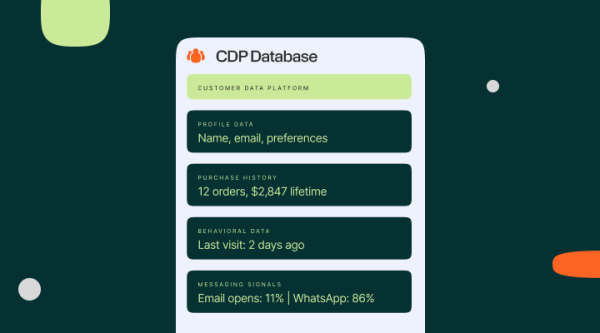
Every other CDP benefit depends on this one. A customer data platform pulls data from your CRM, eCommerce platform, mobile app, website, and service channels into a single unified profile. One record per customer, regardless of how many systems they’ve touched. Without it, personalization is guesswork and segmentation is incomplete.
The difference with Infobip’s Conversational CDP is what goes into that profile. Most CDPs unify web analytics, CRM fields, and transactional data. That’s a solid start, but it leaves out an entire category of customer intelligence: what customers actually say. The Conversational CDP adds chatbot transcripts, WhatsApp message history, and contact center interaction logs to the same unified profile. A customer who asks about a product through chat is expressing intent just as clearly as one who clicks a product page.
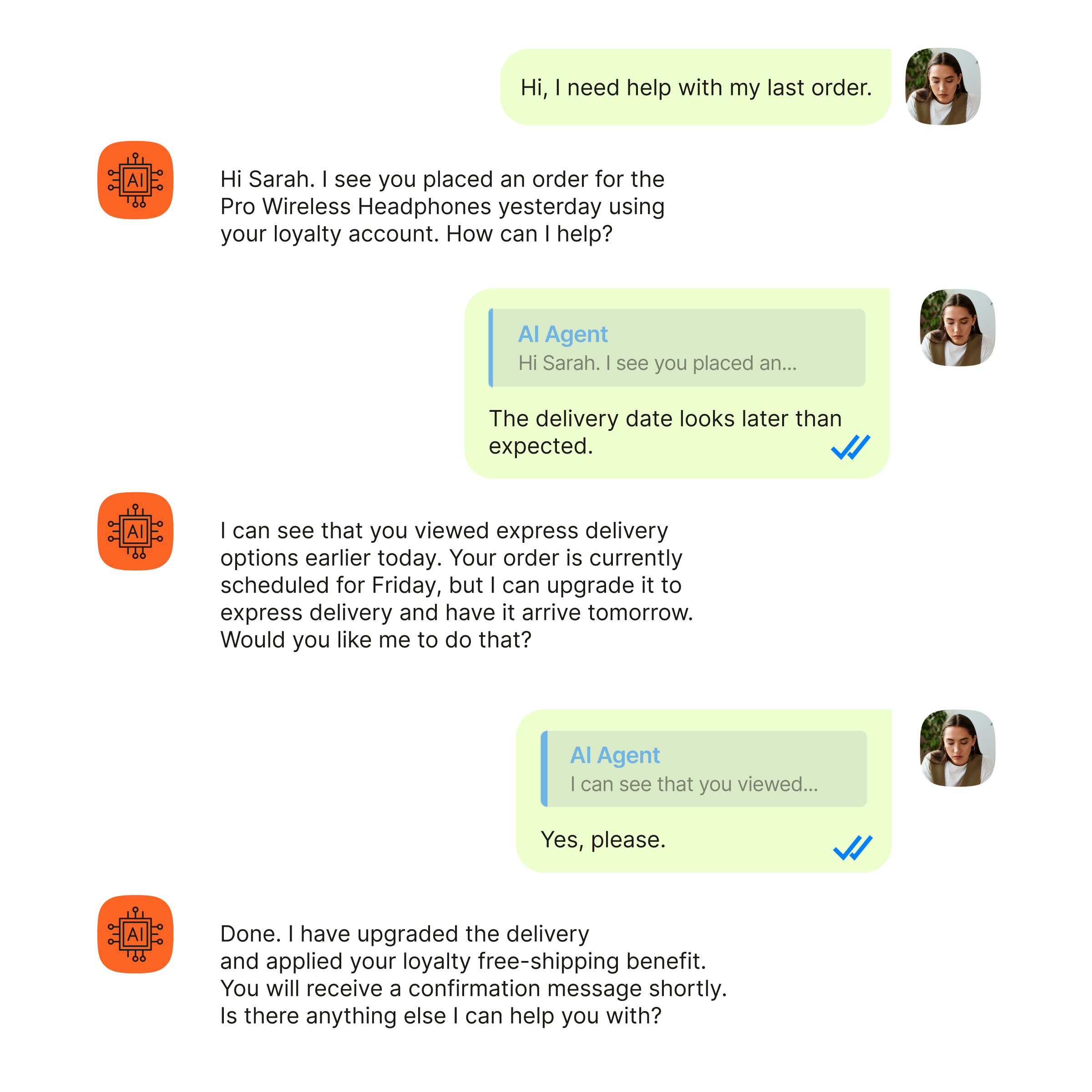
Identity resolution across devices and channels ties it all together. Whether a customer interacts through your app, your website, or a WhatsApp conversation, they’re recognized as one person with one profile.
2. Real-time personalization across every touchpoint
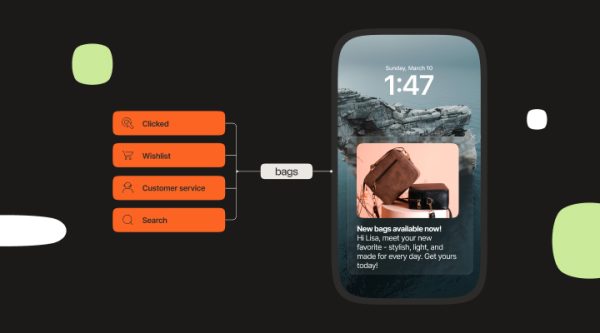
A unified profile only matters if you can act on it before the moment passes. CDPs enable real-time segmentation and dynamic personalization, not batch segments refreshed overnight, but profiles that update as behavior changes and trigger relevant content within seconds.
The business case is well documented. McKinsey research shows that companies excelling at personalization generate 40% more revenue than those that don’t. This finding is even more relevant now than ever since the gap between knowing your customer and acting on that knowledge in real time is where that revenue lives. Within AgentOS, segments built in the Conversational CDP directly power automated journeys, AI chatbot interactions, and agent screens across 15+ channels. There’s no manual audience export and no integration overhead. When a customer’s behavior changes, activation follows instantly across every connected channel.
3. Elimination of data silos across teams
Siloed data is the most cited pain point in enterprise CX, and for good reason. When marketing, sales, and service each see a different version of the same customer, you get conflicting messages, redundant outreach, and frustrated customers who feel like your company doesn’t know them.
A CDP creates a shared data layer everyone accesses. But most organizations have silos that go well beyond marketing and sales. Chatbot operations run on one platform while the contact center uses another and AI agent workflows sit in a third. Each one generates valuable customer data that the others can’t see.
Because all of these functions run natively within AgentOS, Infobip’s Conversational CDP unifies data across the full stack. Marketing, CX, service, and AI teams work from the same profiles. When marketing launches a campaign, the contact center knows about it. When a chatbot captures purchase intent, it’s reflected everywhere.
4. Improved privacy compliance and data governance
For enterprise buyers in regulated industries, compliance isn’t a feature. It’s a prerequisite. A CDP centralizes consent management, data subject access requests, and preference tracking in one platform, ensuring every activation channel respects consent status automatically.
Infobip backs this with SOC 2 Type II and ISO 27001 certifications, GDPR and CCPA compliance, and data residency options across 43 data centers. When a customer updates consent preferences through any channel, that update propagates across every touchpoint instantly. There’s no lag between a customer opting out and the system catching up.
For banking, insurance, healthcare, and any sector with regulatory scrutiny, this infrastructure determines whether a CDP is even viable.
5. Measurable ROI and business impact
The board-level question behind every CDP evaluation: does it pay for itself?
The macro data says yes. A Forrester Total Economic Impact study found CDP investments deliver 158% ROI with a 7-month payback period. The CDP market reflects that confidence, projected to grow from $9.7 billion in 2025 to over $37 billion by 2030 at a 30.7% CAGR. But aggregate industry stats only take you so far. Specific results from companies using Infobip’s Conversational CDP within AgentOS shows what this looks like in practice:
- Bolt: 40% conversion rate increase through personalized WhatsApp sign-up journeys.
- Farm Superstores: 60% operational cost reduction with CDP-powered WhatsApp automation.
- LAQO Insurance: 30% AI resolution rate, with 90% of queries resolved within 3 to 5 interactions.
- Mukuru: deployed a WhatsApp chatbot across 10 languages for financial services customers, proving that CDP ROI scales across markets and languages, not just use cases.
These are production results, not pilot programs. They answer the “why use a CDP” question with numbers, not theory.
With the foundational benefits covered, let’s look at what changes when your CDP doesn’t just organize data, but natively connects it to the channels where customers actually talk to you.
Benefits only a conversational CDP delivers
Traditional CDPs are built to collect, unify, and export. They’re very good at feeding data into email platforms, ad networks, and analytics dashboards, but they weren’t designed for conversations. They can’t power a chatbot with real-time profile data; they can’t give a contact center agent full context before the customer speaks, and they can’t trigger a WhatsApp message the instant behavior changes.
A Conversational CDP handles all three, and here’s where the difference shows up.
1. AI agents and chatbots powered by complete customer context
Most chatbots operate in the dark. They don’t know who they’re talking to until the customer identifies themselves, and even then, they’re working with a thin slice of data. The result is generic interactions that feel robotic regardless of how sophisticated the NLP is.
When AI agents and chatbots connect directly to a CDP, everything changes. AgentOS AI-powered CDP agents access Conversational CDP profiles in real time. They know product holdings, recent interactions, language preferences, and intent signals before the first message. The bot doesn’t ask “How can I help you?” when it already knows you have an open support ticket from yesterday.
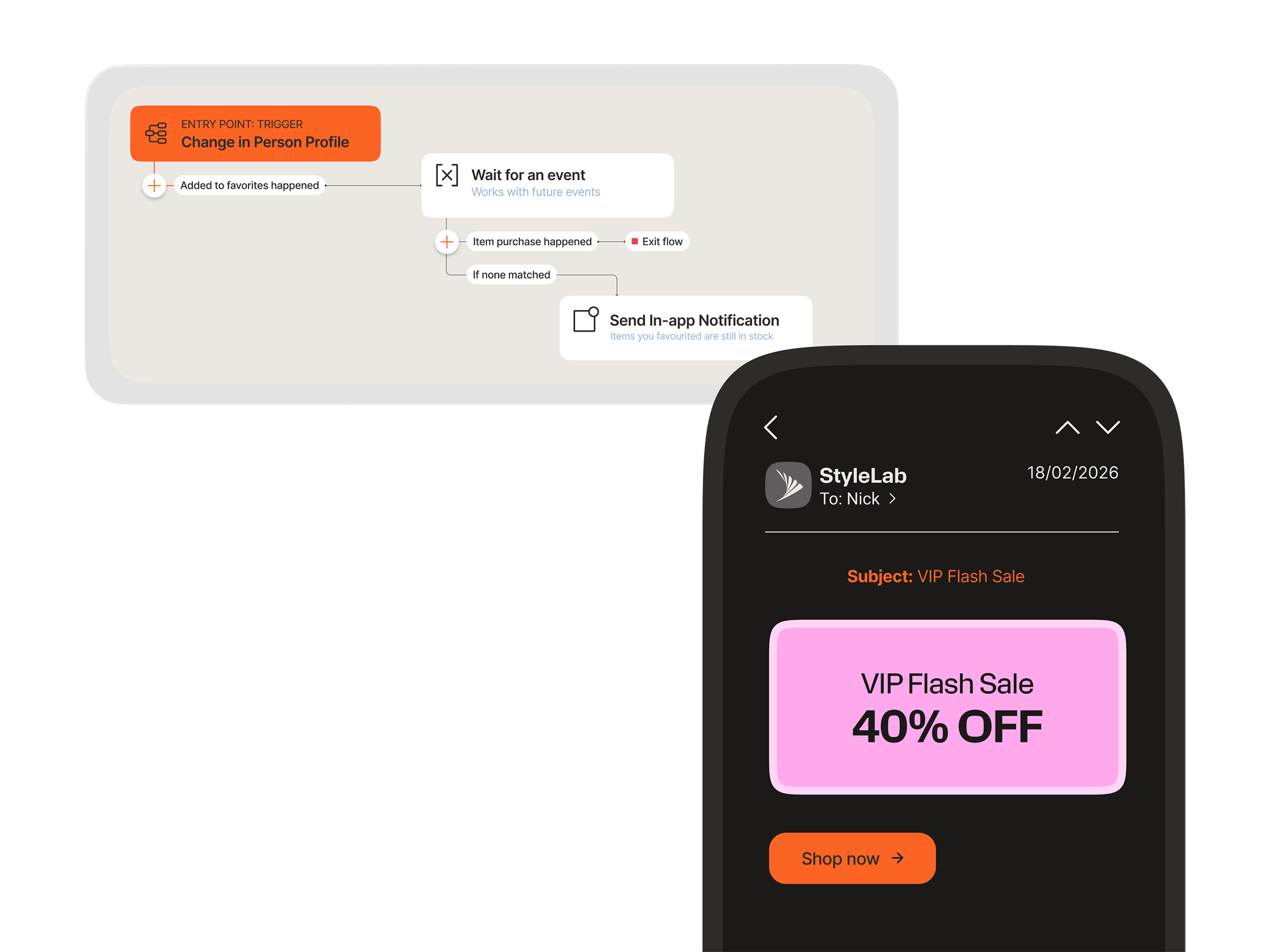
No traditional CDP vendor offers this connection natively because their platforms weren’t built to talk to customers. They were built to store data and push it downstream. A Conversational CDP treats AI-powered conversations as a primary activation surface, not an afterthought.
2. Real-time activation across 15+ messaging channels
Most CDPs activate data to three destinations: email, web, and ads. That covers a fraction of where customers actually engage today.
Infobip activates unified profiles natively across WhatsApp, SMS, RCS, Viber, Telegram, LINE, Live Chat, and more, making it a truly omnichannel CDP. With carrier-grade delivery through Infobip’s own network, not third-party APIs that introduce latency and reliability risk.
A customer action on your website can trigger a personalized WhatsApp message within seconds, not “after the next batch run.” Behind every message: 850+ carrier connections, 43 data centers, 190+ countries, and a 99.95% uptime SLA. When your CDP triggers a communication, it arrives.
The reliability gap between SaaS-only CDPs relying on external delivery providers and Infobip’s owned network infrastructure is where enterprise trust is won or lost.
3. Conversational data as a first-class CDP input
Here’s a blind spot most CDP buyers don’t realize they have. Customers share intent signals across every stage of the journey, asking about pricing in a chat, comparing options with a bot, explaining issues to support. But without a conversational CDP, those signals stay locked in whichever team handled them. Marketing never sees what support heard. Sales doesn’t know what the chatbot already learned. Conversations are your richest source of customer intent, and CDPs can only utilize them when part of a larger journey.
Chat transcripts, chatbot sessions, WhatsApp exchanges, and contact center calls generate sentiment signals, intent patterns, and behavioral context that no amount of click tracking can replicate. When a customer tells your chatbot they’re frustrated with delivery delays, that’s a churn signal. When they ask about the same product category three times in a week, that’s purchase intent.
Infobip’s Conversational CDP ingests all of this as first-class profile data. Every conversation makes the profile smarter, which makes the next conversation more relevant. It’s a compounding advantage that traditional CDPs, built before messaging became a primary engagement channel, simply don’t offer.
4. Contact center agents with full CDP context
Everyone knows the pain: you explain your issue to a chatbot, get transferred to an agent, and start over from scratch. It’s the fastest way to erode customer trust, and it happens because the contact center and the CDP live in different worlds.
In AgentOS, they don’t. When a customer escalates from chatbot to human agent, the Cloud Contact Center agent sees the full CDP profile: interaction history, product holdings, sentiment from prior conversations, and AI-recommended next best action. The chatbot transcript carries over and the customer never repeats themselves.
The impact is direct: lower handle time, higher first contact resolution, and better CSAT scores. This CDP-to-contact-center benefit doesn’t appear on competing benefits pages because most CDP vendors don’t have a contact center to connect to.
5. Send-time optimization and channel recommendation
Even a perfectly personalized message fails if it arrives at the wrong time on the wrong channel. Most CDPs leave this to the activation tool. Build the segment, export the audience, hope the downstream platform figures out timing.
AgentOS intelligence uses Conversational CDP data for send-time optimization, channel recommendation, and destination scoring. The platform determines not just who to reach, but when and where, based on each customer’s historical engagement patterns. A customer who reads WhatsApp at 8 AM but ignores email until afternoon gets the WhatsApp message first. Another customer who engages more with RCS gets the same content delivered through their preferred channel. The CDP stops being passive storage and starts actively driving growth by turning customer intelligence into delivery precision.
All of these benefits sound compelling in theory, but how do you know if your business actually needs a CDP right now? Let’s make that decision easier.
How to know if you need a CDP
Not every business needs a CDP today. But if you recognize three or more of these signs, the cost of waiting is growing:
- Customer data lives in disconnected systems. Your CRM, marketing platform, eCommerce tool, and contact center each hold a partial view. No single team sees the full picture.
- Marketing and service teams operate with different customer views. Campaigns go out without awareness of recent service interactions. Support agents don’t know what offers a customer received last week.
- Personalization doesn’t extend beyond email and web. You can’t activate customer data in messaging channels, chatbots, or AI agents without manual exports and custom integrations.
- You still depend on third-party cookie data. With cookies deprecated, a first-party data strategy powered by a CDP isn’t optional anymore.
- AI models and chatbots lack customer context. Your bots answer generically because they can’t access unified profiles. Your AI agents make recommendations without behavioral history.
- Contact center agents start every interaction from scratch. Customers repeat themselves. Handle times are high. First contact resolution is low.
If these sound familiar, you don’t just need a CDP. You need one that connects data to action without an integration project for every channel. The CDP advantages compound most of these problems you’re facing simultaneously.
Infobip’s Conversational CDP is built for businesses that engage customers across messaging channels and want one platform connecting data, AI, messaging, and service. It’s not another tool to integrate. It’s the layer that makes every other tool smarter.
Speaking of which, different teams experience CDP benefits in different ways.
CDP benefits by team
Marketing teams
Unified profiles mean dynamic segmentation, precise targeting, AI-powered campaign optimization, and attribution across every channel, messaging included. No more reconciling reports from separate email, CRM, and ad platforms. Journey orchestration in AgentOS lets marketers build cross-channel campaigns that pull directly from Conversational CDP segments and activate across 15+ channels from one workflow.
Customer service and contact center teams
Full CDP profiles surface on agent screens: interaction history, product context, sentiment, and recommended actions. Chatbot containment improves because bots respond with profile context, not scripts. When escalation happens, it’s seamless. LAQO Insurance saw this firsthand, reaching a 30% AI resolution rate with 90% of queries resolved within 3 to 5 interactions.
Data and analytics teams
A single data layer eliminates manual reconciliation across platforms. Campaign performance flows back into CDP profiles for closed-loop optimization. Predictive models run on clean, unified data instead of patchy single-source inputs. Insights and analytics within AgentOS provides the reporting layer that turns CDP data into decisions.
These team-level benefits are only as reliable as the infrastructure behind them. For enterprise buyers, that infrastructure matters as much as the features.
Enterprise infrastructure behind every benefit
Every enterprise CDP benefit in this post is backed by Infobip’s carrier-grade infrastructure. This isn’t SaaS running on shared cloud instances. It’s a global communications network built for enterprise-scale reliability.
The specifics: 850+ carrier connections, 43 data centers, 190+ countries, 99.95% uptime SLA, and 130+ languages with automatic detection. Every CDP-triggered communication travels through Infobip’s own network, not routed through third-party APIs that add latency, cost, and failure points.
For enterprise buyers, this means CDP personalization works at global scale, in every language, with the compliance infrastructure that regulated industries require. SOC 2 Type II, ISO 27001, GDPR, and CCPA compliance are standard. Infobip holds Gartner CPaaS Leader recognition, validating the communications backbone that powers every Conversational CDP activation.
When your CDP triggers a message, it doesn’t just leave the platform. It arrives on time, on the right channel and in the right language, with consent status verified.
Frequently asked questions
The main CDP benefits include unified customer profiles from all data sources, real-time personalization across channels, elimination of data silos across teams, improved privacy compliance and consent management, AI-powered predictive analytics, and measurable ROI through conversion, retention, and cost reduction. Infobip’s Conversational CDP within AgentOS extends these by natively activating unified profiles in live conversations across 15+ messaging channels, powering chatbot personalization, AI agent decision-making, and contact center context that traditional CDPs can’t deliver.
You likely need a CDP if your customer data is scattered across disconnected systems, your marketing and service teams lack a unified view of customer behavior, you struggle to personalize at scale, or you’re building a first-party data strategy as third-party cookies deprecate. Infobip’s Conversational CDP is especially valuable if you engage customers across messaging channels. It connects unified profiles to WhatsApp, SMS, RCS, chatbots, AI agents, and your contact center in one platform, with no separate integration required.
A CRM manages known sales relationships and is designed for sales teams tracking pipeline and contacts. A CDP unifies all customer data, behavioral, transactional, conversational, and anonymous, from every source into persistent profiles for activation across marketing, AI, and service workflows in real time. Infobip’s Conversational CDP does much more by serving as the data foundation for AI agents, chatbots, and 15+ channel omnichannel engagement.
A CDP improves personalization by creating unified profiles that combine data from every touchpoint: web, mobile, email, messaging, in-store, and contact center. These profiles enable real-time segmentation, dynamic content, and next-best-action recommendations. Infobip’s Conversational CDP activates this personalization across 15+ messaging channels with send-time optimization and channel recommendation, ensuring the right message reaches the right customer on the right channel at the right time.
A CDP centralizes consent management, data subject access requests, and preference tracking in one platform. Infobip’s Conversational CDP operates with SOC 2 Type II, ISO 27001, GDPR, and CCPA compliance, with data residency options across 43 data centers globally. Every customer profile respects consent status across all activation channels automatically.
A data management platform collects anonymous, third-party data for advertising audience targeting and is designed for short-term campaign optimization. A CDP collects first-party data tied to known customers, creating persistent profiles for long-term relationship building. With third-party cookies deprecated, CDPs built on first-party data are essential for sustainable personalization. Infobip’s Conversational CDP adds a further layer by capturing and activating conversational data that neither DMPs nor traditional CDPs handle.
A conversational CDP is a customer data platform that natively integrates with conversational channels like chatbots, AI agents, messaging platforms, and contact centers. It captures conversation data as profile signals and activates unified profiles in real-time conversations. Infobip’s Conversational CDP within AgentOS is the only platform combining unified customer profiles with native omnichannel messaging delivery, AI-powered chatbots, and cloud contact center functionality, without requiring separate integrations.
Many organizations see improvements in personalization, campaign performance, and data accessibility within the first few months. Basic implementations with pre-built integrations can deliver value within weeks. Complex enterprise deployments typically reach full operationalization in 3 to 6 months. Infobip’s Conversational CDP benefits from native integration within AgentOS, so AI chatbots, contact center, and messaging channels are already connected, reducing implementation time compared to standalone CDPs that require separate integrations for each channel.
A CDP doesn’t replace a CRM. They serve complementary purposes: a CRM manages sales relationships and pipeline; a CDP unifies all customer data for activation across marketing, AI, and service. Infobip’s Conversational CDP integrates with existing CRMs like Salesforce, Oracle, SAP, and Microsoft, enhancing their value by adding unified behavioral data, conversational intelligence, and omnichannel activation capabilities.
A CDP provides the unified, clean, and consented customer data that AI models need for accurate predictions and personalized actions. Without a CDP, AI agents and ML models work with incomplete data, leading to inaccurate recommendations. Infobip’s Conversational CDP directly powers AgentOS AI agents with real-time profiles, enabling autonomous personalization, churn prediction, and next-best-action recommendations across every conversation.
See how AgentOS puts every CDP benefit to work across your entire customer journey