





How network API capabilities strengthen security
Telecom is becoming smarter, and network APIs are leading the way. Discover how these tools are transforming telecom security, enabling real-time verification, fraud prevention, and smarter services.

Every time you use a mobile connection to send a message, open a banking app, or log in using your phone number, a mobile network is working behind the scenes to connect your device and, in some cases, help verify your identity. These networks are run by telecom operators, and they connect people and businesses across cities, countries, and global networks.
Mobile networks are doing much more than just carrying calls and data. They are becoming smart systems that help prevent fraud, verify users, and improve customer experience. One of the main tools making this possible is the network API.
Infobip helps MNOs (mobile network operators) monetize their network investments by enabling new business models through network APIs. These solutions are built using open industry standards like the CAMARA project and are designed for real‑world use.
What is a network API?
A network API, or application programming interface (API) is a set of rules that allows apps and services to ask the mobile network questions in a certain way and format, including modern 5G networks, and receive answers in a safe and controlled way.
Modern mobile networks do much more than just connect devices. They are software-driven platforms that expose advanced network functions through APIs, making it possible to build smarter, faster, and more secure services.
For example, a network API can help an app:
- Verify phone number possession quickly and securely through data connection
- Find out if a SIM card was recently changed
- Confirm a device’s location using the mobile network
- Verify a user’s identity using operator‑verified data
These actions are made possible by access to network functions and network capabilities that were once hidden inside telecom systems.
Why are network APIs important?
In the past, telecom networks were closed, making it hard for outside systems, even with permission, to access their data. Each operator had its own ways of accessing the network and the data behind it. This made innovation slow and expensive.
Today, network APIs open the network in a safe way. They turn complex telecom systems into standardized APIs that work the same way across different networks and regions.
This is important because it means developers and businesses can build services once and use them across global networks, instead of creating a custom solution for every operator. By leveraging this network API capability, telecom operators are moving beyond being just a ‘pipe’ for data to become co-creators of value in the new, connected business ecosystem.
How network APIs support automation and efficiency
The role of APIs in network automation is very important. Automation means systems can react and take action without human help.
With network APIs, telecom operators and businesses can:
- Automatically detect potential fraud and stop it
- Verify users in real time
- Adjust network performance when demand changes
- Make managing network resources easier
This means telecom operators and businesses no longer have to rely on slow, manual processes to manage their networks or to develop and support different use cases and business models. Instead, many tasks happen automatically through APIs, which save time, reduce errors, and allow teams to focus on creating new services, improving security, and finding better ways to serve customers.
The importance of the GSMA Open Gateway initiative and CAMARA
To make network APIs work everywhere, the telecom industry needs common rules. The CAMARA project addresses this need.
The CAMARA project is an open-source initiative hosted by the Linux Foundation and aligned with the GSMA Open Gateway initiative. Its goal is to define how network APIs should be built and used, helping ensure consistent mobile network APIs across industries. The GSMA describes Open Gateway as a framework of common network APIs designed to provide universal access to operator networks for developers, with these APIs defined, developed, and published within CAMARA.
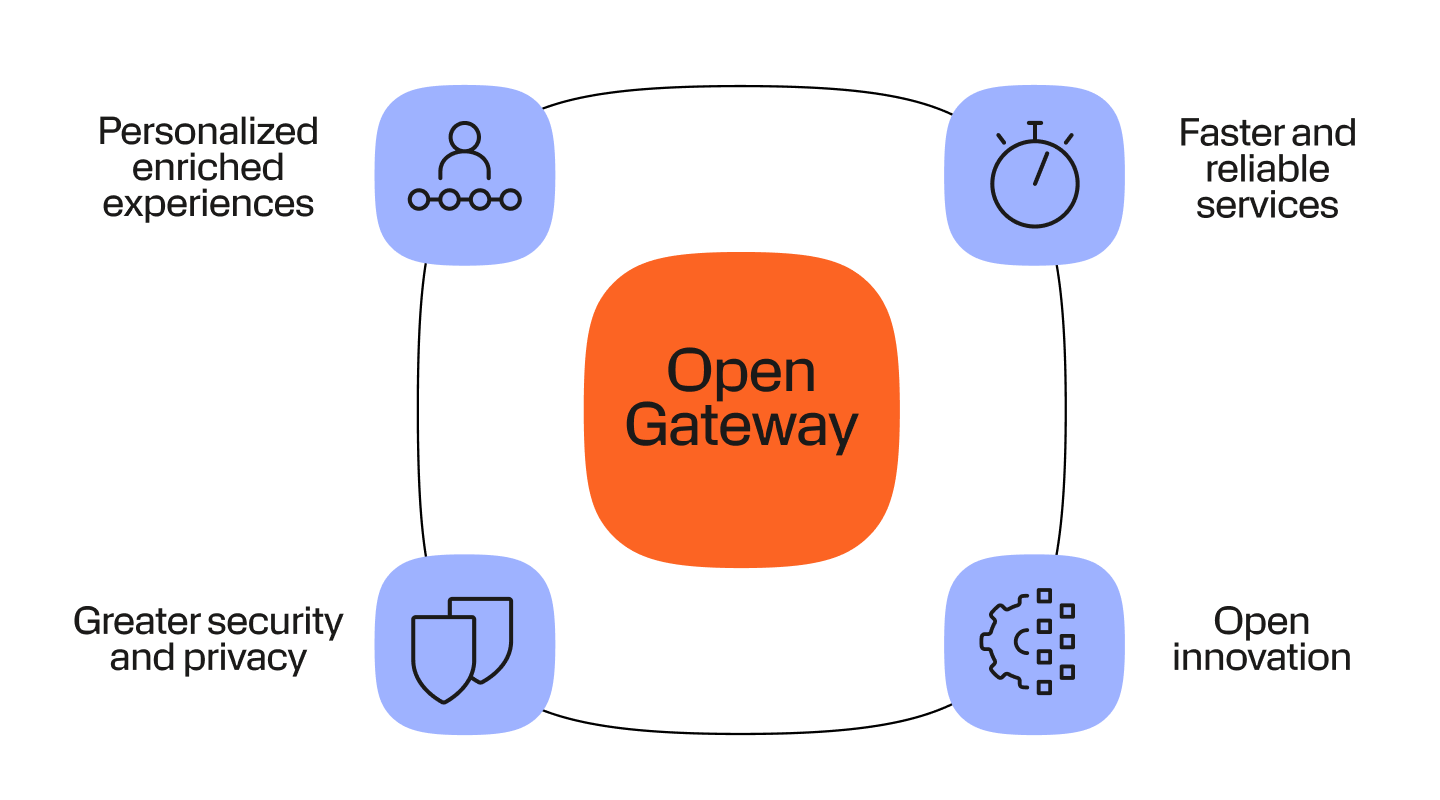
By following CAMARA standards, telecom operators can expose network capabilities in a simple, secure, and predictable way. All CAMARA APIs are built to work in real time, which is critical for security checks, reliable network performance, and a smooth user experience.
How Infobip works with telecom operators?
Infobip works closely with telecom operators around the world, helping them make their network capabilities accessible through secure, developer‑friendly APIs.
As a globally recognized partner of telecom operators, Infobip implements standards from the CAMARA project and the GSMA Open Gateway initiative, ensuring APIs are safe and consistent.
These developments reflect the conversations shaping the telecom industry today. At events like GSMA Mobile World Congress (MWC) in Barcelona, Infobip works alongside telecom operators and ecosystem partners to demonstrate how network APIs are already being used to improve security, enable new business models, and prepare networks for the next phase of digital services.
Connect with experts at MWC26, taking place 2–5 March at Hall 6, booth 6B11, to see how these network API capabilities are applied in practice.
Infobip has been recognized by Frost & Sullivan with the 2025 Customer Value Leadership award for its outstanding performance in the network API industry
The report highlights Infobip as a leader in network API solutions, driven by its strong focus on developer needs and long-standing partnerships with communication service providers (CSPs). Read the full report.
An overview of key network API offerings
By using these APIs, telcos and enterprises can access core network features without complex integrations:
1. Number verification: Proving phone number ownership
The number verification API helps confirm that a person really controls a specific phone number.
Instead of sending a one‑time password by SMS, the mobile network itself checks the phone number in the background.
This helps with:
- Faster sign‑ups
- Fewer fake accounts
- Better fraud prevention
Because it uses real mobile network data, number verification is very accurate and works well in real‑world conditions.
2. SIM swap detection: Stopping fraud early
SIM swap fraud happens when a criminal moves a phone number to a new SIM card.
Infobip’s SIM swap detection API checks if a SIM was changed recently. It shares this information in real time, so apps can react immediately.
This allows businesses to:
- Block risky actions
- Ask for extra checks
- Protect users before damage happens
All of this helps keep users safe without harming their user experience.
3. Device location API: Understanding where a device is
The device location API allows apps to confirm where a device is, based on mobile network data instead of GPS alone.
This is useful for:
- Fraud prevention
- Checking if a user is in an expected place
- Location‑based services
Because it comes from the network, this location information is reliable and works well across different devices.
4. Know your customer API: Verifying user identity via network API
The KYC (Know Your Customer) API helps businesses confirm a user’s identity using trusted information from the mobile network.
When a customer fills in their details in a signup or application form, the KYC API securely verifies this information using the mobile network operator’s records. This ensures identity checks are fast, accurate, and smooth for the user, without requiring additional documents or manual steps.
This helps with:
- Stronger fraud prevention
- Faster onboarding
- Less manual effort for users
By using operator‑verified data, KYC checks become more reliable while keeping the user experience simple and smooth.
Real‑world use and new business models
Telecom operators are already using secure network APIs to earn new revenue and strengthen their role in the digital world. By partnering with technology companies, they can make network features easier to access, use, and monetize.
Nokia: Improving developer adoption through programmable network capabilities
Infobip’s partnership with Nokia is about making telecom networks easier to use for developers. Instead of dealing with complicated network systems, developers can access advanced network features in a simple way through ready‑to‑use network APIs. This is done by combining Infobip’s CPaaS platform with Nokia’s Network as Code technology.
At the same time, telecom operators benefit because their APIs are adopted faster and can be used to create new services and new ways to earn revenue from their network capabilities.
Aduna: Removing complexity from global access to telco infrastructure
Partnership with Aduna focuses on solving one of the biggest challenges with network APIs: they are often hard to use across different countries. Every country has different rules, systems, and requirements, which makes things complicated. Aduna addresses these issues at the infrastructure level, taking care of user consent, legal compliance, and cross-country API routing so that developers and platforms like Infobip don’t have to manage them individually in every market.
By working together, Infobip and Aduna make network APIs much easier for businesses and developers to use. These APIs support functions like checking if a phone number really belongs to a user, spotting SIM swap fraud, confirming device location, with many more capabilities to come. As a result, apps become safer, easier to use, and more reliable for people everywhere, while still working smoothly across networks.
The future of network APIs
When security checks happen quickly in the background, people enjoy using apps more. Network APIs make this possible by letting users log in faster, experience fewer interruptions, and rely on services that work smoothly.
Network APIs are also becoming a core part of how telecom networks operate. They connect network intelligence with automation and security, turning mobile networks into programmable tools instead of just simple connectivity. As many services now require real-time data and fast responses, network APIs help telecom operators run networks more efficiently and adapt quickly to new demands and prepare for the future of digital services.