

A complete guide to Viber marketing for business growth
Learn how Viber Business Messages can support relevant campaigns, customer conversations, and timely service updates.

Viber remains a widely used messaging app in several markets, particularly in Southeastern and Eastern Europe and parts of Asia. Its popularity varies by country, so check whether your customers use it before making it a key part of your messaging strategy.
Infobip’s Messaging Trends 2026 report analyzed 628 billion mobile-channel interactions on Infobip’s platform in 2025. Within that data, Viber interactions grew by 32% globally. These figures reflect activity on Infobip’s platform, not total market growth.
As customer expectations shift toward more relevant, conversational experiences, Viber can help businesses share promotions, send service updates, and support two-way conversations with customers.
In this guide, we’ll cover how Viber Business Messages work, the available message types, practical setup steps, ways to use Viber across the customer journey, and what to consider when measuring results.
What is Viber marketing?
Viber marketing refers to using Viber Business Messages to promote products or services, generate leads, and communicate with customers through targeted messages. Businesses can use the channel for promotional campaigns, transactional updates, and customer conversations, in line with applicable consent and messaging requirements.
Features such as chatbots, branded stickers, carousels, and list messages give businesses different ways to present information and help customers take action.
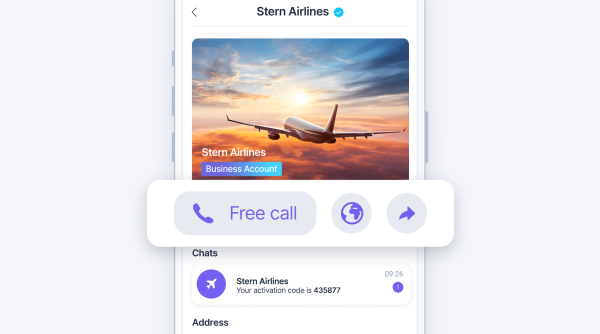
Business messages can come from a verified sender and support formats such as:
- Rich media, such as images, buttons, and video
- Transactional updates
- Promotional campaigns
- Conversational and chatbot-based communication
- Advanced formats, including list messages, carousels, and OTP messages, subject to current Viber requirements
Viber can be a useful channel when customers have chosen to hear from your business there. Make sure each message is relevant and follows applicable consent and platform requirements.
Viber can support different customer communication needs. Let’s look at the benefits and considerations for using the channel.
Benefits of using Viber marketing
Viber usage and engagement vary by market. Infobip’s Messaging Trends 2026 report recorded 32% growth in Viber interactions on Infobip’s platform in 2025. The report also recorded growth across APAC, Eurasia, and Europe. These platform figures are not a measure of total market adoption.
For businesses whose customers use Viber, the channel offers rich formats and conversational features that can support campaigns, service updates, and customer support.
- Use a channel that fits your audience: Viber’s relevance depends on the markets and customer groups you serve.
- Create richer messages: Use supported images, buttons, lists, and carousels to present information and guide customers to a next step.
- Enable two-way conversations: Let customers reply to ask questions, get help, or follow up on a message.
- Automate routine interactions: Chatbots and automated journeys can help handle common requests, with an option to involve an agent when needed.
- Connect messages across the customer journey: Use Viber for relevant touchpoints such as product discovery, order updates, delivery support, and feedback.
- Test performance with your own audience: Track relevant measures such as responses, conversions, support requests, and opt-outs.
When Viber is a preferred channel for your customers, it can bring campaign messages and service conversations closer to the interactions they already have on their phones.
Once you know Viber may be relevant to your audience, the next step is understanding the message formats you can use and how each one works.
Types of Viber business messages
Viber Business Messages support different communication needs, from promotions and service updates to customer conversations. The formats available to your business depend on your use case and current Viber requirements.
1. Conversational messages
Conversational messages enable two-way communication between businesses and customers. Customers can reply to ask questions, request assistance, or engage with a chatbot for guided support. This format can support customer care, booking changes, product inquiries, and recommendations.

2. Promotional messages
Promotional messages let businesses share offers, announcements, and marketing campaigns with customers who have opted in. Depending on the format and current requirements, messages may include images, buttons, and concise text for flash sales, seasonal promotions, product launches, or loyalty rewards.
3. Transactional messages
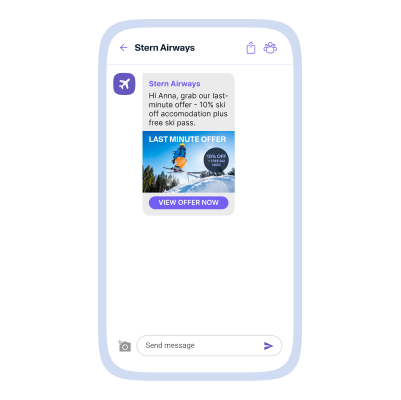
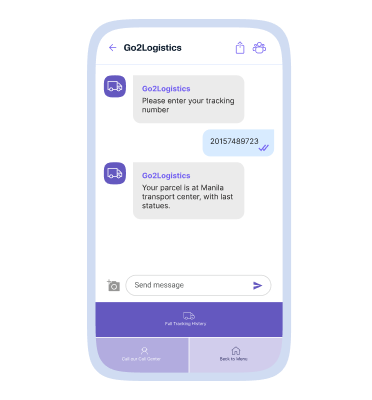
Transactional messages share information related to a customer action or service, such as an order confirmation, delivery update, appointment reminder, payment alert, or account notification. Keep these messages timely, clear, and easy to act on.
4. List messages
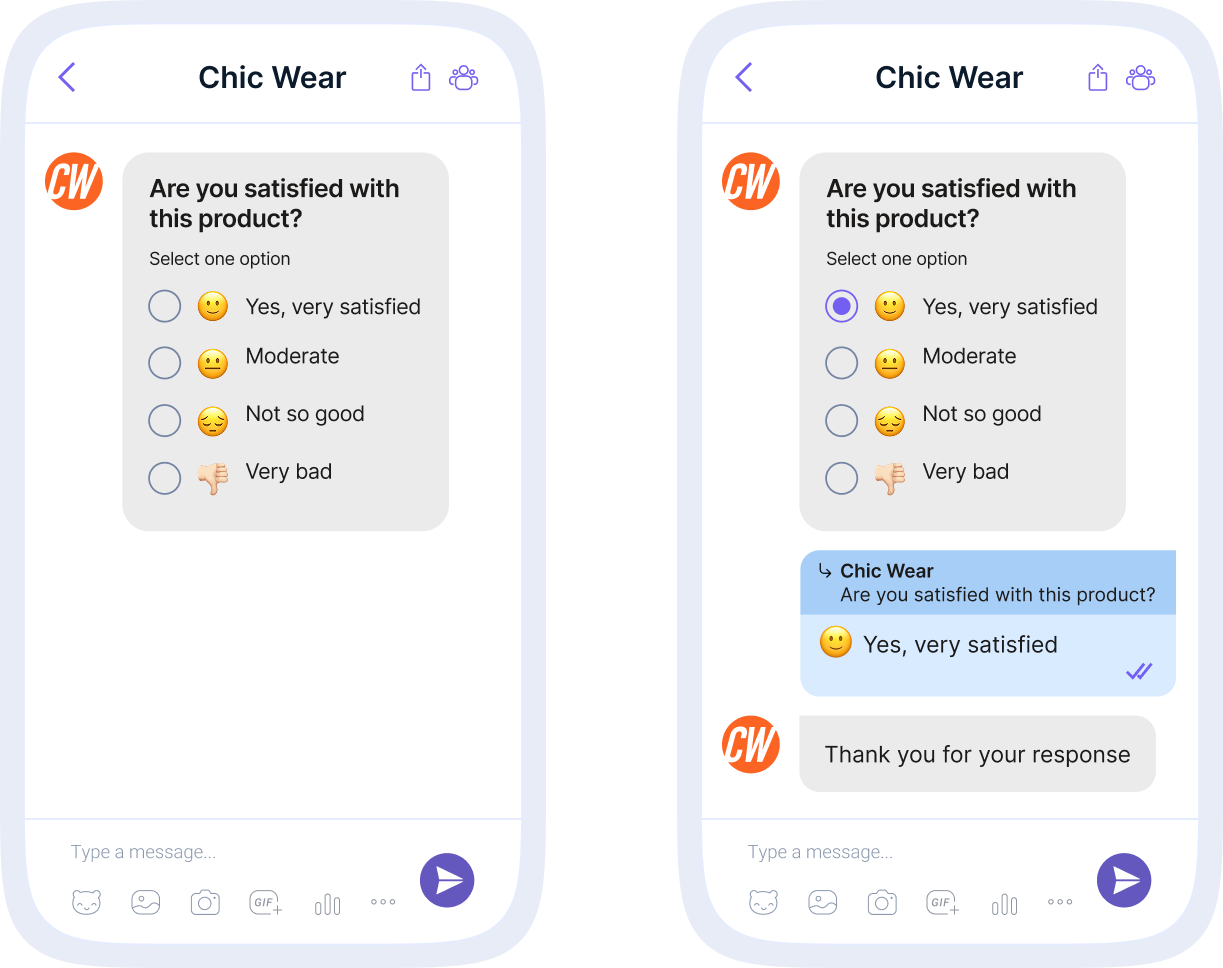
List messages present customers with a set of options to choose from. They can be useful for actions such as checking an order, scheduling a delivery, finding support, or sharing feedback. Confirm the current format specifications before building your message.
5. Carousel messages
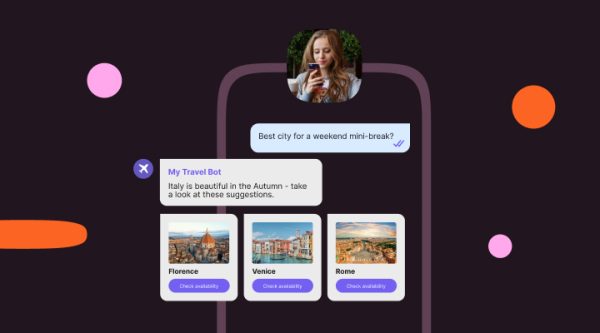
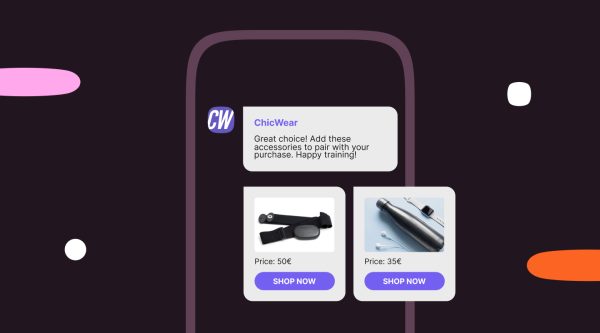
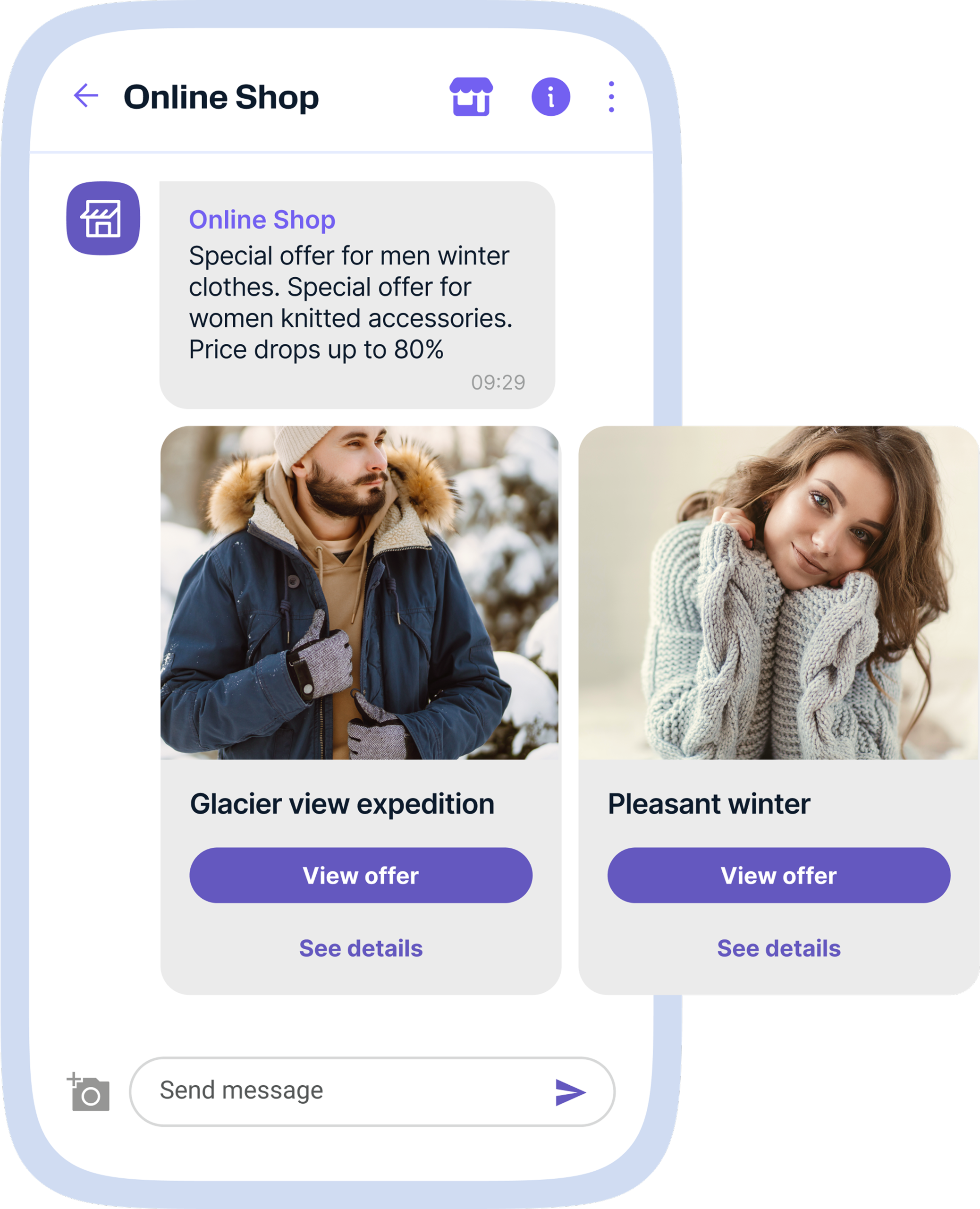
Carousel messages can present a selection of products or offers in a visual, swipeable format. Depending on the current specifications, cards can include images, text, and calls to action that link to a product page or online store.
6. OTP messages
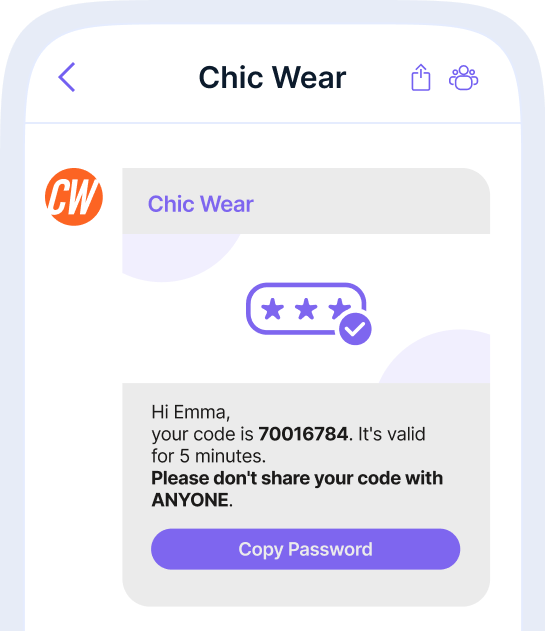
OTP messages can provide a verification code for actions such as login or transaction approval. Make sure the message and delivery flow meet your security requirements, and define an appropriate fallback where needed.
Getting started with Viber marketing
Setting up Viber for business starts with choosing a suitable provider, registering your business, and planning how you will manage consent and customer conversations.
1. Choose an official Viber partner
Working with an official partner like Infobip can help with onboarding, sender setup, message requirements, and connecting to supported Viber services. Confirm that the partner supports the markets and use cases you need.
2. Register and verify your business profile
Follow the current process to register your business sender and complete any required verification. A recognizable business profile helps customers identify who is contacting them.
3. Collect user opt-ins
Explain what customers are signing up for and how they can manage their preferences. Depending on your use case, opt-ins may be collected through:
- QR codes
- Website forms
- App onboarding flows
- Customer support interactions
- Invitations to choose Viber as a preferred channel
4. Connect via API or platform tools
Use APIs or a messaging platform to connect Viber with your systems and support campaign or service journeys. Infobip solutions include customer engagement, contact center, and chatbot tools.
5. Set fallback options
Plan what should happen if a customer cannot receive a Viber message. For some critical updates, an alternative channel such as SMS may be appropriate. Apply fallback rules carefully to avoid sending duplicate or unnecessary messages.
With the technical setup complete, the next step is designing a strategy that makes each message useful to the customer.
Crafting an effective Viber marketing strategy
A successful Viber marketing strategy uses personalization, segmentation, and relevant content to create customer journeys that feel timely and helpful.
Here are a few ways to get started:
- Segment your audience by relevant preferences, purchase history, or customer lifecycle stage.
- Tailor messages to each segment so first-time buyers, loyal customers, and customers interested in different products receive relevant content.
- Personalize thoughtfully using details such as a customer’s name, recently viewed items, or an active order when that information makes the message more useful.
- Use clear calls to action so customers understand whether they can view an offer, track an order, or contact support.
- Set a suitable messaging cadence to stay relevant without overwhelming customers.
- Choose formats that fit the message, such as a carousel for product discovery or a simple update for delivery information.
- Use chatbots and automation to help answer routine questions and support product discovery or post-purchase interactions.
- Test and learn by tracking responses, conversions, support requests, and opt-outs with your own Viber audience.
For a seasonal campaign such as Black Friday, you could plan a sequence with an early teaser, a launch message, and a reminder before the offer ends. Adapt timing and frequency to your audience, and use Viber campaign results to decide what works. SMS forecasts and performance figures should not be treated as Viber results.
With a strategy in place, it’s just as important to follow consent requirements and messaging best practices.
Compliance, consent and best practices
Before sending promotional content, make sure customers have given the required consent. Follow applicable privacy laws and Viber’s current requirements for the message type and region. Clear consent and relevant messages help set the right expectations with customers.
Key compliance rules
- Get the required customer consent before sending promotional messages.
- Follow applicable privacy laws and Viber’s current business messaging requirements.
- Make the purpose of each message clear and relevant to the customer.
- Provide a clear way for customers to manage their preferences or opt out.
Best practices for strong performance
Once a customer has opted in, treat that permission with care. Make each message useful and set a frequency that feels appropriate for your audience.
- Provide clear value in every message.
- Use a friendly, consistent brand voice.
- Test content, timing, and formats with your own audience.
- Use fallback channels such as SMS only when appropriate for the message.
- Review results continuously and adjust your approach based on customer responses.
Here are some ways businesses can use Viber marketing across the customer journey.
Viber marketing use cases
Secure authentication and verification
Use Viber OTP messages for flows such as login verification or transaction approval, where the format is available and appropriate for your customers. Consider how the experience should work if a customer cannot receive the message on Viber.
- Provide an in-app option for delivering a verification code, subject to availability.
- Define a suitable fallback for customers who cannot receive the Viber message.
Example: A customer logs in to a banking app and receives a Viber OTP where the service is available. The business also defines an alternative verification route if the message cannot be received.
Interactive banking menus and customer choices
List messages can help customers choose from a set of options, such as checking an order, changing a delivery preference, finding support, or answering a short survey. Banks might use them to direct customers to common services or collect feedback.
Example: A bank asks customers which service they would like to learn more about. Customers choose an option, such as mobile deposits, budgeting tools, or rewards, and receive a relevant follow-up.
Promote products with carousel messages
Present relevant offerings, such as credit cards, loan plans, or insurance, in a visual carousel. Keep the options focused and link each one to a useful next step.
Example: A customer receives a carousel featuring several credit card offers, compares the available benefits, and selects a card to learn more.
Showcase products and recover abandoned carts
Use product-rich carousels to showcase new arrivals, related products, or seasonal offers. Retailers can also send a timely reminder when a customer leaves products in their cart, with a direct link back to checkout.
Example: During a seasonal promotion, a retailer sends opted-in customers a carousel of selected products. Each card links to the relevant product page, making it easier to explore the offer.
Streamline support and orders
Use supported interactive options to help customers check an order, choose a delivery preference, or find an answer to a common question. When automation cannot resolve an issue, provide a clear path to a support agent.
Example: After purchase, a customer receives a Viber update with order-tracking information and options for getting help or changing a delivery preference.
Gather feedback after purchase
Invite customers to rate their experience through a short reply or supported interactive format. If the response signals a problem, follow up with an appropriate support option.
Example: After delivery, a retailer asks a customer to rate the experience. A low rating triggers a follow-up that explains how to contact support.
Real-world success stories
These customer examples show how businesses have used Viber for travel updates, promotions, two-way communication, and rich-media campaigns. Confirm each result and timeframe with the linked customer story before publication.
Cebu Pacific
Cebu Pacific wanted to improve communication with travelers across the customer journey and move beyond manual email and SMS processes. Infobip helped the airline automate and personalize customer communication using Viber Business Messages as a rich messaging channel, with SMS as a failover option.

Cebu Pacific used Viber for promotional campaigns, including seat-sale announcements, and for flight notifications such as delays, gate changes, and updates. The existing customer story reports a 75% year-over-year increase in Net Promoter Score and a 6% increase in conversion rates for promotional campaigns using Viber with SMS as a failover.
Primer
Primer used Viber Business Messages to encourage customers to shop online. The campaign used discount vouchers redeemable on its eCommerce site and Viber activity data to focus messaging on active customers.

The existing customer story reports a 53% voucher redemption rate and a 401% increase in total sales. Confirm the campaign timeframe and measurement context before publication.
NLB bank
NLB Bank in Montenegro used Viber for transactional and event-triggered messaging. The bank also used two-way messaging to promote its Arrange a meeting offer, retaining SMS as a failover channel.

The existing customer story reports a 30% increase in meeting requests compared with previous campaigns, a 30% increase in sales leads, and a 15% increase in overall sales. Confirm the comparison periods and attribution before publication.
Metrobank
Metrobank integrated Viber Business Messages with its Salesforce Marketing Cloud system using Infobip’s plugin. The integration supported personalized rich-media messages with images, videos, and interactive buttons.
The existing article says the integration was set up in two days, with campaigns launching after a week of testing. It also reports up to 50% lower marketing message delivery costs compared with SMS. Confirm the current applicability and comparison basis before publication.
Why Infobip is your preferred partner for Viber Business Messaging
Viber can support customer conversations across marketing, service, and authentication journeys. With Infobip, businesses can connect messaging with automation, customer data, and other communication channels.
- Deliver authentication messages where the format is available and appropriate for the use case.
- Offer interactive self-service options that help customers find information or get support.
- Use rich-media formats to present products, offers, and useful updates.
Using Viber on Infobip’s platform can give teams access to:
- Messaging expertise: Support with Viber onboarding, integration, and messaging use cases.
- Customer journeys: Tools to create and manage automated messaging journeys.
- Channel coordination: Options to connect Viber with other communication channels where appropriate.
- Performance insights: Analytics to help teams review campaign and customer interaction results.
- Platform experience: Infobip’s Messaging Trends 2026 report analyzes 628 billion mobile-channel interactions on Infobip’s platform in 2025 and 3.8 trillion messages over 20 years. It recorded 32% growth in Viber interactions on the platform in 2025.
As a Platinum Partner, Infobip can help businesses with Viber onboarding, integration, and analytics. Confirm current partnership benefits and any early-access claims before publication.
FAQs
Viber marketing uses business messages to communicate with customers who have given the required consent. Businesses can use Viber for promotions, transactional updates, two-way support, and automated customer journeys.
Businesses of different sizes can use Viber where it is available and relevant to their customers. Its popularity varies by market, so consider your audience’s channel preferences before investing in a campaign.
Depending on the use case and current Viber requirements, businesses can use Viber for promotional, transactional, and conversational messaging, as well as supported formats such as lists, carousels, and OTP messages.
Work with an official Viber partner to register your business sender and complete any required verification. You can then connect through an API or a messaging platform, depending on your needs.
Invite customers to subscribe through channels such as your website, app, or in-store QR codes. Explain what they are opting in to and provide a clear way to manage their preferences or opt out. Do not assume that opting in to one type of message means a customer has agreed to every type.
Viber Business Messages can support rich-media and interactive formats, depending on the message type and current requirements. Check the latest specifications before preparing a campaign.
A messaging platform can help coordinate Viber with channels such as SMS, email, or push notifications. Define when to use each channel and avoid sending duplicate or unnecessary messages.
Security and compliance depend on the message type, implementation, and applicable laws. Follow Viber’s current business messaging requirements and your provider’s guidance. Do not assume that protections for personal Viber chats automatically apply to business messages. Get the required consent for your use case and provide a clear way for customers to manage their preferences.