




AI orchestration explained: How to reinvent customer journeys
Discover how AI orchestration connects agents, data, and channels to power intelligent, continuous customer conversations across the entire customer journey.

Customer journeys are still too often fragmented. Conversations break when people move between channels, context gets lost, and teams struggle to meet growing expectations for speed, relevance, and personalization.
Marketing and customer support rarely speak the same language, missing out on opportunities for seamless, continuous engagement. When brands can’t connect the dots, everyone loses.
We’re now at a turning point. Customers no longer just want hyper-personalized experiences; they expect conversations that feel continuous, contextual, and human, wherever they happen. Legacy bots can’t adapt. Rigid flows can’t scale. What brands need now is a way to unify AI, data, and channels so every interaction feels connected, responsive, and purposeful.
At Infobip, an orchestration-first approach shapes how we’re building and delivering AI today. Read on to explore the AI features currently available across our platform, what they can build now and see where intelligent customer engagement is heading next.
What is AI orchestration?
AI orchestration is the coordination of artificial intelligence, data, and communication channels to manage customer interactions as a single, continuous experience, rather than a set of disconnected touchpoints.
Instead of running chatbots, campaigns, analytics, and support tools in silos, orchestration connects and coordinates them in real time. It determines:
- What should happen next in an interaction
- Which AI capability or agent should act
- What data and context should be applied
- When human involvement is required
Why AI orchestration matters now
Customer expectations have evolved faster than most organizations’ technology stacks. People move fluidly between messaging apps, voice, email, and web, and they expect brands to remember who they are, what they need, and where the conversation left off.
At the same time, businesses are deploying more AI than ever:
- Chatbots for support
- AI for marketing personalization
- Analytics for insights
- Automation for operations
Without orchestration, these capabilities remain siloed. AI orchestration is what allows enterprises to scale intelligence without sacrificing continuity, relevance, or control.
How does AI orchestration work?
Think about how platforms like Spotify or YouTube anticipate your preferences and serve exactly what you want, when you want it. Now imagine bringing that same level of intelligence to every customer’s conversation.
In practice, AI orchestration works by coordinating several core capabilities:
Orchestrating data and context
Customer interactions generate rich real-time data. AI orchestration connects live conversations with historical behavior, preferences, and journey stage so every response is context-aware.
Coordinating AI agents and models
Different AI agents specialize in different tasks, such as intent detection, knowledge retrieval, recommendations, sentiment analysis, or transaction handling. Orchestration decides which agent acts, when, and why, maintaining continuity across the journey.
Automating decisions and next-best actions
AI orchestration enables dynamic decision-making: selecting the right message, channel, offer, or action based on live signals rather than static rules.
Human-in-the-loop escalation
When human expertise is needed, orchestration ensures live agents step in with full context, conversation history, and AI-powered assistance, eliminating repetition and friction. At the same time, AI is continuously learning from these interactions, analyzing outcomes and agent responses, to improve its understanding and recommendations for future conversations.
Monitoring performance and outcomes
Orchestration continuously monitors interactions, outcomes, and system performance, turning insights into immediate improvements.
AI orchestration vs AI agents
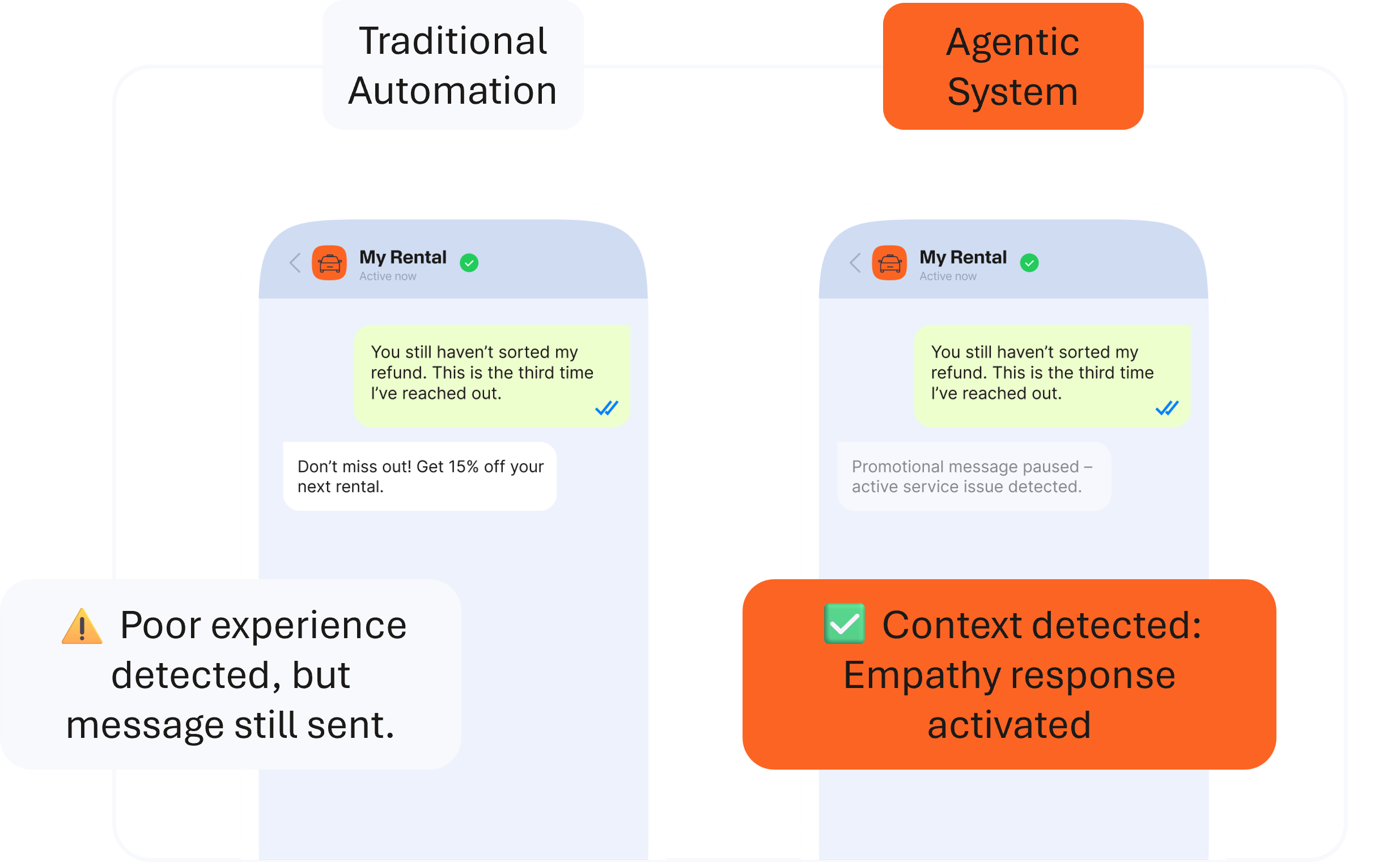
AI agents and AI orchestration solve different but complementary problems.
- AI agents are goal-driven, autonomous entities designed to perform specific tasks, such as understanding user intent, recommending next actions, retrieving data, or completing transactions.
- AI orchestration is the coordinating intelligence that decides which agent should act, when, and how, while maintaining context across the entire customer journey.
In other words, agentic AI is what enables orchestration.
Agents provide the capabilities; orchestration turns those capabilities into coherent, end-to-end experiences.
Benefits of AI orchestration
As customer expectations rise, hardcoded workflows and single-purpose bots can no longer keep up. AI orchestration delivers clear advantages across the organization.
Greater scalability
Orchestrated systems dynamically allocate AI resources and agents based on demand, enabling organizations to scale conversations, channels, and use cases without manual reconfiguration.
Faster, more efficient operations
By automating routine decisions and tasks, AI orchestration reduces operational load and allows teams to focus on complex, high-value interactions.
Seamless, continuous experiences
Customers can move across channels without losing context. Conversations feel connected, personalized, and uninterrupted.
Improved performance and outcomes
Multiple AI agents working together solve more complex problems than any single model could on its own, improving accuracy, relevance, and resolution rates.
Stronger governance and control
Centralized orchestration enables better monitoring, compliance, and transparency across AI-driven interactions.
Why Infobip is uniquely positioned to lead in AI orchestration
At Infobip, AI orchestration is not an add-on, it’s the foundation of how intelligent customer engagement is built and delivered.
Our orchestration-first approach unifies our SaaS and CPaaS capabilities and enhances them with advanced, agentic AI. At the core are intelligent experience agents that orchestrate and hyper-personalize conversations at every touchpoint.
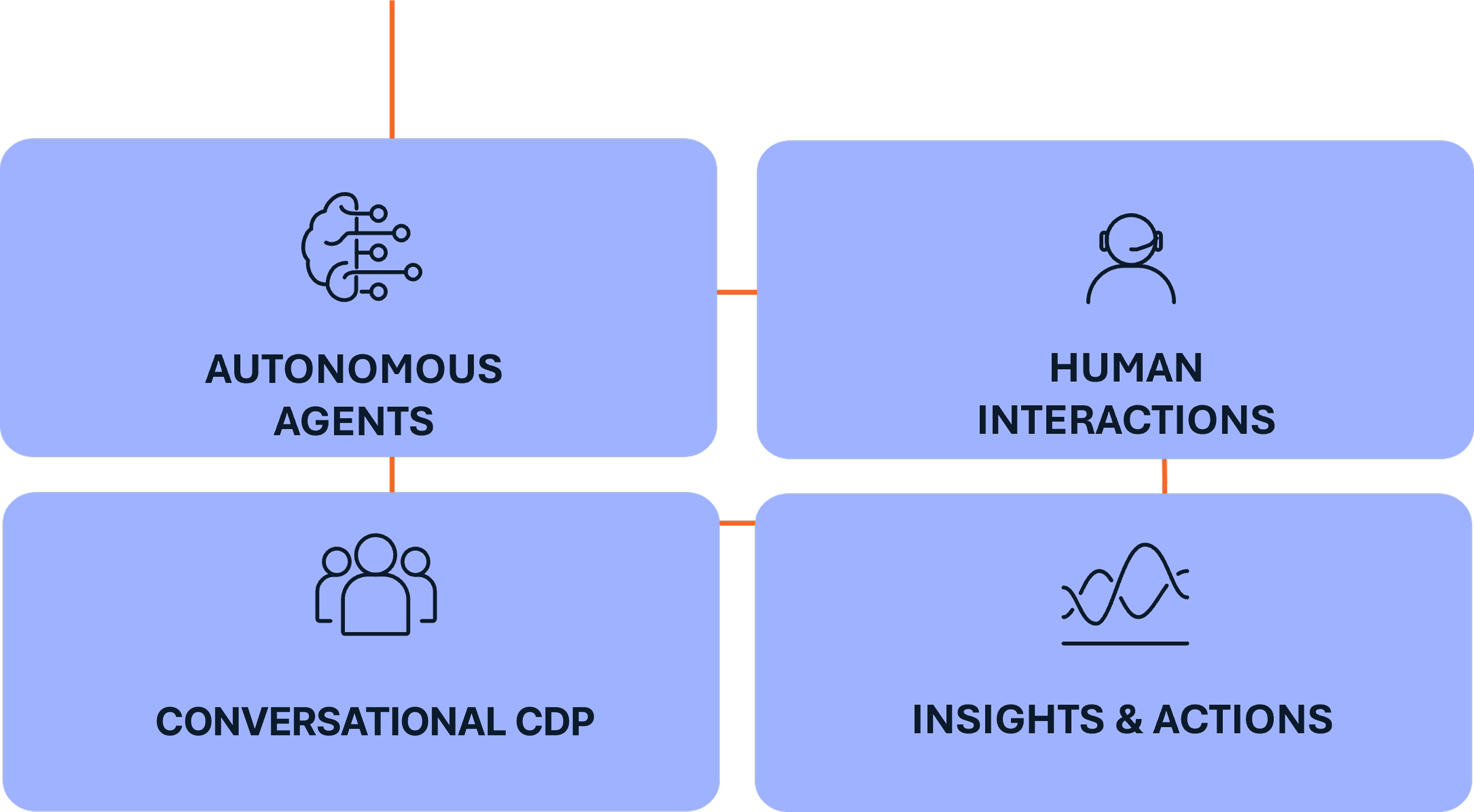
This approach is powered by four core capabilities working together:
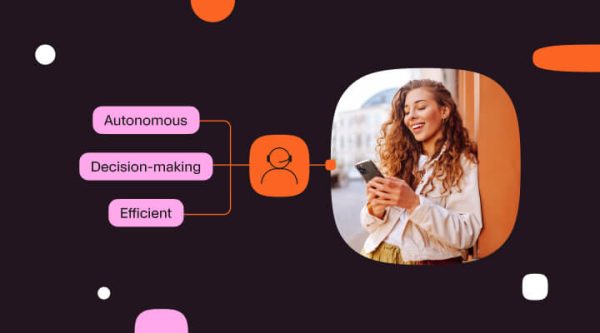
- Autonomous agents that can make decisions, complete tasks, and move conversations forward without constant human input
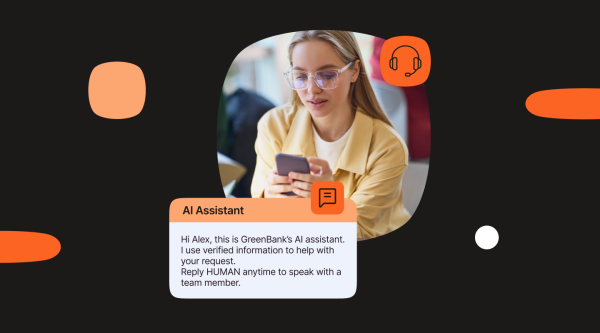
- Human-in-the-loop (HITL), where live agents are brought in seamlessly with full context and AI-powered assistance
- Conversational CDP that captures interaction data in real time to inform personalization
- Insights & actions that ensure every next step is timely, relevant, and effective
Combined with Infobip’s global infrastructure and trusted partner ecosystem, this orchestration model is built to operate at real-world scale:
- Billions of first-party customer interactions run through our platform each year
- Fully controlled infrastructure and data centers, ensuring reliability, security, and redundancy
- Ongoing strategic AI investments ensure continuous innovation at scale
Most importantly, orchestration doesn’t replace humans, it enables teams to work faster, smarter, and with greater precision.
Why choose Infobip as your AI orchestration platform?
While others retrofit AI into old systems, we’ve built our platform from the ground up into a new foundation for agentic, real-time, omnichannel engagement.
We’ve built an agentic conversational framework, a system of intelligent agents that handle tasks, make decisions, and adapt based on live context. We deliver a full AI orchestration layer built on years of infrastructure investment, proprietary data, and AI innovation.
- Solving fragmentation: Customers can move across channels without losing context or continuity.
- Reducing operational load: Goal-driven AI agents automate routine work, freeing teams to focus on what matters.
- Empowering business users: With prompt-based design, anyone—not just developers—can build, iterate, and launch intelligent workflows.
Each of these capabilities is powerful on its own. Together, they form the foundation of an AI orchestration platform that connects engagement, knowledge, insights, and channels into a single, coherent experience.
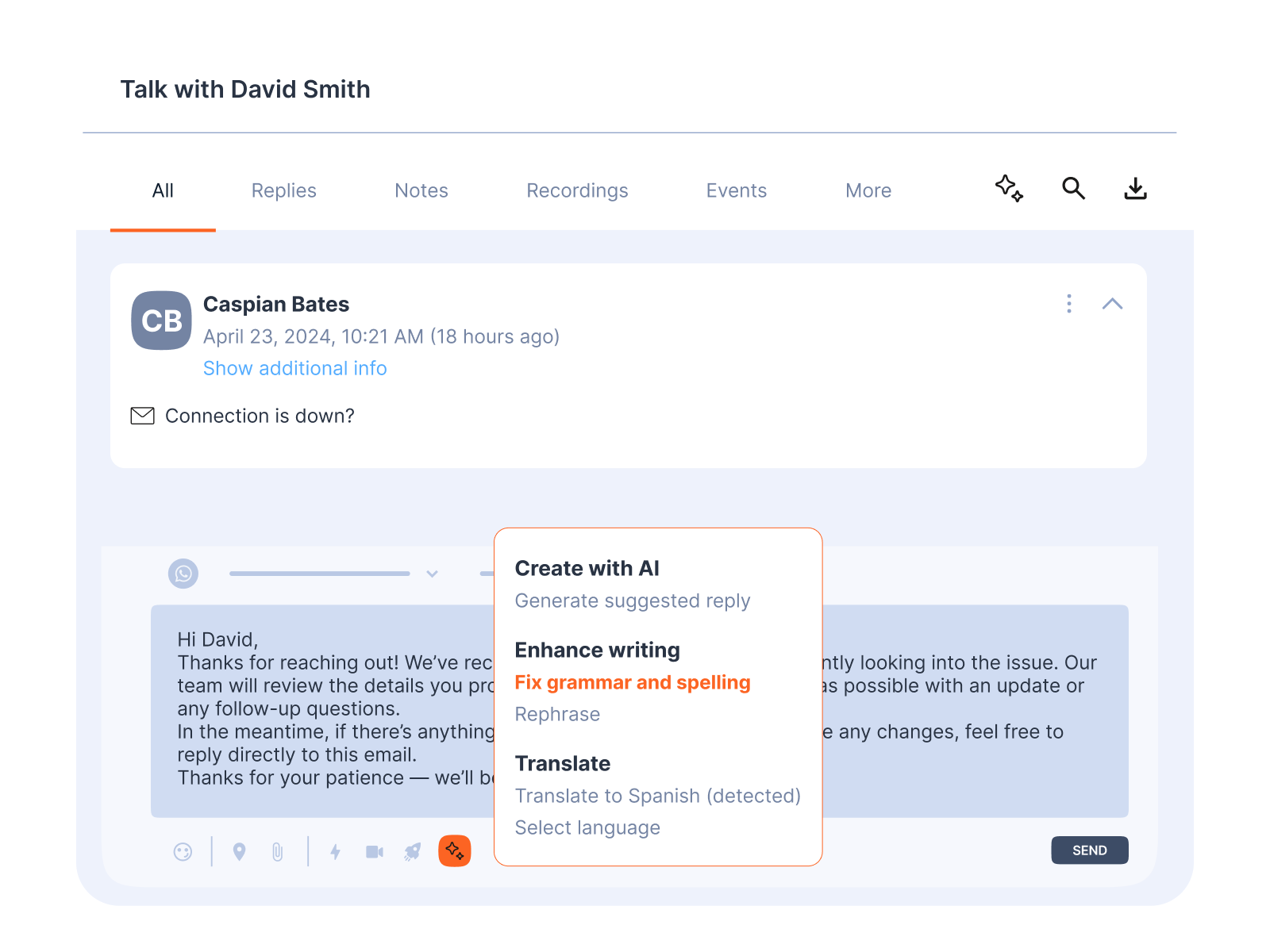
Infobip: Built for today and designed for what’s next
This is about more than automation. It’s about enabling teams to move faster, design smarter journeys, and deliver conversations that feel genuinely helpful.
What’s available today is just the beginning. Our AI roadmap continues to evolve, expanding how AI orchestration, intelligence, and human creativity come together to shape the future of customer engagement.
The platform built for agentic AI
Get the step-by-step setup guide for your first AI agent deployment, plus the enterprise playbook covering architecture, use cases, and how to build the business case.

FAQs
An AI orchestration platform coordinates AI models, agents, data, and workflows to deliver unified, end-to-end experiences across systems and channels.
Automation executes predefined tasks. AI orchestration dynamically coordinates intelligence, decisions, and actions based on real-time context.
While large enterprises benefit significantly, AI orchestration platforms increasingly enable businesses of all sizes to scale intelligent engagement efficiently.
Agentic AI provides autonomous, goal-driven agents. Orchestration connects these agents into continuous, context-aware journeys.
Ready to experience AI orchestration in action?
Sign up for our AI free trial and discover how to transform your customer journey with Infobip’s AI orchestration platform.