




The ultimate guide to AI Voice assistants: Features, benefits, and the agentic future
Learn what AI Voice assistants are, how they work, key features, and why agentic AI is redefining Voice-based customer engagement.

For decades, Voice has been the most expensive and difficult channel to automate. Labour alone accounts for 60–70% of total call center operating costs, and those costs continue to rise as customer expectations increase and skilled agents become harder to retain.
AI Voice assistants have matured from basic command-followers into sophisticated conversationalists. Now, with the rise of agentic AI, they are evolving again, from systems that just talk, to intelligent agents that can think, plan, and do work on your behalf.
Before we dive into features and use cases, let’s define what we mean by an AI Voice assistant.
What is an AI Voice assistant?
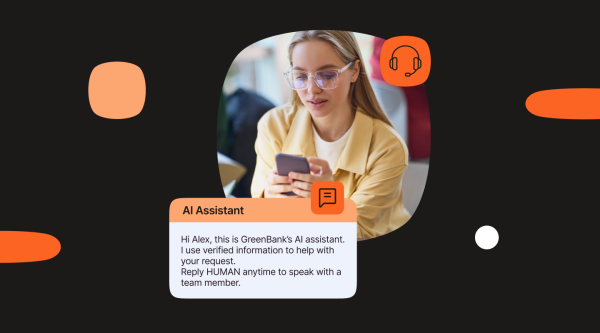
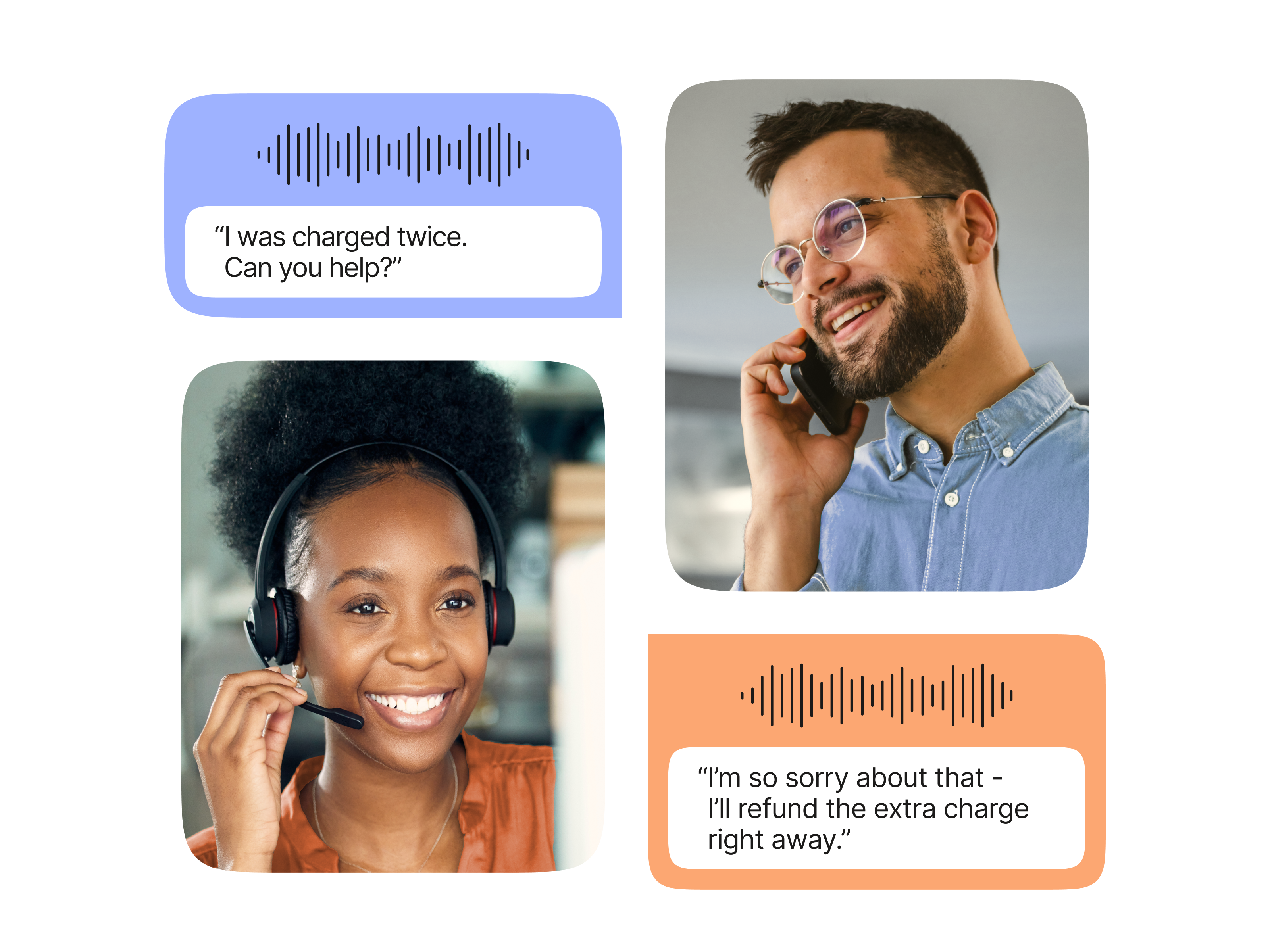
An AI Voice assistant is a software solution that uses artificial intelligence to communicate with people using spoken language. Unlike traditional phone systems that rely on keypad inputs, these assistants use voice recognition and Natural Language Understanding (NLU) to interpret human speech and respond naturally.
You likely use consumer versions daily (think Siri or Alexa). In a business context, however, AI Voice assistants serve a more specific purpose. They act as the first line of defense in contact centers, handling complex queries, authenticating users, and resolving issues without human intervention. To see why this is such a step forward, it helps to compare AI Voice assistants with traditional IVR systems.
At a high level, the distinction is simple:
- Traditional AI Voice assistants understand and respond
- Agentic Voice assistants understand, decide, and act
Types of AI Voice assistants
| Category | Description | Example |
|---|---|---|
| Personal and smart home assistants | Designed for individual users to manage tasks, control smart devices, or interact via wearables. | Siri, Google Assistant, Alexa |
| In-car voice assistants | Embedded in vehicles for hands-free navigation, communication, and entertainment. | Apple CarPlay, Android Auto |
| Enterprise voice assistants | Built for workplace productivity, handling scheduling, data queries, and CRM integration. | Microsoft Copilot Voice |
| Custom assistants | Application-specific or platform-integrated assistants built using APIs, tailored to specific business or product needs. | OpenAI, Dialogflow |
The difference between IVR and AI Voice
Legacy IVR systems are logic-trees based on specific inputs. If the user goes off-script, the experience can break down. AI Voice assistants replace these static flows with conversational understanding. They can interpret intent, retrieve context, and respond dynamically, allowing customers to speak naturally instead of navigating menus.
- IVR: “Press 1 for Sales. Press 2 for Support.”
- AI Voice Assistant: “I see your order #12345 is delayed. Would you like me to reschedule the delivery or issue a refund?”
Understanding the difference is one thing, understanding the mechanics is another.
How do AI Voice assistants work?
Modern AI Voice assistant interactions happen in milliseconds to ensure the conversation feels real. Here is the four-step technical flow that powers every interaction.
1. Speech-to-Text (STT)
The system captures the user’s spoken audio and converts it into text data. This is also known as Automatic Speech Recognition (ASR).
2. Natural Language Understanding (NLU)
Converting audio to text is not enough; the system must understand meaning. NLU algorithms analyze the text to identify the user’s intent (what they want) and extract entities (specific details like dates, names, or account numbers).
3. Decisioning and orchestration
Once the intent is clear, the AI determines the correct response. In simple bots, this might be fetching a pre-written answer. In advanced agentic AI systems, this involves querying a database, checking a CRM, or triggering a workflow to perform a task.
4. Text-to-speech (TTS)
Finally, the system converts its text response back into audio. Modern TTS engines use neural networks to produce synthesized voices that are nearly indistinguishable from humans, complete with intonation and emotion.
With the basic flow in place, the next question is what makes a modern Voice assistant truly effective.
Core features of modern Voice technology
To deliver a customer experience that rivals a human agent, your solution needs more than just basic speech recognition. Look for these essential capabilities.
Natural language processing (NLP)
Advanced NLP understands context, slang, and complex sentence structures. If a customer says, “I actually don’t want to cancel anymore,” a robust NLP engine understands the negation and reverses the previous intent.
Barge-in capability
In a real conversation, people interrupt each other. “Barge-in” technology allows customers to interrupt the voice assistant while it is speaking. The AI stops talking immediately and listens to the new input, making the interaction feel polite and natural rather than robotic.
Sentiment analysis
Voice carries data that text does not: emotion. AI Voice assistants can analyze tone, pitch, and speed to detect frustration. If a customer sounds angry, the system can automatically prioritize their queue position or hand them off to a senior human agent with a flag indicating a “high-risk” interaction.
Natural-sounding voice
Advances in neural text-to-speech have significantly reduced robotic phonics, enabling voices that sound natural, expressive, and conversational. This helps build trust, making Voice AI suitable for higher-stakes interactions such as financial product guidance or mortgage recommendations, where tone, clarity, and perceived competence directly influence customer confidence.
Omnichannel continuity
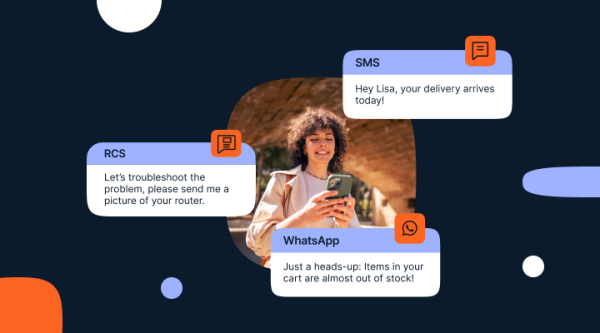
Voice should not exist in a silo. A customer might call to report a damaged item but need to upload a photo. A modern assistant can trigger an SMS or WhatsApp message containing a secure upload link while keeping the customer on the line, bridging the gap between voice and digital channels.
These capabilities define today’s best Voice assistants, but the technology is already evolving further.
The next evolution: Agentic AI in Voice
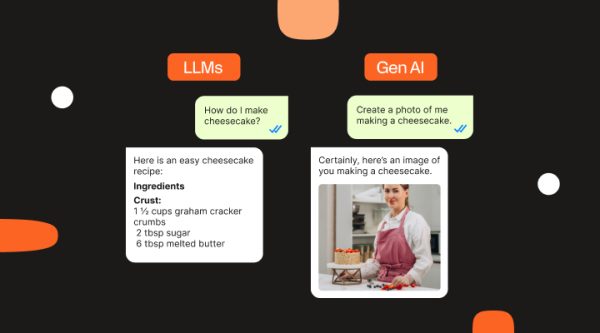
We are entering a new era. Generative AI (GenAI) gave us systems that could create content. Agentic AI gives us systems that can make decisions and take action.
Agentic AI is a system that enables AI agents to perform real-world tasks autonomously. This means they can make decisions to achieve goals without human intervention. By bridging decision-making and execution, agentic AI creates Voice assistants that don’t just answer questions, they solve problems.
To really see what’s changed, it helps to compare agentic AI with the tools most brands still use.
How agentic Voice AI agents differ from rule-based bots
Most brands still rely on rule-based chatbots or Voice bots. While useful for simple tasks, they cannot reason. Here is a comparison of how these two technologies function in a customer service environment.
| Feature | Agentic Voice AI agent | Rule-based bot |
|---|---|---|
| Primary strength | Decision-making and complex tasks | Repetitive, simple tasks |
| Indenpendence | High (autonomous) | Low (script-dependent) |
| Learning method | Experience and feedback | Pre-defined rules |
| Key difference | Thinks, adapts, takes action | Follows strict flows |
However, even the smartest agent is only as good as the data it can access.
The role of data in agentic Voice AI agents
For an AI agent to be truly autonomous, it needs context. It cannot decide to offer a refund or upgrade a flight unless it knows who the customer is. This is why agentic Voice assistants must be connected to a unified customer profile, such as Infobip’s Customer Data Platform. When the AI has real-time access to purchase history and loyalty status, it stops being a generic bot and becomes a personalized concierge.
When you combine agentic behavior with rich customer data, you unlock powerful real-world use cases.
Top use cases for AI Voice assistants
Implementing AI Voice assistants allows businesses to scale support without scaling headcount. Here are the most effective ways to deploy this technology.
Intelligent troubleshooting (Triage)
Agentic AI can diagnose technical issues by asking dynamic follow-up questions. Instead of just logging a ticket, the AI acts as a level-1 technician, guiding the user through reset procedures or identifying specific hardware faults before routing to a specialist.
Appointment management in healthcare
Voice assistants can integrate with scheduling software to handle booking, rescheduling, and cancellations 24/7. This reduces the administrative burden on clinic staff and lowers the rate of missed appointments through proactive voice reminders.
For example, outbound voice reminders delivered via Infobip’s Voice Messages API can automatically confirm appointments, notify patients of changes, or prompt rescheduling, helping clinics reduce no-shows without increasing staff workload.
Order management for retail
Customers frequently call to check order status (“WISMO” calls). An AI assistant can instantly pull shipping data from the backend and provide an update. More importantly, an agentic assistant can process changes, such as updating a delivery address or modifying an order, provided the goods haven’t shipped.
Fortunately, there are already tools and integrations that make these use cases achievable today.
Once organizations understand the value of agentic Voice AI, the next question becomes: how do you actually build and deploy it?
Seamless AI integration
No single AI provider is perfect for every use case. Some excel at hyper-realistic voice synthesis, while others lead in conversational logic or specific language capabilities. A future-proof Voice strategy requires the flexibility to choose the best tools for the job.
Bring your own AI (BYOAI)
Infobip’s open platform allows you to integrate seamlessly with the world’s leading AI vendors. Whether you need the reasoning power of OpenAI, the lifelike speech synthesis of ElevenLabs, or the enterprise-grade contact center capabilities of Google CCAI, our infrastructure acts as the bridge.
- OpenAI: Power your conversational logic with GPT models to handle complex, unstructured queries with ease.
- ElevenLabs: Deliver market-leading text-to-speech realism that captures nuance and emotion.
- Google CCAI: Leverage Google’s specialized Contact Center AI for industry-standard intent recognition and fulfillment.
This “agnostic” approach means you aren’t locked into a single AI model. As new breakthroughs happen in the AI space, you can swap or upgrade your underlying models while keeping your Voice infrastructure stable and scalable on Infobip.
Infrastructure matters
The smartest AI model is useless if the call drops. To run a reliable Voice assistant, you need a global CPaaS (Communications Platform as a Service) provider. This ensures high-quality Voice connections, low latency (critical for AI response times), and compliance with local regulations. Using a provider with local data centers ensures that Voice traffic stays within regional borders, which is a key requirement for GDPR and other privacy laws.
Infobip operates one of the world’s most comprehensive direct connection Voice networks, providing 98% U.S. coverage on its owned network and delivering Voice connectivity to 195 countries worldwide. With over 100 billion Voice minutes processed annually across 40+ global data centers, the platform is proven to handle high-volume, latency-sensitive Voice traffic reliably.
Local data centers ensure Voice traffic remains within regional borders when required, supporting compliance with GDPR and other data residency regulations, while maintaining the response times needed for natural, real-time AI conversations.
The partner ecosystem
For many enterprises, the fastest route to value is working with specialized partners. System integrators and digital agencies can build bespoke AI Voice services on top of established platforms. This allows businesses to leverage specific industry expertise, whether in banking or logistics, they can ensure the underlying technology is robust.
OpenAI Voice, embedded into real conversations
Infobip enables OpenAI-powered Voice experiences as part of broader conversational journeys, not standalone demos. Enterprises can integrate Voice AI in the way that best fits their architecture and maturity.
WebSocket-based voice conversations
For teams building cloud-native or application-driven experiences, Infobip supports low-latency audio streaming to and from OpenAI’s Real-Time API. This allows businesses to design highly customized voice conversations while relying on Infobip’s network to deliver quality and reach.
This approach also supports ElevenLabs Conversational AI for premium neural TTS and Retell AI for specialized voice agent use cases.
SIP-based voice conversations
For enterprises with existing telephony or contact center infrastructure, Infobip enables OpenAI voice integration directly into SIP-based call flows. This allows AI voice agents to participate in real phone calls using existing PBXs, CCaaS platforms, or on-prem systems, without re-architecting the voice stack.
This approach lowers the barrier to adopting voice AI and makes it easier to scale from pilots to business-critical use cases.
Conversations don’t stop at AI, humans stay in the loop
Infobip’s product narrative recognizes that the future isn’t AI or humans, it’s intelligent collaboration between the two.
That’s why Infobip’s voice capabilities are designed for hybrid conversational workflows, where AI Voice agents and human agents operate within the same conversation journey. Businesses can route calls dynamically, pass context between AI and agents, and ensure service continuity when conversations become complex or sensitive.
The result is not automation for its own sake, but better outcomes for customers and teams.
Why modern Voice needs an orchestration platform
Voice assistants cannot be standalone apps. If your Voice bot doesn’t know what happened in your email marketing or SMS channels, your customer experience is fragmented.
To deliver true agentic experiences, businesses need complete AI orchestration. This approach unifies three critical layers:
- Unified data: A Customer Data Platform that provides the “memory” for the AI.
- Intelligent routing: A journey orchestration engine (like Infobip’s Customer Engagement Solution) that decides when to use Voice, when to switch to chat, and when to alert a human.
- The AI layer: AI Chatbot Building Platform that manages the conversational logic and connects to the Large Language Models (LLMs).
When these elements work together, you create a system where the Voice assistant is not just a talking robot, but a fully integrated member of your support team.
Customers expect immediate, intelligent, and natural interactions, regardless of the channel they choose, and have rightfully lost patience for anything less.
AI Voice assistants, powered by agentic AI and robust orchestration platforms, offer the only viable path to meeting these expectations at scale. By moving beyond simple scripts to autonomous decision-making, businesses can turn their contact centers from cost centers into drivers of customer loyalty and satisfaction.