




Best conversational AI platforms 2026
The best conversational AI platforms are not defined by features alone, but by how well they integrate into your strategy, systems, and customer experience.

AI is everywhere. Even if you feel a bit tired of hearing about it, the numbers tell a clear story.
Around 78 percent of companies worldwide now use AI in at least one business function. More than half use it across multiple areas such as customer engagement, operations, and support.
Companies that integrate AI thoughtfully stay aligned with market expectations. Those who hesitate often watch competitors move faster and serve customers more efficiently.
But adopting AI just to say you have it does not create value.
The better questions are these: which AI platform actually improves how your business runs? Which one strengthens workflows, fits your tech stack, connects to customer data, and helps you deliver better experiences?
That is what we are here to explore.
In this guide, you will find:
- What defines the best AI platform in 2026
- Why personalization shapes loyalty
- Real AI examples across industries
- The best AI platforms 2026
- How to decide which AI platform fits your strategy
Let’s begin with why this shift matters so much.
Why AI platforms matter more than ever
According to Statista market forecasts, the global AI market is expanding rapidly and expected to grow strongly through 2026, highlighting the acceleration of AI adoption across industries.
What is a conversational AI agent?
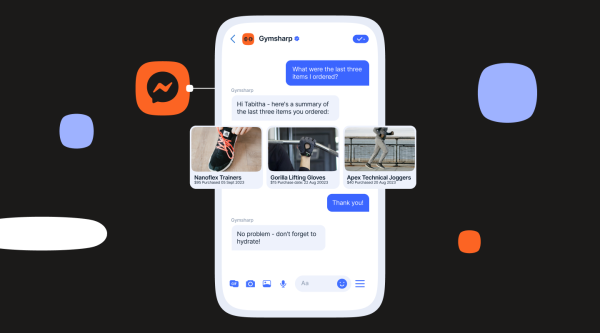
A conversational AI agent is an AI system designed to interact with people through messaging or voice channels such as web chat, WhatsApp, SMS, or email. Unlike basic chatbots, conversational agents can understand natural language, access business systems, retrieve data, and trigger automated workflows to complete tasks during a conversation.
Businesses continue to invest in AI across customer service, marketing, fraud detection, logistics, and internal operations.
AI platforms are no longer side tools. They support core processes.
Companies now use conversational AI agents to:
- Answer support questions
- Complete specific tasks
- Qualify leads
- Trigger automated workflows
- Guide customers through journeys in real time
Customers may not care that it is AI. They care about results.
Customers expect:
Fast, accurate responses
Conversations that remember context
Smooth transitions between channels
Fewer repeated questions
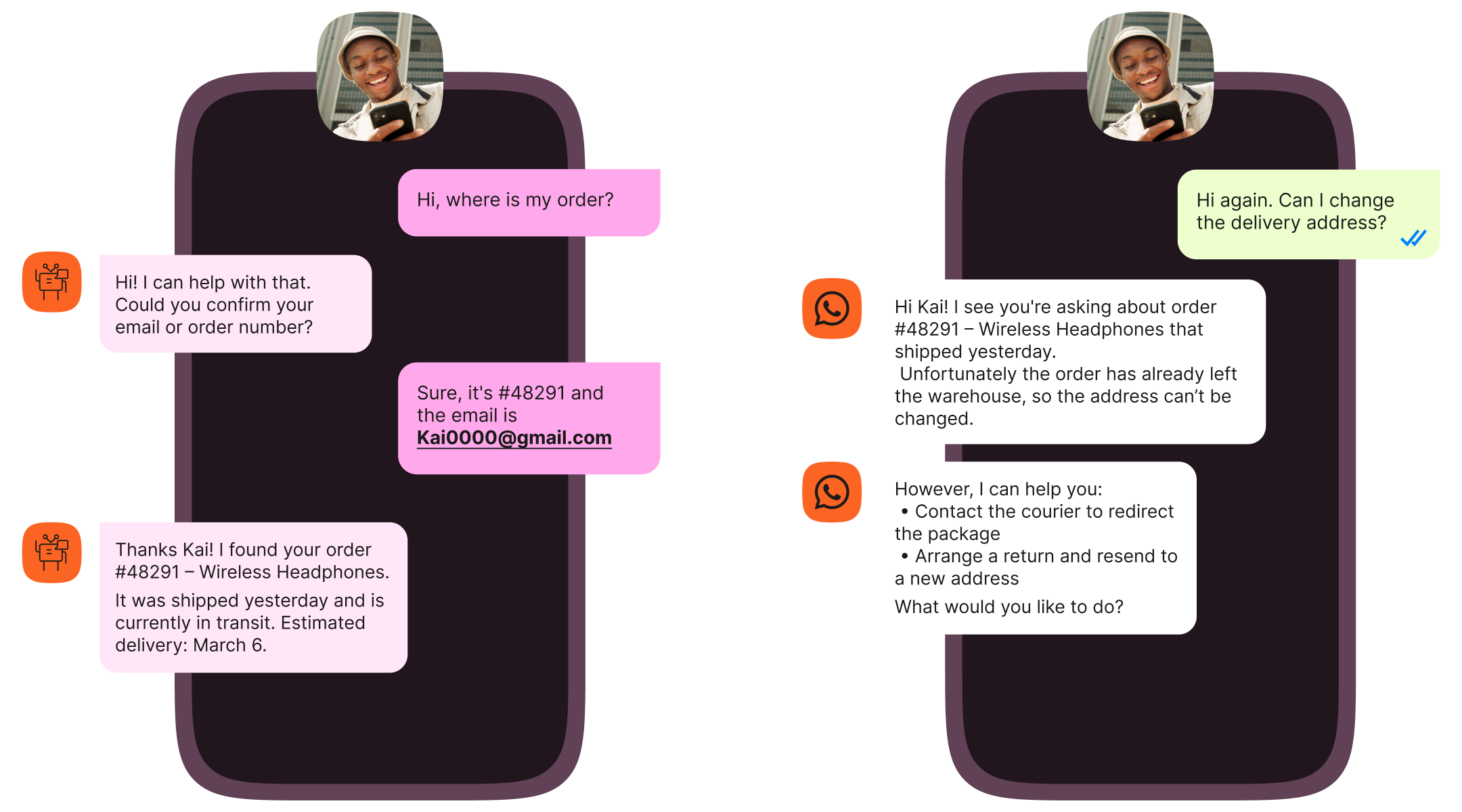
If someone starts a chat on your website and continues it on WhatsApp, the system should remember the entire exchange. If they ask about an order, the AI chatbot should already know which one.
Strong AI platforms combine advanced AI models, real-time processing, and deep integration with your systems. They connect with CRM software, messaging channels, contact centres, Google Workspace, and productivity tools. This allows data to move smoothly across platforms.
When data flows properly, AI performs properly.
Best AI platforms 2026
Several AI platforms lead the market in 2026. Each offers strengths depending on your needs.
1. Infobip
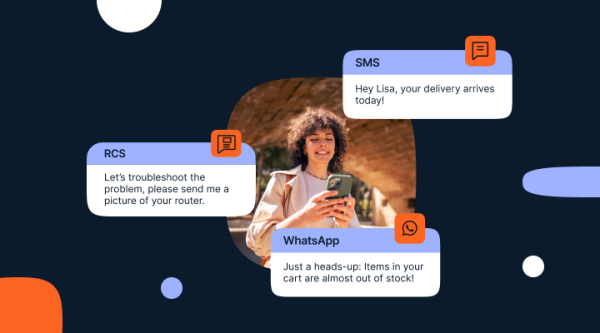
Infobip positions conversational AI within a broader communications platform. Rather than operating as a standalone chatbot tool, AI agents run inside a unified messaging environment that includes SMS, RCS, WhatsApp, email, voice, and Live Chat.
In practice, this allows conversations to move across channels while maintaining context.
For example, a customer might start a conversation on a website, continue on WhatsApp, receive a follow-up SMS, and get a transactional confirmation by email. The system maintains the conversation history throughout the interaction.
Infobip combines:
Advanced AI capabilities
Omnichannel communication
Real-time analytics
Automated workflows
API-based integrations
Visual drag-and-drop journey design
The platform also supports agentic AI capabilities, allowing AI agents to complete tasks and trigger workflows rather than only responding to questions.
Organizations evaluating conversational AI platforms often consider how well AI connects to communication infrastructure. Infobip’s approach focuses on integrating conversational AI directly into messaging ecosystems used for customer engagement.
2. Google Dialogflow CX
Google Dialogflow CX integrates with Google Cloud and Google Workspace. It supports complex conversation design and flexible AI models. It is particularly suitable for developer-led environments.
3. Intercom
Intercom combines AI automation with customer support tools. Its primary focus is customer support, improving response times and reducing ticket loads.
4. Zendesk AI
Zendesk integrates AI into its service platform. It assists agents and automates repetitive queries.
5. Drift
Drift focuses on conversational marketing and sales. AI agents qualify leads and book meetings to accelerate pipelines.
6. Twilio
Twilio provides programmable AI capabilities through APIs. It supports custom builds for technical teams.
7. Sinch
Sinch combines messaging APIs with automation tools. Businesses can deploy AI chatbots across multiple channels and integrate with existing systems.
4 Key ingredients for performative conversational agents
Design conversations around outcomes
Many teams begin by asking what questions a chatbot should answer. High-performing conversational systems start with a different question: what outcomes should the agent complete?
When conversations are designed around outcomes, AI can move beyond answering questions to completing actions such as:
- generating payment links or quotes
- completing checkout inside the conversation
- registering new users and collecting profile information
- creating renewal quotes when subscriptions expire
- escalating cases to human agents with full context
This approach reduces friction and helps conversations progress toward clear business results.
Increase agent proficiency by connecting to your tech stack
Conversational agents become far more capable when they are connected to operational systems.
Integrations with platforms such as CRM systems, payment gateways, inventory tools, scheduling platforms, and knowledge bases allow AI to retrieve information and trigger actions during a conversation.
For example, an agent might detect purchase intent, generate a checkout link, update the CRM automatically, and send a contextual follow-up message through WhatsApp.
When AI connects to your systems, conversations become operational workflows.
Use context to improve decision quality in every interaction
Strong conversational AI adapts responses based on real customer signals and operational context.
These signals may include:
- customer history and lifecycle stage
- previous conversations
- behavioral patterns and engagement trends
- real-time events or triggers
Using this context allows AI to recommend relevant products, proactively assist customers, or pause messaging when issues arise. The result is more natural conversations and better decision making within each interaction.
AI guardrails enable controlled autonomy at scale
As conversational agents become more autonomous, clear guardrails are essential.
Enterprise AI platforms typically include mechanisms such as:
- validation or approval requirements for sensitive actions
- policy and compliance enforcement
- knowledge boundaries to prevent inaccurate responses
- escalation paths when uncertainty or risk is detected
These controls allow AI to automate more processes while maintaining trust, accuracy, and compliance.
What makes a strong AI platform
A capable AI platform does more than respond to text prompts.
It connects to business systems. It retrieves customer data securely. It runs automated workflows that complete tasks. It processes requests in real time. It also supports teams by drafting responses, summarising conversations, and helping with campaign content.
Let’s break that down clearly.
Language understanding
The system must interpret natural language accurately. Strong AI models allow it to understand intent, not just keywords.
Real-time performance
Conversations must remain fast and context aware. Delays reduce trust and satisfaction.
System integration
The platform should connect with CRM systems, messaging channels, contact centres, and internal tools. When AI works across systems, it becomes operational rather than isolated.
Customization and control
Teams should be able to fine tune behaviour, adjust tone, configure escalation rules, and design automated workflows. Drag and drop builders make this easier for non technical teams. APIs allow developers to build deeper logic.
Scalability
The platform must perform consistently across regions, channels, and high message volumes.
When these fundamentals are strong, AI delivers measurable value.
Conversational AI examples across industries
The impact of AI becomes clearer when we look at real use cases.
Healthcare
Healthcare providers use AI agents to schedule appointments, send reminders, share secure updates, and answer common policy questions.
The system connects directly to patient databases. It retrieves information securely and responds in real time. For urgent cases, it escalates conversations to human staff with a summary attached.
This reduces call volumes while improving response times. Privacy and compliance remain central.
Finance
Banks and fintech companies deploy AI to handle balance checks, activate cards, send fraud alerts, and guide onboarding.
The AI connects to backend systems, retrieves account details securely, and triggers confirmations instantly through SMS or email. Automated workflows reduce manual work while maintaining security.
Retail and eCommerce
Retail brands use AI for abandoned cart recovery, order tracking, loyalty management, and product recommendations.
AI analyses purchase history and browsing behaviour. It triggers personalized follow ups in real time and adjusts messaging based on context.
This improves both conversion and retention.
Telecommunications
Telecom providers use AI to troubleshoot issues, manage upgrades, and reduce repetitive support queries.
By automating common requests, teams can focus on complex problems that require human expertise.
Travel and hospitality
Airlines and hotels rely on AI for booking changes, loyalty programs, and real time updates.
Customers can move between web chat, WhatsApp, and email without losing context. The system remembers the conversation and continues it naturally.
Gamification
Conversational AI can also drive interactive experiences through gamification.
Brands use AI agents to run quizzes, reward programs, and time-sensitive promotions that encourage participation rather than passive browsing. The AI tracks responses in real time and adapts the experience based on user behaviour.
Second screening is a strong example. During live sports events or TV broadcasts, viewers can interact with an AI chatbot on their phone while watching. The bot might run polls, offer predictions, or unlock exclusive discounts tied to the moment.
This keeps engagement high while collecting valuable data and driving measurable results such as click-through rates and lead generation.

AI is not just a trend
AI has moved beyond hype. Businesses continue investing because results are visible.
Well implemented AI platforms:
- Reduce response times
- Lower operational costs
- Improve customer satisfaction
- Increase conversion rates
- Support smarter decision making
When integrated properly, AI becomes part of daily operations. Customers experience smoother journeys. Teams focus on higher-value work. Leadership sees measurable improvements.
The value is practical and measurable.
The platform that fits your strategy
Technology should support your strategy, not reshape it.
Some businesses need straightforward AI automation that handles common questions clearly and reliably.
Others require deeper AI capabilities integrated across channels, connected to their tech stack, and capable of running automated workflows at scale.
The strongest AI platforms in 2026 s쳮d because they align with business goals.
When selecting which AI platform to invest in, focus on building systems that support measurable results, real personalization, and operational efficiency.
Infobip connects AI with messaging infrastructure, advanced AI models, and orchestration tools inside one environment. It integrates intelligence directly into workflows rather than isolating it.
The goal is not to chase trends. The goal is to build systems that improve how your business communicates, operates, and grows.
Infobip as a fan favorite
There is something undeniably satisfying about using a platform that feels complete.
Infobip’s AI Hub is built to guide businesses from idea to launch without chaos. It follows a simple but powerful flow.
First, define your use case. Are you solving customer support bottlenecks, boosting lead generation, or improving sales conversions?
Next, choose your channels. Engage customers on WhatsApp, RCS, web chat, mobile apps, or multiple channels at once. Meet them where they already are.
Then design the journey. Shape conversations that reflect your brand voice. Infobip trains the AI using your documentation, so responses remain accurate and aligned with your messaging.
Testing comes next. AI Hub refines performance using Retrieval Augmented Generation technology with over 95 percent response accuracy. It reduces hallucinations and prepares the system for real-world scenarios.
Finally, launch and monitor. Real-time analytics help you continuously improve.
Infobip backs this with:
- 40 plus global data centers for flexible data storage
- Enterprise grade security on Azure
- Microsoft partnership for stable performance
- Support for 130 plus languages
- 24/7 technical support and consultancy
The results speak clearly.
Megi Health reduced data collection time by 65 percent and achieved an 86 percent customer satisfaction score.
Podravka reached an 18 percent conversion rate to engaged users with 343,000 messages exchanged in 90 days.
LAQO Insurance now handles 30 percent of queries through AI, with 90 percent resolved within just a few messages.


Infobip also supports conversational AI marketing, conversational commerce, and conversational support in one unified platform.
It is fast to launch, flexible to scale, and built for measurable ROI.
That combination explains why many businesses do not just adopt Infobip. They stick with it.
FAQs about best AI platforms
The best AI platform depends on your goals. Companies often evaluate Infobip, Google Dialogflow CX, Intercom, Zendesk AI, Drift, Twilio, and Sinch based on integration depth and scalability.
Assess integration capabilities, real-time performance, scalability, customization options, and alignment with your tech stack.
Healthcare, finance, retail, telecom, travel, and e-commerce see strong results in automation and customer engagement.
Yes. Modern AI agents can book appointments, process requests, update accounts, and trigger automated workflows without manual input.
Some AI platforms support image generation and AI-generated content, though most business value comes from workflow automation and data integration.
Agentic AI describes systems where AI agents take initiative, complete tasks, and execute workflows rather than only answering prompts.
Modern AI platforms provide drag and drop tools and APIs. Implementation complexity depends on integration depth and workflow design.
See how conversational AI fits your strategy
Learn how Infobip helps businesses design AI-powered conversations, automate workflows, and deliver personalized customer experiences at scale.