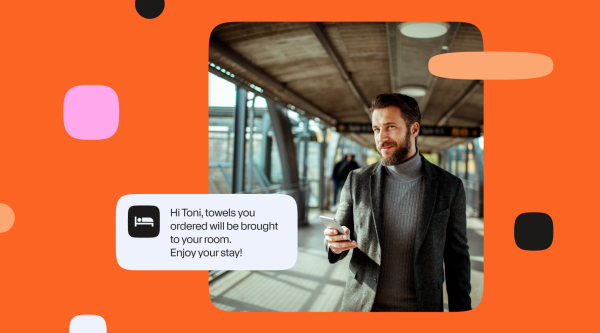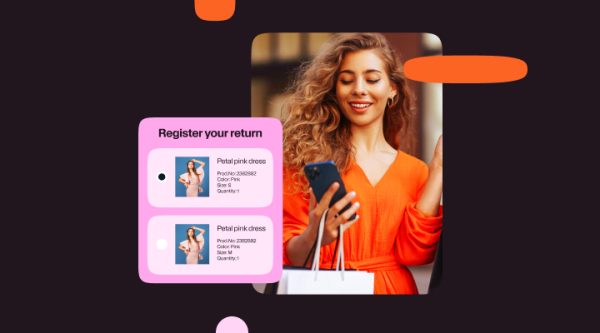





Customer experience automation that delivers at enterprise scale
How customer experience automation (CXA) transforms service, sales, and support. AgentOS automates personalized engagement with AI agents and journey orchestration.

Customer experience automation (CXA) helps enterprise teams use data, messaging, and AI to deliver personalized journeys across the full customer lifecycle. The real challenge is keeping those journeys consistent across WhatsApp, SMS, RCS, live chat, email, voice, and in-app messaging without losing context or control.
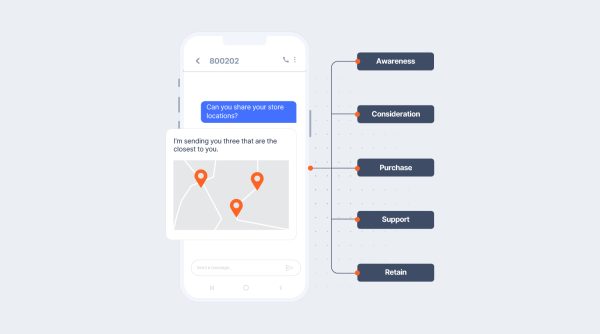
Picture a customer starting on your website, asking a question on WhatsApp, stalling at checkout, and getting an SMS nudge instead of a generic email. That is how CXA turns intent into conversion instead of losing the customer at checkout.

This guide covers the CXA fundamentals buyers expect and the enterprise capabilities that matter most. CXA only works when the journey can be delivered, not just designed. Customer results include a 40% conversion lift, a 60% reduction in operational costs, and a 30% AI resolution rate, with 90% of those conversations finished in 3 to 5 interactions.
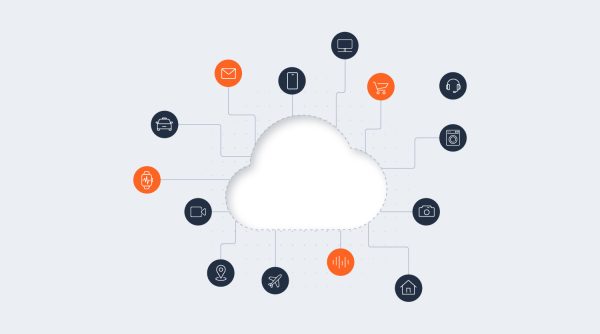
The enterprise CXA stack: A conversational AI platform understands intent, the customer data platform unifies context, Journey Orchestration chooses the next step, and native channels deliver it.
Before the pillars make sense, it helps to define CXA clearly.
What customer experience automation is and what it is not
Customer experience automation uses AI, automation, and customer data to streamline and personalize interactions across the entire customer lifecycle. That includes onboarding, support, retention, recovery, and growth, not just campaign execution. It spans marketing automation, CRM, and customer service automation, but it goes further by acting across the full lifecycle instead of stopping at campaigns, records, or tickets.
The missing piece is delivery. A platform can have strong logic and still fail if it cannot reach the customer on the right channel, at the right time, with the right context. That is why enterprise CXA has to combine AI reasoning, customer data unification, and native messaging infrastructure in one stack. If the journey cannot be delivered reliably, it is nothing more than a workflow diagram.
With that definition in place, the four pillars are easier to apply.
The four pillars of customer experience automation
The standard CXA framework comes back to orchestration, segmentation, personalization, and automation. Each pillar feeds the next, and enterprise scale depends on whether they run on live data, native channels, and systems that can act in real time.
Orchestration connects every touchpoint into a unified journey
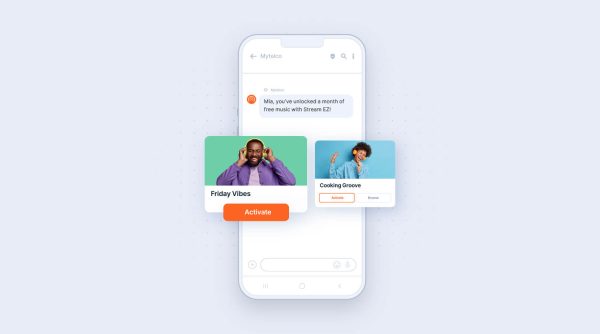
Orchestration connects channels, teams, and systems into one journey. A website action can trigger a WhatsApp message. An abandoned cart can trigger an SMS follow-up. A chatbot escalation can route to a live agent with full context.
Journey Orchestration within AgentOS keeps the thread intact from first visit to resolution, so marketing, service, and support can work from the same journey instead of handing the customer between disconnected tools. One platform can coordinate the next best action across the journey.
Segmentation updates audiences in real time
Segmentation turns customer behavior into live audiences. The Conversational CDP within AgentOS enriches segments with chatbot interactions, messaging behavior, and contact center sentiment, then combines that data with web, CRM, and transactional signals. A customer who browses pricing, asks a bot about a feature, and abandons a checkout can move into a new journey immediately.
That is the difference between static lists and responsive CXA. Real-time segmentation lets teams react while intent is still warm. Instead of waiting for the next campaign cycle, the platform can adjust the journey immediately.
Personalization turns generic messages into contextual conversations
Personalization means using the whole profile to decide what to send, when to send it, and where it should land. Within AgentOS, send time optimization picks the moment a customer is most likely to engage, and channel recommendation picks the format they prefer. A returning customer might get a WhatsApp message after browsing a product and chatting with a chatbot, instead of a generic email the next morning.
That keeps the message relevant and cuts wasted sends. The platform can choose the most useful next action instead of blasting every contact with the same message.
Automation lets AI agents act, not just respond
Automation is where AI agents can take initiative. AI agents within AgentOS access the unified customer profile, reason over the situation, act across channels, and escalate to humans when judgment is needed. They move the journey forward.
That means automation can do more than lower support load. It can take the next step for the customer, whether that is routing the conversation, sending a follow-up, or resolving a simple issue automatically.
How AgentOS maps to the four pillars
- Orchestration: Journey Orchestration coordinates every channel, team, and system in one flow.
- Segmentation: the Conversational CDP builds live audiences from messaging, web, CRM, and contact center data.
- Personalization: send time optimization and channel recommendation across the WhatsApp Business Platform, SMS, and RCS business messaging.
- Automation: AI agents built on the conversational AI platform, with handoff to the cloud contact center.
The impact is easy to see early on when each pillar works together.
Benefits of customer experience automation for enterprise
Once CXA is live, the value shows up in resolution speed, operating cost, conversion, and scale. Those are the metrics enterprise leaders care about. Here is how those outcomes show up in practice.
Faster resolution and higher customer satisfaction
AI agents can answer common questions instantly on the channel the customer already uses, whether that is WhatsApp, SMS, or live chat. Customers do not sit in queues for simple tasks, and they do not have to repeat themselves as they move between channels. LAQO Insurance saw 30% of queries resolved by AI chatbot, and 90% of those conversations finished in 3 to 5 interactions.
That improves CSAT and lowers handle time. Customers get a fast answer in a channel that feels familiar.
Reduced operational costs without sacrificing quality
CXA cuts manual work. Segmentation updates itself, behavior triggers messages, and routing sends conversations where they belong. When messaging, automation, and routing live in separate tools, teams waste time reconciling data, fixing broken handoffs, and maintaining duplicate workflows. Farm Superstores cut operational costs by 60% after integrating WhatsApp chatbot automation into its support workflow.
The result is less tool sprawl and lower operational drag. That matters because enterprise savings need to come from structure, not shortcuts.
Higher conversion rates through contextual engagement
Bolt increased conversion by 40% with a WhatsApp sign-up journey that reached customers on the channel they already used. That is what happens when personalization and orchestration line up. CXA turns interest into action faster, so revenue teams can move before intent cools.
Those results matter most when the same journey can scale across markets, languages, and traffic spikes.
Scalable support across global markets
Enterprise CXA depends on delivery, not just reach. Journeys need to keep working when traffic spikes, teams expand, or markets shift. That means customers still get a reliable experience wherever they are.
Delivery quality stays consistent even when volume rises or demand changes. That is what makes automation usable at enterprise scale.
That context sets up the real use cases.
How customer experience automation works in practice
The examples below show multiple modules working together across channels, data, and action.
Automated onboarding across messaging channels
- A new customer signs up on the website and gets a WhatsApp welcome sequence with onboarding steps tied to the product they chose.
- The AI chatbot answers setup questions.
- Journey Orchestration sends an SMS nudge if they stall.
- A contact center agent steps in with the full history if they still need help.
This process keeps onboarding in one continuous journey instead of several broken interactions. The customer does not have to repeat information at every step.
Proactive customer support before issues escalate
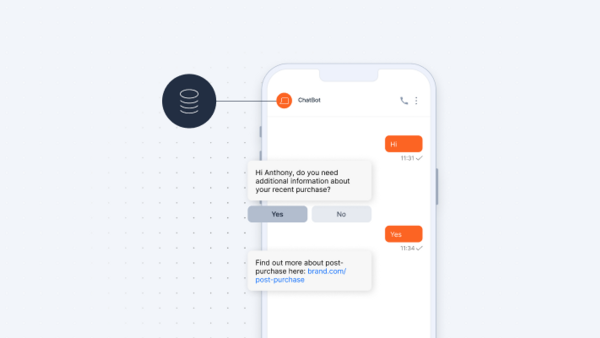
CXA is most useful before a problem becomes a ticket. The Conversational CDP can spot repeated failed transactions, a drop in product usage, or another signal that the customer needs help. AgentOS can trigger a proactive WhatsApp message. If the customer responds, the AI agent handles the issue with the interaction history in consideration.
If the case is too complex, it escalates to a human agent with the full context. That helps prevent churn before it starts.
Cross-sell and upsell triggered by customer behavior
A purchase is not the end of the journey. The Conversational CDP can identify cross-sell opportunities from purchase history, browsing behavior, and conversation context, then trigger a personalized recommendation on the customer’s preferred channel at the optimal send time.
This is CXA at work in revenue, not just service.
Feedback collection and closed-loop analytics
After a chatbot resolution, an agent interaction, or a messaging exchange, AgentOS can automatically trigger a satisfaction survey on the same channel. Results flow back into the customer profile and Insights and Analytics, so teams can see which journeys work and which ones need fixing.
Closed-loop CXA: every interaction creates a signal. Signals improve the customer profile, the profile improves the next journey, and analytics show whether the change created a better outcome.
The best CXA systems learn from history and improve the next version. That closes the loop and feeds the next journey through Insights and Analytics.
The next question buyers usually ask is how CXA differs from adjacent tools.
Customer experience automation vs marketing automation vs CRM
CRM stores data. Marketing automation runs campaigns. CXA automates the full customer lifecycle across every channel. Here is a direct comparison.
| Layer | What it does | Main focus | How it works |
|---|---|---|---|
| CRM | Stores contacts, deals, and interaction history | Record keeping | Holds the customer memory |
| Marketing automation | Runs campaigns and nurture flows | Funnel progression | Schedules sends and triggers campaigns |
| CXA | Automates the full customer lifecycle | Experience and action | Uses live data to decide and deliver the next step |
The simplest way to remember it: CRM is the memory, marketing automation is the campaign engine, and CXA is the action layer that turns live context into the next best experience.
That action layer is what makes CXA work. It uses live data to decide what happens next, then delivers the experience through native messaging, AI agents, and journey orchestration.
That is where the platform comparison starts.
What to look for in a customer experience automation platform
When you evaluate a customer experience automation platform or software, ask these questions.
- Does it support omnichannel delivery, not just third-party connectors?
- Can AI agents act on unified customer profiles?
- Can journeys respond to live events in real time?
- Is customer data from messaging, CRM, web, and contact center tools unified in one place?
- Does the platform include analytics, security, and compliance for regulated markets?
- Does it integrate cleanly with Salesforce, Oracle, SAP, Microsoft, ServiceNow, and 100+ other tools?
AgentOS answers yes to those questions with native integrations, REST APIs, multi-platform SDKs, and real-time webhooks for custom workflows. That matters because enterprise CXA usually has to fit an existing stack, while still delivering a more connected customer experience.
One more layer matters at enterprise scale, and that is delivery.
Enterprise infrastructure behind every automated experience
Enterprise CXA depends on delivery. A journey can look perfect in a workflow builder and still fail if messages do not reach the customer on time.
Why infrastructure matters: AI can decide what should happen next, but carrier-grade delivery determines whether the customer actually receives it.
The infrastructure behind every automated journey
- 850+ carrier connections
- 43 data centers
- Coverage in 190+ countries
- 99.95% uptime SLA
- Automatic language detection for 130+ languages
- SOC 2 Type II, ISO 27001, GDPR, and CCPA compliance
Because messages are delivered through Infobip’s own network, personalization and routing do not depend on a fragile third-party relay. That lets automated journeys work reliably at global scale.
Proof from customers makes the case even stronger.
Trusted by enterprises worldwide
Real customer results show how broad the use cases can be when CXA is backed by the right platform.
Results from real CXA deployments
- Alyasra Fashion built a WhatsApp retail experience that delivered 30x tracked ROI, 18x tracked sales ROI, and 1.5K new customer contacts.
- Podravka helped users make healthier choices with an AI assistant, driving an 18% conversion rate to engaged users and 343K messages exchanged in the first 90 days.
- Mukuru uses a WhatsApp chatbot in 10 languages.
Enterprises invest in CXA because it improves conversion, lowers cost, and makes support easier to scale.
If the use case is clear, the next step is simple.
Final thoughts
We have looked at what CXA is, how orchestration, segmentation, personalization, and automation work together, where enterprise value shows up, and why delivery infrastructure matters at scale.
Ready to move from CXA theory to execution? Contact us or explore the Customer Engagement Platform.
Frequently asked questions
Customer experience automation (CXA) uses AI, machine learning, and automation to streamline and personalize interactions across the full customer lifecycle, from first contact through support and retention. Unlike marketing automation, which focuses on campaign funnels, or CRM, which stores relationship data, CXA acts on the journey itself.
The biggest benefits are faster issue resolution, lower operational costs, better customer satisfaction, higher conversion rates, and more scalable support across global markets. When automation uses real customer context, it improves the experience instead of making it feel robotic.
Marketing automation focuses on campaign execution, including email sequences, lead scoring, and funnel progression. CXA automates the entire customer experience lifecycle, including onboarding, service, retention, and proactive engagement across all channels.
The four pillars are orchestration, segmentation, personalization, and automation. Orchestration coordinates interactions across channels and systems, segmentation groups customers by behavior and data, personalization tailors content and timing, and automation executes the next step at scale. AgentOS supports all four with native messaging delivery, AI agents, and a Conversational CDP.
CXA software is technology that combines AI, data analytics, and workflow automation to manage and personalize customer interactions across the full lifecycle. It usually includes AI agents or chatbots, journey orchestration, customer data unification, analytics, and omnichannel delivery capabilities.
AI improves CXA by enabling autonomous resolution, predictive personalization, intelligent routing, and real-time optimization. It can handle routine tasks without human intervention, anticipate needs before they arise, and adjust timing, channel, and content based on behavior.
Measure CXA ROI through lower operating costs, better CSAT and NPS, faster first contact resolution, shorter average handle time, higher conversion, and lower churn. The clearest proof comes from business outcomes, not just activity metrics.
CRM stores and organizes customer relationship data like contacts, deals, and interactions. CXA acts on that data in real time to automate and personalize customer experiences across channels. CRM is the memory. CXA is the action layer.
The best CXA platform depends on your use case, but enterprise buyers should evaluate native omnichannel delivery, AI agents, a customer data platform, journey orchestration, insights and analytics, integrations, compliance, and global scalability. Infobip’s AgentOS is unique because it combines those capabilities with owned, carrier-grade messaging infrastructure across 190+ countries, giving it a structural advantage that SaaS-only CXA vendors cannot match.
Basic CXA implementations with prebuilt integrations can deliver value within weeks. More complex enterprise deployments with custom AI agents, multichannel orchestration, and CDP configuration typically take 3 to 6 months. Infobip’s native module architecture helps reduce implementation time because the chatbot, contact center, messaging, orchestration, and analytics layers are already designed to work together.