




CDP vs CRM: What’s the difference and what a conversational CDP adds
Learn how a CRM, a CDP, and a Conversational CDP differ, where each one fits, and what Infobip adds when teams need both unified data and live engagement.

If you are evaluating a customer data platform (CDP) and a customer relationship management (CRM) platform, the first question is not which one sounds better. The real question is where your customer data lives, where your customer conversations happen, and how quickly your teams can act on both. A CRM helps you manage known relationships. A CDP helps you unify customer data.
A Conversational CDP brings those layers together, so customer context can move from storage into action. That matters when your customer journey runs across channels and teams. Sales wants account history, marketing wants behavioral signals, service wants recent issues, and AI agents need current context before they reply. It connects unified profiles with live messaging, AI agents, chatbot building, and cloud contact center interactions, so the customer record does not stop at a static profile.
This article explains the core CDP vs CRM differences, shows where each platform reaches its limits, and outlines what Infobip adds when enterprises need both unified data and live engagement.
Customer Data Platform vs CRM: The core difference
The clearest way to think about the relationship between a CRM and a CDP is to separate purpose from output. A CRM manages customer relationships. A CDP unifies customer data. A Conversational CDP uses that unified data to drive action across channels, journeys, and live conversations.
A CRM is built for sales and service teams. It stores known customer records, activity history, pipeline stages, and support notes, which makes it useful for account management and follow-up. A CDP is built for data unification. It pulls together behavioral, transactional, and identity data from multiple sources so marketing, CX, and data teams can work from a fuller customer profile.
The difference goes beyond the type of data each system stores. A CRM helps teams manage customer relationships, while a CDP brings together data from across systems to utilize this data in future communications and campaigns. A Conversational CDP builds on that foundation by connecting customer data to real-time engagement.
What a CRM does
A CRM gives customer-facing teams a shared view of known customers. Sales reps log calls, service teams track cases, and account managers manage contact history in one place. That makes follow-up easier, improves pipeline visibility, and keeps service records organized.
The limitation appears when the customer journey extends beyond what people manually record. A CRM usually depends on human input, so it does not automatically collect anonymous browsing activity, unify behavior across devices, or capture every chatbot and messaging interaction. It can tell you what someone on the team entered, but it does not on its own tell you what the customer is doing right now.
What a CDP does that a CRM cannot
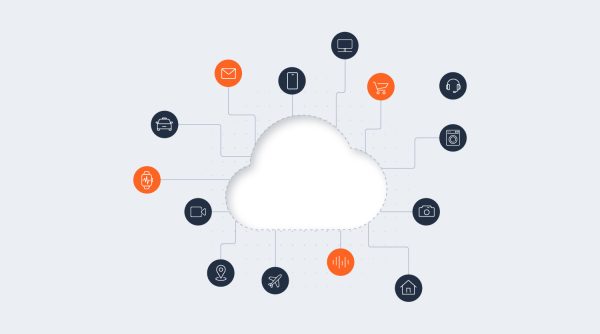
A CDP is designed to collect and unify customer data from multiple sources, which means it can ingest website visits, app activity, transactions, email engagement, identity data, offline interactions, and support events. Once that data is resolved into a unified profile, the business can use it for segmentation, personalization, and activation.
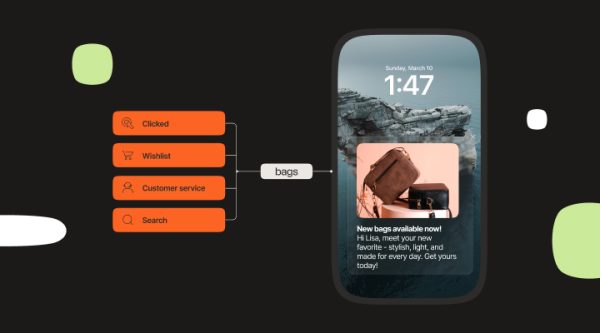
That is where the gap between a standard CDP and a Conversational CDP matters. Infobip’s Conversational CDP also captures data from chatbots, AI agents, WhatsApp, SMS, RCS, live chat, and contact center interactions. Instead of treating conversation as a side channel, it treats it as a source of intent, context, and profile enrichment.


CDP vs CRM comparison table
| Area | CRM | Standard CDP | Conversational CDP in AgentOS |
|---|---|---|---|
| Main purpose | Manage customer relationships | Unify customer data and build segments from events and attributes | Unify data and activate it in conversations |
| Primary users | Sales, service, account teams | Marketing, CX, data teams | Marketing, CX, service, AI, and data teams |
| Data type | Known contacts, deals, cases, notes | Behavioral, transactional, identity data | Behavioral, transactional, identity, and conversational data |
| Data capture | Mostly manual or workflow-based | Automated across sources | Automated across sources and channels |
| Real-time profile | Limited | Strong | Strong, with live conversational context |
| Channel activation | Usually through add-ons | Often email, web, ads | 15+ channels, including messaging |
| AI readiness | Low to moderate | High | High, with native AI agent context |
| Best for | Relationship management | Data unification | Conversational engagement and activation |
This is the simplest answer to the difference between CDP and CRM. A CRM tracks the relationship, a CDP unifies the data, and a Conversational CDP helps the business use that data in the customer journey.
The limits of using each platform alone
The question many teams ask is whether one system can do enough on its own. In practice, the answer depends on the job each team needs to get done, because the strongest CRM and the strongest CDP still leave gaps when used in isolation.
What a CRM alone cannot do
A CRM does not give you the full customer journey. It does not automatically know what someone browsed, clicked, abandoned, or searched before reaching out, and it does not resolve identity across devices or collect anonymous behavior at scale. That makes it hard to personalize messages or route customers with the right context.
If a chatbot or service workflow begins every conversation from zero, the CRM is only part of the stack, not the full answer.
What a standard CDP alone cannot do
A standard CDP solves unification, but it does not replace the operational work that the CRM owns. Sales pipeline management, account ownership, and case handling still live in the CRM, which is why the two systems often need to work together rather than compete for the same role.
The other limit appears at activation. Standard CDPs often stop at email, web, or ad tools, which means teams still need connectors, middleware, and more integration work to activate data in messaging channels. That adds complexity exactly where enterprises want speed.
How CDP and CRM work together
The most useful way to think about CDP and CRM together is as a connected data flow between systems. The CRM stores the relationship, the CDP enriches it with behavioral and transactional data, and the combined profile then becomes useful across marketing, service, AI, and messaging.
In a well-designed stack, the CRM first captures known customer data. The CDP then ingests that CRM data alongside behavioral and conversational signals, resolves identity across sources, and builds a unified profile. Once that profile exists, the business can activate it across messaging, web, AI, and contact center, then feed results back into future interactions.
Teams do not have to stitch together separate systems for CRM integrations, a Conversational CDP, journey orchestration, AI agents, chatbot building, and cloud contact center. Within AgentOS, those capabilities already work together in the same environment.

What a Conversational CDP adds
A Conversational CDP does not only store data. It captures the information created during conversations with customers, which is often the point where intent is strongest and response time matters most.
That includes chatbot sessions, AI agent interactions, messaging history, contact center transcripts, sentiment signals, and intent signals. When that data becomes part of the customer profile, teams can respond with more context and less delay.
The value is practical rather than abstract. If a customer asks a question on WhatsApp, the platform does not need to wait for a batch sync or an external middleware chain before it can respond with context. The profile already reflects the interaction.
That is what distinguishes Infobip’s Conversational CDP from a standard CDP. It extends beyond profile creation into activation.
The business results show why that matters. Bolt saw a 40% increase in conversion rate through WhatsApp, Farm Superstores reduced operational costs by 60%, and LAQO Insurance resolved 30% of queries with an AI chatbot. These outcomes point to the same pattern: when the data layer and the engagement layer work together, the customer experience improves and the operational load drops.

When to use a CRM, a CDP, or both
The decision is easier when you frame it around the work your teams actually do.
- A CRM remains the right foundation for sales pipeline management, service tracking, and account ownership, because those tasks depend on structured relationship data and operational workflows.
- A CDP becomes valuable when the business needs a unified view of behavior, transactions, and identity across digital touchpoints.
- A Conversational CDP within AgentOS becomes the stronger choice when engagement happens across messaging, chatbots, AI agents, or contact center, because it brings profile data into the same environment where the customer conversation happens.
That also answers the question behind do I need a CDP if I have a CRM. For businesses focused mainly on relationship management, a CRM can carry much of the load. A CDP becomes more important when personalization, real-time response, and cross-channel activation enter the picture. When live engagement across messaging, AI agents, and contact center also matters, the conversational layer becomes just as important as the data layer.
What this means for your stack
If your CRM already supports sales and service, keep it. If your team needs unified behavioral and conversational data, add a CDP. If you need that data to move into live messaging, AI agents, and contact center without extra integration work, the Conversational CDP within AgentOS brings the full loop together.
A CRM manages the relationship. A CDP builds the profile. AgentOS connects both to the channels where customers actually respond, so your teams can work with the right context at the right moment.
FAQs about CDP vs CRM
A CRM manages direct relationships with known customers. It helps sales and service teams track contacts, deals, cases, and account history. A CDP unifies data from multiple sources into a single customer profile, so teams can use behavioral, transactional, and identity data for personalization and activation.
No. A CDP and a CRM serve different roles in the stack. A CRM supports sales and service workflows, while a CDP organizes customer data and makes it usable across channels. Most enterprise teams need both to manage relationships and activate data at scale.
If you want a fuller view of customer behavior, then yes. A CRM stores relationship data, but it does not usually capture anonymous browsing, cross-device activity, or live conversational signals. A CDP adds that missing context and helps teams personalize in real time.
The CRM stores known customer data such as contacts, deals, and service history. The CDP brings that data together with behavioral and conversational signals, resolves identities, and activates the unified profile across channels. That gives marketing, service, and AI teams a more complete customer view.
A CDP collects data that reflects customer behavior across the journey. That includes website visits, app activity, email engagement, transactions, and, in the case of Infobip’s Conversational CDP, chatbot sessions, messaging history, and contact center interactions. A CRM usually stores data that people enter manually or through sales and service workflows.
A conversational CDP is a customer data platform that also captures and uses conversation data. It brings together messaging, chatbot, AI agent, and contact center interactions, then turns that data into profile enrichment and real-time activation. In Infobip’s AgentOS, that helps teams connect customer data with live engagement across channels.
Ready to connect customer data with live conversations?
Explore how Infobip’s Conversational CDP within AgentOS helps enterprise teams unify customer profiles, activate messaging across 15+ channels, and support AI agents and contact center with real-time context.