




Customer data types and collection methods: The enterprise guide
Explore the key types of customer data, from identity and behavioral to transactional and attitudinal, plus modern collection methods across messaging channels.

Customer data collection now depends on first-party signals, clear consent, and data that enterprises can activate in real time. That matters more as cookie-based tracking becomes less reliable, privacy regulations keep tightening, and customers expect relevant experiences across every channel.
For enterprise teams, the challenge is not just collecting customer data. It is collecting reliable data and making it usable across channels in real time. That is why the customer data strategy now starts with two questions: What data should you collect? And how should you collect it?
This article covers the core types of customer data, the collection methods enterprises use today, and the growing role of conversational interactions across messaging channels. It also explains how a customer data platform helps unify and activate customer data in real time.

The core types of customer data every enterprise needs
Customer data usually falls into four core categories by use, plus a source-based taxonomy by origin.
The use-based view helps you understand what the data tells you. The source-based view helps you understand where it came from and how reliable it is. Together, they form the base of a complete customer data strategy.
Identity data: Who your customers are
Identity data tells you who a customer is. It includes names, email addresses, phone numbers, physical addresses, social handles, account IDs, and other personally identifiable information.
This data is the foundation of a unified customer profile. Without it, you cannot reliably connect behavior, transactions, support history, or messaging activity to the same person.
In enterprise environments, messaging channels often capture identity data naturally. A phone number, a verified WhatsApp profile, or a registered live chat session can all help resolve identity with consent already built in. That makes messaging a strong source for first-party identity data.
Behavioral data: What your customers do
Behavioral data shows what customers do. It includes website visits, app usage, product views, clicks, search activity, session length, and purchase patterns.
This data helps teams understand actions, but not motives. A customer may browse a product page ten times before buying. That behavior matters, but it does not explain why they hesitated.
Behavioral data increasingly comes from conversational channels such as chatbots, messaging apps, and live chat. Chatbot interactions, messaging response patterns, conversation paths, channel preference, and intent signals can all reveal behavior outside the browser. In other words, behavior no longer lives only on the website. It also lives in the conversation.
Transactional data: How your customers buy
Transactional data covers purchase history, order values, payment methods, subscription activity, renewals, returns, refunds, and cart abandonment. It is one of the most useful data types for segmentation and value modeling.
It helps teams identify high-value customers, predict churn, and shape cross-sell or upsell strategies.
Transactional data now also appears inside messaging journeys. Customers buy through WhatsApp, RCS, SMS, and chat-based commerce flows. That creates transactional data at the point of conversation, not just at the point of checkout. Traditional analytics tools do not always capture that interaction fully.

Sentiment data: How your customers feel
Attitudinal data reflects how customers feel. It includes satisfaction scores, NPS, CSAT, reviews, feedback, comments, opinions, and sentiment.
This data is valuable because it comes directly from the customer. It is also harder to collect well. Responses are often self-selecting, unstructured, and influenced by timing.
Sentiment can now be detected during chatbot and messaging interactions, not just after a survey. That gives enterprises a more continuous view of customer mood and experience.
Data source taxonomy: Zero, first, second, and third-party
It helps to classify customer data by source too.
Zero-party data is data a customer intentionally shares. It includes preferences, goals, communication choices, and answers given in surveys or chatbot flows. It is high quality because the customer gives it directly.
First-party data is collected from owned channels. This includes website behavior, app activity, purchase history, messaging interactions, and support conversations. It is direct, reliable, and easier to activate than third-party data.
Second-party data comes from a trusted partner. It can extend your view, but only if the relationship is clear and the data is relevant.
Third-party data is aggregated from external sources. Its value is falling fast. Cookie deprecation, stricter privacy rules, and weaker signal quality have all reduced its usefulness.
Privacy regulations and cookie deprecation are pushing enterprises toward zero-party and first-party data collection. Conversational interactions are one of the strongest ways to collect both.
Customer data collection methods: From traditional to conversational
Now let’s move from what to how.
Enterprises already collect customer data across many systems, but coverage is often limited to web, CRM, and form-based interactions. That leaves out one of the richest sources of consented customer data available today: conversation.
Web analytics and digital tracking
Web analytics gives teams a view of digital behavior. Tools like Google Analytics, heatmaps, session recordings, and pixel tracking show which pages people visit, how long they stay, and where they drop off.
It captures behavioral data well and can also help with identity resolution when paired with login or server-side signals.
But the limits are growing. Cookie deprecation, ad blockers, and stricter privacy laws make passive tracking less reliable than before. Enterprises need first-party tracking strategies, not just cookie-based setups.
Forms, surveys, and direct customer input
Forms and surveys remain core methods for collecting direct input. They include lead forms, registration forms, preference centers, and feedback surveys. These methods are especially useful for zero-party and first-party data because the customer gives the information directly and explicitly consents to it.
The problem is friction. Long forms and one-time surveys often lead to low completion rates and form fatigue. Many customers quit before they finish.
That is why more teams are moving toward conversational data capture. Instead of asking for everything at once, they collect data in smaller steps during a conversation.
CRM and transactional systems
CRM and transactional systems are a major source of customer data. They include platforms like Salesforce, HubSpot, eCommerce systems, POS tools, and ERP systems. These systems capture identity, purchase history, support interactions, and service context. They are essential for sales and service teams.
CRM data is only as useful as the information flowing into it. When customer data stays fragmented across separate systems, marketing sees engagement, support sees tickets, sales sees pipeline activity, and no team has a complete customer view.
That is why unification matters.
Social media and community listening
Social listening tools help teams capture what customers say in public channels. They can reveal sentiment, trends, complaints, praise, and emerging needs. This is useful for attitudinal and behavioral insight. It helps teams understand how customers talk about a brand and what issues matter to them.
The tradeoff is control and attribution. Social data is noisy. It is hard to tie to one known customer unless it is connected with other first-party data.
Conversational data collection: The method most guides miss
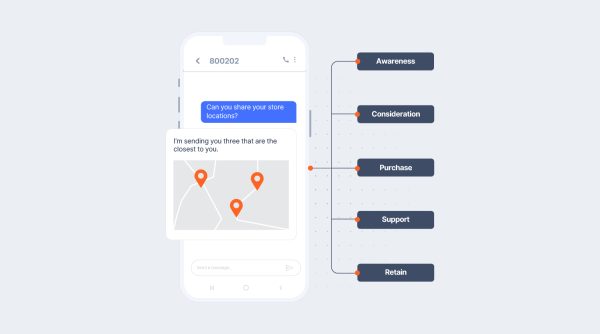
Many enterprises still underuse messaging and conversational channels for customer data collection. Conversational interactions across WhatsApp, SMS, RCS, live chat, voice, and chatbots are becoming a high-value source of consented customer data for enterprises.
Why? Because the customer is already engaged. They started the conversation or opted in. That changes the quality of the signal. A single conversation can capture intent, preferences, sentiment, channel choice, response patterns, identity signals, and zero-party data shared inside a flow.
It also creates structured data in real time. A chatbot can ask a question, capture the answer, validate it, and pass it downstream instantly.
Infobip supports 15+ native channels, 130+ languages, and 850+ carrier connections across 190+ countries. Enterprises can collect customer data where customers already are. That data then flows into the Conversational CDP within AgentOS.
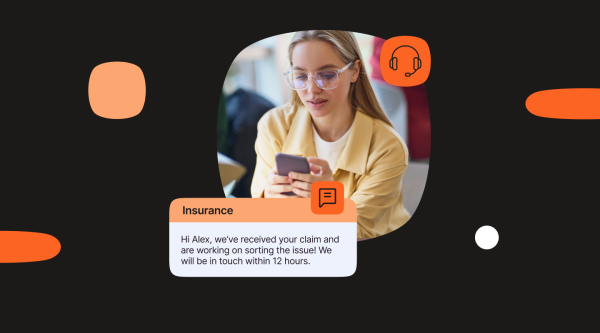
WhatsApp Flows are a strong example. They let enterprises collect structured data for use cases like loan applications, preference capture, feedback, onboarding, and service intake. Progressive profiling makes this even better. Instead of asking everything in one long form, each conversation adds a small amount of data over time. That reduces friction and improves completion rates.

Loyalty programs and incentivized data sharing
Loyalty programs remain a strong source of transactional and preference data. Customers are often willing to share more when they see a clear value exchange.
Rewards, points, and personalized benefits can improve both the volume and accuracy of shared data. Gamified collection also works well when the ask is relevant and the value is obvious.


This method is not new, but it still works. It is especially effective when paired with conversational channels.
Unifying customer data: Why collection without activation is wasted effort
Most enterprises collect from dozens of sources, then store the data in separate systems. CRM holds one view. Analytics holds another. Support tools hold another. Messaging platforms hold yet another. The result is a fragmented customer picture.
The result is familiar for many enterprise teams: duplicate records, inconsistent experiences, and fragmented personalization.
The silo problem in enterprise customer data
The silo problem is common across enterprise teams.
Marketing has email engagement data, support teams manage ticket history, sales works from CRM activity, eCommerce teams track order data, and messaging teams handle conversation logs, but these systems often remain disconnected.
Validity industry survey found that 24% of CRM admins report that less than half their data is accurate and complete. Even if the exact number changes by source, the pattern is familiar: disconnected systems create unreliable profiles.
Teams repeat outreach, miss context, and fail to personalize across channels.
How a customer data platform solves unification
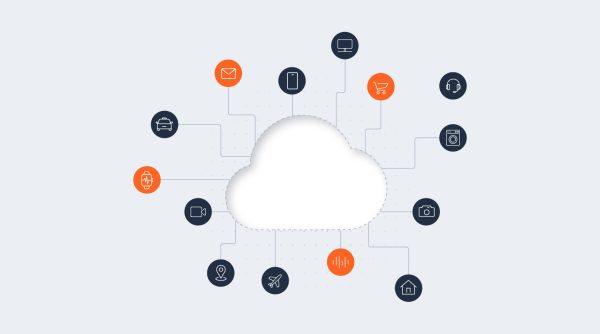
A CDP ingests data from multiple sources, resolves identities across channels, builds unified customer profiles, and makes that profile available for activation in real time. That matters more now because enterprises need customer data they can activate in real time.
Infobip’s Conversational CDP within AgentOS unifies first-party conversational data from chatbots and messaging interactions with CRM, web, and transactional data in real time. That means no third-party middleware and no batch-only thinking. The data is ready for real-time use across 15+ channels.
You can also connect the CDP with other AgentOS modules, including the chatbot building platform, journey orchestration, AI agents, insights and analytics and cloud contact center.
From collection to activation: Closing the loop
It starts with collection through conversations and digital touchpoints. It moves into unification inside the CDP. Then it activates through personalized messaging, journey orchestration, and AI agent interactions. After that, teams measure outcomes and refine the next interaction.
In AgentOS, that loop spans multiple modules: chatbot builder for collection, Conversational CDP for unification, journey orchestration for activation, AI agents for complex actions, and insights and analytics for optimization. That is the difference between data storage and customer experience design.
Collecting customer data responsibly: Privacy, consent, and compliance
Customer data collection now lives inside a tighter regulatory environment. Teams need to move fast, but they also need to stay compliant.
Privacy and consent now need to be built into customer data strategies from the start.
GDPR, CCPA, and global privacy regulations
Regulations such as GDPR, CCPA, PIPL, and LGPD shape how enterprises collect and use customer data. They push teams toward consent, transparency, and data minimization. They also make passive tracking less attractive and first-party collection more important.
Messaging-based collection works well here because it is usually opt-in by design. It also tends to be more explicit than passive web tracking. That makes it easier to align with privacy requirements.
Infobip also supports enterprise-grade infrastructure, including data residency options across 43 data centers, plus SOC 2 Type II and ISO 27001 certifications.
Consent management across channels
In an omnichannel environment, consent needs to travel with the customer. That means managing opt-ins, preferences, channel permissions, unsubscribe requests, and regional rules across every touchpoint.
Messaging channels like WhatsApp, SMS, and RCS require explicit opt-in. That makes them some of the most consent-compliant channels for data collection. When managed well, they can support both trust and scale.
Best practices for enterprise customer data collection
Here are the practical rules that matter most.
- Start with a data strategy, not a tool: Do not begin by collecting more data. Begin by deciding which data types support your business goals. If the goal is personalization, retention, or cross-sell, define the data needed for each.
- Prioritize first-party and zero-party sources: Third-party data is less useful than it used to be. Focus on data you collect directly from owned channels and customer interactions. That data is more accurate and more actionable.
- Use conversational channels for higher-quality input: Messaging and chatbot interactions give customers a natural way to share data. They also reduce friction compared with long forms. Use them to capture preferences, intent, and feedback in context.
- Invest in unification before expanding collection: Collecting more data without unifying it usually creates more noise, not more value. A CDP helps connect sources, resolve identities, and keep profiles current.
- Use progressive profiling: Ask for a little more each time, not everything at once. Progressive profiling keeps the experience light and improves completion rates over time.
- Measure data quality, not just data volume: Volume alone can mislead. Track completeness, accuracy, deduplication rates, consent status, and match quality. Good data beats more data every time.
Customer data collection examples by type
To make this more concrete, here is how the main data types show up in real enterprise environments.
- Identity data examples: Name, phone number, email address, customer ID, verified WhatsApp profile, account number.
- Behavioral data examples: Website visits, app clicks, product browsing, chatbot path choices, message response timing, channel preference.
- Transactional data examples: Order history, subscription renewals, refunds, payment method, cart abandonment, in-conversation purchases.
- Attitudinal data examples: NPS scores, CSAT ratings, reviews, support feedback, sentiment in chat, survey responses.
- Zero-party data examples: Preferred communication channel, product preferences, budget range, use case, onboarding goals, purchase intent.
The key is not to collect every possible field. It is to collect the right data at the right moment, with consent, and in a format you can use.
Why conversational data collection matters more in 2026
Customers no longer want to repeat themselves across channels. They expect brands to remember context, respond in real time, and respect privacy. That pushes enterprises toward first-party, consented, and continuously updated data.
Messaging-based data collection fits that model better than traditional tracking methods. It is more direct, more current, and easier to activate in real time. The Conversational CDP within AgentOS collects data from every messaging interaction, unifies it with the rest of the customer stack, and activates it in real time across 15+ channels and 130+ languages.
Rather than collecting more disconnected data, enterprise teams are focusing on building unified customer views across channels and systems.
What enterprise teams should do next
Enterprise teams are increasingly building unified customer views across channels and systems.
The core customer data types and collection methods still matter, but enterprise teams increasingly combine traditional inputs with conversational data from owned channels, unify that data in a CDP, and activate it in real time.
That is how you move from scattered records to better customer experiences.
FAQ
Customer data is usually grouped into four main categories: identity data, behavioral data, transactional data, and attitudinal data. Identity data tells you who the customer is, behavioral data shows what they do, transactional data shows how they buy, and attitudinal data shows how they feel. A second useful view is source-based: zero-party, first-party, second-party, and third-party data.
Customer data can come from web analytics, forms, surveys, CRM systems, transactional systems, social listening, loyalty programs, and conversational channels. For enterprise teams, messaging interactions are becoming more important because they capture consented, identity-resolved data in real time.
First-party data comes directly from your own channels and customer interactions. Third-party data comes from external aggregators and has less direct customer relationship value. First-party data is usually more accurate, more compliant, and more actionable. That is why it is now the core of most enterprise data strategies.
Zero-party data is information a customer intentionally shares with a brand. It can include preferences, communication choices, goals, or purchase intent. It is high value because the customer gives it directly. Conversational flows and messaging interactions are especially effective for collecting it.
Ethical customer data collection starts with clear consent, transparency, and customer control. You should explain how data will be used, offer opt-in and opt-out choices, and respect privacy regulations. Messaging channels can help because they often require explicit opt-in. That makes consent easier to manage.
A customer data platform, or CDP, is software that collects data from many sources, resolves identities, builds unified customer profiles, and makes that data available for activation. A CDP helps enterprises turn fragmented data into a usable view of each customer.
Common tools include web analytics platforms, CRM systems, survey tools, social listening platforms, marketing automation tools, and customer data platforms. For messaging-based collection, enterprises also use chatbot builders and omnichannel messaging platforms.
Conversational data collection captures information through chatbot conversations, WhatsApp messages, SMS, live chat, and other messaging interactions. Each conversation can capture intent, preferences, sentiment, and explicit answers. The data is then structured and passed into a CDP or similar system for activation.
Data quality starts with verified collection sources, structured capture, identity resolution, and deduplication. You also need validation rules, regular hygiene processes, and clear governance. A unified CDP helps keep data current by connecting sources and resolving profiles in real time.