



HubSpot x Infobip: Solving the engagement gap
HubSpot and Infobip explore how connected data, messaging channels, and AI-ready CRM foundations help brands close the engagement gap and deliver more relevant, human customer experiences.

Customer experience has become the ultimate differentiator. The way a brand communicates, responds, and builds relationships is far harder to replicate than products or features. Customers now judge companies by how quickly they reply, how relevant their messages feel, and how well they understand context across channels.
With this in mind, we spoke with Jose Jaramillo, LatAm HubSpot Partner Program Director, to understand how brands are addressing this growing engagement gap and why HubSpot’s partnership with Infobip plays an important role in closing it.
Customers engage where conversations happen
Conversations with friends, family, and colleagues happen primarily through messaging apps. They are always on, always accessible, and woven into daily routines. It’s natural that customers bring those same habits and expectations into their interactions with brands. When they reach out, they want the experience to feel just as direct and familiar as any other conversation on their phone.
As Jose Jaramillo explained, messaging is no longer reserved for simple questions or quick updates. Customers use it to research products, compare options, ask for recommendations, resolve issues, and follow up after a purchase. In many cases, a single conversation spans multiple stages of the customer journey, all within the same thread.
Speed matters, but it’s only one part of what customers notice. A fast response loses value if it lacks context or forces the customer to repeat themselves. Inconsistent answers across touchpoints, or being passed from one channel to another, create friction and weaken confidence in the brand.
These customers are demanding faster responses, immediacy, and personalized content. Their demands are higher than ever, and they are just going to keep growing. So, of course, that is very demanding for companies all across Latin America, especially Brazil and Mexico. And that trend is only trending up, it doesn’t look like it’s going to slow down. So, it’s up to brands to actually reach customers where they are in these regions.

Jose Jaramillo
LatAm HubSpot Partner Program Director
What customers value most is continuity. They expect brands to remember who they are, recognize previous interactions, and respond in a way that reflects an ongoing relationship rather than a one-off exchange. When messaging is connected and informed by past conversations, interactions feel smoother and more human.
Understanding context also allows brands to tailor how they communicate. Once a company knows whether someone is in an awareness, consideration, or decision stage, it becomes easier to guide them in a relevant way and choose the most effective channel for that moment.
“If it’s awareness, it’s going to be very different from consideration or the decision,” Jose noted. “That’s where key channels like WhatsApp and RCS are going to play a very, very important role in those later stages of the buyer’s journey.”
RCS: A new opportunity for customer engagement
WhatsApp continues to be the most widely used messaging channel across Latin America, and it plays a central role in how brands communicate with customers. At the same time, Jose pointed to RCS (Rich Communication Services) as an emerging channel delivering promising results.
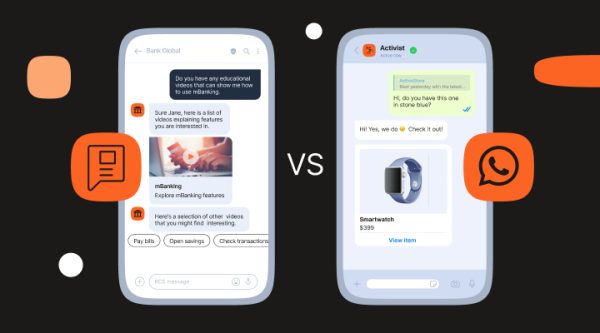
Often described as an evolution of SMS, RCS brings richer, more interactive experiences directly into native messaging apps. Brands can include images, branded elements, buttons, and guided flows that make messages easier to understand and act on.
Rather than competing with WhatsApp, Jose described RCS as a complement. While WhatsApp supports open, conversational exchanges, RCS works particularly well for structured communication such as confirmations, reminders, onboarding messages, and educational content. In markets like Brazil and Mexico, early adopters are seeing higher engagement by using RCS where clarity and guidance matter most.

Why strong data foundations matter for AI
As interest in artificial intelligence continues to grow, Jose emphasized that results depend less on tools and more on preparation. AI relies on data that is accurate, organized, and accessible. Without that foundation, automation creates noise instead of value.
HubSpot’s CRM provides the structure needed to support AI across marketing, sales, and service. When customer data is centralized and consistent, AI can help prioritize leads, suggest next actions, and surface insights that improve conversations rather than replace them.
We’ve seen in HubSpot that the most prepared companies are the ones that are ready to use it, actually have solid basis. And what I mean by that is a solid data architecture.
Jose Jaramillo
LatAm HubSpot Partner Program Director
He added that organizations with years of CRM usage are in a strong position to benefit from AI today. “What I see is the best combinations are those companies that have used a CRM for the past years, and now they are ready to actually turn on any AI and start, accessing this information.”
In these cases, automation supports efficiency, while teams stay focused on higher-value interactions that depend on understanding the customer behind the data.
What strong partnerships really mean
Strong partnerships go beyond integrations. They align around shared problems and shared outcomes. In the case of HubSpot and Infobip, that alignment centers on helping businesses communicate more effectively as customer expectations continue to evolve.
Jose highlighted that both companies bring complementary strengths. HubSpot focuses on data, context, and orchestration. Infobip provides the channels, reach, and reliability needed to deliver messages at scale. Together, they allow brands to move from disconnected touchpoints to connected experiences.
“When partners like Infobip spend a lot of effort developing this integration, it makes things easier for us, and it makes things easier for our customers,” he said. “It’s as easy as turning on an integration, and you get the best of both worlds.”
HubSpot x Infobip: A shared customer-centric vision
At its core, the Infobip and HubSpot partnership is built around a shared belief that customer needs should guide technology decisions. “The customer wins first,” Jose explained. “It’s very important that in a partnership we never solve first for us.”
By connecting CRM data with omnichannel messaging, businesses gain the ability to respond faster, communicate more clearly, and adapt as conversations grow more complex. Rather than adding tools for the sake of innovation, the goal is to make customer engagement simpler and more effective. As Jose shared, when technology works in service of real conversations, brands are better positioned to build trust, loyalty, and long-term growth.
Looking ahead, Jose sees this collaboration becoming even more important.
The future is going to entail much more difficult, complex problems. So having more heads, having more, more technology, having more capabilities is going to be a great way to offer a hand to those customers in the future that might be in need of both services of HubSpot capabilities and Infobip’s capabilities.
Jose Jaramillo
LatAm HubSpot Partner Program Director
Together, HubSpot and Infobip are building toward that future, one where better data, better channels, and better partnerships help brands create experiences customers genuinely value.