


WhatsApp for government services: The future of citizen engagement
Citizens no longer compare government services only to other public institutions, they compare them to banks, retailers, and delivery apps. In this article, we look at how governments can use WhatsApp to meet those expectations, offering secure, real‑time, and inclusive digital services on a channel people already use every day.
A citizen needs to renew a document. They call the government hotline, wait 40 minutes on hold, get transferred twice, and are told to visit the office in person. Three weeks later, still nothing.
Now imagine the same citizen sends a WhatsApp message. In seconds, a verified government chatbot confirms their identity, retrieves their application status, and walks them through exactly what to do next. No queue, no office visit, no frustration.
This isn’t a vision for the future. Governments across the world are already delivering digital government services this way.
Citizens interact with public institutions dozens of times a year. Permit applications, benefit payments, healthcare queries, and emergency information. Their expectations have shifted: the same person who tracks a delivery in real time and manages their bank account on a phone now expects the same speed from their government.
Most public institutions haven’t kept pace. But the gap is closing, and WhatsApp is playing a central role in how governments are driving that change.
This guide covers everything decision-makers need to know: the key use cases, security and compliance requirements, how to choose the right government messaging platform, and how to get started with citizen engagement through WhatsApp.
What is WhatsApp for government services?
WhatsApp for government services is the use of the WhatsApp Business Platform, accessed via the WhatsApp Business API, to deliver public information, automate citizen support, send official notifications, and enable two-way communication between government agencies and the people they serve.
Unlike personal WhatsApp, API-based implementations are enterprise-grade: structured, auditable, scalable, and built to integrate with existing government infrastructure, CRMs, case management systems, and identity verification tools.
How WhatsApp for government services works
A government WhatsApp deployment follows five steps:
- Trigger: A citizen sends a message, or a government system initiates an outbound notification such as an appointment reminder or emergency alert
- Automated workflow: The message routes through a configured workflow, handled by a chatbot, a live agent, or a combination of both
- Secure messaging: The response is delivered through WhatsApp’s end-to-end encrypted channel via a verified government account
- Citizen response: The citizen replies, selects from menu options, submits documents, or escalates to a human agent
- Analytics and reporting: Every interaction is logged and reportable, giving agencies a unified view of service performance
How it compares to traditional government communication channels
|
Channel |
Availability | Avg. response time | Scalability | Cost per interaction |
Accessibility/ inclusion |
Crisis responsiveness |
|---|---|---|---|---|---|---|
| Phone/call center | Business hours | Minutes to hours | Limited | High | Medium | Low |
| 24/7 send, slow response | Hours to days | Medium | Medium | Medium | Low | |
| In-person | Office hours | Appointment-dependent | Very limited | Very high | Low | Low |
| WhatsApp (API) | 24/7 | Seconds to minutes | Highly scalable | Low | High | High |
WhatsApp stands out not only on speed and cost, but also on accessibility and crisis responsiveness, two areas where traditional channels struggle the most.
Benefits of using WhatsApp for government services
The case for WhatsApp as a government messaging platform starts with one fact: citizens are already there. No new app to download, no account to create, no behavior change required. With over 3 billion active users globally, WhatsApp is the primary communication channel, not a secondary one, in many of the markets where governments are working hardest to modernize.
But reach alone doesn’t make a channel strategic. Here’s what actually moves the needle.
Faster service delivery
Automated workflows handle common requests, application status checks, appointment bookings, document submissions, instantly, at any hour. Response times drop from days to seconds. Citizens get answers without waiting for office hours or agent availability, and agencies clear backlogs without adding headcount.
Lower operational costs
Shifting volume from call centers to WhatsApp significantly reduces cost per interaction. Routine queries are handled by government chatbot automation. Agents focus on complex cases that need human judgment. During peak demand, the platform scales without proportional cost increases, a critical advantage for agencies managing tight budgets.
24/7 government services
WhatsApp chatbots extend service availability beyond the working day. Citizens can track an application at midnight, report an issue on a weekend, or receive emergency alerts in real time, without waiting until Monday morning. This shift to 24/7 government services via WhatsApp directly reduces call center volume while improving access for working citizens who can’t call during business hours.
Better citizen experience
Real-time, conversational, and personalized. WhatsApp interactions are fundamentally different from traditional government communication. Citizens get proactive updates, clear next steps, and two-way engagement. Satisfaction improves when people feel informed rather than ignored.
Inclusion and accessibility
WhatsApp runs on low-cost smartphones, functions on slow connections, and doesn’t require technical literacy. It reaches rural populations, older citizens, and communities that traditional digital channels routinely miss. For governments with accessibility and inclusion mandates, this is significant.
Emergency alert capability
When speed is critical, WhatsApp delivers. Government emergency alerts via WhatsApp reach citizens on the device they check most frequently, with open rates that consistently exceed 90%, far higher than email. Two-way messaging lets agencies gather real-time feedback and adjust their response as a situation evolves.
Core use cases: How governments use WhatsApp in practice
The breadth of digital government services that can run through WhatsApp is wider than most agencies initially expect. Here are the highest-impact applications, grouped by function.
Service notifications and alerts
Proactive outbound messaging is one of the highest-value starting points for any government WhatsApp deployment. Citizens receive:
- Appointment confirmations and reminders
- Document processing updates and status changes
- Public service announcements and policy updates
- Government emergency alerts via WhatsApp, natural disasters, public health advisories, security incidents
Proactive messaging reduces missed appointments, cuts inbound call volume, and keeps citizens informed without requiring them to chase updates. WhatsApp open rates consistently exceed 90%, compared to 20-30% for email, a meaningful difference when the message matters.
AI-powered chatbots for public services
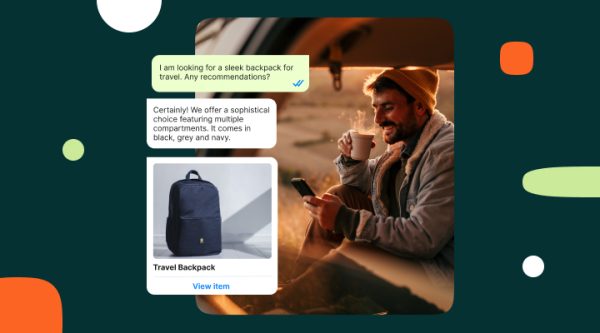
A WhatsApp chatbot for government services handles the queries that currently consume disproportionate staff time: application status checks, FAQs, form guidance, appointment scheduling. Conversational AI government services deliver:
- 24/7 responses without waiting for office hours
- Guided workflows that walk citizens through multi-step processes and collect structured information
- Automated form collection that replaces paper-based or web form submissions
- Escalation pathways that route complex or sensitive cases to a human agent
Well-designed citizen self-service portals built on conversational AI reduce average handling time, improve first-contact resolution, and give citizens a genuinely useful alternative to calling or visiting in person.
Two-way citizen communication
WhatsApp enables real dialogue between governments and citizens, not just broadcast messaging. Two-way applications include:
- Public consultations on policy, planning, and budget decisions
- Post-service satisfaction surveys and feedback collection
- Complaint submission with automated case tracking and status updates
- Community engagement on local issues, infrastructure projects, and service changes
Public sector digital engagement through conversational channels gives agencies faster, richer insight into citizen sentiment, and gives citizens a genuine sense of participation rather than passive information receipt.
Digital identity and secure communication
For transactions requiring identity verification, WhatsApp supports:
- OTP delivery for WhatsApp two-factor authentication government login, reducing fraudulent access to citizen accounts and services
- Secure document submission and exchange, reducing the need for in-person verification
- Policy and regulatory communications to verified recipients
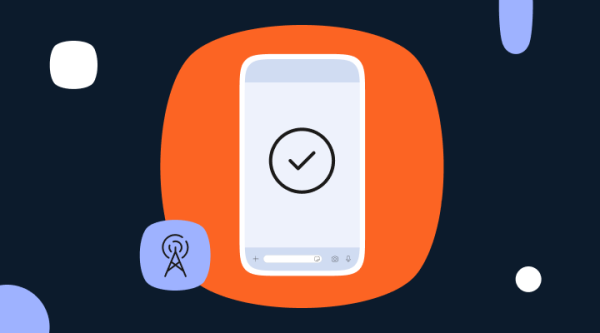
- WhatsApp verified sender government accounts, the green checkmark signals to citizens that the communication is official, reducing impersonation risk and phishing exposure
This is especially relevant for governments building out digital identity schemes or cutting dependence on in-person verification for routine transactions.

Security, compliance, and governance considerations
The most common question from public sector decision-makers is a reasonable one: is WhatsApp secure enough for government use?
The answer is yes, when deployed correctly through the WhatsApp Business API via a certified WhatsApp Business Solution Provider (BSP). The key distinction is between consumer WhatsApp and enterprise API implementations. They are not the same product.
End-to-end encryption
All WhatsApp messages are end-to-end encrypted by default. For government use cases involving sensitive citizen data, identity documents, health records, financial information, case details, messages cannot be intercepted in transit. This is a baseline security feature, not an add-on.
Data protection and storage controls
Enterprise API deployments give agencies control over where data is stored and for how long. For governments with data sovereignty requirements, common across the EU, APAC, and the Middle East, providers that offer in-country hosting options are essential. This is not available through consumer WhatsApp or informal business accounts.
Verified government accounts
The WhatsApp verified sender government account, signaled by a green checkmark, is more than a trust indicator. It’s a mechanism for preventing impersonation. Citizens can confirm they’re communicating with an official source, reducing phishing risk and building confidence in digital government channels.
Audit trails and governance rules
Enterprise implementations log every interaction. This supports compliance, internal audit, regulatory reporting, escalation handling, and performance management, all standard requirements in public sector environments. Governance frameworks for digital communication should be defined before deployment, not after.
Integration with existing government systems
Secure government messaging doesn’t exist in isolation. API-based deployments connect with CRM systems, case management platforms, identity verification tools, and compliance engines, maintaining data governance across the full service delivery chain and ensuring no citizen data sits outside your existing controls.
Enterprise-grade WhatsApp for government services is structured, audited, and compliant. It is not informal messaging at scale.
WhatsApp Utility messages: the backbone of government communication
Most government interactions are transactional by nature. A citizen completes an action, submits a form, books an appointment, makes a payment, and expects a timely, accurate update. WhatsApp Utility Templates are purpose-built for exactly this.
Unlike customer service conversations, Utility messages are outbound, template-based, and triggered by a specific event or action. They don’t require the citizen to initiate contact, and they don’t depend on a live agent. They’re automated, consistent, and delivered in seconds.
Common government utility message examples:
- Appointment confirmations and reminders (health, licensing, consular)
- Application and case status updates
- Tax payment receipts and due date reminders
- Document expiry alerts (passport, national ID, driving license)
- Benefit and payment disbursement notifications
- Court date and hearing reminders
- Voting registration confirmations and polling day reminders
- Fine and penalty notices with payment links
Because Utility Templates sit outside the 24-hour customer service window, they give governments a reliable channel for proactive outreach, reaching citizens where they are, at the right moment, without adding to inbound call volume.
How to get started with WhatsApp for government services
Deploying WhatsApp for public sector communication requires more than activating a messaging channel. A structured approach ensures the rollout is scalable, compliant, and delivers measurable impact.
Define clear objectives
Start with the problem you’re solving. High inbound call volume? Missed appointments? Slow emergency communication? A defined use case makes it easier to design the right workflow, set success metrics, and build internal alignment before development begins. Trying to solve everything at once typically delays delivery and dilutes impact.
Validate your use case with Meta
Every government use case on WhatsApp must be reviewed and approved by Meta before deployment. This covers the specific workflows, message types, and citizen data interactions your agency plans to run. Skipping this step or assuming approval mid-build creates costly rework.
Working with a business service provider that has a direct line to Meta removes that friction. Infobip has been a certified WhatsApp Business Solution Provider since the program launched in 2018. As a Premium Meta Partner, we have a direct communication channel with Meta, so use case validation moves faster, edge cases get resolved quickly, and your deployment stays compliant with platform policies from day one.
Build secure and compliant foundations
Before any citizen data enters the system, establish data governance policies, complete legal review for the channels and data types involved, and set up your verified government account through a certified business service provider. Compliance architecture should be in place at the start, retrofitting it is significantly harder and riskier.
Integrate with existing government systems
WhatsApp works best as part of your existing infrastructure, not alongside it. Map the integration points, CRM, case management, identity verification, and confirm your provider’s API supports them. Partial integration creates data silos and limits the value of the channel for both citizens and administrators.
Choose the right messaging partner
Your WhatsApp Business Solution Provider shapes every aspect of the deployment: implementation speed, compliance posture, scalability, and ongoing support. Evaluate providers against these criteria:
- Compliance and security: In-country data hosting aligned to your jurisdiction, relevant public sector certifications, and a proven track record in regulated industries
- Scalability: Confirmed throughput capacity for high-volume campaigns like emergency alerts and election reminders, without performance degradation
- Automation and AI: Built-in chatbot and workflow tools that reduce custom development time and cost
- Omnichannel support: WhatsApp alongside SMS, RCS, email, and voice in a single platform
- Integration flexibility: Documented APIs and connectors for the government systems already in use
Before signing, ask potential providers: Where is citizen data hosted? What is your peak throughput? How do you handle escalation from bot to human agent? What pre‑built integrations exist for government systems? Are you a certified WhatsApp Business Solution Provider?
Why Infobip for government messaging
We’re a global WhatsApp Business Solution Provider with the infrastructure, security credentials, and public sector experience government deployments demand.
- Built for government scale: Our platform runs across 9,700+ carrier connections and 40+ data centers on six continents. High-volume campaigns, emergency alerts, election reminders, public health communications, run without degradation, even at peak load.
- AI-powered citizen engagement with AgentOS: AgentOS lets agencies build and deploy chatbot workflows without heavy development, from guided form collection to live application status updates. When a query needs a human, intelligent routing hands it to the right agent with full conversation context intact.
- Omnichannel beyond WhatsApp: WhatsApp is one channel in a broader citizen engagement strategy. Our platform supports SMS, RCS, email, voice, and push notifications from a single interface, so agencies can reach every segment of the population on the channel they actually use.
- Enterprise-grade security and compliance: Our platform operates on a hybrid cloud model with locally available services in 75+ markets. Our compliance engine is continuously updated with in-country regulations and operator requirements, so your team doesn’t have to track regulatory changes manually.
- Local presence, global capability: With offices on six continents, we bring local account management and sector-specific expertise to every deployment, backed by 24/7 support across time zones.
Yes, when deployed through the WhatsApp Business API via a certified WhatsApp Business Solution Provider. All messages are end-to-end encrypted, and enterprise implementations include data hosting controls, audit logging, and verified account setup. For governments managing sensitive citizen data, the critical requirement is a BSP that offers in-country data hosting aligned to local data protection regulations, something consumer WhatsApp cannot provide.
The WhatsApp Business API is built for scale. With the right platform and BSP, governments handle millions of outbound notifications and concurrent inbound conversations without performance issues. AI-powered government chatbot automation handles the majority of routine queries, routing complex cases to human agents. Platforms like Infobip are designed to maintain throughput at peak demand, including time-critical scenarios like government emergency alerts via WhatsApp.
Yes. API-based deployments are designed for integration with CRM systems, case management platforms, identity verification tools, and legacy databases. A well-resourced BSP will offer pre-built connectors and documented APIs that reduce integration complexity. When evaluating providers, ask specifically about experience connecting WhatsApp to the government systems already in use at your agency.
No. WhatsApp is already installed on over 3 billion devices worldwide. Citizens who use WhatsApp personally can interact with government accounts immediately, with no additional downloads, registrations, or setup required. This is one of the channel’s core advantages over standalone citizen portals or government apps, both of which typically face significant adoption barriers.
Most governments begin with low-risk, high-impact use cases such as appointment reminders, simple FAQ chatbots, and application status notifications. These are easy to implement, reduce call volume quickly, and help internal teams get comfortable with the channel before expanding to more complex workflows or sensitive data scenarios.