



Key RCS statistics & market insights for 2026
Discover the data that proves why RCS is becoming the most effective channel for modern customer engagement.

Comprehensive RCS (Rich Communication Services) statistics & market research 2026
Rich Communication Services (RCS) has officially graduated from an emerging channel to a global standard. With Apple’s adoption of RCS in iOS 18, the barrier between Android and iPhone users has dissolved, creating a unified, app-like messaging experience for billions of mobile subscribers worldwide.
To help you decide, we’ve curated the most authoritative RCS statistics and market research for 2026. Drawing from GSMA intelligence, Juniper Research, and Infobip’s own Omdia-commissioned reports, these numbers tell the story of where business messaging is heading.
User base & global adoption
RCS monthly active users
- Projections: Following Apple’s iOS 18 adoption in late 2024, the active user base to reach approximately 3.8 billion by the end of 2026. (Source: Juniper Research)
- YoY growth: Prior to the Apple integration, a steady 16% year-over-year growth in active users, a trajectory that has since steepened significantly. (Source: Juniper Research)
France
Penetration rate increased from 25% before Apple’s adoption to 80% after
Germany
Penetration rate increased from 50% before Apple’s adoption to 80% after
UK
Penetration rate increased from 35% before Apple’s adoption to 70% after
USA
Penetration rate increased from 4-5% before Apple’s adoption to 70% after
RCS traffic growth on the Infobip platform
Infobip delivers billions of messages for its customers and partners every year across multiple channels. We have supported RCS since 2018, and we have been tracking volumes and usage ever since – publishing our findings in our annual Messaging Trends Report.
Over the past two years we have seen a significant spike in RCS traffic and in Q3 2025 we reached a major milestone by hitting 10 billion RCS messages successfully delivered.
5-year RCS traffic growth on our platform
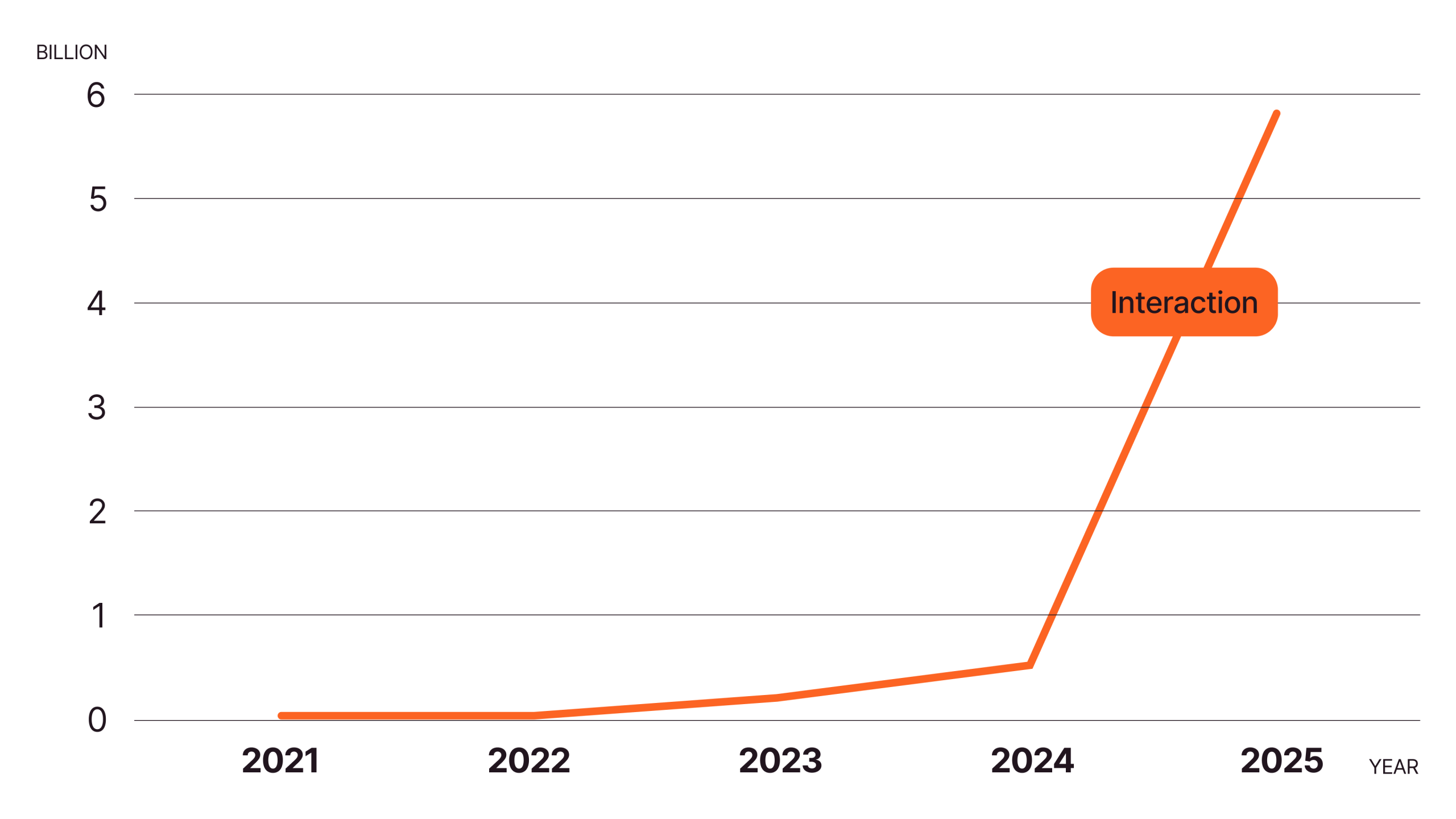
2025 saw 311% growth in RCS traffic globally on our platform, but for some regions the increases were particularly acute.
Fastest growing regions
- NAM: 70x
- LATAM: 7x
- APAC: 5x
- Europe: 4x
Growth by industry
- Marketing & advertising: 32x
- Tech & software: 7x
- Retail & eCommerce: 353%
- Finance & fintech: 264%
Market size & revenue forecasts
Global RCS market valuation
Analysts predict a massive shift in value from traditional SMS to rich messaging channels over the coming decade.
- Reach by 2035: The global RCS market to reach $28.2 billion by 2035, growing at a compound annual growth rate (CAGR) of 12.17%. (Source: Market Research Future)
- Reach by 2030: Forecast of $12.46 billion by 2030, representing a substantial CAGR of 25.3% from 2024. (Source: Grand View Research)
- Forecast: Predictions that the total market could expand to over $60.5 billion by 2030 as conversational commerce matures. (Source: ResearchAndMarkets)
- Daily volume: Google reported that over one billion RCS messages are sent daily in the US alone. (Source: Google)
- Infobip volume milestones: The scale of RCS adoption is visible on our own platform, where we have successfully delivered over 10 billion RCS messages since 2018.
- Peak traffic growth: The shift is accelerating during peak retail periods. Infobip reported that the use of RCS surged 277% on Black Friday 2025 compared to the previous year. (Source: Infobip)
Regional revenue forecasts (A2P RCS for Business)
- Revenue and traffic by 2029: Omdia research commissioned by Infobip forecasts that total A2P RCS revenue will hit $4.2 billion by 2029, while traffic will soar from 1.5 trillion messages in 2024 to more than 6 trillion in 2029. (Source: Infobip)
- Regional growth leaders: The Americas and Asia & Oceania are projected to be the dominant regions, followed by the Americas, Europe, and then the Middle East & Africa. (Source: Omdia)
Asia & Oceania
2024 Revenue: $169M
2029 Revenue: $2.2B
2024 Traffic (billion): 5.6
2029 Traffic (billion): 64
Americas
2024 Revenue: $113M
2029 Revenue: $1.5B
2024 Traffic (billion): 4.7
2029 Traffic (billion): 5.4
Europe
2024 Revenue: $22M
2029 Revenue: $324M
2024 Traffic (billion): .8
2029 Traffic (billion): 11
Middle East & Africa
2024 Revenue: 13M
2029 Revenue: $220M
2024 Traffic (billion): .545
2029 Traffic (billion): 8
Total
2024 Revenue: $317M
2029 Revenue: $4.2B
2024 Traffic (billion): 12.6
2029 Traffic (billion): 137
RCS for Business market share & revenue
- Operator revenue: By 2029, RCS will account for 18% of global operator business messaging revenue, a 6x increase from just 3% in 2024. (Source: Juniper Research)
- Messaging revenue for operators: By 2028, RCS is expected to generate an additional $15 billion in messaging revenue for operators globally. (Source: Juniper Research)
Business & enterprise adoption
RCS for Business growth
Enterprises are moving from pilot phases to full-scale deployment, particularly in customer-centric sectors.
- Adoption surge: Google and industry partners reported a 40% year-over-year increase in RCS for business adoption as of mid-2023. (Source: Google and Industry Partners)
- Usage increase: Orange, recorded a 400% increase in RCS usage in France in 2023, signaling a tipping point in European enterprise adoption. (Source: Orange)
- Growth: According to UC Today, global RCS for Business adoption has grown approximately 30-fold over the last two years. (Source: UC Today)
RCS device & carrier support
Infrastructure readiness is no longer a bottleneck for RCS, with major hubs and carriers fully online.
- Operator deployments: Google’s Jibe platform supports RCS across 90 global operator deployments, creating an addressable market of over 2 billion users (Source: Cisco/Webex Report).
- US carrier ubiquity: The top four U.S. telecom carriers now fully support RCS, ensuring virtually 100% coverage across major networks. (Source: Infobip)
Regional adoption & coverage
Geographic RCS coverage statistics
RCS is a global standard, but adoption curves vary by region.
- APAC growth: The Asia Pacific RCS market is projected to witness a CAGR of 25.4% through 2031, followed by Japan (24.6% CAGR) and India (26.4% CAGR). (Source: KBV Research)
- Indonesia spotlight: Indonesia is emerging as a critical growth hub for rich messaging. Infobip recently strengthened its footprint in the region through a strategic partnership with Telkomsel to enhance RCS connectivity for local enterprises.
- High-growth markets: Infobip regional analysis identifies the Philippines as a standout market, showing 98% RCS adoption growth. (Source: Infobip)
- Regional preferences: While RCS provides universal reach, it often works alongside popular local apps. For a deeper dive into regional habits, read our guide to the most popular messaging apps by country .
Consumer engagement & performance metrics
RCS open & click-through rates
RCS consistently outperforms traditional channels by combining the high visibility of SMS with the interactivity of apps.
- Open rates: RCS achieves open rates of 72%. (Source: Infobip)
- Click-through rates (CTR): CTR ranges from 15-30%, with exceptional use cases reaching up to 51% CTR. (Source: Infobip)
- Higher conversion: Brands using RCS rich cards saw 60-70% higher conversion rates compared to MMS. (Source: Infobip Messaging Trends 2025)

RCS vs. other channels
- Lower CPC: Cost-per-click for RCS is 14 times lower than SMS because fewer messages were required to achieve the same conversion result. (Source: Infobip)
- RCS vs. email: Consumers are 35 times more likely to read RCS messages than emails. (Source: Google Developers)
- RCS vs. SMS: RCS messages have up to 72% open rates similar to SMS but with 10x higher engagement due to rich media capabilities. (Source: Infobip)
- RCS uplift: RCS in-market campaigns show read rates anywhere from 73% to 92%, with CTR reaching up to 7% and a 20% increase in conversion compared to traditional channels. (Source: Webex and MobileSquared Analysis)
Consumer trust & sentiment
In an era of digital fraud, the verified sender feature of RCS is a primary driver of consumer adoption.
- Trust factor: 88% of consumers trust a message more if it’s displayed with a verified company badge. (Source: Datos Insights Study on Financial Services Trust)
- Preference for RCS: 70% of consumers say RCS makes them more likely to communicate with a brand. (Source: GSMA)
- Competitive advantage: 59% of consumers stated they would choose a financial services provider offering RCS over one that does not (Source: Datos Insights).
Use case adoption
Healthcare & appointment management
- Reducing missed appointments: 50% reduction in missed appointments after implementing appointment reminders sent via messaging channels. (Source: Infobip)
- Patient satisfaction: 30% increase in patient satisfaction levels when effectively utilizing digital interactions. (Source: Infobip)
Retail & e-commerce
- CTR increase: 30% increase in click-through rates after switching promotional campaigns to RCS rich cards. (Source: Industry case study)
Financial services
- Personalized financial advice: 70% of consumers expect their banks to offer them personalized financial advice. (Source: Infobip)
Pricing & cost analysis
- Variable models: RCS pricing varies significantly by market and carrier. Generally, RCS Basic messages are often priced similarly to SMS, while RCS Single messages can be approximately 20–30% higher due to rich media capabilities. (Source: Infobip)
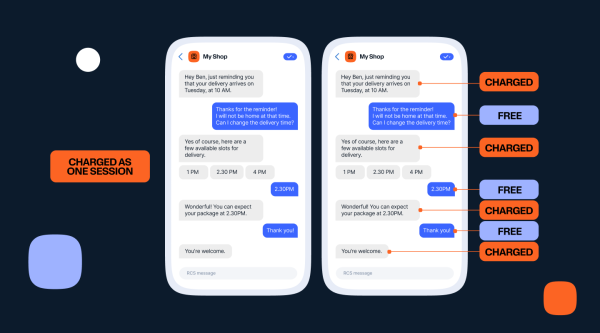
- Conversational value: RCS Conversational messages are usually about twice the price of a standard SMS but include a 24-hour session window for unlimited exchanges. This makes them highly cost-effective for complex, two-way customer support interactions compared to paying for every individual SMS segment. (Source: Infobip)
Market challenges & barriers
Despite growth, the ecosystem faces hurdles that vendors are actively solving.
- Awareness: Low consumer awareness remains a challenge, with many users unaware that their native messaging app has been upgraded to RCS (Source: Global Telco Consult).
- Competition: RCS competes with established OTT apps like WhatsApp (3 billion users). However, RCS is increasingly viewed as a complement, offering universal fallback coverage, rather than a direct replacement. Germany serves as a prime example, where RCS penetration has already surpassed WhatsApp, a trend expected to replicate globally as iOS adoption matures. (Sources: GTC & Infobip)
Business messaging traffic growth
- 3 trillion messages: Global business messaging traffic will reach nearly 3 trillion messages by 2030 across SMS, RCS, and OTT channels. (Source: Juniper Research)
- 50% RCS traffic growth: RCS for business traffic is expected to grow 50% in 2025 alone, largely driven by the Apple iOS 18 rollout. (Source: IOT)
Apple iOS RCS integration impact
The integration of RCS into iOS 18 in September 2024 was the most significant market event of the decade.
- Traffic spike: Early market analysis indicated a 500% increase in global RCS traffic immediately following the iOS rollout as brands activated universal campaigns. (Source: Juniper Research)
- Implementation: Enterprises that previously rejected RCS due to incomplete reach (iOS limitation) are now actively seeking implementations following Apple’s iOS 18.1 RCS support rollout. (Source: Infobip)
Device & platform support
- Android dominance: Android holds over 70% of the global mobile OS market, providing a massive, established base for RCS before iOS even entered the picture. (Source: Messageflow)
- Universal reach: RCS integration into iOS ended the green bubble quality gap for business messaging, allowing brands to use rich features for virtually all customers. (Source: Infobip)
- Samsung consolidation: Samsung has moved to consolidate its messaging experience into the Google Messages app, further unifying the Android ecosystem around a single RCS standard. (Source: RCS study)
Technology standards & specifications
- Universal profile 2.5: The GSMA’s latest Universal Profile ensures feature consistency (typing indicators, read receipts, high-res media) across different carriers and devices. (Source: GSMA Standards Committee)
- 5G default: RCS is designed as the default messaging protocol for 5G networks, ensuring it is future-proofed for the next generation of mobile connectivity (Source: Cisco/Webex).
Operator & vendor ecosystem
The RCS ecosystem relies on a tight collaboration between mobile network operators (MNOs) and aggregators (CPaaS providers) to ensure global deliverability and connectivity.
Key takeaways for industry leaders
- Market inflection point: The RCS market is projected to reach $28.2 billion by 2035. It is no longer an experimental channel but a primary revenue driver.
- The iOS gap is gone: Apple’s support has eliminated the primary barrier to entry for North American enterprises.
- Performance wins: With 15-30% average CTRs and significantly higher conversion rates than SMS, RCS offers a superior ROI.
- Trust is currency: The verified sender badge is a critical tool for increasing engagement and protecting brand reputation.
- Strategic Necessity: With 71% of industry professionals planning adoption, RCS is becoming a standard expectation for consumer engagement in 2025.