




Why platforms outgrow their CPaaS partner
You closed the deal on Monday. By Thursday, your customer is asking when they can start sending messages. Your partner says pricing will take two weeks. That is when platforms start looking for partners who can move at their pace.

That gap is where platform companies lose momentum. Not in the messaging infrastructure itself, which mostly works, but in everything around it: the pricing turnaround that takes days, the compliance review that stalls without explanation, the RCS registration that disappears into a queue with no visibility.
These are not edge cases. For platforms scaling across channels and geographies, they are the operating reality.
And the cost is valuable time spent by your team on repeated follow ups, leading to lost revenue, slower onboarding, and customers evaluating competitors because you can’t move quickly enough.
The invisible scaling wall
Most platforms select their first CPaaS provider based on the developer’s experience. Documentation quality, SDKs, time to first message. That decision makes sense when you are integrating SMS for a few hundred customers in a single market.
The problem surfaces later.
As your customer base grows, as you expand internationally, and as you add channels beyond SMS, you start depending on your provider for things that have nothing to do with API design: pricing turnarounds on large deals, sender registration across 44 countries within Europe’s complex messaging ecosystem, compliance approvals for new WhatsApp campaigns, and RCS onboarding for customers who want richer messaging.
This is where many providers fall short. Not because their APIs break, but because their operating model was not built for the demands of a scaling platform.
Consider what happens when a platform with thousands of customers needs to:
- Get competitive pricing for a prospect sending high volumes across fifteen countries
- Register a new short code with carrier-specific compliance requirements
- Launch numbers in multiple markets and maintain available stock
- Onboard a customer to RCS with clear timelines and status visibility
- Resolve a delivery issue that is affecting a top-tier account during a campaign
Each of these can be time-sensitive. Each requires not just an API call, but a combination of technology and human expertise working in concert: the right tooling, the right people, and the right process. And when those interactions are slow, generic, or routed through round-robin queues where no one owns your account, the impact compounds.
Your sales team cannot close deals without pricing. Your customers cannot launch campaigns without compliance approval. Your product roadmap stalls because provisioning workflows require manual coordination that your engineering team must build around.
The operating model
Platform teams tend to evaluate CPaaS providers on technical capabilities: channel coverage, API design, delivery rates, and global reach.
The provider’s operating model, which describes how their technology and people work together to serve platform partners, is often treated as an afterthought. “Do they have support? Yes. Move on.”
This is a mistake.
What separates providers at scale is the operating model behind those APIs: the combination of self-serve technology, dedicated people across specialized roles, and structured processes that either allow you to accelerate your business or quietly throttle it.
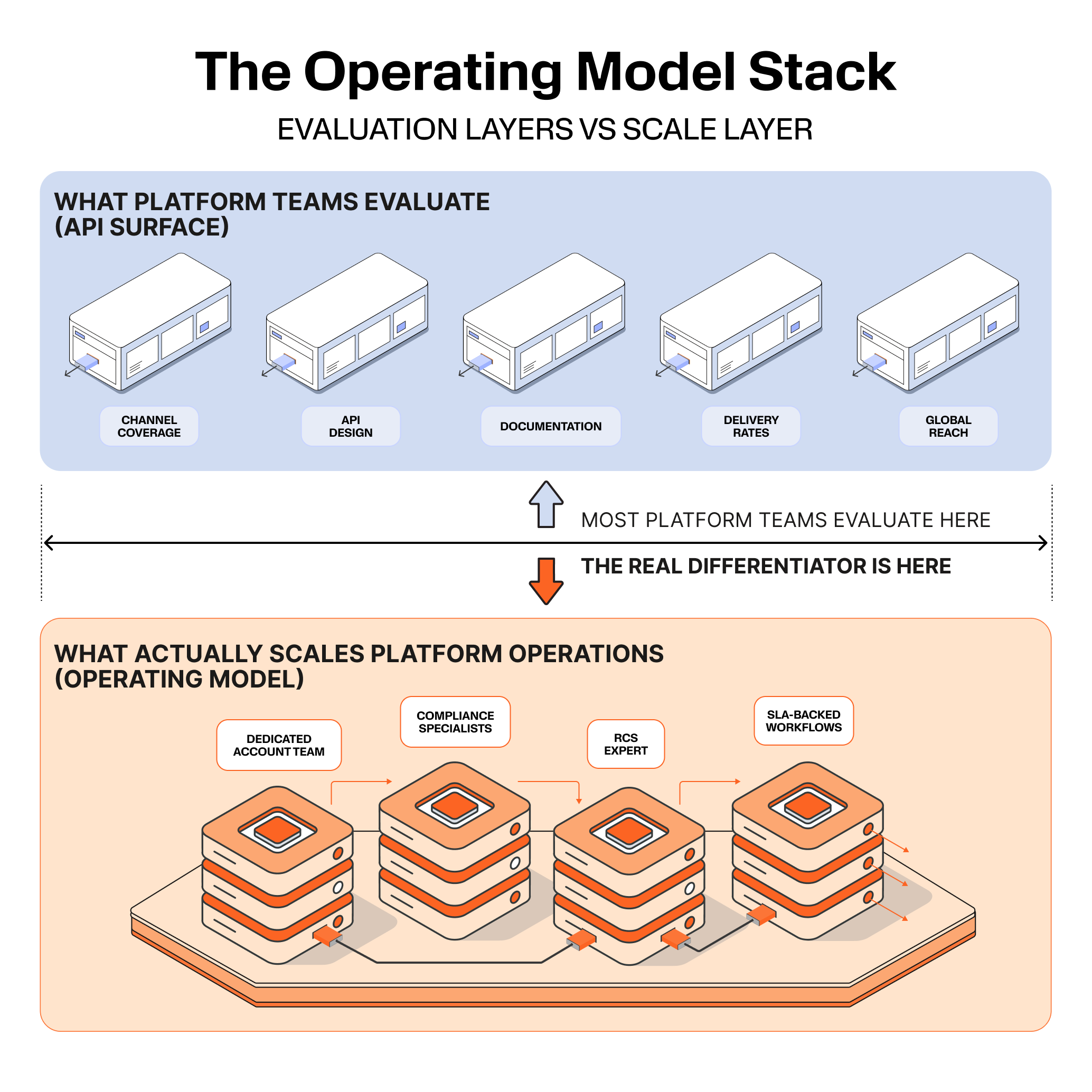
The technology layer, including MCP servers, APIs, UIs, and workflow tooling, gives your team flexible building blocks: you still build and configure your platform, but you have optionality to do so without reinventing every integration, and instead consuming workflows.
The people layer complements this, with dedicated account managers who know your business, technical account managers who understand your integrations, compliance specialists who navigate carrier- and market-specific rules and own registrations end-to-end, and RCS experts who provide clear timelines rather than vague estimates.
These roles work together with technology, not in silos or through round-robin ticket queues, to deliver value for both your platform and your customers.
When that operating model is in place, the effects are tangible.
Pricing turnarounds across markets take days instead of weeks, because your team has context and a direct escalation path. Compliance reviews come back in three to five business days with specific, actionable feedback, because a dedicated specialist owns your submissions rather than passing them between teams. Onboarding follows clear timelines, backed by a team with 20 years of experience, expertise in launching messaging channels globally, and strong relationships with 800+ direct operators.
This is not about having better customer service. It is about whether your provider’s operating model, the interplay between their technology and their people, can keep aligning, augmenting, and pacing with yours.
RCS is the current stress test
If there is one channel that exposes the operating model gap between providers, it is RCS. My previous piece dives into the channel explosion problem: why adding RCS shouldn’t take six months.
RCS is not just another messaging API. It operates within a maturing and constantly evolving ecosystem, where compliance requirements, carrier policies, and even commercial models continue to shift by market.
Agent registration involves carrier-specific approval processes, brand verification, and ongoing adherence to rules that vary regionally. In the U.S., for example, political messaging and sweepstakes are currently prohibited.
Approval timelines can range from weeks to months, depending on the brand profile and the provider’s carrier relationships, all within an environment that remains in active flux.
For platforms, this creates a specific problem: your customers want RCS because their end users expect richer messaging experiences. But offering RCS means your provider needs to handle registration at scale, provide clear timelines, and deliver fallback to SMS when RCS is not available on a device.
Here is where the gap becomes concrete.
Most CPaaS providers, including the largest ones, treat RCS registration as a 2nd class citizen.
You submit a request, it enters a queue, and you wait. There is no API for agent creation. No programmatic way to track where a registration stands in the carrier approval pipeline, compounded by the limited people and technology interplay.
Infobip takes a different approach, and it illustrates what a platform-oriented operating model looks like in practice.
On the technology side, we recently launched a full-stack RCS Registration API that lets platforms automate the entire lifecycle: create agents programmatically via API or UI, submit for launch to carriers, track approval status in real time with step-by-step progress visibility, and go live without manual handoffs. And we are further expanding this with an MCP server providing the full RCS registration scope.
On the people side, a dedicated RCS team with deep carrier relationships works alongside your account team to provide clear timelines, pre-submission guidance, hands-on support navigating carrier-specific requirements, and best practices on how to use the channel effectively. Technology and expertise work together. The APIs handle scale; the people handle complexity, compliance nuances, and content guidance, giving it 1st class consideration.
The difference matters.
When RCS registration is an API backed by a specialized team, you can build it into your platform’s self-serve onboarding flow and know that edge cases get expert attention. When it is a ticket in a shared queue, every new customer is a manual process with unpredictable timelines.
The same logic applies to compliance more broadly.
Campaign registration, template approvals, and sender verification are not one-time setup tasks. They are ongoing operations that scale with your customer base.
A provider whose operating model treats compliance as a core capability, with dedicated specialists who guide, iterate, and enable faster launches, supported by pre-vetting tools that catch issues before submission, can turn weeks of back-and-forth into days.
A provider that treats it as just another ticket category cannot.
The international pricing trap
For platforms with a global customer base, pricing is not a simple rate card exercise.
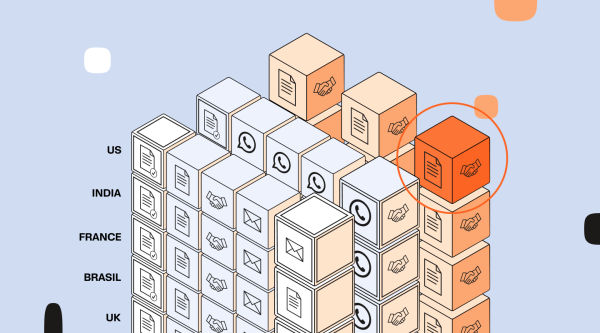
When sixty percent of your customers are international, you need competitive rates across dozens of countries, not just favorable pricing in your home market.
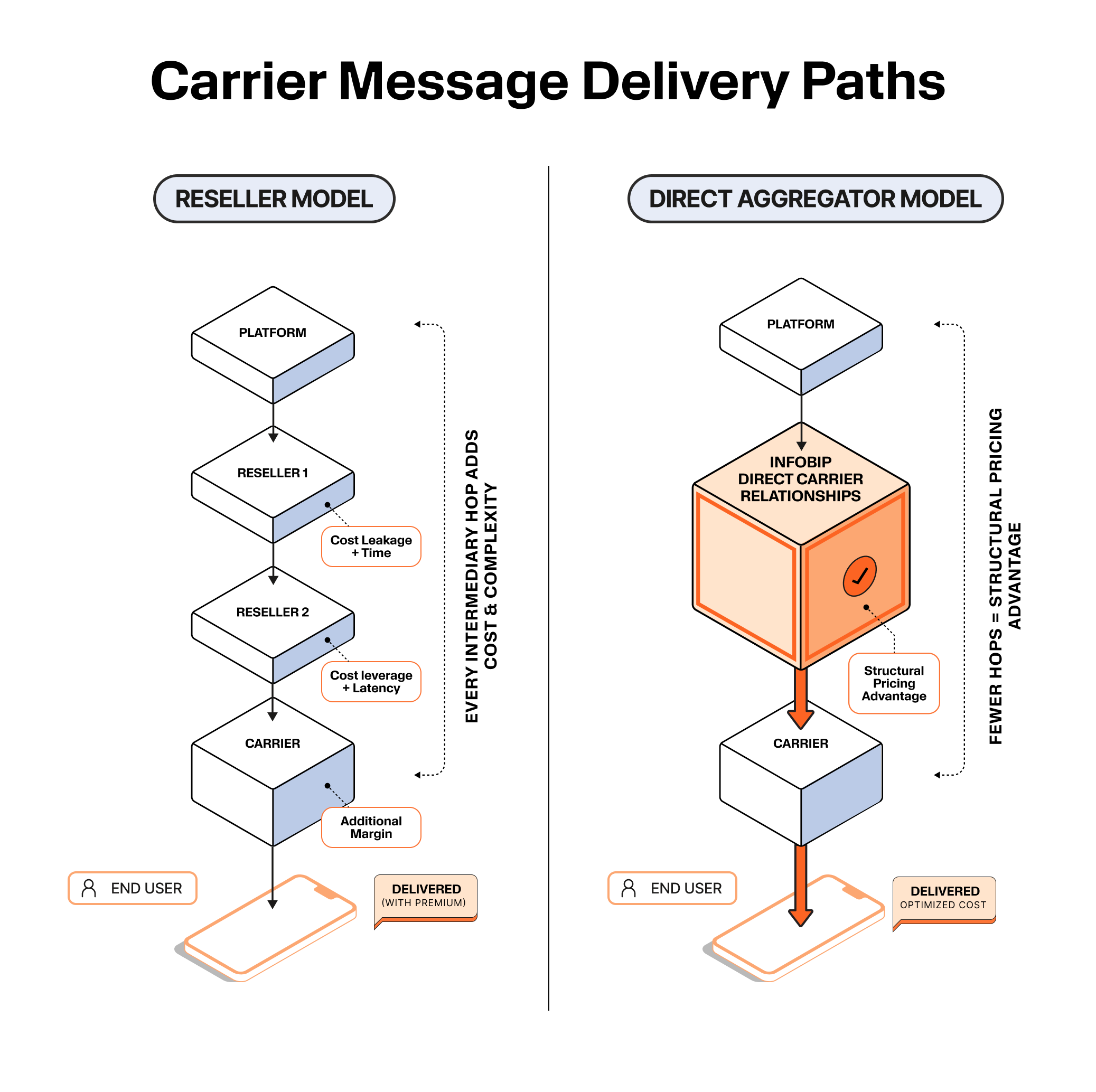
That means granular, network-level pricing instead of blended and inflated, country-level pricing that erodes margins. This requires a provider with direct carrier relationships, because every intermediary hop between you and the carrier adds cost and reduces control.
But pricing is only part of the equation. Platforms also need:
- Network-specific rate structures that reflect actual carrier costs, not one-size-fits-all international rates
- Protected margins so your provider does not undercut you by selling directly to your customers
- Flexible commitment models that let you structure agreements by region, by channel, or by overall volume
- Number provisioning at scale, so launching in a new country does not require weeks or months of manual coordination
A provider with direct carrier connectivity, without intermediary hops, can offer structural pricing advantages that a reseller model cannot match. And for platforms where messaging margins are thin and competitive, that difference matters. But even here, pricing is not just a technology problem. It requires people who understand your business well enough to structure deals quickly, with the authority to move fast on competitive opportunities rather than routing every request through weeks of internal approvals.
From building operational infrastructure to consuming it
Even after you find a provider with the right operating model, there is a second layer of overhead that quietly consumes engineering capacity: the operational infrastructure you build around your CPaaS integration.
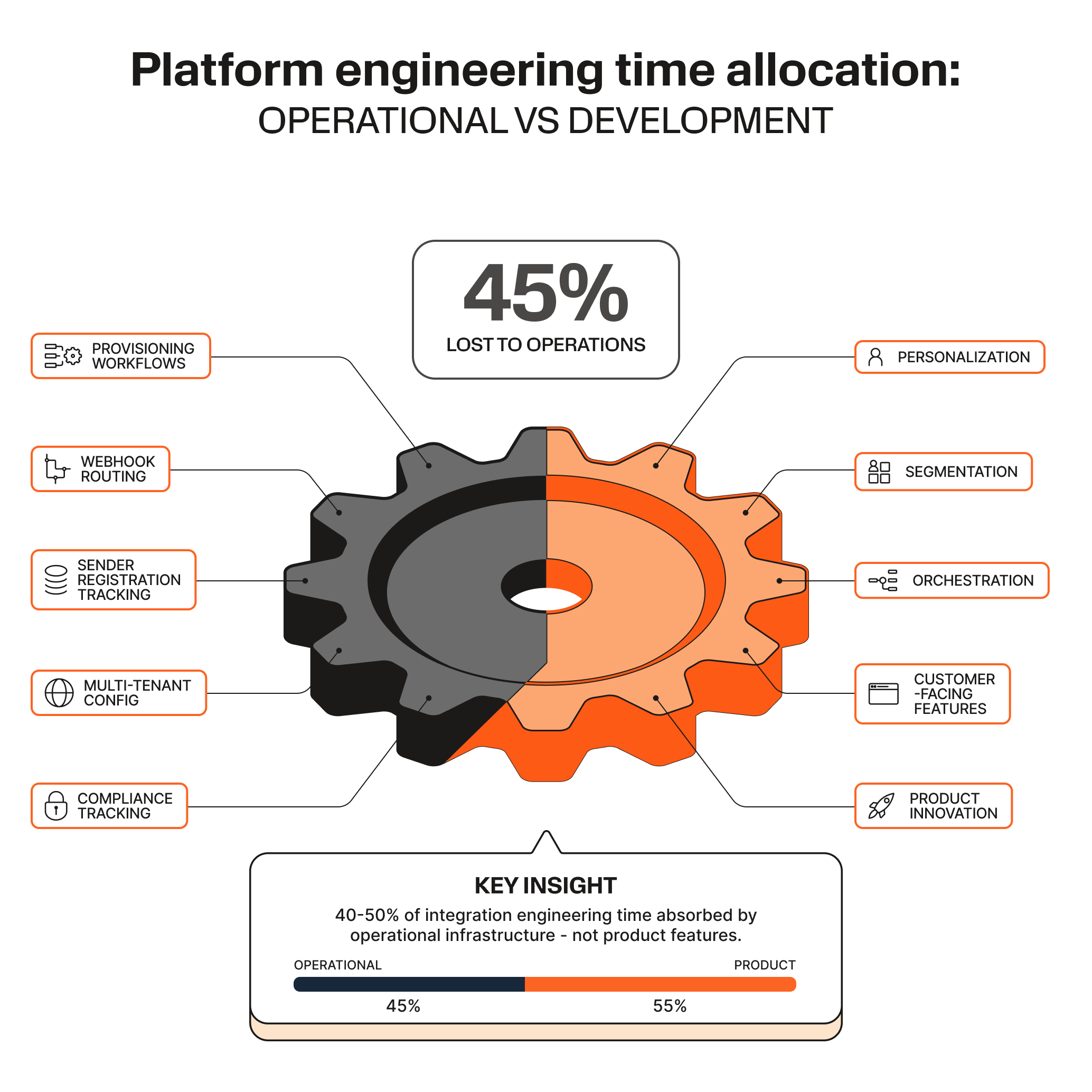
Provisioning workflows, admin tooling, webhook routing, sender registration tracking, and multi-tenant configuration.
None of that is what your customers pay for.
But it must be built, maintained, and updated every time you add a channel, enter a new market, or onboard a new segment of customers. In many platform teams, this operational layer absorbs 40 to 50 percent of integration-related engineering time, leaving a surprisingly small share for the customer-facing features that differentiate your product.
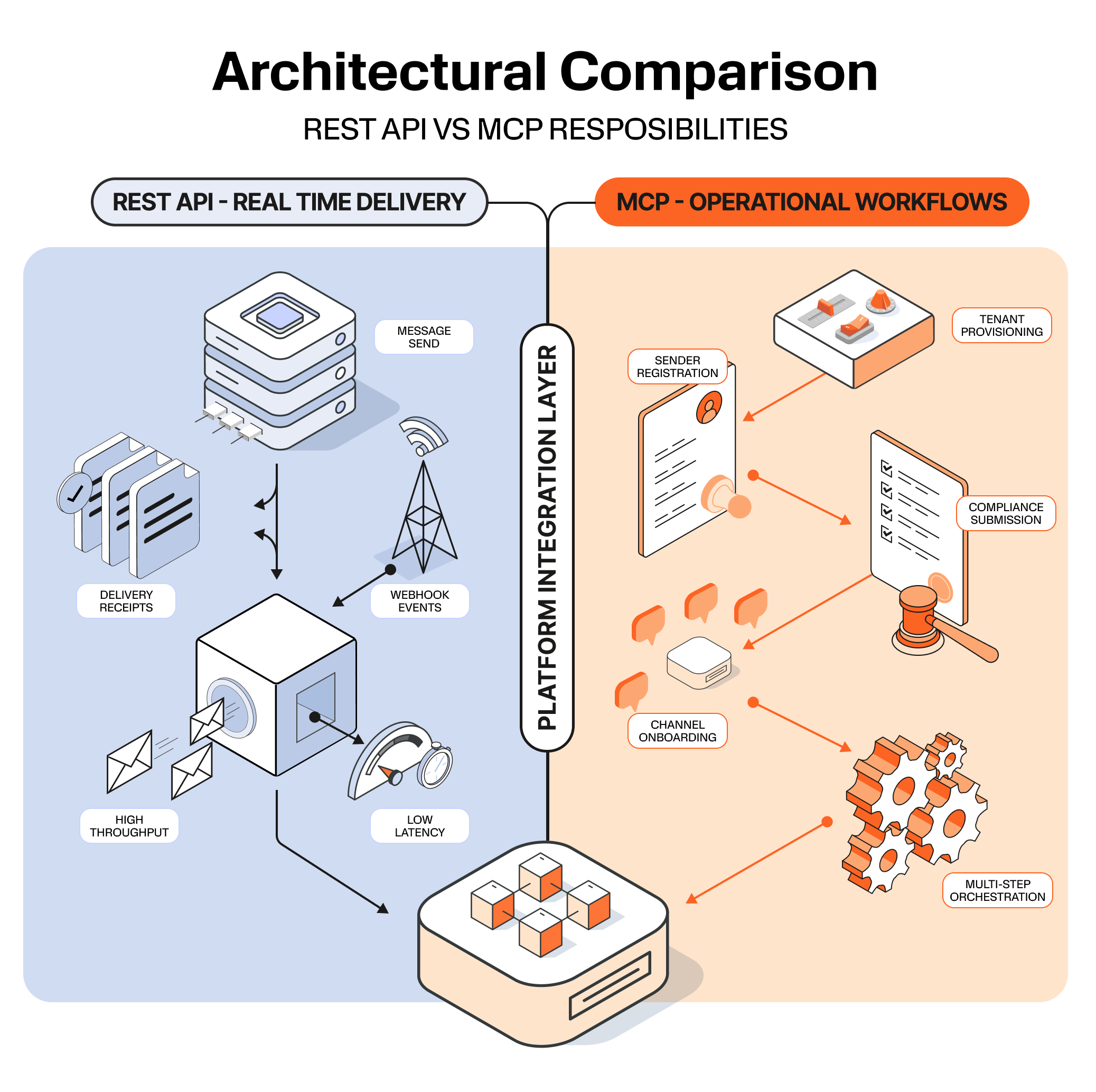
For years, this was the cost of doing business. REST APIs are excellent for real-time message delivery, but they give you building blocks, not workflows. You still must orchestrate multi-step operations like provisioning a new tenant across three channels in two countries or tracking a sender registration from submission through carrier approval to go-live.
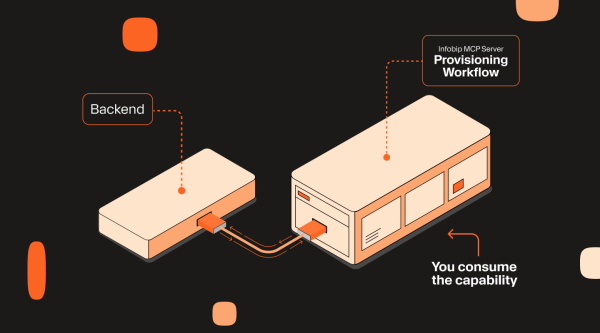
That is starting to change. With the emergence of Model Context Protocol (MCP), providers can now expose operational capabilities as consumable workflows rather than raw API endpoints.
Instead of your engineering team building and maintaining custom provisioning logic, an MCP-enabled integration lets you invoke a complete workflow, provision this customer for WhatsApp in Germany, and let the provider handle the multi-step orchestration behind the scenes.
I wrote about this shift in more detail:
The short version: REST still powers real-time delivery where speed and throughput matter. MCP covers the operational side, the multi-step setup and configuration work that tends to absorb engineering time without improving your product. The two work together, and for platforms managing hundreds or thousands of customers across multiple channels, the combination can meaningfully shift where engineering capacity is focused.
This is the technology side of the operating model, extending further. The same principle that applies to people, dedicated specialists handling complexity so your team does not have to, applies to infrastructure.
When registration, compliance, and provisioning are consumable workflows rather than custom code, adding a new channel or entering a new market takes weeks instead of months. Your engineering team spends less time building internal tooling and more time building the personalization, segmentation, and orchestration features that your customers pay for.
What to look for when you have outgrown your provider
The signs are usually clear before anyone names the problem.
Pricing requests take weeks. Tickets get bounced between teams. Compliance rejections come back with codes instead of explanations. RCS timelines are vague. International expansion requires manual effort that does not scale.
When those symptoms accumulate, the question is not whether to evaluate alternatives. It is what to evaluate for.
An operating model built for platforms, not just an API catalog
You need a provider whose technology and people work together at the pace your business requires. Multi-tenant APIs and UIs for self-serve onboarding. Dedicated account managers, technical account managers, and compliance specialists who own your relationship end-to-end. Clear SLAs, direct escalation paths, and roles that work in concert rather than in silos.
Channel readiness that extends beyond SMS
RCS, WhatsApp, Viber, and whatever comes next should be available through a unified integration, with registration, compliance, and fallback handled as managed capabilities. Registration should be API (or MCP)-driven, not ticket-driven, and backed by people who know the carrier landscape.
Global infrastructure with local depth
Direct carrier relationships across your key geographies, competitive pricing without intermediary markup, and the ability to provision numbers and senders in new markets without months of lead time.
Consumable operations, not just consumable APIs
The provider should offer operational workflows, whether through MCP or equivalent mechanisms, that let your team consume capabilities like provisioning, registration, and compliance as managed services rather than building custom infrastructure around raw endpoints.
A partner model that protects your business
Floor rates that cannot be undercut, flexible pricing structures, and a provider that sees your success as their growth rather than competing with you for your customers.
The cost of staying
Switching providers is work. There is no way around that. Migration planning, API integration, sender registration, and customer communication. It is a project, and it has a cost.
But staying with a provider you have outgrown has a cost, too, and it compounds.
Every deal that stalls because pricing takes two weeks. Every customer onboarding is stretched because compliance advice is incorrect or reviews are slow. Every product roadmap item that slips because your team is building workarounds for gaps that your provider’s operating model should be filling.
Platform teams that recognize this early tend to frame the decision correctly. It is not about finding a cheaper provider or a better API. It is about finding a partner whose operating model, the way their technology and people work together, scales with yours. So that messaging infrastructure becomes a growth enabler rather than a constraint.
The question is not whether your CPaaS provider can send messages. They all can.
The question is whether their operating model can support the demands of a platform that is scaling across channels, countries, and thousands of customers, without becoming the bottleneck.
If the answer is no, the cost of staying increases every quarter. And the longer you stay with a provider built for a smaller version of your business, the wider the gap between what you need and what they can deliver.
The real question for platform teams is not whether you need a different provider. It is whether you can afford to keep treating messaging infrastructure as a solved problem while it quietly becomes the constraint on everything else you are trying to build.