



SentBe: Redefining trust in cross-border fintech communications
People demand security and convenience while carrying out financial transactions. Discover how SentBe delivered a secure, reliable international remittance solution powered by Infobip.

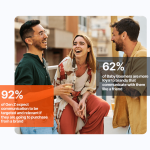
When it comes to international remittance, users prefer speed, convenience, transparency, and security. According to a report by Visa, 92% users prefer convenience, whereas 82% seek reliable customer support. They want quick updates on their transactions and payment status, which makes it important for fintech brands to level up their communication process.
To better understand how brands are meeting their customer expectations, we spoke with Cheong-Ho Park, Advisor at SentBe, to understand how brands are meeting their customer expectations by leveraging digital technologies.
SentBe is a leading global foreign exchange and total financial solutions company from South Korea, serving customers in 50 countries. The company delivers borderless financial services to individuals and corporates through innovative cross-border remittance solutions.
Real-time notifications build trust
With increasing digitalization in the fintech and banking space, cross-border remittance processes have become faster and more reliable. Users not only want smooth payment remittance, but they also want real-time notifications of the transfer. Brands usually send these notifications to their customers through SMS, email, or messaging apps after the money has been successfully transferred.
“Even a five-minute delay in a transfer that used to take just one minute now triggers complaints and results in call center enquiries. For these reasons, real-time notifications are now essential, not optional.”, says Cheong-Ho Park. Even though providing real-time notification is crucial for brands, it often becomes challenging due to geographical restrictions.
SentBe primarily serves customers in Vietnam, Indonesia, the Philippines, and Thailand, which fall under different time zones and different contact hours. The messaging channels also differ for each region, making it difficult to guarantee high delivery rates with a single channel. Therefore, SentBe has been using SMS and KakaoTalk to notify its customers about their transactions.
Considering each country’s spam regulations and other transmission restrictions, routing and content design must be planned with current regulations in mind.

Cheong-Ho Park
Advisor, SentBe
Strengthening authentication to fight fraud
Digital fraud is one of the common pain points of the fintech industry, which not only affects customers but also hampers the credibility of brands. According to a report by Alloy, 67% of fintech and financial institutions reported rising fraud rates in 2025. Over 22% of firms surveyed lost more than $5 million in direct fraud losses.
Nowadays, scammers adopt innovative ways to perform different types of fraud, which are often hard to detect early. OTP fraud is the most common type of fraud seen in the remittance industry, which can occur in two ways:
- Range fraud: In this method, the fraudster sends one or two OTP requests from a range of numbers to avoid being detected.
- Synchronized multiband fraud: Here, bots are used to send OTP requests to different brands. And as users receive a single OTP, they often fail to detect that it is a fraudulent message.
Facing frequent fraudulent instances in the international remittance process, SentBe implemented Infobip Signals, a comprehensive and automated security solution.
“Signals identifies and blocks SMS pumping or artificial traffic occurring during the OTP stage of user registration in real time, which ensures a high authentication success rate and reduces unnecessary transmission costs and security risks.”, says Cheong-Ho Park.
Our onboarding speeds improved, and overall customer satisfaction increased after using Infobip Signals.
Cheong-Ho Park
Advisor, SentBe
Although security is key when it comes to executing financial transactions, Fintech brands must also ensure the deliverability of OTP messages. Often, aggressive blocking of messages prevents legitimate OTP from reaching customers, resulting in unsuccessful transactions.
Alternatively, if messages are delivered successfully, but you fail to block fraudulent traffic, you may lose your brand’s credibility. For brands like SentBe, it is therefore important to strike a balance between security and message deliverability. “For each national channel, we set a minimum threshold where both criteria are simultaneously met and adjust the balance in real-time.” says Cheong-Ho Park.
AI: The future of fintech security
Mitigating security risk and ensuring a smooth transaction experience are the core priorities of Fintech brands. As mentioned above, digital fraud and attack patterns are continuously evolving, which often outsmarts the human defense mechanism. According to Cheong-ho, AI can come to the rescue here by helping brands identify threats in advance.
“We expect AI to learn device, network, and behavioral data in real time, detect anomalies early, and reduce response times from minutes to seconds.”, says Cheong-Ho Park.
Advanced AI-powered fraud detections make use of machine learning and real-time monitoring to identify suspicious activity with high accuracy. Not only in detection but also in the customer communication process, AI helps in minimizing fraud.
Conversational AI uses advanced RAG (Retrieval-Augmented Generation) that delivers accurate responses, reducing chances of misinformation and fraud-related hallucinations. Therefore, customers only share sensitive data with their brand when they absolutely need to.
The best way to speed up our defenses is through teamwork. If fintech’s share anonymous data about the threats they see, we can all react to new dangers before they cause real damage.
Cheong-Ho Park
Advisor, SentBe
Enhancing CX without compromising security
Providing a smooth customer experience is essential for businesses today to remain competitive. But how can brands meet customer expectations while keeping their security protocols intact? Cheong-ho shares some tips on how to achieve this:
- First, performance metrics such as delivery success rate, latency, and cost must be analyzed by country, telecom provider, and time zone, supported by real-time monitoring systems.
- Second, security must be layered across multiple dimensions, such as device intelligence, behavioral signals, and traffic analysis, to prevent single points of failure.
- Third, by integrating and dynamically switching between trusted local channels in each market and by pre-establishing infrastructure, businesses can improve reach, reliability, and customer satisfaction.
Building a secure financial ecosystem powered by Infobip
Fintech brands often face SMS fraud attacks towards international destinations, which not only results in poor customer experience but also increases their SMS costs. To prevent such a situation, SentBe implemented Infobip Signals, which helped them to prevent the AIT attacks and reduce its messaging cost.
Additionally, by leveraging channels like SMS and KakaoTalk powered by Infobip, SentBe has been delivering timely notifications to its huge customer base.
Cheong-ho highlights that the brand now looks forward to adding more channels, such as WhatsApp, as a part of its omnichannel strategy to support its growing customer base across Southeast Asia. “As we target customers of various nationalities across different countries, we must now expand into diverse channels, and we believe all such efforts will be undertaken in conjunction with Infobip.”, says Cheong-Ho Park.
Infobip consistently prioritizes customer needs and actively reviews them even when my requests are quite urgent.
Cheong-Ho Park
Advisor, SentBe