


What is smishing? How to identify and prevent text message scams
A fake delivery alert, a bank warning, or a one-time password request can feel routine at first. Learn how smishing works, how to recognize the warning signs, and how people, businesses, and mobile operators can reduce the risk of SMS scams.

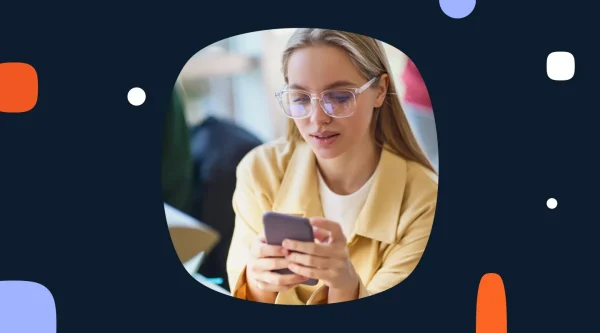
At 8:14 AM, a customer gets a text saying a package could not be delivered. The message looks familiar. There is a delivery reference, a company name, and a link to reschedule. The customer is expecting a package, so there is little reason to question it. They tap the link. The page looks convincing. It asks for a small delivery fee and card details. A few seconds later, the customer has handed sensitive information to a fraudster.
This is smishing. The technique is not new, but the experience it creates is becoming harder to distinguish from legitimate communication. For customers, that can mean financial loss and anxiety. For businesses, it can mean something harder to recover: lost trust.
This guide explains what smishing is, how an attack typically happens, how to identify suspicious messages, and how customers, businesses, and mobile operators can play a role in reducing the risk.
What is smishing (SMS phishing)?
Smishing is a scam delivered primarily through SMS, but also through other mobile messaging channels. The message is written to look like it came from a bank, courier, employer, government office, or other service you already know and trust.
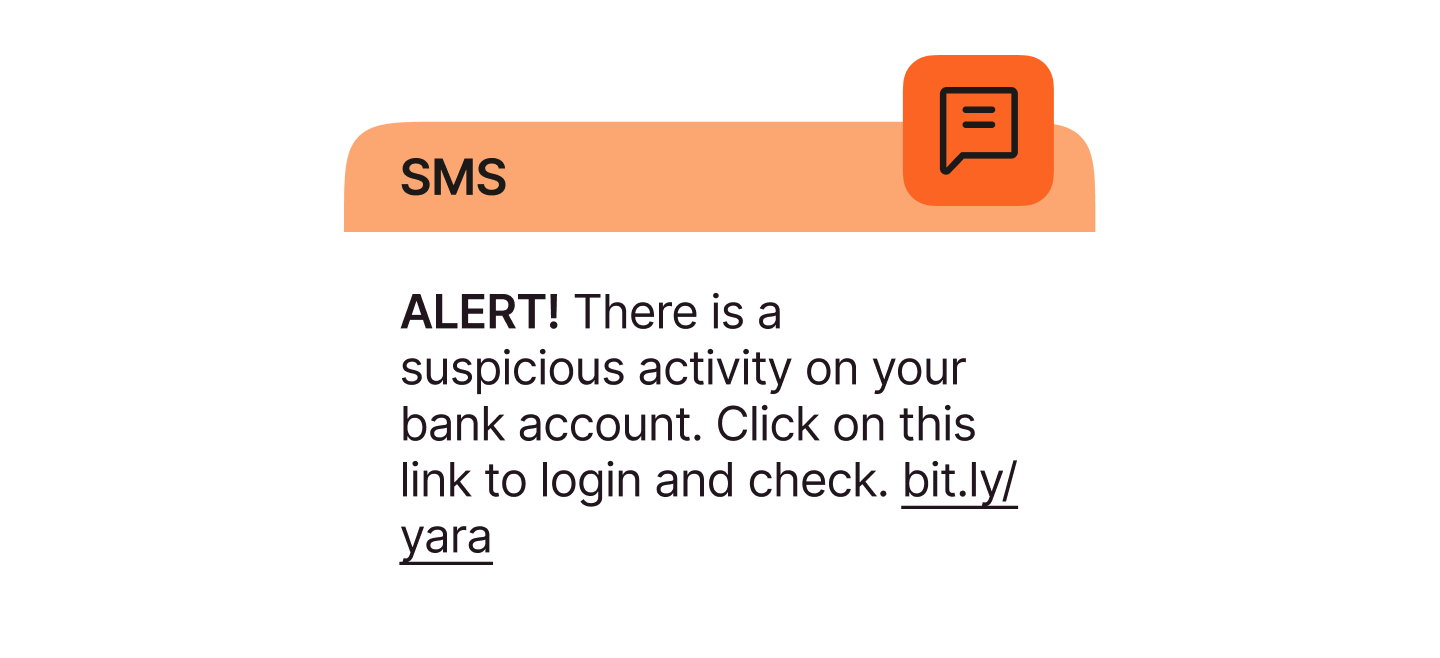
The scam is often convincing enough that you may not realize anything is wrong. The goal is to get you to take an action before you have a chance to verify the message or sender. Fraudsters may use fake websites or landing pages that closely resemble legitimate ones to make the scam even harder to detect.
That action might involve:
- Clicking a link to a fake website
- Entering a username, password, or payment details
- Sharing an SMS one-time password or verification code
- Replying with personal information
- Calling a number controlled by the scammer
- Making a payment
Smishing is a form of social engineering. Rather than exploiting a technical vulnerability directly, attackers exploit trust and human behavior to persuade someone to do something they would not normally do. 70% of all mobile phishing attacks now take place over SMS, while SMS-originated scams surged 30-40% quarter-over-quarter.
How smishing works
A typical smishing attack follows a simple pattern:
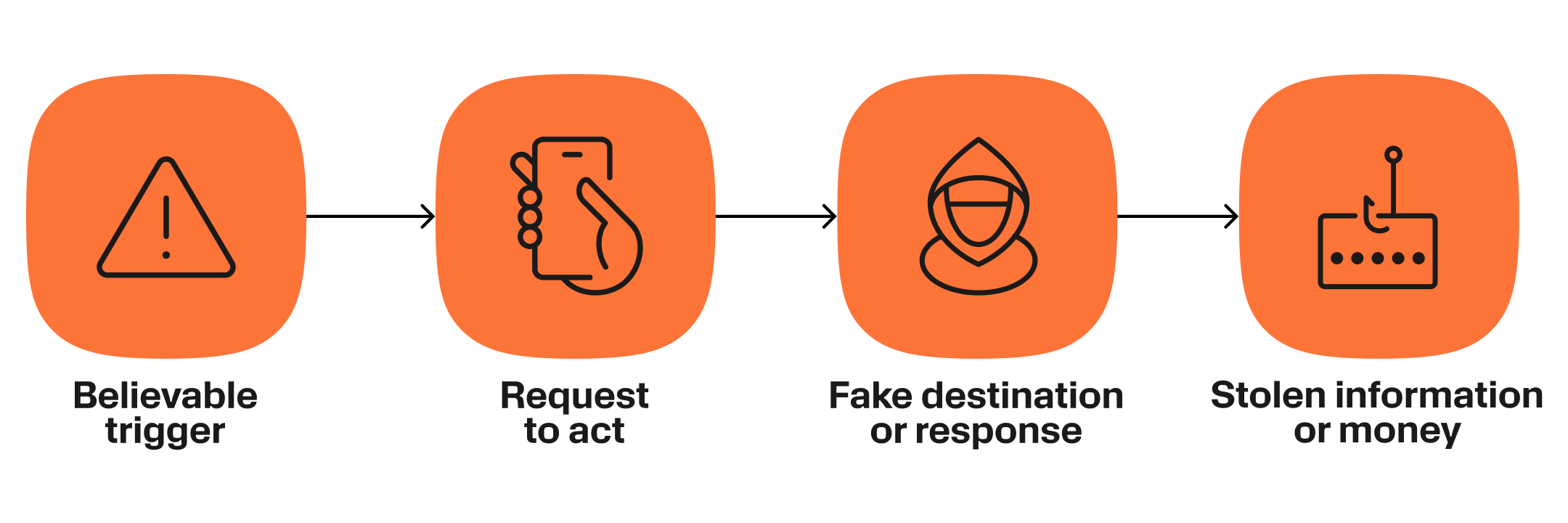
Consider what happens to the customer in this delivery example:
1. The customer receives a believable message
The first step is not necessarily a sophisticated technical attack. It is a message designed to make sense in the customer’s life. It might reference:
- a delivery that is supposedly waiting
- an unusual bank transaction
- an unpaid bill
- a tax refund
- a subscription renewal
- an account-security warning
The goal is to create recognition before suspicion.
2. The message creates a reason to act
Next comes pressure. The customer may be told that a payment is required, an account will be suspended, a package will be returned, or a transaction must be verified. The message does not need to threaten the customer directly. It only needs to make the requested action feel more important than taking time to verify it.
3. The customer follows the instructions
The customer clicks a link, calls a number, replies to the message, or enters information into a fake website. This is the point where a communication problem becomes a fraud event.
4. The fraudster gets what they need
Depending on the attack, the fraudster may capture credentials, payment information, personal data, or authentication codes. The customer may not realize anything is wrong immediately.
5. The customer discovers the fraud
The realization often comes later: an unfamiliar transaction appears, an account is accessed, or the customer notices that the original message was not legitimate. Now the experience moves beyond the customer. The customer contacts the bank, retailer, delivery company, or other organization they believe sent the message. And that is where smishing becomes a business problem. What started as a message targeting one customer can now affect the business relationship, the communication channel, and the trust between the customer and the brand.
When fraud reaches the customer, trust is affected too
From the customer’s perspective, it may not matter that a fraudster sent the message. If the message appeared to come from a trusted brand, the brand can become part of the experience. The customer may ask:
- Why did your company send me this?
- How did the fraudster know I was expecting a delivery?
- Can I trust messages from you anymore?
- Is my account safe?
- Who is responsible for this?
Even when the business did not originate the scam, it may still have to manage the consequences: customer support requests, fraud investigations, reimbursement questions, reputational damage, and declining confidence in a communication channel that the business relies on. That makes prevention more than a security exercise. It becomes part of the customer experience.
Smishing vs phishing vs vishing: What’s the difference
Phishing, smishing, and vishing all use impersonation and social engineering to persuade people to reveal information or take an action. The main difference is the communication channel:
| Type | Channel | How it typically works |
|---|---|---|
| Phishing | Fake emails impersonate a company or individual to steal credentials, payment information, or other data. | |
| Smishing | SMS (and other mobile messaging channels) | Fraudulent texts direct recipients to spoofed websites, request information, or encourage other actions. |
| Vishing | Phone call or voicemail | Fraudsters call or leave voice messages to impersonate a trusted organization and extract information or persuade the victim to act. |
The techniques can also overlap. A smishing message may direct someone to a fake website, which then prompts them to enter a phone number and receive a fraudulent call. Attackers can combine channels to make a campaign more convincing.
Common smishing examples to watch for
Every smishing message shares one trait – a strong prompt to act immediately, before the recipient has time to think it through.
Fake delivery notifications
“There’s a problem with your delivery – pay $1.99 to reschedule.” The approach works because delivery notifications are now a normal part of online shopping. A recipient who is genuinely expecting a parcel may not immediately question the message.
Fake bank fraud alerts
A text claims that suspicious activity has been detected on the recipient’s account and asks them to verify a transaction or secure their account. The link may lead to a fake banking website designed to capture login credentials, payment information, or authentication codes.
Many banks now add two-factor checks for logins from new devices specifically to close this gap.
Prize and lottery scams
The oldest trick in the book, and still working: The recipient is told they have won a prize, received an inheritance, or been selected for a reward. The message then asks them to pay a fee or provide personal or financial information to claim it.
Trusted-contact impersonation
Instead of pretending to be a company, the scammer impersonates someone the recipient knows or trusts. The message might reference a colleague, friend, employer, or family member and ask for money, information, or another action. Attackers can use publicly available information to make these messages more convincing.
How to identify a fake text message
No single sign proves that a message is fraudulent. Several warning signs together, however, should make you stop and verify the message through another channel. Look out for:
- Unexpected urgency: The message says you must act immediately or face a consequence.
- Suspicious sender details: It comes from an unfamiliar number, an unusual sender ID, or a name that closely resembles a legitimate brand.
- Unfamiliar links: The message directs you to a shortened URL or a domain that doesn’t match the organization’s official website.
- Requests for sensitive information: It asks for a password, PIN, card number, or one-time passcode.
- Unexpected context: You receive a delivery notification for a package you didn’t order or an account alert for a service you don’t use.
- Unusual language: Spelling, grammar, formatting, or terminology may differ from the messages you normally receive from the organization.
- Requests to bypass normal processes: The sender asks you to provide information or make a payment in a way the organization does not normally require.
When in doubt, don’t use the contact details provided in the message. Open the organization’s official app or website yourself, or contact it using a number you already trust.
How to prevent smishing
The best place to stop a smishing attack is before the customer ever sees it. That requires looking beyond the content of a single message and understanding the traffic moving through the messaging ecosystem. This is where the role of the mobile operator becomes important. Operators sit at a point in the messaging ecosystem where they can identify and stop harmful traffic before it reaches the customer.
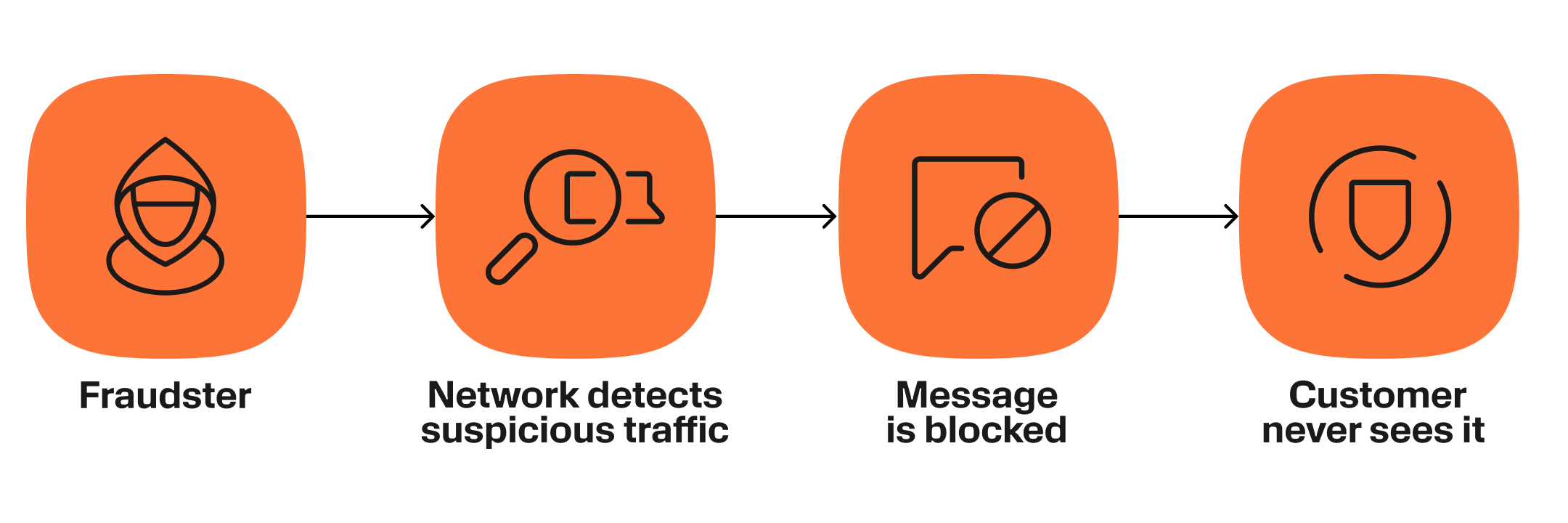
An SMS Firewall can change the outcome. It operates at the network level, analyzing SMS traffic and identifying patterns associated with spam, phishing, fraudulent traffic, grey routes, SIM-box activity, and other forms of abuse. Infobip’s SMS Firewall uses techniques including machine learning, traffic analytics, malicious-number and URL detection, and MSISDN reputation to help operators block harmful traffic before it reaches subscribers.
In other words, the customer does not have to recognize the scam. The network can intervene first. Instead of: fraudster → customer → customer discovers fraud → business responds the experience can become:
Why smishing prevention matters
Smishing isn’t an isolated problem that’s fading as people get wiser to it. The data points the other way. Based on the Fraud and Security Trends Report, in 2025 blocked fraudulent message volume increased by 77% year-over-year, with December 2025 more than double the early-2025 monthly average. Phishing-style content, smishing included, grew from 45% to 49% of all blocked harmful content, up 94% year-over-year. At the same time, SMS Firewall blocking increased by 27% while leaked, unprotected traffic fell 42% – evidence that upstream filtering is closing the gap between attackers and the people they target.
For businesses, the consequences go beyond individual fraudulent transactions. Repeated scams can weaken customer confidence in SMS as a communication channel. Customers may become reluctant to click legitimate links, trust account alerts, or use SMS-based authentication.
There are also operational costs. When customers receive fraudulent messages that impersonate a company, they may contact customer support to report the incident, recover an account, dispute a transaction, or determine whether a message was genuine.
No single layer can eliminate smishing on its own. The customer can learn to recognize suspicious messages, businesses can strengthen their controls and communication practices, and operators can detect and block harmful traffic before delivery.
Everyone in the messaging chain shares responsibility for keeping that trust intact: mobile operators need to filter traffic at the network level, CPaaS providers need to route messages cleanly rather than through grey routes, and businesses need to choose partners who do both.
But responsibility cannot stop there. Ecosystem participants, mobile operators and businesses can also:
- Educate customers about how legitimate messages look and what they will never ask for
- Monitor fraud reports and suspicious messaging patterns
- Protect SMS traffic at the network level
- Detect abnormal OTP and authentication traffic
- Work with messaging providers and mobile operators to identify emerging fraud patterns
- Make reporting and recovery processes simple when customers do encounter fraud
The goal is to create multiple opportunities to stop the attack. Because if the customer is the first and only line of defense, the attacker has already reached the person you are trying to protect.
From customer protection to trust protection
Let’s return to the customer who received the fake delivery message. There are two possible outcomes. In the first, the fraudulent SMS reaches the customer. They click the link, lose money, contact the business, and begin questioning whether they can trust future messages from that brand. In the second, suspicious traffic is identified and blocked before delivery. The customer receives nothing. Their delivery arrives normally. The business never has to explain the incident.
That is why fighting smishing is about protecting the moments when customers rely on a business to communicate with them. When fraud prevention works well, the customer may never know it happened. And that is the best outcome of all.
FAQs about smishing
Smishing blends “SMS” and “phishing”: a scam delivered primarily through SMS, but also through other mobile messaging channels, to impersonate trusted brands and steal money, passwords, or personal data.
All three aim to steal money or data by impersonating a trusted source. Phishing uses email, smishing uses SMS text messages, and vishing uses phone calls or voicemail. Because smishing targets people through their mobile devices, attackers may use malicious links, spoofed websites, or other mobile-focused techniques to steal credentials, payment information, or personal data.
Usually, it happens in one of a few ways: a data breach at a company you’ve used, mobile numbers bought and sold in bulk on the dark web, automated scraping of numbers listed publicly online, unsecured browser-saved form data, or software that generates and tests random number combinations.
Don’t click any links or reply, even to opt out. Delete the message, and if it claims to be from your bank or another service you use, contact that company directly through a number or app you already trust, not any number supplied in the text.
Potentially, depending on the circumstances, the jurisdiction, and the business’s role in the transaction. This can depend on factors such as whether the business failed to meet applicable security or consumer-protection obligations (for example, data-protection obligations under laws such as GDPR or POPIA) and whether its systems or processes contributed to the loss.
For that reason, businesses should not treat smishing as just a customer-awareness problem. Protecting messaging channels, monitoring suspicious traffic, and using appropriate authentication and fraud-prevention controls can help reduce both customer risk and potential business exposure.