




AI chatbots for eCommerce: Use cases, benefits, and how to get started
How eCommerce AI chatbots drive cart recovery, post-purchase support, and product discovery, plus how to choose a platform and measure ROI.

Seven out of ten online shoppers abandon their cart before checkout. A product question goes unanswered at 11pm. A loyal customer waits three days for a return confirmation that a bot could have sent in seconds. These are the gaps that eCommerce AI chatbots are built to close.
Every one of those moments costs you revenue. eCommerce AI chatbots recover it by answering instantly, recovering carts automatically, and resolving post-purchase requests in seconds.
Today’s eCommerce chatbots understand natural language, integrate with product catalogs and order management systems, and run across WhatsApp, Instagram, and SMS simultaneously. That channel reach recovers customers who would otherwise leave without buying. The most advanced operate as autonomous agents, handling multi-step tasks like personalized styling recommendations or order dispute resolution without human involvement.
This guide covers what eCommerce chatbots actually do, the use cases producing measurable results, how to evaluate platforms, and how to get started without overcomplicating the deployment.
What is an eCommerce chatbot?
An eCommerce chatbot is software trained on the specific data and workflows that drive online retail. Product catalog data, customer purchase history, inventory status, order management systems, and post-purchase support flows.
A generic chatbot can answer FAQ questions. An eCommerce chatbot can answer “Is the blue version of this jacket in stock in size M?” and if it isn’t, offer to notify the customer when it arrives, suggest an alternative, or apply a discount to convert a would-be lost sale.
Modern eCommerce chatbots operate on natural language processing and generative AI, not rigid decision trees. They understand intent, handle ambiguity, and take action. They send cart recovery messages, initiate return requests, and process loyalty redemptions. The frontier in 2026 is agentic AI: chatbots that handle multi-step, autonomous tasks within a single conversation, without waiting for the customer to know what to ask next.
Types of eCommerce chatbots
Rule-based chatbots operate through predefined menus and keyword triggers. They handle structured tasks reliably (order status lookups, FAQ responses, store locator queries) but break down when customers express intent in unexpected ways. They’re a starting point, not a long-term strategy.
AI-powered chatbots use natural language processing and machine learning to understand intent behind the words, not just the words themselves. They handle variation in how customers phrase questions, learn from interactions over time, and support personalization based on behavioral data. Most enterprise eCommerce chatbot deployments today are AI-powered.
Agentic AI shopping assistants represent the 2026 frontier. They handle multi-step reasoning tasks. Comparing multiple products against a customer’s stated preferences. Managing a return that requires checking eligibility, crediting a loyalty account, and scheduling a pickup. They do this autonomously across a full conversation. Standard AI chatbots respond to queries. Agents initiate actions on their own.
The question most eCommerce buyers are asking in 2026 is where chatbots end and AI agents begin. The answer is covered below.
Key eCommerce chatbot use cases
Cart abandonment recovery
The industry average cart abandonment rate is approximately 70% (Baymard Institute). For a retailer doing $10M in annual eCommerce revenue, recovering even 5% of abandoned carts represents hundreds of thousands in revenue that currently disappears without a follow-up.
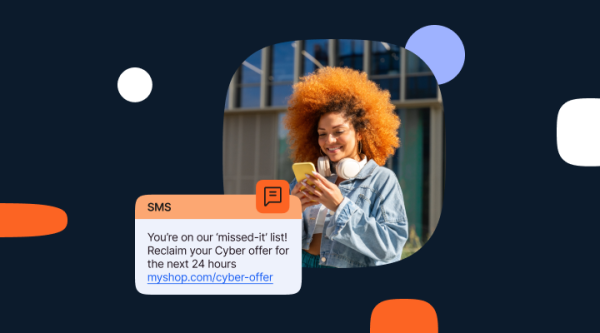
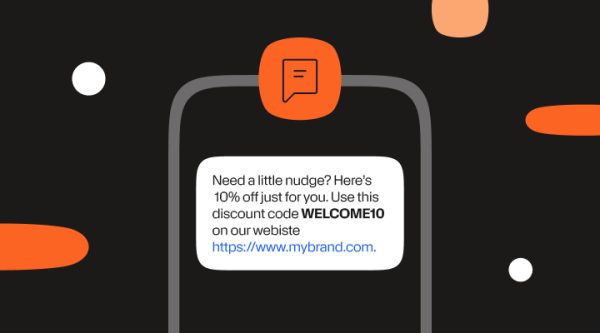
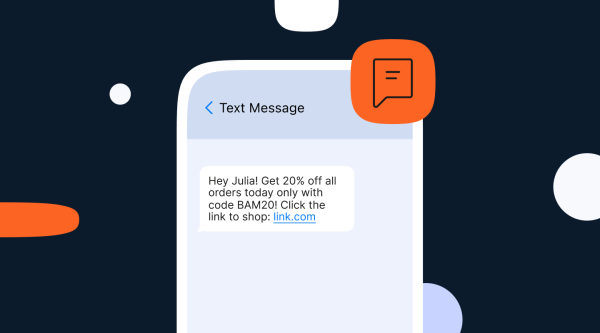
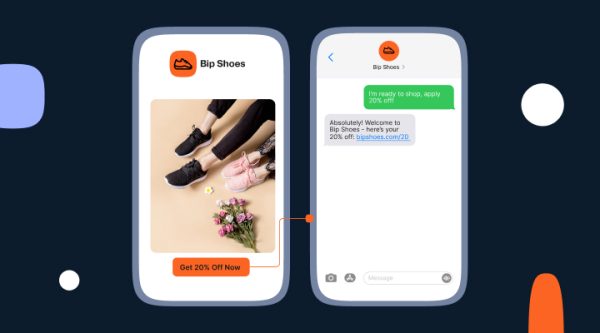
Your cart recovery bot fires the moment a customer leaves checkout without purchasing. The recovery message arrives via WhatsApp, SMS, or email with the exact products left in the cart. It can apply a dynamic discount based on the customer’s tier or cart value. One-tap checkout links reduce friction to zero.
Timely, channel-specific messaging makes the difference in conversion recovery. Bolt, working with Infobip on a WhatsApp sign-up journey, achieved a 40% increase in the number of users completing registration after starting the process.
The difference between a cart recovery chatbot that works and one that doesn’t comes down to timing, personalization, and channel. A generic email 24 hours later performs far worse than a WhatsApp message 45 minutes after abandonment that names the specific product and offers a reason to come back.
Product discovery and recommendations
Customers don’t always know what they want when they land on a product catalog. “I need a gift for a gardener with a budget of $50” is a natural human query that a keyword search box handles badly. An AI chatbot handles it directly.
Conversational product discovery lets customers describe what they’re looking for in plain language (occasion, recipient, budget, style preference) and returns catalog-grounded recommendations that match the intent. Cross-sell and upsell suggestions draw from purchase history and browsing behavior, surfacing relevant additions at the moment of highest purchase intent.
Nissan Saudi Arabia used Infobip’s conversational AI platform to engage dealership customers through a chatbot flow, achieving an 80% session engagement rate.
Visual search adds another layer. A customer uploads a photo of a product they’ve seen and the chatbot returns the closest matches from the catalog. This works particularly well in fashion, home furnishings, and electronics.
Order tracking and post-purchase support (WISMO)
“Where is my order?” (WISMO) is consistently the highest-volume query in eCommerce customer service. It’s also the easiest to automate. Order status, shipping updates, delivery confirmation, and expected arrival times are all data that exists in your systems and can be surfaced in seconds through a chatbot without agent involvement.
Post-purchase chatbot automation extends beyond tracking. Return initiation, exchange requests, refund status, and delivery failure notifications are all high-frequency, structured interactions that a chatbot handles reliably. Each one removed from your contact center queue reduces operational cost and frees agents for interactions that actually require human judgment.
Farm Superstores deployed an AI chatbot for customer service across their retail operations and achieved a 60% reduction in operational costs.
Automating post-purchase support (the category with the highest predictable volume) is typically the fastest path to ROI for eCommerce chatbot deployments.
Proactive customer engagement
Most eCommerce chatbot deployments start reactive. Wait for the customer to reach out, then respond. Proactive engagement flips that model by using behavioral signals from your customer data platform to trigger outbound conversations at the right moment.
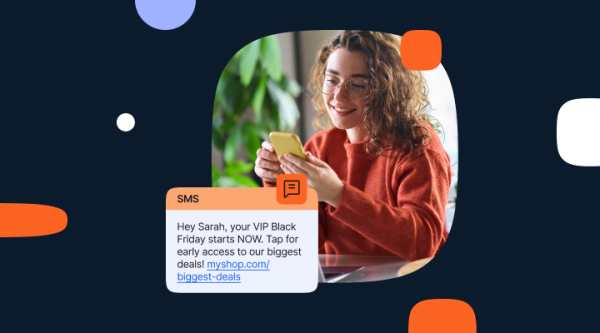
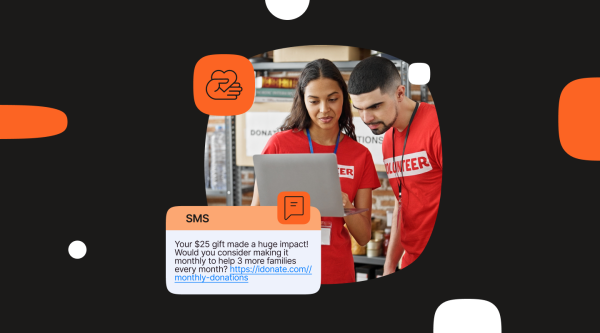
Reorder reminders trigger when a customer’s typical repurchase window approaches for consumable products. Back-in-stock alerts fire immediately when a wishlisted item becomes available. Loyalty check-ins acknowledge milestones and present redemption options before points expire. Promotional campaigns run across WhatsApp, SMS, RCS, and email simultaneously, with the same bot logic, not separate builds for each channel.
TGR Haas F1 used Infobip’s conversational platform for a fan engagement campaign and achieved 80% lower cost of ad conversion and a 76% engaged user rate.
The broader principle applies directly to eCommerce. Proactive, personalized outreach through a conversational channel outperforms passive digital advertising when the data exists to make it relevant.
eCommerce chatbot channels: Where customers shop in 2026
The channel question for eCommerce chatbots has a clear answer. Customers expect to engage where they already spend time. That means WhatsApp, Instagram, SMS, RCS, and messaging apps alongside Live Chat. Not just a chat window in the corner of your website.
Each channel has specific capabilities that eCommerce chatbots can exploit:
- WhatsApp — product catalog browsing, payment links, voice message support, two-way conversational flows, and template notifications for cart recovery and order updates. WhatsApp’s verified business profiles establish trust in a way generic SMS cannot.
- RCS — rich product carousels, verified sender identity, interactive buttons, and high-resolution images. Where carrier support exists, RCS delivers a WhatsApp-quality experience to customers on any Android or iPhone (iOS 18+) without a third-party app.
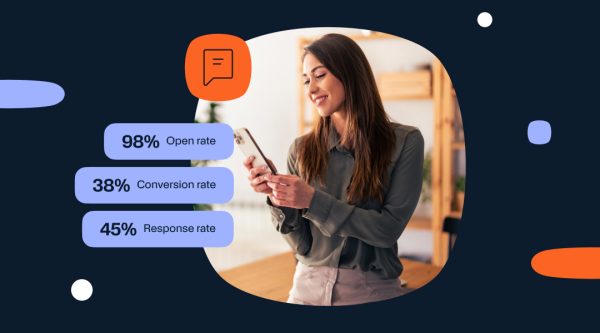
- SMS — reliable fallback for cart reminders, delivery updates, and time-sensitive promotions. High open rates and no app dependency make it effective for re-engagement.
- Instagram — shop-and-buy within DMs, handling customer service queries that arrive through product tags and story replies.
- Messenger, Telegram, Viber — existing audiences in specific markets, particularly relevant for retailers with APAC, MENA, or European customer bases.
- Live Chat — website and in-app, for customers who prefer to stay in-context rather than switch to messaging.
The practical implication for eCommerce teams. Bot logic should be configured once and deployed across all relevant channels. Rebuilding separate chatbots per platform multiplies maintenance overhead without adding capability. The AI chatbot builder supports 10 consumer messaging channels from a single build, backed by 800+ direct operator connections across 190+ countries and support for 130+ languages.
Chatbots vs. AI agents for eCommerce: What’s the difference?
This is the question buyers are asking most in 2026, and the answer has direct implications for how you scope and budget a deployment.
| Chatbot | AI Agent | Human Agent | |
|---|---|---|---|
| Best for | Structured, predictable interactions | Complex, multi-step tasks | Judgment-heavy or emotionally sensitive interactions |
| Examples | Order tracking, cart recovery, FAQ, product recommendations | Personalized styling advice, multi-product comparisons, order disputes | High-value relationship queries, complex complaints |
| Key trait | Fast, scalable, always on | Context-aware, autonomous reasoning, can initiate actions | Empathy, accountability, nuanced judgment |
Chatbots handle interactions where the query type is predictable and the answer can be retrieved or templated. AI agents handle interactions where the resolution requires combining multiple data sources, evaluating options, and making decisions. The kind of task that used to require a skilled customer service agent.
Most eCommerce chatbot use cases (WISMO, cart recovery, FAQs, reorder reminders) belong in the chatbot tier. A smaller but commercially significant category belongs with AI agents. Complex return disputes, personalized product consulting, and high-value loyalty interventions.
The platforms delivering the most value in eCommerce are those that support both tiers and escalate between them without the customer noticing the handoff. When a product inquiry escalates from chatbot to AI agent to a human stylist, the human should see the full prior conversation. Not start from zero.
AgentOS is designed for this architecture: chatbot automation, AI agent reasoning, and human escalation within a single platform.
What to look for in an eCommerce chatbot platform
The market is crowded with chatbot platforms. These criteria separate eCommerce-grade tools from generic conversational AI.
Channel coverage. Are the channels natively integrated, or connected through third-party plugins? Native integrations mean direct access to channel APIs, faster deployments, and fewer failure points. A platform with five native channels is more reliable than one with fifteen via connectors.
AI capabilities. Look for NLP with eCommerce intent libraries, GenAI with RAG (so product recommendations draw from your actual catalog, not general training data), and confidence thresholds that route to a human when the AI isn’t certain.
Customer data integration. A chatbot without customer data delivers generic interactions. The best eCommerce chatbot platforms connect to your CDP or CRM to personalize every message based on purchase history, behavior, and lifecycle stage. Look for conversational CDP capabilities that build persistent customer profiles from every interaction.
Escalation path. How does the chatbot hand off to an AI agent, and how does that hand off to a human? Is conversation context preserved across tiers? A broken escalation creates the worst possible customer experience — worse than no chatbot at all.
eCommerce integrations. Direct connectors to Shopify, Magento, BigCommerce, WooCommerce, VTEX, and your OMS matter more than generic API access for most eCommerce teams. Pre-built integrations reduce go-live time significantly.
Analytics and ROI measurement. Cart recovery rate, conversion rate lift, average order value impact, containment rate, and channel-specific revenue attribution should be available without custom BI configuration. Look for BI tool integration (Looker, Tableau, Power BI) for teams that need to tie chatbot performance into broader revenue reporting.
Security and compliance. PCI-DSS for any flow that touches payment data. GDPR controls for European customer data. Data residency options for retailers operating across multiple jurisdictions. Ask every vendor directly whether their platform logs full conversation history for audit purposes.
How to measure eCommerce chatbot ROI
Chatbot deployments fail to prove ROI when teams measure activity instead of outcomes. The metrics that matter are:
- Cart recovery rate — of abandoned carts that received a recovery message, what percentage resulted in a completed purchase? This is the primary commercial KPI for cart abandonment use cases.
- Containment rate — what percentage of customer service interactions were fully resolved by the chatbot without escalation? Higher containment = lower cost per interaction.
- Conversion rate lift — for product discovery and recommendation flows, what is the conversion rate for chatbot-assisted sessions versus unassisted? Attribution models vary by platform.
- Average order value impact — do sessions with chatbot-driven cross-sell recommendations produce higher AOV than sessions without? Quantifying upsell contribution justifies the channel investment.
- CSAT on chatbot interactions — a high containment rate that produces low satisfaction scores is not a win. Track CSAT separately for chatbot-resolved and escalated interactions.
- Channel-specific revenue attribution — for proactive engagement flows (cart recovery, back-in-stock, reorder reminders), direct revenue attribution per channel is achievable and expected. A WhatsApp cart recovery campaign that generates $X in recovered revenue is measurable.
AgentOS insights and analytics surfaces these metrics natively, with integration into Looker, Tableau, and Power BI for teams that need chatbot performance data inside existing dashboards.
Getting started with AI chatbots for eCommerce
The eCommerce brands that see the fastest return from chatbot deployment start narrow, measure precisely, and expand based on what the data shows.
Step 1: Define your highest-volume use case. Pull customer service data for the past 90 days. What are the top query types by volume? WISMO, return requests, and product questions appear on nearly every eCommerce list. These are your first automation targets — high frequency, low complexity, measurable outcomes.
If your cart abandonment rate is above 60%, cart recovery is the higher-return first move. A cart recovery chatbot that achieves a 5–10% recovery rate on abandoned sessions generates attributable revenue from day one.
Step 2: Choose a platform with native eCommerce integrations and omnichannel delivery. Generic chatbot platforms require significant customization to connect to OMS, product catalogs, and eCommerce platforms. Start with a platform that has pre-built integrations with your commerce stack, native channel delivery (not third-party plugins), and a clear upgrade path from chatbot to AI agent as your use cases grow.
Step 3: Measure and iterate. A cart recovery chatbot with a 40% conversion rate in the first 60 days is a business case for expanding to product recommendations. A WISMO chatbot that achieves 70% containment is a business case for adding return initiation. Let the data drive the roadmap, not the feature list.
AI chatbot builder is built for this approach: a modular AI chatbot builder with pre-built eCommerce integrations, 10 natively supported consumer channels, and an escalation path to AI agents and human agents when the interaction requires it.
Talk to an eCommerce chatbot expert
Let us help you map the right starting point for your business.

FAQs
A rules-based bot follows a fixed decision tree. It breaks the moment a customer phrases something outside the script. An AI chatbot understands intent, handles variation in how questions are asked, and connects to live data sources: your product catalog, OMS, and customer history. That means it can answer “Is the blue version of the jacket in stock in my size?” and offer an alternative if it isn’t, rather than returning a generic “I didn’t understand that.” Get a fuller picture of how conversational AI applies specifically to eCommerce, including personalization and agentic use cases.
The chatbot detects abandonment and triggers a recovery message through the channel most likely to get a response, typically WhatsApp or SMS, within 30 to 60 minutes. The message references the specific products left behind and can apply a dynamic discount based on cart value or customer tier. A one-tap checkout link removes the friction of returning to the site. Recovery rates vary by industry and execution, but the cart abandonment guide covers the timing, channel, and personalization decisions that separate high-performing campaigns from low ones.
Chatbots handle interactions where the answer is retrievable or templatable: order tracking, cart recovery messages, FAQ responses, reorder reminders. AgentOS AI Agents handle interactions that require multi-step reasoning: comparing several products against a stated preference, resolving a return dispute that spans eligibility rules and a loyalty credit, or managing a complaint that needs judgment rather than a lookup. The distinction matters for scoping, most eCommerce use cases start in the chatbot tier and escalate to agents only when the complexity warrants it.
Personalization at scale requires connecting the chatbot to a source of customer data. A chatbot that can see purchase history, browsing behavior, loyalty status, and lifecycle stage sends a different message to a lapsed customer than to someone who bought yesterday. The customer data platform builds persistent profiles from every interaction across channels, so personalization improves with each conversation rather than resetting. Without that data layer, a chatbot defaults to generic responses regardless of how sophisticated its underlying AI is.
Journey orchestration handles this: define the trigger conditions and message logic once, then deploy across WhatsApp, SMS, RCS, and email from the same flow. The chatbot monitors behavioral signals, a repurchase window approaching, a wishlisted item becoming available, points nearing expiry, and initiates the outbound conversation automatically. Our WhatsApp eCommerce customer journey blog shows how this plays out end-to-end on a single channel.
The two that matter most for commercial justification are cart recovery rate (completed purchases divided by recovery messages sent) and containment rate (chatbot-resolved interactions as a percentage of total volume). Both are directly attributable to the chatbot and translate to revenue or cost reduction without inference. Insights and analytics surfaces these alongside conversion lift, average order value impact, and channel-specific revenue attribution, with native integration into Looker, Tableau, and Power BI.
Start with the use case that has the highest query volume and the most predictable structure. For most retailers, that’s WISMO, it’s the easiest to automate, produces immediate containment rate gains, and builds internal confidence for expanding to more complex flows. If cart abandonment is a larger commercial problem, that’s an equally valid starting point with direct revenue attribution from day one. The AI chatbot builder supports both starting points with pre-built eCommerce integrations and a deployment path that scales from a single use case to a full retail and eCommerce conversational strategy.