



Benefits of chatbots for business and customers: The complete guide
Discover the real benefits of chatbots built on an enterprise platform: 24/7 omnichannel support, 60% cost reduction, CDP-powered personalization, and AI agent escalation. With customer results, industry examples, and a full FAQ.

Google “benefits of chatbots” and you’ll get the same list ten times over. But a chatbot that handles FAQ on a single web widget is a different product from one that resolves 30% of insurance queries automatically, deployed across 15 channels in 130 languages. This guide covers the second kind, with the customer results to support it.
Here’s what we’ll cover:
- Benefits for your customers (omnichannel availability, personalization, multilingual support, smart escalation)
- Benefits for your business (cost reduction, scalability, lead generation, revenue growth, analytics, brand consistency)
- What AI chatbots deliver that rule-based bots can’t
- Industry-specific results
- Build flexibility (no-code, low-code, pro-code)
- Enterprise security and compliance
The customer experience is where chatbot value becomes tangible first, so let’s start there.
Benefits of chatbots for your customers
CX leaders evaluating chatbot platforms need to connect deployment decisions to measurable outcomes: higher CSAT, lower customer effort, faster resolution. The benefits below go beyond generic claims by connecting each one to a specific Infobip capability, with the platform context that makes each benefit achievable.
Instant support across every channel they actually use
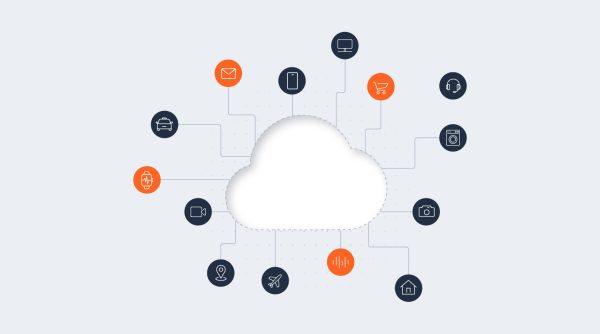
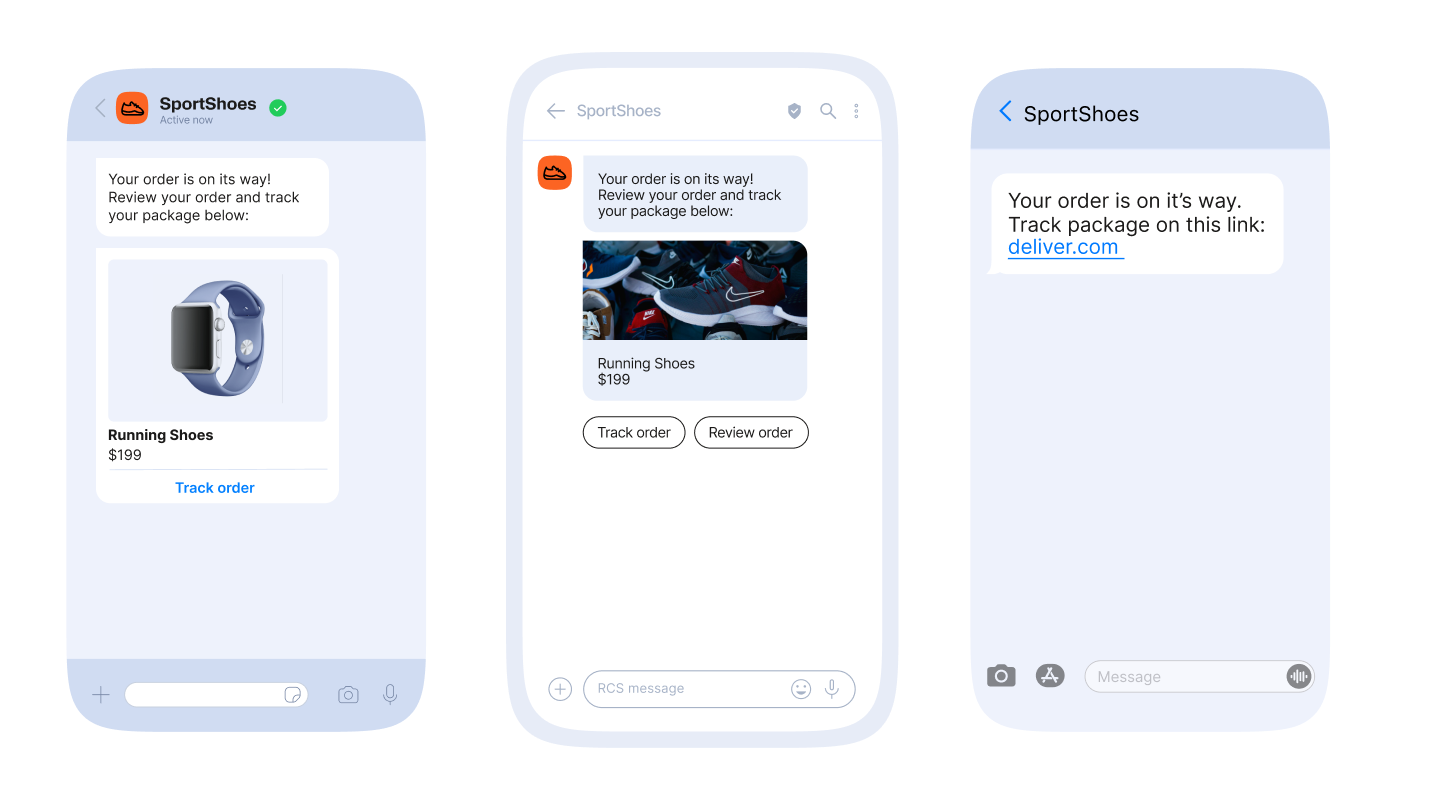
The generic benefit is “24/7 availability.” The real benefit is channel availability. Your customers get help on WhatsApp at 2am, interact with rich media on RCS, use Live Chat on your website, or message through Viber, Telegram, or Apple Messages for Business. All with the same intelligence behind the conversation.
Infobip’s AI chatbot builder deploys across 15+ messaging channels from a single builder. One set of bot logic, one build, every channel.
With 99.95% uptime SLA and 850+ direct carrier connections, customers never hit a dead end regardless of where they start the conversation. That kind of availability translates directly into higher CSAT scores, because the fastest way to improve customer satisfaction is to be available when they need you.
Most chatbot vendors support two to five channels and depend on third-party APIs for delivery. Infobip owns the messaging infrastructure and that’s the difference between “available” and “reliably available at 2am on a Saturday in Jakarta.”
WhatsApp, 10:14pm
Pat: Where’s my order? It was supposed to arrive today.
Nova Sports: Hi Pat! Your order #4821 is currently at the local depot. Updated delivery: tomorrow by 2pm. Want me to send you a live tracking link?
RCS, next day 11:30am
Nova Sports: Your package is on its way! [Live tracking map with “Reschedule delivery” and “Leave with neighbour” buttons]
SMS, 1:47pm
Nova Sports: Your order #4821 was delivered to your front door at 1:45pm. Thanks for shopping with us!
The channel reach matters, but what happens inside each conversation matters more. That’s where personalization comes in.
Personalized interactions from the first message
This is Infobip’s strongest differentiator, and no competitor in this space is talking about it yet. Here’s why: most chatbot platforms can only personalize based on what the customer says during that session.
Infobip’s Conversational CDP within AgentOS means the chatbot already knows the customer’s history, preferences, purchase behavior, and lifecycle stage before the first message arrives.
The customer never has to repeat their name, order number, or issue. The chatbot recommends products based on what they’ve actually bought before. And high-value customers get routed to priority support automatically. A returning customer asking about an order gets their specific order status instantly, not a generic “please provide your order number” prompt.
This isn’t integration-project personalization that takes six months to configure. It’s native because the CDP and chatbot builder live on the same platform.
WhatsApp
Chatbot: Hi Sarah! Just a heads up: your subscription renews in 3 days. Based on your usage this month, you might save 15% by switching to the Annual plan. Want me to show you the breakdown?
No question asked. The chatbot already knows the customer’s billing cycle, usage patterns, and which offer makes sense. That’s CDP personalization working before the conversation even starts.
Personalization handles the “what” of the conversation. But for global enterprises, there’s still the question of “in what language,” and that’s where multilingual support becomes a real competitive advantage.
Natural conversations in 130+ languages
“Multilingual support” sounds like a checkbox feature until you’re serving customers across Southeast Asia, the Middle East, and Latin America simultaneously. Infobip’s chatbot detects preferred language automatically and responds naturally, with product vocabulary, banking terminology, and cultural context preserved.
No separate bot builds per language and no manual language selection menus. 130+ languages with automatic detection. Deploy one chatbot that serves your entire global customer base without rebuilding flows for each market.
For enterprises operating across diverse regions, this eliminates a massive operational burden and opens the door to audiences you couldn’t serve before. Customers who interact in their own language convert at higher rates, and one build gets you there in every market.
Language and personalization handle most interactions smoothly. But customers still need humans sometimes, and the way that handoff works determines whether your chatbot builds trust or destroys it.
Seamless escalation when they need a human
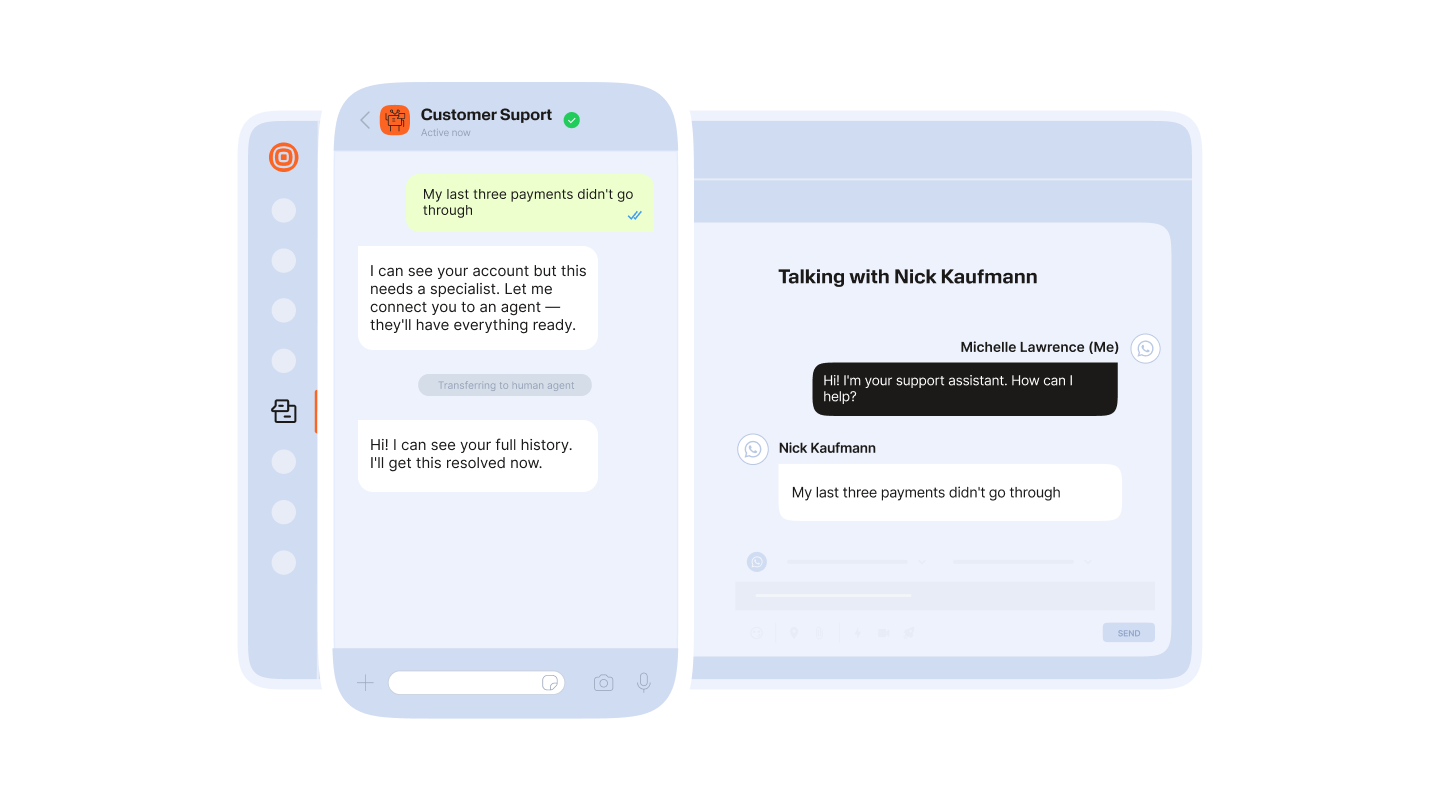
The number one customer frustration with chatbots isn’t getting a bot, but getting trapped in one. AgentOS and its cloud contact center solves this with three-tier escalation that no competitor currently offers:
- Chatbot handles routine queries (order status, FAQ, account info)
- AI agent steps in for complex reasoning (loan eligibility calculations, dispute resolution, multi-step troubleshooting)
- Human agent takes over for empathy-driven situations (complaints, sensitive issues, high-value negotiations)
The critical part: full chat transcript, CDP profile, and AI-recommended next actions transfer with the conversation at every handoff. The human agent sees everything, including what the AI agent already tried.
Most “benefits of chatbots” content stops at “human handoff.” The intermediate AI agent tier, handling complex reasoning before a human even needs to get involved, is what makes this escalation model different.
WhatsApp conversation (customer side)
Customer: I’ve been charged twice for my last order and I’m really frustrated. This is the third time this has happened.
Chatbot: I can see the duplicate charge on your account. I’ve flagged it for an immediate refund. Let me connect you with someone who can make sure this doesn’t happen again.
Back-end view (agent side)
Escalation trigger: Repeat complaint (3rd occurrence) + negative sentiment detected
Routed to: Senior support agent
Context transferred: Full chat transcript, CDP profile (loyal customer, 2yr history, 3 duplicate charge incidents), AI recommendation: process refund + apply loyalty credit
Now that we’ve covered how chatbots benefit the people using them, let’s look at the business case, which is usually what gets the budget approved.
Benefits of chatbots for your business
If you’re building an ROI case for chatbot investment, this section gives you the numbers. Cost reduction comes first because it’s the most immediately provable benefit, but revenue generation and operational intelligence follow close behind.
Reduce operational costs without reducing quality
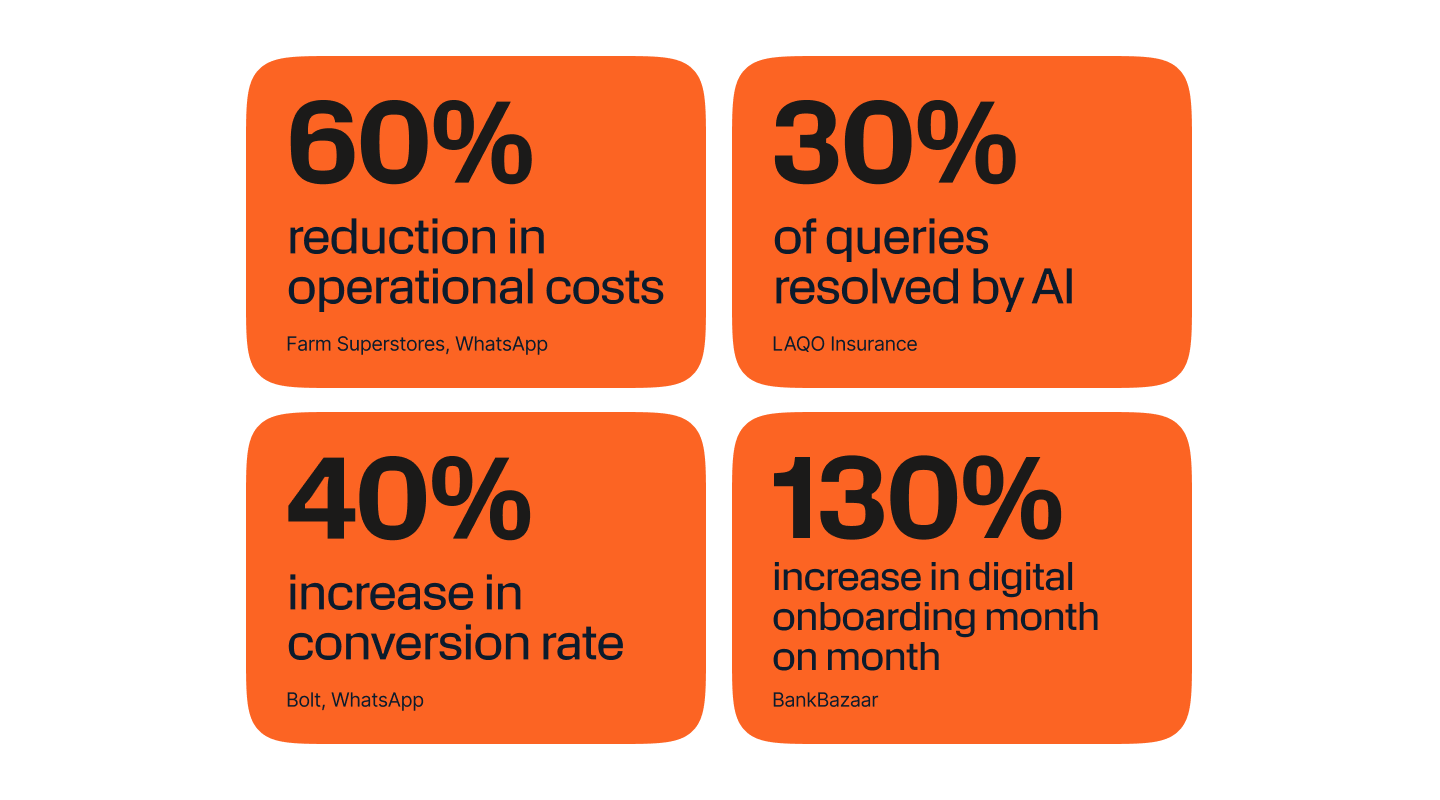
Farm Superstores deployed a WhatsApp chatbot and achieved a 60% reduction in operational costs. That’s not a projection, but a measured result. The mechanism is straightforward: chatbots handle routine queries at a fraction of human agent cost, eliminate after-hours staffing requirements, and deflect calls from expensive voice channels to messaging. McKinsey research shows businesses can reduce operational costs up to 30% with AI-powered customer support, and this finding is even more relevant with the AI advancement.
When a single chatbot session costs pennies and a human agent interaction costs dollars, the ROI is immediate. Chatbots handle the repetitive, high-volume queries so your team can focus on conversations that need a human touch.
Cost savings get attention, but the ability to handle growth without proportional headcount increases is what makes chatbots strategically valuable in the long term.
Scale without scaling headcount
Black Friday. Product launches. Marketing campaigns that actually work. Every one of these creates a volume spike that would traditionally require temporary staffing, overtime, or longer wait times. Chatbots handle thousands of simultaneous conversations without a flinch.
But here’s what separates Infobip from standalone chatbot platforms making the same claim: Infobip owns and operates the messaging delivery network. 850+ carrier connections. 43 data centers. 190+ countries. No third-party API dependencies for message delivery. 99.95% uptime SLA.
When a SaaS chatbot vendor says “we scale,” they mean their software scales. When Infobip makes the same claim, that includes the delivery infrastructure underneath. Carrier-grade throughput is not something you can bolt on after the fact.
Handling volume efficiently is one side of the equation. The other is turning that volume into revenue, which brings us to lead generation.
Generate and qualify leads automatically
Chatbots aren’t simply reactive support tools; they’re proactive revenue generators. A chatbot engages website visitors, collects contact details, asks qualifying questions, and routes high-intent leads to sales instantly, without a form submission or a “we’ll get back to you in 24 hours” delay.
Bolt achieved a 40% increase in conversion rate with their WhatsApp sign-up journey chatbot. That’s what happens when you meet prospects in a channel they already use, at the moment they’re most interested. When connected to Infobip’s Conversational CDP, lead scoring goes beyond form fields. The chatbot qualifies based on behavioral data: pages visited, products browsed, previous interactions, lifecycle stage. High-value leads get routed to sales immediately. Lower-intent leads enter nurture sequences automatically.
Lead generation captures new revenue, but there’s also significant revenue sitting inside your existing customer base, and CDP-powered chatbots are uniquely positioned to unlock it.
Drive revenue with contextual cross-sell and upsell
This is a benefit that requires a native CDP layer to deliver. Infobip’s CDP-powered chatbots know what customers own, what they’ve browsed, and what they’re likely to need next.
That enables proactive product recommendations triggered by behavioral signals: cart recovery via WhatsApp eCommerce journeys with 90%+ open rates (compared to 20% for email), payment reminders tied to lifecycle events, and upgrade offers timed to contract renewal windows.
The chatbot stops being a cost center and becomes a revenue channel. Every support conversation is also a potential upsell opportunity, handled with context rather than generic scripts.
Revenue and cost savings are the headline metrics, but the operational intelligence chatbots generate is what drives continuous improvement.
Gain actionable insights from every conversation
Every chatbot interaction generates data: intent patterns, common questions, sentiment signals, friction points, drop-off moments. The question is whether you can actually use that data.
Infobip’s Insights and Analytics module within AgentOS provides role-based dashboards (CX managers see different views than compliance officers), containment rate tracking, CSAT measurement, and custom reports exportable to BI tools. This creates a continuous improvement loop based on real conversation data. You don’t guess what customers struggle with. You measure it, fix it, and measure again.
Data-driven optimization handles what you can measure, but brand consistency across every touchpoint requires something more systematic.
Maintain brand consistency across all touchpoints
Consistency across thousands of daily interactions is hard to maintain manually. Chatbots deliver the same tone, compliance language, and product information across every channel and every interaction, every time. Build once in AgentOS, deploy across 15+ channels with channel-native adaptations: WhatsApp button menus, RCS carousels, SMS fallback for areas without data coverage. The same guardrails that prevent off-brand responses also provide audit trails for regulated industries.
For enterprises operating across multiple markets and channels, this consistency isn’t a nice-to-have, but a regulatory and brand requirement.
With the business benefits established, there’s a question worth addressing directly: what’s different about AI-powered chatbots compared to the rule-based bots that have existed for years?
Benefits of AI-powered chatbots vs. basic bots
Buyers increasingly search for “benefits of AI chatbots” specifically. That’s because they now understand there’s a meaningful difference between a decision-tree bot that matches keywords and an AI chatbot that understands intent. Here’s what that difference delivers.
Understand customer intent, not just keywords
Rule-based bots match keywords. If a customer types something slightly different from what’s programmed, the bot fails. AI chatbots powered by NLP and NLU understand what customers mean. “Send money,” “wire transfer,” “make a payment,” “I need to transfer funds to my brother.” A rule-based bot needs a separate rule for each variation. An AI chatbot recognizes they’re all the same intent.
AgentOS’s intent detection handles typos, synonyms, and complex multi-turn conversations without losing context. GenAI intent detection with flexible LLM selection makes conversations feel natural rather than scripted.
Understanding intent is the foundation, but the ability to improve over time is what separates AI chatbots from static tools.
Learn and improve with every conversation
A rule-based bot deployed today works exactly the same in six months. It never gets better unless someone manually updates it. AI chatbots trained on real conversation data improve intent recognition, reduce fallback rates, and increase containment over time.
Retrieval-augmented generation (RAG) enables document-grounded responses. The chatbot pulls accurate answers from knowledge bases, product documentation, or FAQs without hallucinating. When your product catalog changes, your pricing updates, or your policies shift, the chatbot adapts through its knowledge base rather than requiring flow rebuilds. That means less time spent on maintenance and fewer resources tied up keeping your bot up to date.
Continuous improvement matters, but not at the cost of accuracy. That’s the tension GenAI introduces, and it’s one that AgentOS addresses directly.
GenAI responses with enterprise guardrails
GenAI gives chatbots natural, conversational responses. It also introduces risk: hallucination, off-brand statements, and compliance violations. Most “benefits of AI chatbots” posts ignore this entirely.
AgentOS provides both sides: GenAI-powered natural language responses with enterprise guardrails that enforce compliance disclosures, prevent hallucinations through RAG grounding, and maintain full audit trails for every AI-generated response.
The platform offers a flexible LLM library (bring your own model or use Infobip’s defaults) with model routing capabilities. You choose the model, set the guardrails, and maintain full visibility into what the AI generates and why.
It’s the difference between “we use AI” and “we use AI responsibly with proof.”
AI capabilities matter most when applied to specific industry contexts. Let’s look at where chatbots deliver the highest impact by vertical.
Chatbot benefits across industries
Banking and financial services
Balance inquiries, loan pre-qualification, KYC onboarding, fraud alerts, payment reminders. LAQO Insurance achieved 30% of queries resolved by their AI chatbot, with 90% resolved within three to five interactions. Bank Albilad integrated a WhatsApp chatbot with their cloud contact center to offload routine FAQs from agents and streamline support across the MENA region, bringing conversational service to customers on a channel they already use daily. The compliance angle is critical here: PCI-DSS for payment data, GDPR for customer information, KYC/AML for onboarding. Chatbots in banking need audit trails and data residency options that generic platforms can’t provide.
For the full picture on banking chatbots, including compliance depth and use case breakdowns, explore our financial services resource.
eCommerce and retail
Product recommendations, order tracking, cart abandonment recovery, and return processing. Bolt achieved a 40% increase in conversion rate with their WhatsApp sign-up chatbot. BankBazaar saw a significant increase in digital onboarding month-on-month after implementing a chatbot-driven acquisition flow, proving the model works for high-consideration products too.
The WhatsApp-specific benefit here is significant: 90%+ open rates for cart recovery messages compared to ~20% for email. Rich media product catalogs, in-chat payment links, and CDP-powered promotions based on actual purchase history turn WhatsApp into a full commerce channel.
Telecommunications
Plan inquiries, billing support, SIM activation, network troubleshooting, and upgrade recommendations. Telco operators handle millions of routine support queries monthly. The vast majority (plan details, billing questions, usage checks) are completely automatable. Chatbots absorb this volume entirely, freeing human agents for complex technical issues and retention conversations.
Healthcare
Appointment scheduling, symptom triage, medication reminders, insurance inquiries, and patient onboarding. The sensitivity of healthcare data makes compliance non-negotiable: HIPAA-ready data handling, data residency options for jurisdictional requirements, and multilingual support for diverse patient populations. For real-world examples, see our healthcare AI chatbot guide.
Healthcare chatbots work best when they handle administrative burden (scheduling, reminders, form collection) while routing clinical questions to qualified staff immediately.
Travel and hospitality
Booking management, flight and hotel inquiries, loyalty program engagement, disruption notifications, concierge services. Mukuru deployed a WhatsApp chatbot for financial services in 10 languages, demonstrating how multilingual, omnichannel chatbots serve globally mobile customers.
The omnichannel benefit is particularly strong here: WhatsApp for travel updates and rebooking, RCS for rich booking confirmations with images and buttons, SMS for real-time flight alerts in areas with limited connectivity.
Industries define the “what.” But the “how” of building a chatbot determines who in your organization can actually create and maintain it.
Build your way: no-code, low-code, or pro-code
This is a differentiator that no one else is talking about. Competitors mention “easy to build” but none differentiate build modes for different teams and use cases. AgentOS supports all three on the same platform.
No-code visual builder
Drag-and-drop interface with pre-built templates. Both rule-based and AI-powered chatbots are buildable without writing code. A basic FAQ chatbot can go live in minutes, and you can build or refine flows using natural language prompts instead of configuring every step manually. This is for marketing teams, CX managers, and operations leads who need to launch without developer dependency. Non-technical teams iterate on chatbot flows directly, test variations, and deploy updates without filing engineering tickets.
Low-code JavaScript
Custom logic, financial calculations, and validation rules inside chatbot flows. Dynamic context handling for scenarios where visual builders hit their limits. Write custom JavaScript directly inside flows without external development environments.
This mode balances speed with control. Technical configurators and business analysts who can write basic logic get full flexibility without a full development stack.
Pro-code Python
Developers can build with Python on LangGraph and AutoGen, create multi-agent workflows for complex processes, and connect to external systems through MCP integration. The platform also offers REST APIs with OpenAPI spec and SDKs in Python, Node.js, Java, PHP, and .NET. Full developer freedom with enterprise infrastructure underneath. All three modes produce the same production-grade chatbot on the same AgentOS platform. A no-code FAQ bot and a pro-code multi-agent system both deploy to the same channels with the same security and compliance layer.
Flexibility in building is important, but enterprise buyers also need to know the security and compliance foundation underneath. That’s the section most competitor posts skip entirely.
Enterprise security, compliance, and reliability
No competing guide covers compliance in depth. This is the largest content gap, and it’s the section that enterprise security teams and procurement will evaluate most closely.
| Area | Infobip AgentOS Chatbot |
|---|---|
| Data encryption | AES-256 at rest, in transit, and in use |
| Certifications | SOC 2 Type II, ISO 27001 |
| Regulatory compliance | GDPR, CCPA, PCI-DSS |
| Data residency | 43 data centers across 190+ countries |
| Uptime SLA | 99.95% carrier-grade |
| Audit trails | Full conversation logging for every AI-generated response |
Infobip is also recognized as a Leader in the 2025 Gartner Magic Quadrant for Communications Platform-as-a-Service (CPaaS), reinforcing the platform’s enterprise credibility for procurement teams evaluating vendor shortlists.
The benefits here are concrete: regulatory audit readiness without scrambling for documentation, data sovereignty for enterprises operating across multiple jurisdictions, and carrier-grade reliability that generic chatbot SaaS vendors cannot match because Infobip owns its delivery infrastructure. No third-party API dependency for message delivery means one fewer vendor in your security review.
Every benefit in this guide comes back to one thing: chatbots built on the right platform don’t just answer questions, they reduce costs, generate revenue, and scale with your business while keeping compliance teams happy.
Frequently asked questions
Chatbots deliver measurable benefits for both businesses and customers: 24/7 omnichannel availability, instant response times, reduced operational costs (Farm Superstores achieved 60% cost reduction), personalized interactions at scale, automated lead generation and qualification, and consistent brand messaging. When built on an enterprise platform like Infobip’s AgentOS, chatbots also deliver deployment across 15+ messaging channels, CDP-powered personalization that knows every customer before the first message, and intelligent escalation from chatbot to AI agent to human agent with full context preserved.
Chatbots help businesses by automating routine customer interactions at scale, reducing support costs, generating and qualifying leads, and providing actionable insights from every conversation. They handle thousands of simultaneous conversations without additional hiring, absorb volume spikes during peak periods, and operate 24/7 without overtime costs. Infobip’s AgentOS adds enterprise-specific benefits: omnichannel deployment across WhatsApp, SMS, RCS, and 17+ other channels, native CDP integration for personalized interactions, and AI agent escalation for complex queries, all on a single platform.
Rule-based chatbots follow predetermined decision trees. They can only respond to specific inputs they’ve been programmed for. AI chatbots use natural language processing (NLP) and machine learning to understand customer intent, handle typos and synonyms, maintain multi-turn conversations, and improve over time. GenAI-powered chatbots go further, using large language models to generate natural responses with retrieval-augmented generation (RAG) for document-grounded accuracy. Infobip’s AgentOS chatbot builder supports all three types, with enterprise guardrails that prevent hallucination and maintain compliance audit trails.
Chatbots save money by automating routine queries that would otherwise require human agents, eliminating after-hours staffing costs, deflecting calls from expensive voice channels to messaging, and handling volume spikes without additional hiring. Farm Superstores achieved a 60% reduction in operational costs with their WhatsApp chatbot. McKinsey research shows businesses can reduce operational costs up to 30% by implementing AI in customer support. AgentOS amplifies savings by deploying the same chatbot across 15+ channels from a single builder, eliminating per-channel rebuild costs.
Yes. Chatbots drive revenue through proactive lead engagement, personalized product recommendations, cart abandonment recovery, and conversational commerce. Bolt achieved a 40% increase in conversion rate via their WhatsApp sign-up journey chatbot. When connected to Infobip’s Conversational CDP, chatbots trigger contextual cross-sell and upsell based on real behavioral data, transforming every conversation into a potential revenue opportunity.
Infobip’s AI chatbot builder supports 15+ messaging channels including WhatsApp, SMS, RCS, Apple Messages for Business, Facebook Messenger, Instagram, Viber, Telegram, LINE, Live Chat, Zalo, KakaoTalk, email, voice, and in-app messaging. All from one builder with one set of bot logic. The same chatbot deploys across multiple channels simultaneously without rebuilding. Most competitor chatbot platforms support two to five channels.
High-impact industries include banking and financial services (balance inquiries, loan pre-qualification, fraud alerts), eCommerce and retail (product recommendations, cart recovery, order tracking), telecommunications (billing support, plan changes, self-service), healthcare (appointment scheduling, patient onboarding), and travel and hospitality (booking management, disruption notifications). Infobip serves enterprises across all these industries with industry-specific templates and compliance capabilities.
Chatbots improve customer experience by providing instant responses on preferred channels, offering 24/7 availability, delivering personalized interactions based on real customer data, supporting 130+ languages, and enabling seamless escalation when needed. The critical differentiator is no dead ends: Infobip’s AgentOS provides three-tier escalation (chatbot to AI agent to human) with full context transferred, ensuring every interaction reaches resolution regardless of complexity.
Key metrics include containment rate (percentage resolved without human escalation), cost-per-interaction reduction, call deflection rate, CSAT improvement, agent handle time reduction, lead conversion rate, and revenue attributed to chatbot-assisted interactions. Infobip’s Insights and Analytics module within AgentOS provides real-time dashboards, custom reports, and exportable data for BI tools, enabling enterprise teams to prove chatbot ROI with verifiable data rather than estimates.