





Messaging Trends 2026
Channel analysis
Join us as we look at the growth trends for the pillar channels being used by our customers, how they are being used, and why certain channels take off in a particular region while others struggle to gain traction.
SMS is a key pillar channel for almost all of our customers across all regions. Although the trend for adopting multiple channels to communicate with customers is well advanced, in 2025 SMS still accounted for 62% of the traffic on our platform.
It is used for core use cases where reliability and speed of delivery are the highest priority. SMS is the go-to channel for notifications, OTP messages, and any situation where a small piece of information needs to be communicated quickly.
5-year trend
As a mature pillar channel that is firmly entrenched in the workflows of our customers, we would not expect a significant increase in SMS volumes globally.
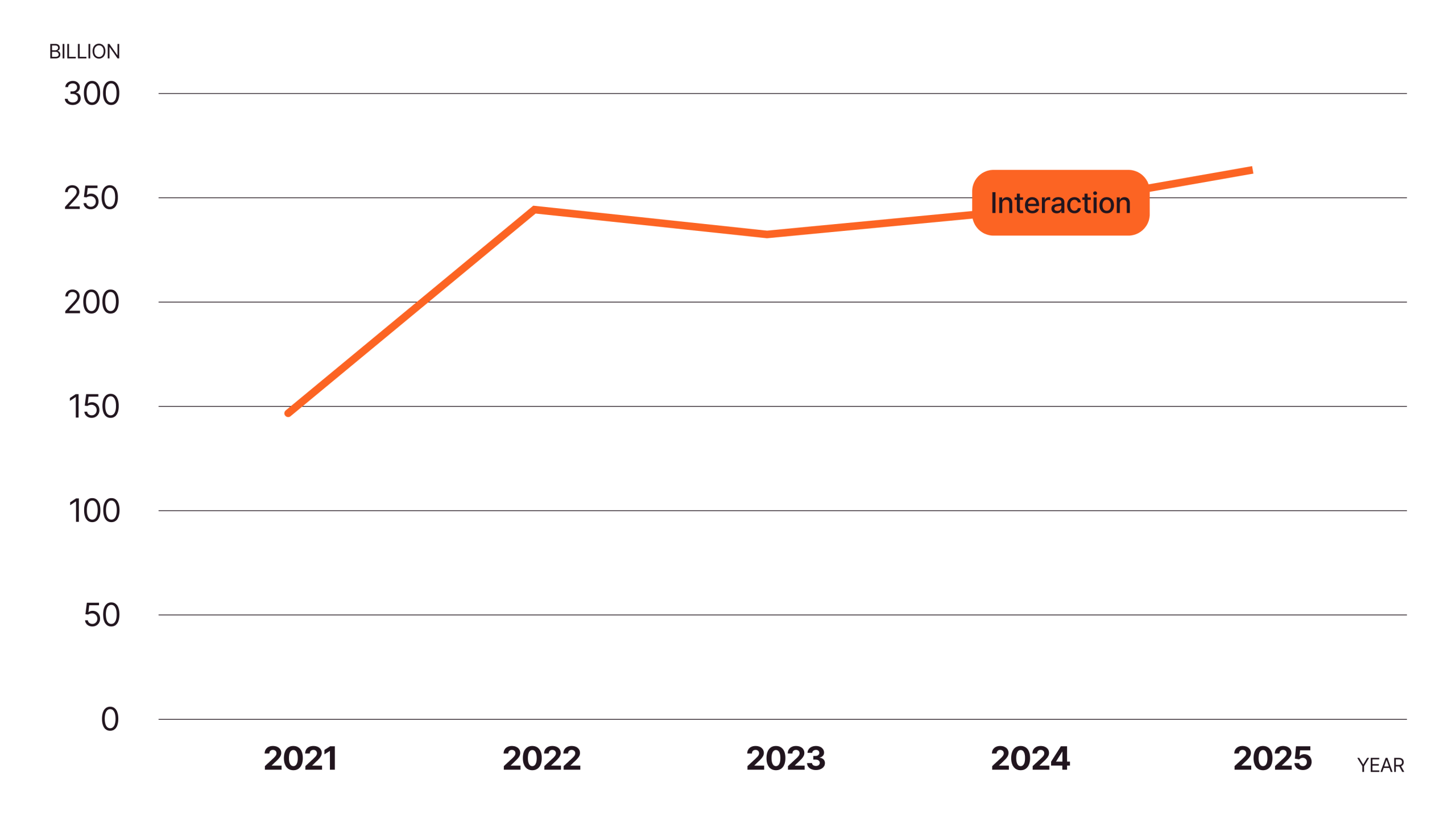
However, this high-level view hides some significant increases at a regional and country level.
2025 high growth regions:
53%
LATAM
34%
EUROPE
14%
APAC
These sharp increases have been somewhat offset by regulatory changes in the significant Indian market, where we are already seeing the effects of the changes by the Reserve Bank of India to phase out SMS OTP messages. Banks and payment providers must adopt alternative 2FA methods by April 2026 for domestic transactions and by October 2026 for cross-border payments. This has led to a 14% decrease in SMS messages in India in 2025, and we expect an even more significant drop off during 2026.
SMS is still evolving
As one of the original pillar channels of B2C communication, SMS has been functionally stable for a long time. The next major shift will happen in the orchestration layer, where Agentic AI will play a greater role in managing interactions.
But that doesn’t mean that there haven’t been a lot of minor improvements that add up to a significantly better user experience over time.
Take OTP messages for example. We take them for granted now – we make a transaction that requires verification by SMS and the message arrives immediately.
That wasn’t always the case just a few years ago. Sometimes an OTP message arrived late and expired before you could use it, or maybe it didn’t arrive at all if you were travelling in another country. These days OTP delivery is far superior, the improvements just happened slowly so maybe we didn’t notice it.
From our perspective a lot of work has gone into these improvements; no ground-breaking advancements, but rather a constant refinement to our platform and systems to where we are today. These include:
Continuous expansion of our global network by establishing high-quality, direct connections with suppliers, ensuring greater coverage and faster message delivery worldwide.
We enhanced platform scalability by deploying new data centers and optimizing existing ones, providing localized access points that reduce latency and support seamless message processing.
We constantly improve our traffic prioritization, ensuring that critical, time-sensitive messages like 2FA codes are delivered promptly, even during peak traffic periods.
Constant improvements to our monitoring and routing technologies mean that we can now identify and address potential delivery challenges before they impact users.
We now offer a range of failover solutions enabling our customers to maximize message delivery success. As new channels like RCS are integrated into our platform, they enable our customers to benefit from vastly more sophisticated failover strategies.

DPD: Improving delivery experiences and cutting costs with Viber and SMS.
20%

MMDSmart: 4.5x revenue growth with SMS and Number Lookup.
4.5x
5x
{{title}}.
{{meta.stats[0].number}}
{{meta.stats[1].number}}
{{meta.stats[2].number}}
We saw a significant 168% global increase in email traffic on our platform in 2025, with particularly strong growth in the Retail & eCommerce and Marketing & Advertising industries.
There is no doubt that brands are placing greater emphasis on email for customer retention and ongoing engagement, with expectations for the channel rising as marketers recognized its value beyond simple broadcast messaging. It has also established its role as part of a wider B2C strategy alongside SMS, RCS, and OTT messaging apps.
5-year trend
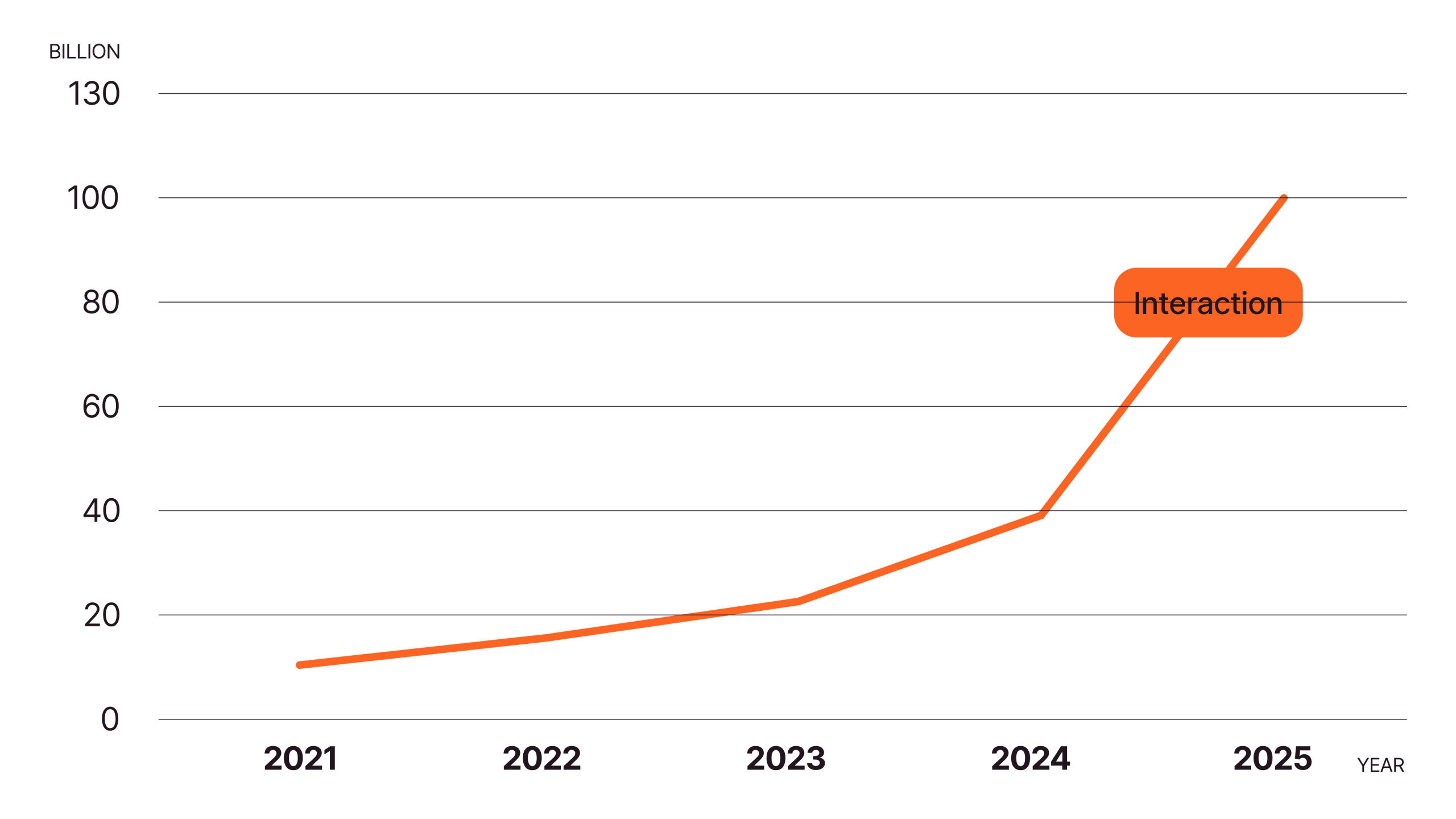
But this doesn’t fully explain the triple digit increase in email traffic on our platform. Rather than customers moving traffic back to email from newer digital channels, what we see is customers switching their existing email traffic to our platform.
There are three primary factors influencing this trend:
A number of existing large senders that have previously split their traffic between multiple vendors have now migrated most and in some cases all their email traffic to us to benefit from our reliability and cost effectiveness.
Infobip makes it simple for a business to manage all their channels from a single platform. As most brands now use multiple channels to communicate with their customers, it makes no sense to deal with different vendors for each channel. This has led to many more of our customers consolidating all their channels with us.
Continued development emphasis on our email offering means that our customers now enjoy industry leading deliverability performance, starting with custom domain warmup plans, proactive blocklist and reputation monitoring, and weekly reporting.
| Growth by region |
|---|
| APAC 233% |
| NAM 248% |
| MENA 113% |
| Growth by industry |
|---|
| Retail & eCommerce 5x |
| Tech & software 207% |
|
Marketing & advertising 192% |
With tens of millions of customers around the world, promotional and informational email messages must be delivered in a reliable and timely manner. Due to the proactive deliverability support we have increased our delivery rate and improved our sender reputation. By sending emails through the API provided by Infobip, we have been able to optimize our costs and reallocate operational personnel to other strategically important tasks.
Seungyong Sim
Director, Nexon Korea

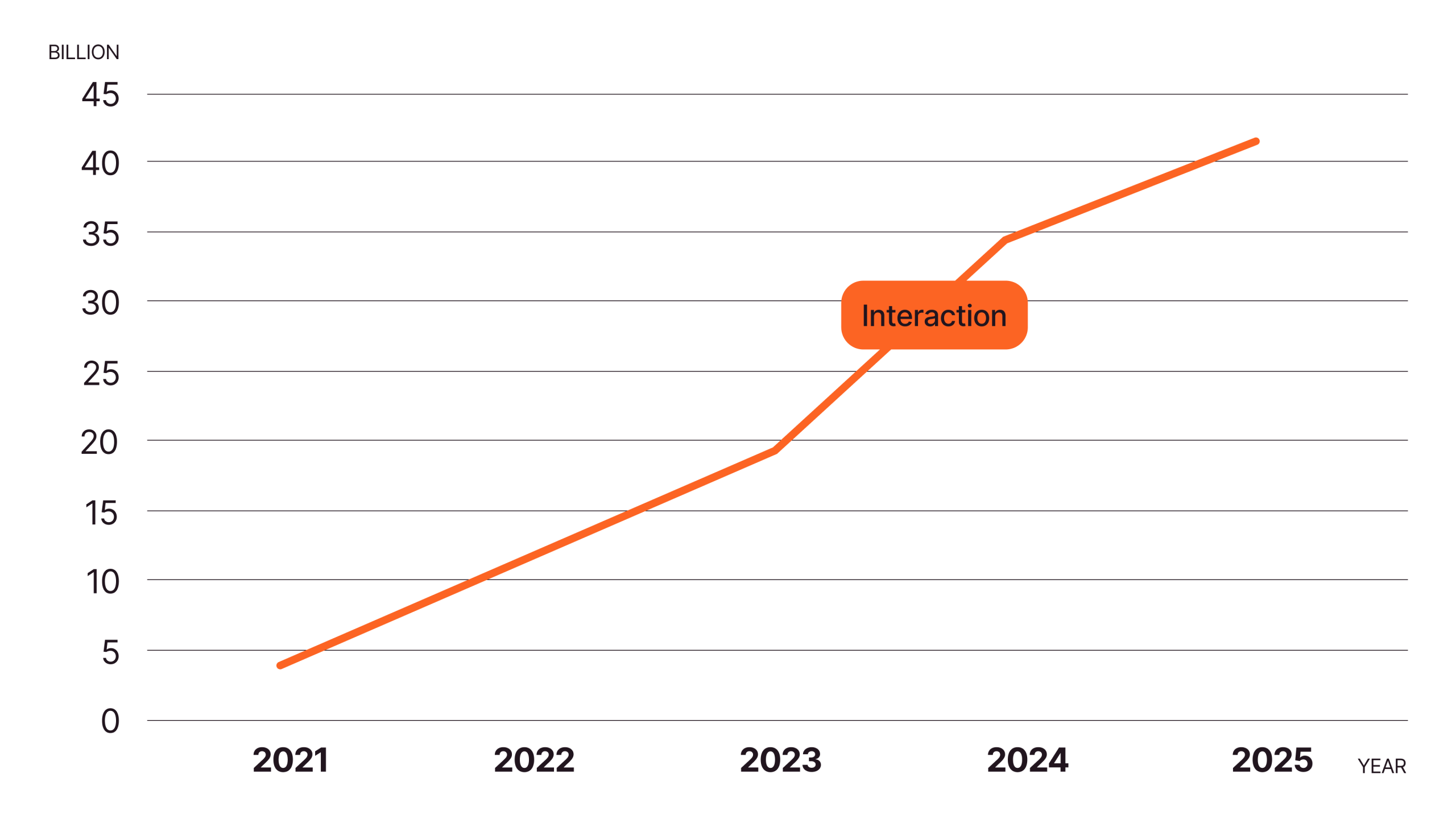
With our research showing that WhatsApp has the widest reach and most consistently high penetration rates across the globe, a high proportion of our customers utilize the channel for conversational support, AI, and marketing use cases.
In countries from the Americas, Europe, and all through Asia there will be millions of people from multiple generations that use the app as their primary way of communicating with friends, family members, and their preferred brands.
5-year trend
| Country | WhatsApp penetration rates |
|---|---|
| Brazil | 85% |
| Hong Kong | 90% |
| India | 75% |
| UAE | 90% |
| United Kingdom | 85% |
In Brazil, WhatsApp is part of everyday life. I use it for everything, and it’s the channel people turn to most. What started as messaging between friends and family has evolved into a key touchpoint for businesses, from receiving brand updates to completing purchases. While channels like Instagram and RCS are growing, WhatsApp remains the dominant channel.

Raquel Tasquetto
Infobip Sao Paulo, Brazil
While there are still some regions where other OTT messaging apps or RCS have higher usage levels, for our global enterprise customers WhatsApp has become a pillar channel in their customer communication strategies.
WhatsApp is the most popular app in India – I think all my friends and family have it. Apart from personal communication, I see a lot of brands messaging me on WhatsApp every other day. These are mostly promotional messages with images and call-to-action links. Instagram and Facebook Messenger are also quite popular, but these are mostly for personal messaging.

Abhijeet Guha
Infobip New Delhi, India
| Growth by region | |
|---|---|
| Europe | 35% |
| MENA | 36% |
| LATAM | 18% |
| Growth by industry | |
|---|---|
| Travel & hospitality | 39% |
| Finance & fintech | 21% |
| Marketing & advertising | 377% |
Rising demand for conversational CX
With its mature set of features WhatsApp has been a key channel for brands evolving their conversational maturity.
Conversational AI interactions
91%
of traffic
25% growth in 2025
Conversational support
94%
of traffic
25% growth in 2025
Conversational marketing
21%
of traffic
38% growth in 2025

TGR Haas F1 Team: Bringing interactive game experiences to fans over messaging channels .
80%
76%
74%

Nissan Saudi Arabia: Mastering lead generation with an AI-powered voice game over WhatsApp.
80%
84%
93%

Mukuru: Faster customer service and reduced costs with WhatsApp Business Platform.
30x
92%
{{title}}.
{{meta.stats[0].number}}
{{meta.stats[1].number}}
{{meta.stats[2].number}}
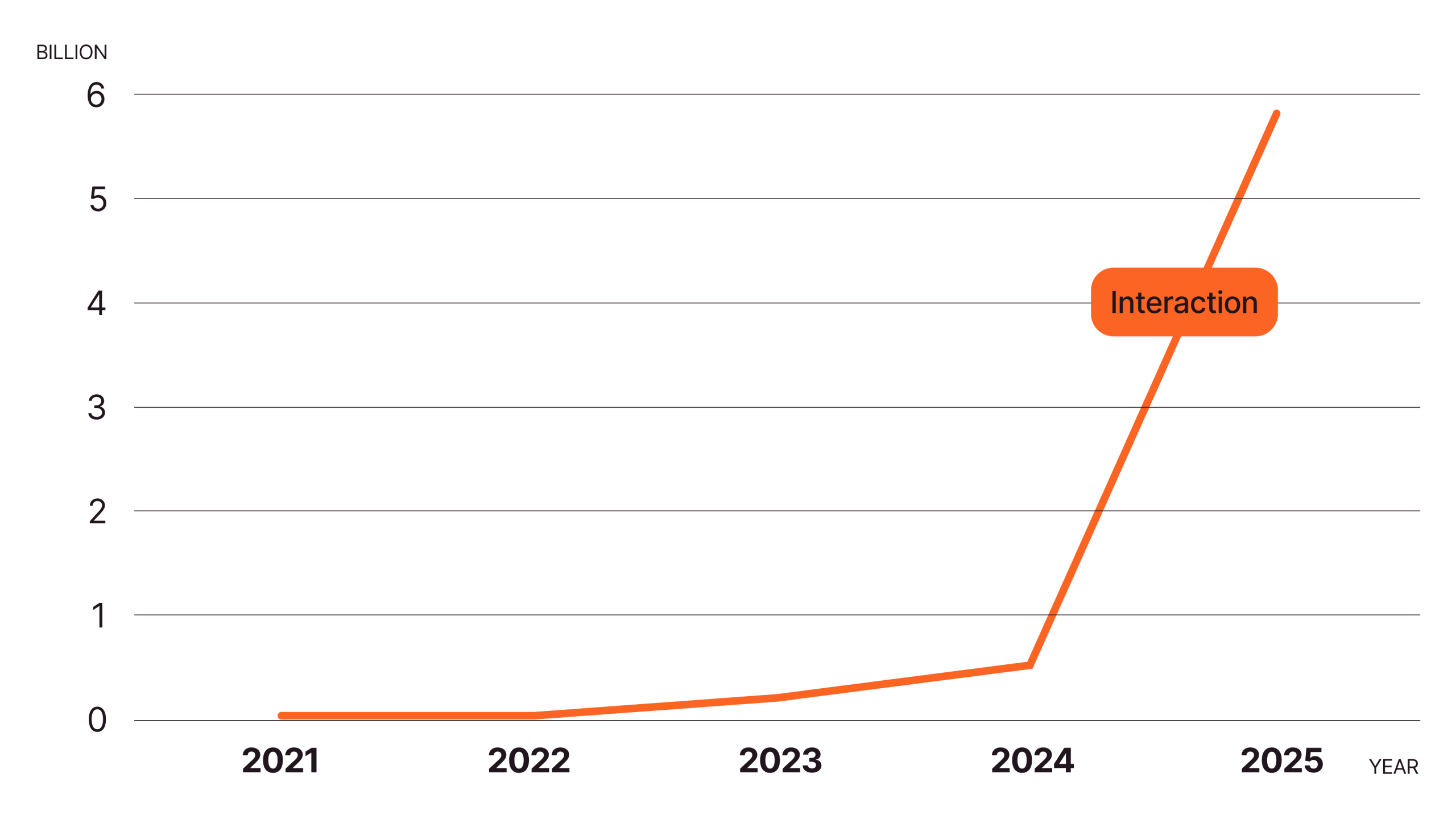
311% global growth in 2025
RCS experienced strong global momentum in 2025, driven by expanding smartphone penetration, 5G rollout, and increased enterprise adoption of rich messaging.
On our platform we reached a major milestone in Q3 2025 by hitting 10 billion RCS messages successfully delivered.
North America stood out as one of the fastest‑growing regions, with RCS traffic growing 70x as carriers ironed out issues and many brands went all-in on the channel for key use cases.
5-year trend
Europe also saw accelerated growth thanks to widespread Android penetration and major operator support, with several markets reaching penetration rates of 70–80% following broader ecosystem unification.
Asia‑Pacific saw rapid expansion in many markets, also driven by increased carrier support and some large brands increasing volumes after a period of experimentation with the channel.
Despite this global rise, growth remained limited in markets where carrier support lagged. Industry analyses highlight that roughly 25% of regions continue to face slow carrier adoption, creating fragmented availability and hampering the rollout of interoperable RCS features. These constraints disproportionately affect countries where operators have yet to fully unify around the RCS standard or prioritize investment in modern infrastructure.
What is holding RCS back in some regions?
Several reports highlight that about 25% of markets globally still face slow carrier adoption, which directly suppresses RCS rollout and feature availability. These regions include parts of the Middle East and Africa, where operators have not fully unified around the RCS standard, resulting in inconsistent service readiness and fragmented deployments.
This includes issues such as:
Delayed migration to IMS/RCS‑capable infrastructure
Limited interoperability agreements between regional carriers
Hesitancy to invest in RCS due to strong OTT dominance (WhatsApp, Telegram, etc.)
RCS requires modern Android devices or newer iPhones (iOS 18+) to use rich messaging features. Regions with a large base of older, non‑Android smartphones or legacy devices naturally have lower RCS‑ready user bases.
The impact of Apple support on RCS deliverability rates
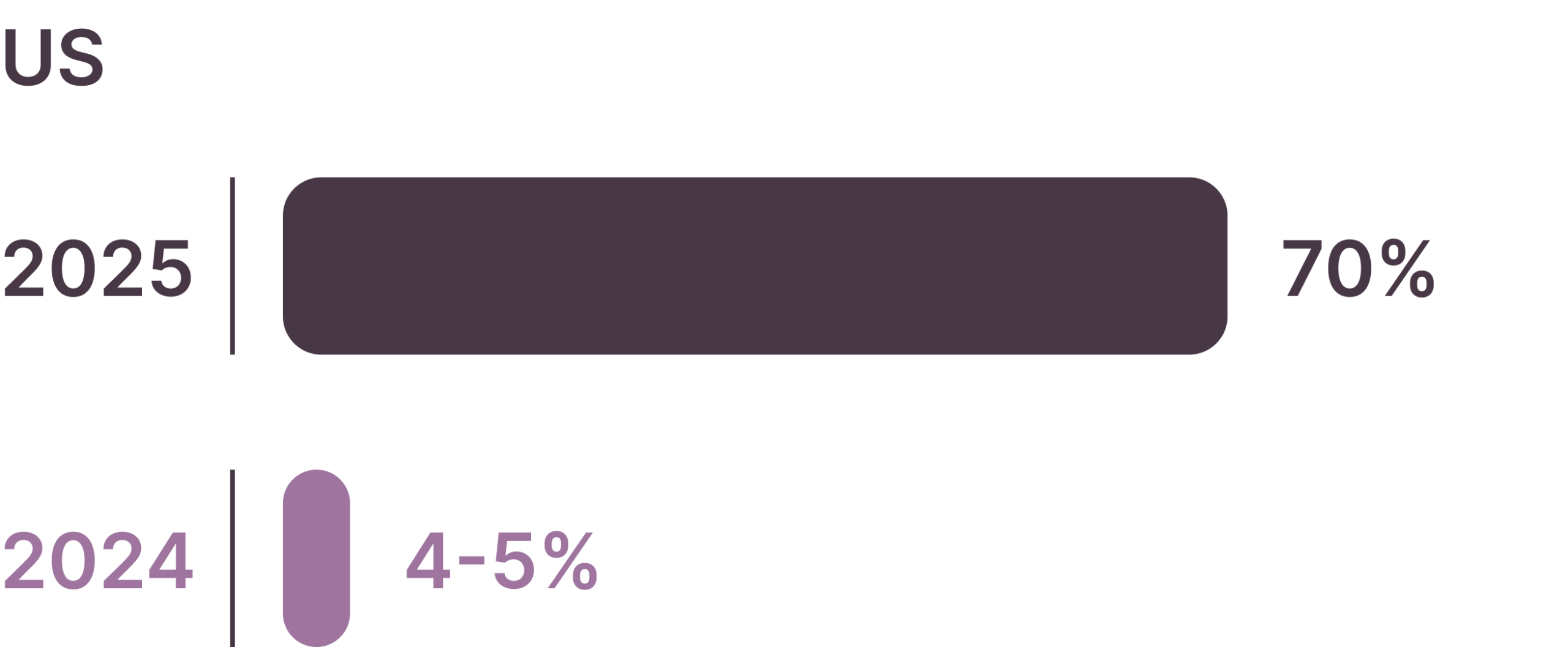
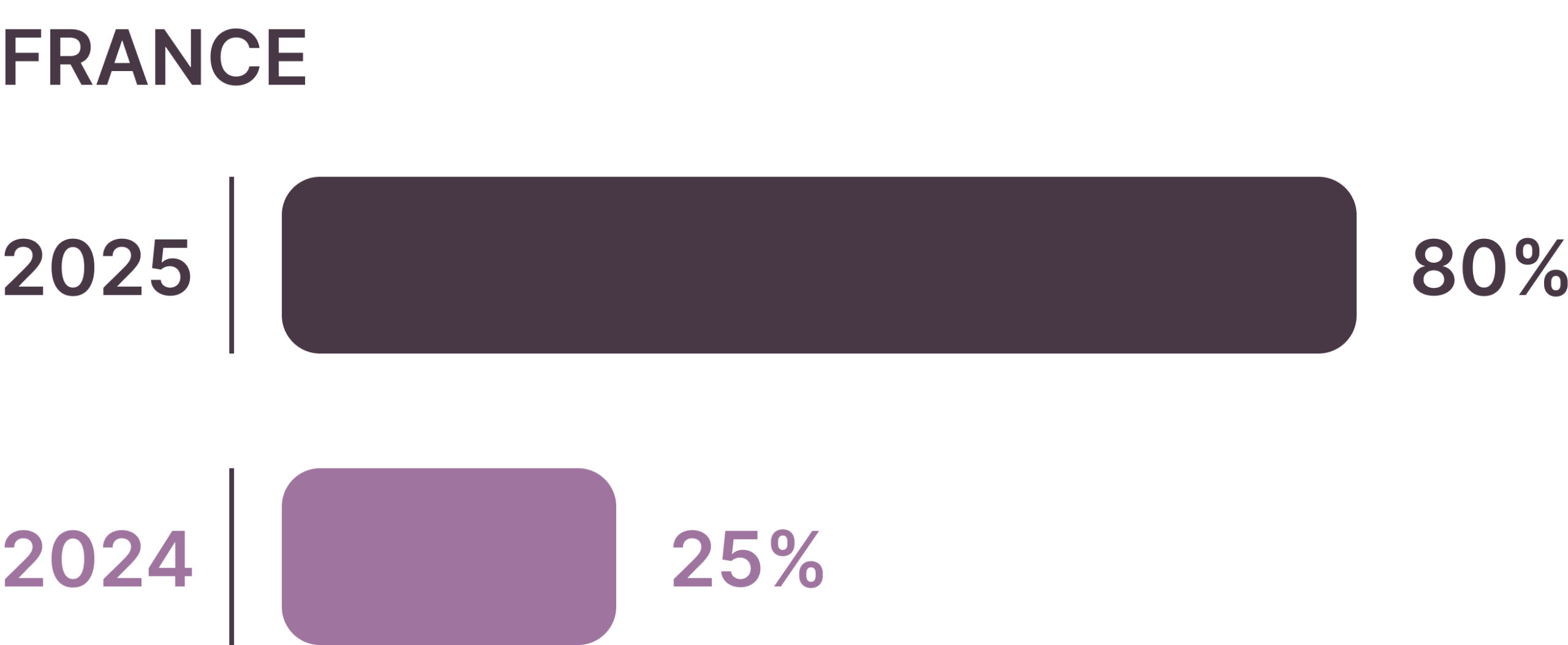
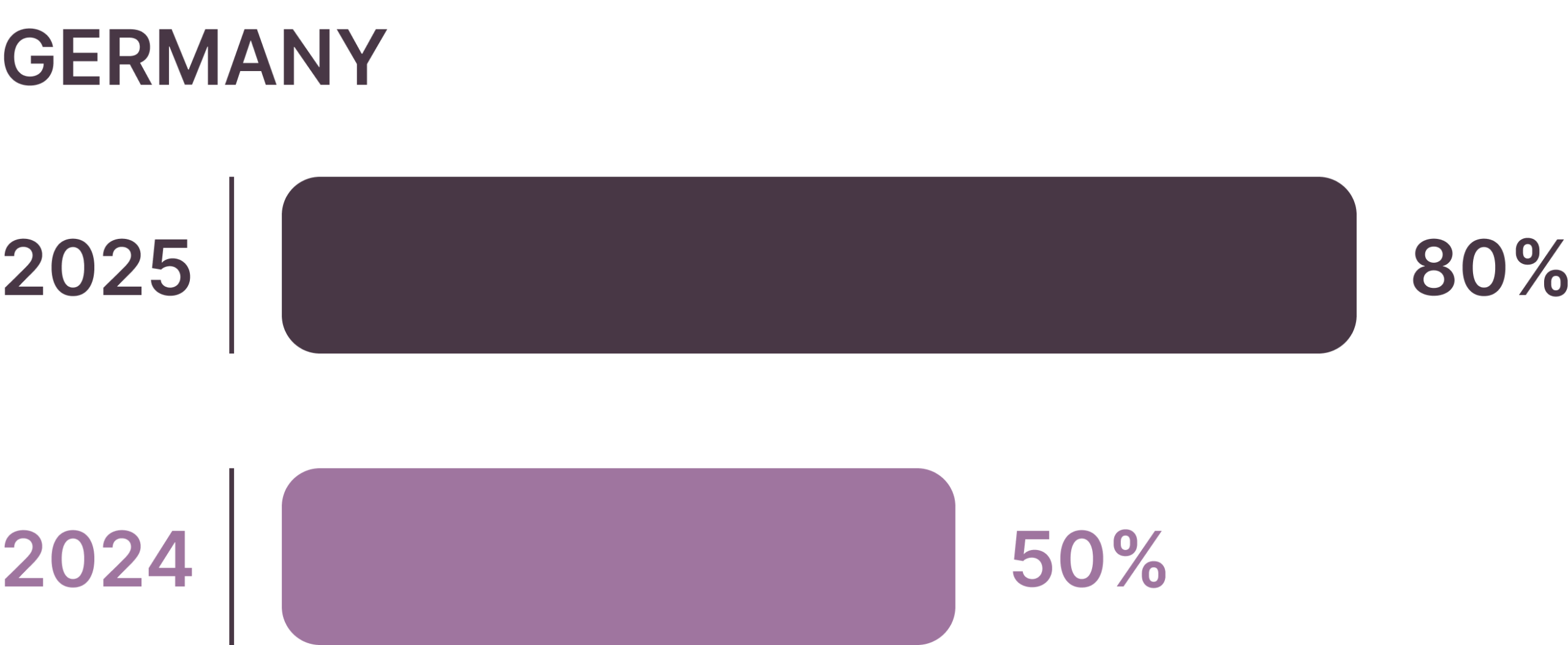
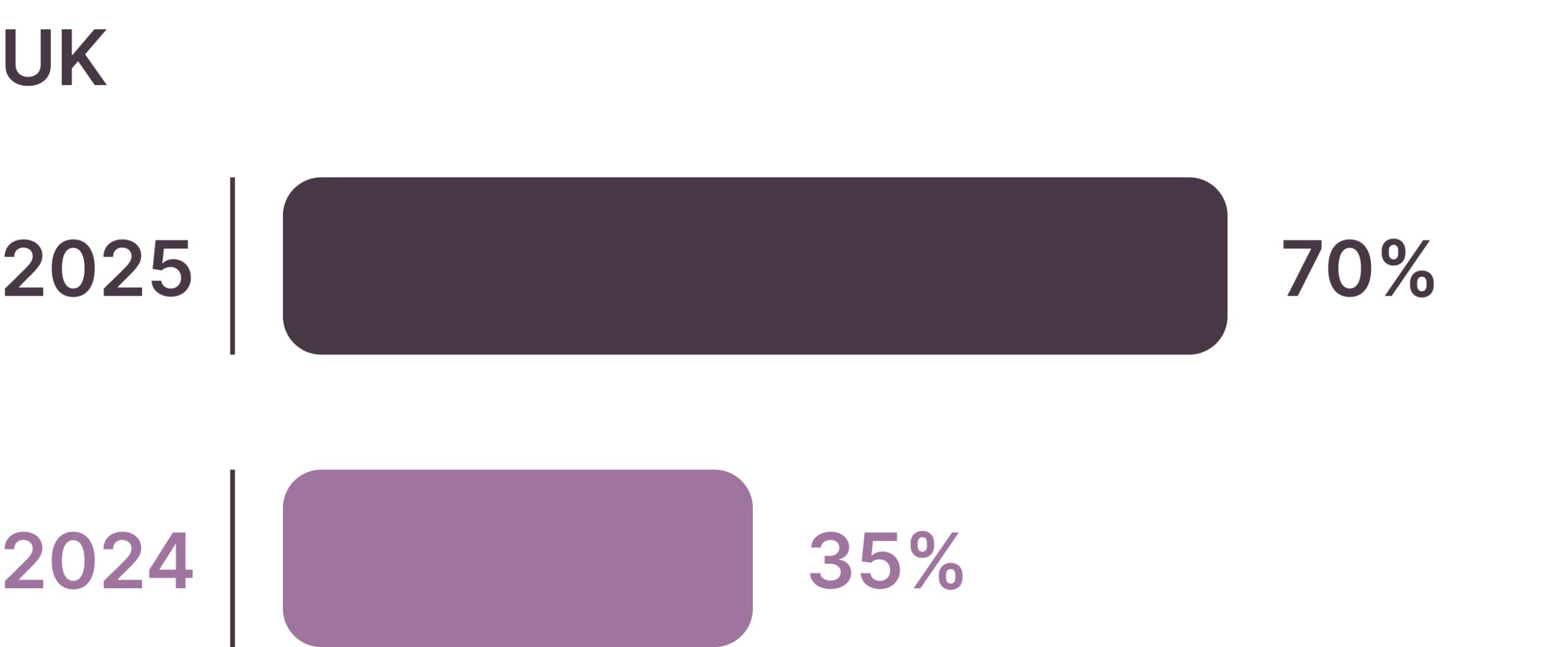
Why it’s not 100% today:
- Not all iOS users update their system right away
- Older Android devices (pre-Android 5.0) don’t support RCS
However, as new devices replace older ones, and more users update their systems; the reachable audience will continue to grow – fast.
| Growth by region | |
|---|---|
| NAM | 70x |
| LATAM | 753% |
| APAC | 516% |
| EUROPE | 398% |
| Growth by industry | |
|---|---|
| Marketing & advertising | 32x |
| Tech & software | 7x |
| Retail & eCommerce | 353% |
| Finance & fintech | 264% |
| Rising demand for conversational CX | |
|---|---|
| Conversational AI | 146% |
| Conversational support | 10x |
| Conversational marketing | 273% |

The Los Angeles Rams launched the 2025–2026 season schedule to 10k+ fans who were given the opportunity to purchase game-day tickets via RCS.
The team saw 60% growth in ticket sales and a 70% lift in engagement compared with traditional SMS.

The Los Angeles Chargers are using Infobip’s AI-driven chatbot technology via RCS to connect fans with the information they care about most, including game day updates, stadium details and player news.


32% global growth in 2025
Brands are increasingly turning to voice and video communication to create faster, more human, and more immersive customer interactions. As consumers demand more authentic, real‑time support, businesses are integrating voice technology into customer journeys – from voice‑activated purchasing and support to voice recognition tools that streamline interactions. The rise of smart speakers and voice assistants has empowered brands to offer hands‑free, conversational experiences that feel personal and intuitive.
North America remains one of the most voice-centric markets globally, where voice continues to play a critical role in customer engagement, particularly for support, authentication, and high-value interactions. Unlike many regions that have shifted heavily toward OTT messaging, consumers and businesses in the U.S. still rely on voice as a trusted, real-time channel. This is now being accelerated by the rise of AI-powered voice agents, alongside innovations like Branded Calling, which restore trust in voice by displaying verified business identity, logos, and call reasons directly on the handset.
At the same time, video communication is becoming a core component of digital customer service, helping brands deliver richer, more engaging interactions. Video enables face‑to‑face support, product demonstrations, and guided assistance that builds trust and reduces friction, meeting customer expectations for immediacy and authenticity. As highlighted in digital communication trend reports, real‑time voice and video channels provide a level of emotional connection and clarity text‑based channels can’t match, positioning them as essential tools for modern customer engagement strategies.
WhatsApp Business Calling (API-based voice calling)
After a successful Beta release in limited markets, WhatsApp Business Calling became generally available globally in July 2025.
| Growth by region | |
|---|---|
| LATAM | 93% |
| NAM | 85% |
| MENA | 101% |
| EUROPE | 13% |
| Growth by industry | |
|---|---|
| Telecoms | 272% |
| Tech & software | 246% |
| Marketing & advertising | 236% |
| Media & entertainment | 4.5x |
*Note: Voice and video interactions are measured in seconds of call duration, unlike message-based channels which count discrete interactions. This means the volume metrics are not directly comparable to SMS, Email, and OTT messaging apps.

32% global growth in 2025
Viber experienced strong growth across 2024 and 2025, driven by rising adoption in Eastern Europe, Asia, and especially Southeast Asia. The app reached a significant milestone in 2024 reaching 800 million monthly active users, with a 25% year‑over‑year increase, with particularly high penetration in markets like Russia, Ukraine, and Turkey, where usage exceeds 70%. Growth continued into 2025, with Viber’s global user base surpassing 1.1 billion, supported by over 70 million hourly interactions and rising engagement among younger demographics and business users.
The fastest‑growing region for Viber is APAC, which saw a 45% surge in Viber messaging interactions, driven by rapidly expanding digital ecosystems in the Philippines and other Southeast Asian markets. This expansion is fueled by cultural relevance, strong demand for cost‑effective communication, and Viber’s focus on privacy, large community features, and business messaging tools that make it appealing for both personal and commercial use.
| Growth by region | |
|---|---|
| APAC | 45% |
| Eurasia | 33% |
| Europe | 16% |
| Growth by industry | |
|---|---|
| Production & manufacturing | 130% |
| Retail & eCommerce | 115% |
| Healthcare | 64% |
| Rising demand for conversational CX | |
|---|---|
| Conversational AI | 130% |


Shape the future of messaging with us
Our custom messaging solutions help businesses like yours lead the way.