



Top 7 of the best enterprise AI agent solutions in 2026
Looking for the best enterprise AI agent solutions? Compare the 7 top platforms by channel coverage, compliance, and integration depth.

Choosing the right AI platform for your enterprise is not a minor procurement decision. The market is crowded, vendor claims are loud, and the cost of getting it wrong, in failed deployments, locked-in contracts, or agents that break under production load, is significant. What you need are AI-driven systems that handle concurrent customer interactions at scale.
This guide explains what enterprise AI agents are, how they work under the hood, and reviews the best enterprise AI agent solutions available today. Whether you are evaluating your first deployment or replacing a platform that has stopped scaling, this comparison gives you a grounded starting point.
What are enterprise AI agents?
Enterprise AI agents are intelligent, AI-powered systems that use natural language to interpret user intent, make decisions, and take autonomous action across connected business systems. They are not chatbots in the traditional sense. A basic automation tool follows a fixed script: if the user says X, respond with Y. An enterprise AI agent reasons about context, accesses live data, executes multi-step tasks, and adapts its behavior based on what it learns during an interaction.
In customer service, this distinction matters enormously. A scripted bot handles a narrow set of FAQs. An enterprise AI agent can verify an account, process a return, escalate to the right support team member with full context, and update your CRM, all within a single conversation thread.
- Real-time action: Agents retrieve live data and complete transactions the moment a customer request arrives, without batch processing delays.
- Agentic workflows: Multi-step task sequences execute automatically across connected systems, from verifying identity to updating records to sending confirmations.
- Scaling AI across channels: A single agent logic layer can serve customers across WhatsApp, SMS, voice, email, and live chat simultaneously without rebuilding flows for each channel.
- Creating AI assistants for 24/7 interactions: Customers get consistent, capable service at any hour without adding headcount to your contact center.
- Freeing technical teams for higher-value work: Routine, repeatable customer interactions are handled autonomously, so your engineers and developers focus on building differentiated capabilities rather than managing support queues.
The shift from automation tool to genuine enterprise AI agent is the shift from rule-based response to outcome-based reasoning. That distinction should sit at the center of your evaluation criteria.
How do enterprise AI agents work?
Understanding the underlying architecture helps you evaluate platforms on substance rather than marketing claims.
Natural language processing (NLP) is the foundation. It converts raw user input, whether typed or spoken, into structured intent that the agent can act on. Modern NLP goes beyond keyword matching to understand context, handle ambiguity, and interpret meaning across languages and communication styles.
Machine learning (ML) allows agents to improve over time. Models trained on historical interaction data get better at predicting what a user needs and routing requests appropriately, reducing the volume of escalations to your support team.
Generative AI and large language models (LLMs) give modern agents conversational fluency and reasoning capability. An LLM can synthesize information from multiple sources, generate coherent responses, and handle open-ended queries that no rule-based system could anticipate. The rise of generative AI has fundamentally changed what is possible in agent design.
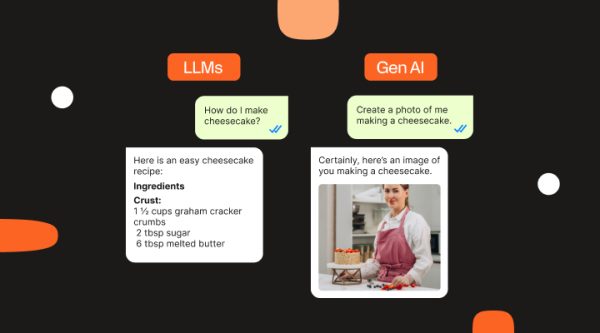
However, LLMs alone are unpredictable in production environments. Without structure, they can hallucinate, go off-topic, or fail compliance requirements in regulated industries. This is why an orchestration layer matters. The best enterprise platforms wrap LLM capability inside guardrails, controlling what the agent can say, which systems it can access, and when it must escalate to a human.
Multiple LLM support is also an important architectural consideration. Locking your entire platform to a single model provider creates risk: model deprecation, vendor pricing changes, or capability gaps all become your problem. Platforms that support multiple LLM providers give you the flexibility to route different tasks to the most appropriate model.
Top 7 enterprise AI agent solutions to consider
1. Infobip
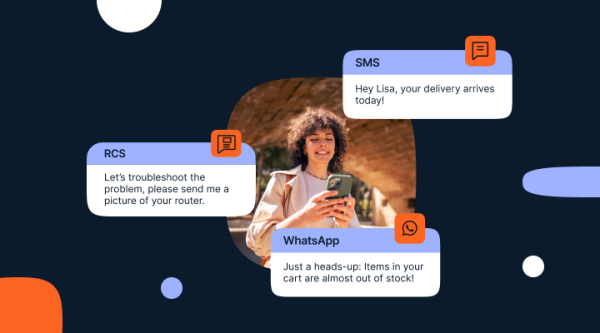
Infobip builds agents that work across the channels your customers already use: WhatsApp, RCS, SMS, email, voice, and live chat, on carrier-grade infrastructure. This is not a layer built on top of third-party channel providers. The delivery infrastructure is Infobip’s own, which means fewer failure points and direct carrier relationships that matter when you are operating at scale.
Infobip’s AI agents run on AgentOS, a unified platform that brings together customer communication, journey orchestration, unified analytics, and conversational automation in a single environment. There is no stitching together of separate tools or managing integrations between disconnected products. Your team works from one platform, whether they are building agent flows, managing live interactions, or analyzing performance across channels.
When it comes to building AI agents, Infobip offers a code, low-code, and no-code approach that reflects how enterprises actually work. Business users on your support team can create AI agent flows using the no-code visual builder without writing a line of code. Technical teams can extend those same agents using full API access, custom webhooks, and logic integrations. Both paths sit on the same platform, so there is no version fragmentation or duplication of effort.
The agentic AI layer handles real work, not just conversation. Agents can take real-time action: retrieving customer data, completing transactions, triggering agentic workflows across downstream systems, and updating records in connected platforms. Multiple LLM support means you are not dependent on a single model vendor. You can route different interaction types to the most appropriate model based on task complexity, cost, or compliance requirements.
AI agents also pull data from your CRMs, databases, APIs, and business tools directly into conversations through Model Context Protocol. AI agents access customer records, order history, inventory levels, whatever they need to respond accurately.
When a conversation requires human judgment (human in the loop), escalation includes full conversation context. The agent does not hand off a cold case. The human picks up a complete interaction history, which means no repetition for the customer and faster resolution for the support team.
On compliance, enterprise-grade security is built into the platform baseline. Infobip holds ISO 27001 and SOC 2 Type II certifications, maintains GDPR compliance, and offers data residency options for organizations with localization requirements. Pre-built integrations cover Salesforce, HubSpot, SAP, Zendesk, and Microsoft Dynamics, reducing the integration overhead that typically slows enterprise deployments.
Best for: Retail, banking, telco, and healthcare enterprises that need omnichannel AI at scale with compliance controls already in place.
2. Salesforce Agentforce
Agentforce is agentic AI built directly into the Salesforce CRM ecosystem. Powered by the Atlas reasoning engine and grounded in Salesforce Data Cloud, it gives sales, service, and marketing teams AI agents that operate within the context of existing Salesforce records and workflows. If your enterprise already runs on Salesforce as its system of record, Agentforce reduces integration lift considerably. Agents have direct access to customer data already living in your org.
Best for: Enterprises where Salesforce is the primary system of record and teams want AI capabilities without leaving that ecosystem.
3. IBM Watsonx
IBM Watsonx is an AI-powered enterprise platform that combines foundation models with governance tooling designed for regulated industries. It provides compliance features including data lineage tracking, model explainability, and audit controls that give risk and compliance teams visibility into how AI decisions are made. Watsonx also supports on-premises and hybrid cloud deployments, which matters for organizations with strict data sovereignty requirements.
Best for: Regulated industries such as financial services, healthcare, and government, where explainable AI and documented governance are prerequisites for deployment approval.
4. Microsoft Copilot Studio
Microsoft Copilot Studio builds agents that connect directly to Microsoft 365, Teams, and Dynamics 365, governed through Microsoft Entra and Purview. For enterprises that run on Microsoft infrastructure, this creates a coherent environment for automating internal workflows including HR queries, IT helpdesk, and procurement approvals, without introducing new identity or access management complexity.
Best for: Microsoft-first enterprises looking to automate internal workflows and employee-facing processes within their existing environment.
5. Rasa
Rasa is an open-source platform aimed at technical teams that want full control over agent logic and model behavior. Its CALM architecture deliberately separates language understanding from business logic execution, giving engineers precise control over how agent responses are generated and what actions agents are permitted to take. On-premises deployment is supported for organizations that cannot send customer data to cloud providers.
Best for: Engineering-led teams that need granular control over agent behavior and have the technical depth to manage open-source infrastructure.
6. Cognigy
Cognigy is a contact center automation platform with strong voice channel integrations, including native connectors for Genesys and Amazon Connect. Its visual flow builder makes it accessible to non-developer teams, and the platform has deep experience in voice AI design: intent recognition, silence handling, and call routing logic that text-first platforms often underinvest in.
Best for: Contact centers prioritizing voice channel modernization, particularly those already running Genesys or Amazon Connect infrastructure.
7. Kore.ai
Kore.ai is a generative AI platform covering customer service, IT support, and HR automation under a single umbrella. Its AI-driven development studio provides prebuilt templates for common enterprise use cases including password resets, order tracking, and leave requests, alongside customization tools for adapting those templates to your specific processes. The platform positions itself as an AI assistant layer that deploys quickly using templates while still giving technical teams room to customize at depth.
Best for: Enterprises that want fast time-to-value through prebuilt templates without sacrificing the ability to customize agent behavior across departments.
Summary of best AI agent solutions
| Platform | Best for |
|---|---|
| Infobip | Retail, banking, telco, and healthcare enterprises that need omnichannel AI at scale with compliance controls already in place. |
| Salesforce Agentforce | Enterprises where Salesforce is the primary system of record and teams want AI capabilities without leaving that ecosystem. |
| IBM Watsonx | Regulated industries such as financial services, healthcare, and government, where explainable AI and documented governance are prerequisites. |
| Microsoft Copilot Studio | Microsoft-first enterprises looking to automate internal workflows and employee-facing processes within their existing environment. |
| Rasa | Engineering-led teams that need granular control over agent behavior and have the technical depth to manage open-source infrastructure. |
| Cognigy | Contact centers prioritizing voice channel modernization, particularly those already running Genesys or Amazon Connect infrastructure. |
| Kore.ai | Enterprises that want fast time-to-value through prebuilt templates without sacrificing the ability to customize agent behavior across departments. |
What makes Infobip the right choice for enterprise AI
Channel infrastructure that’s already built
Most AI agent platforms treat channel delivery as an integration concern, something you wire up using third-party APIs after the fact. Infobip’s position is different. Channel delivery is the foundation the platform is built on. That matters when you are scaling AI from a single channel pilot to a full omnichannel deployment. You are not stitching together separate providers for WhatsApp, SMS, and voice. Everything runs on infrastructure Infobip has operated at carrier scale for years.
Code, low-code, and no-code, and real flexibility
Enterprise organizations are rarely homogeneous in technical capability. Your support team operations staff may have no development background. Your technical teams may want to extend agent behavior with custom API logic and data integrations. Infobip’s code and no-code architecture lets both groups work on the same platform simultaneously. Business users design and iterate on AI-driven conversation flows. Developers build the integrations and custom logic that connect those flows to backend systems.
Agentic AI that completes tasks, not just answers
An AI assistant that answers questions is a useful starting point, but it is not what enterprise customer operations actually requires. Infobip’s agentic AI handles multi-step agentic workflows that go beyond response generation. An agent can retrieve account data in real time, complete a transaction, trigger a downstream process in your CRM, and send a confirmation, all within a single interaction. When escalation is appropriate, the support team receives the full conversation history including every step the agent already completed. No repetition for the customer. No rework for the human agent picking up the case.
Enterprise-grade security as a baseline
Enterprise-grade security is not a premium tier in Infobip’s model. It is the baseline. ISO 27001 and SOC 2 Type II certifications, GDPR compliance, and data residency options are available to all enterprise customers. Role-based access controls, audit logging, and documented data handling practices give your compliance and legal teams what they need to approve production deployment in regulated environments. For industries like banking, healthcare, and telecommunications, where a security gap is not just a liability but a regulatory event, this baseline matters more than almost any other feature on the list.
Start building AI agents that perform in production
The best enterprise AI agent solutions are not the ones with the most impressive feature lists. They are the ones built on infrastructure reliable enough to handle real operational complexity: millions of interactions, multiple channels, compliance requirements across jurisdictions, and integration with the systems your business already depends on.
Infobip brings channel coverage, agentic AI capabilities, and enterprise-grade compliance controls together in a single platform. You are not assembling a solution from parts. You are deploying on infrastructure that has been running at carrier scale for over a decade, with the agent layer built on top of it, not bolted on.
FAQs
An enterprise AI agent is an AI-powered system that uses natural language to understand user intent, make decisions, and take action across connected business systems. Unlike basic chatbots that follow fixed scripts, enterprise AI agents handle multi-step tasks, access live data, and adapt to context in real time. They are designed to operate at scale across customer service, sales, and operations workflows.
The most important factors are channel coverage, integration depth, security and compliance certifications, support for multiple LLMs, and the ability to scale across business units. Enterprises in regulated industries should also evaluate data residency options and audit logging capabilities. A code and no-code build experience matters for teams with mixed technical capabilities.
Yes. Infobip’s AI agents connect directly to the tools enterprises already use, including Salesforce, HubSpot, SAP, Zendesk, and Microsoft Dynamics, through pre-built integrations that are ready to deploy without custom development. For systems outside that library, full API and webhook support covers custom integration requirements. Crucially, Infobip’s agents do not just retrieve information from connected systems. They read from and write to them in real time, meaning an agent can update a CRM record, trigger an order update, or close a support ticket within the same customer interaction.
Retail, banking, telecommunications, and healthcare see the highest impact, primarily because of high customer interaction volumes and complex service workflows. Financial services and healthcare organizations also benefit from the compliance controls that enterprise-grade platforms provide. That said, any industry managing large volumes of repetitive customer or employee interactions is a strong candidate for AI agent deployment.
Security standards vary by vendor. Enterprise-grade platforms should hold certifications including ISO 27001 and SOC 2 Type II, support GDPR compliance, and offer data residency options for regulated markets. Role-based access controls and full audit logging are also baseline requirements for regulated industries. Before deploying, verify that the platform meets your organization’s specific compliance obligations.