



WhatsApp data security: Encryption & API best practices
Explore how WhatsApp encryption works, the security risks introduced at the API layer, and best practices for protecting customer data while maintaining compliance and trust.

Most businesses realize that digital communication is the future, but many overlook the massive responsibility that comes with it: protecting customer data. With over three billion active users, WhatsApp is the world’s most popular messaging channel, making it a prime target for cyber threats. However, it is also one of the most heavily fortified platforms available.
If you are using WhatsApp for business, or planning to, you need to know exactly how your data travels, where it lives, and who can see it. In this guide, we break down the mechanics of encryption, the security architecture of the WhatsApp Business API, and the actionable steps you must take to mitigate risk.
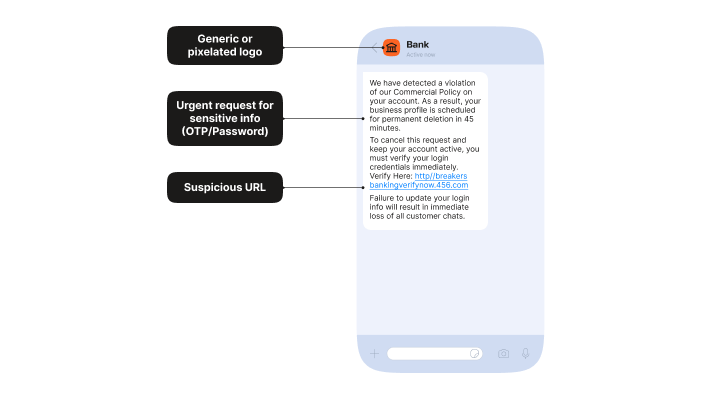
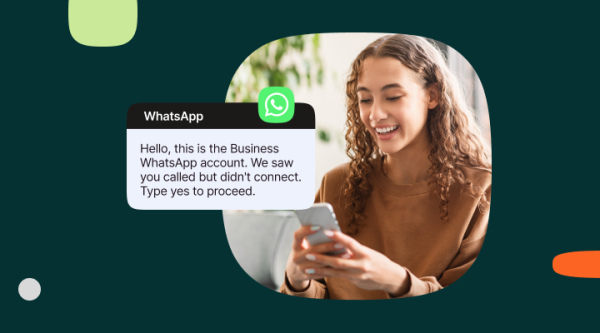
While that single fraudulent message can cause serious damage, the bigger picture is understanding why WhatsApp security matters for every interaction your business has.
Why data security on WhatsApp matters
With rising cyber threats and strict data-protection regulations like GDPR and CCPA, secure messaging is no longer optional, it is a critical business requirement. Companies must ensure that every interaction, from a simple support query to a sensitive transactional notification, remains private and compliant.
With its massive global user base, WhatsApp facilitates both casual chats and high-stakes business communications, requiring a rigorous approach to security.
Beyond keeping conversations private, businesses also need to consider where their data is stored and how that aligns with local and global regulations.
Understanding end-to-end encryption (E2EE)
At the core of WhatsApp data security is end-to-end encryption (E2EE), which ensures that privacy is baked into the system rather than added as an afterthought. WhatsApp uses the Signal Protocol, an open-source system built on the Double-Ratchet algorithm and strong cryptographic primitives. E2EE means that every message is locked with a unique key before it ever leaves the sender’s device.
How E2EE works
The encryption process is automatic and invisible to the user, but the mechanics behind it are robust.
- Encryption: When you send a message, your device locks it using a cryptographic lock.
- Transmission: The message travels through WhatsApp’s servers in this locked, encrypted form.
- Decryption: The message can only be unlocked and read by the recipient’s device, which holds the unique digital key.
What is covered by E2EE
This protection is not limited to simple text messages; it extends to almost every form of communication on the platform.
- Texts: Standard messages and chats.
- Calls: Voice and video calls are fully encrypted.
- Media: Photos, videos, and documents shared in chats.
- Group chats: Conversations with multiple participants are protected by the same protocol.
- Verification: Users can manually verify encryption status using QR codes or numeric security codes within the chat info screen.
Encryption provides a strong foundation, but WhatsApp strengthens this further with additional layers of protection around accounts and usage.
How WhatsApp implements security beyond E2EE
While encryption is the most famous security feature, WhatsApp employs a layered defense strategy to protect user accounts and metadata. These built-in protections work in the background to prevent unauthorized access and abuse.
- Temporary storage: Messages are not stored on WhatsApp servers permanently; they are kept only until delivery is confirmed and then deleted.
- Privacy controls: Default settings allow users to control who sees their profile photo, last seen status, online presence, and other personal details.
- Account protection: Security alerts notify users if a contact’s security code changes (for example, after a device change or potential breach), and optional two-step verification adds an extra layer of protection against account theft.
- Abuse and spam detection: Automated systems help identify and block bulk messaging, spam accounts, and other abusive behavior on the platform.
These protections apply to everyday users, but businesses using WhatsApp at scale need to understand what changes when they move to the Business and Cloud APIs.
WhatsApp Cloud API & MM API: Data handling and privacy
For companies scaling their communication, the WhatsApp Business API and Cloud API offer powerful tools that maintain high security standards. It’s important to note that while E2EE protects the message in transit, the business is responsible for securing the data once it’s received. Messages sent via the API remain encrypted until they reach the business’s chosen dashboard or software integration.
- Decryption point: Messages are decrypted only within the business’s own system or their Business Solution Provider’s (BSP) infrastructure.
- Cloud API or MM API storage: Messages processed via the Cloud API are temporarily stored for up to 30 days to ensure delivery, after which they are deleted.
- No Meta access: Meta cannot read the content of your messages at any point during transmission or temporary storage.
- Compliance standards: Businesses should always ensure their hosting environment follows standards like ISO 27001 and GDPR to keep decrypted customer data safe.
Even with secure APIs and strong encryption, there are still practical risks that businesses and users must be aware of.
Common security risks & limitations
No system is perfectly impenetrable, and most security risks on WhatsApp stem from user behavior or external factors rather than the encryption protocol itself. It’s vital to understand where the vulnerabilities lie so you can defend against them. The primary risks often involve metadata and unencrypted endpoints:
- Metadata visibility: While message content is hidden, metadata such as phone numbers, timestamps, and frequency of interaction is not encrypted.
- Cloud backups: By default, backups stored on Google Drive or iCloud are not protected by E2EE unless the user specifically enables encrypted backups.
- Unofficial clients: Third-party “mod” apps (like WhatsApp Plus) bypass security protocols and often lack encryption, exposing users to data theft.
- Phishing scams: Attackers often use social engineering to impersonate businesses or friends to steal verification codes or personal data.
Knowing where the weaknesses are is only useful if you act on them, which is where clear security best practices come in.
Best practices for maximizing WhatsApp security
Maintaining a secure environment is a shared responsibility between the platform, the business, and the end-user. By following a few strategic practices, you can significantly reduce the attack surface for your communications.
For individual users
Individuals should focus on account hygiene and device security:
- Enable two-step verification: Set up a PIN to prevent SIM-swapping attacks.
- Update regularly: Keep both the WhatsApp app and your phone’s operating system updated to patch security holes.
- Encrypt backups: Manually enable end-to-end encrypted backups in the settings menu.
- Verify links: Avoid clicking suspicious links and verify the identity of unknown business contacts.
For businesses using WhatsApp API
Enterprises must implement rigorous governance over how they access and store WhatsApp data:
- Use official BSPs: Only work with authorized Business Solution Providers and official Cloud API partners to ensure protocol compliance.
- Obtain opt-in: Strictly follow consent rules to ensure you are only messaging customers who want to hear from you.
- Secure hosting: Implement strong access controls and firewalls for the dashboard where customer chats are stored.
- Regular audits: Conduct security audits of your CRM and support platforms to prevent data leaks.
While these steps go a long way toward protecting your data today, WhatsApp and Meta are continuously evolving their security and privacy capabilities.
Future developments & emerging features
Meta continues to invest heavily in privacy technologies to stay ahead of evolving cyber threats. We can expect to see more granular privacy controls that give users and businesses tighter command over their digital footprint.
Upcoming features are likely to focus on identity protection and deeper encryption integration:
- Passkey support: Moving beyond SMS verification to biometric and cryptographic passkeys for login.
- Chat locks: The ability to lock specific sensitive chat threads behind a biometric wall.
- IP protection: Features that mask IP addresses during calls to prevent location tracking.
- AI threat detection: Enhanced AI models to detect sophisticated phishing attempts and account takeovers in real-time.
Example of a threat detection warning:
Security alert: We’ve detected unusual activity on your WhatsApp account that may indicate phishing or unauthorized access. Recent messages from your account contain suspicious links or patterns not typical for your usual activity: “Hey, check out my new side hustle: www.passionprojectfun.com”
If this wasn’t you, tap Secure Account to log out of other sessions and protect your account.
WhatsApp data security is robust, leveraging the industry-leading Signal Protocol to ensure that personal and business conversations remain private. But technology is only one part of the equation. True security requires vigilance from users and rigorous compliance from businesses.
This is where Infobip steps in. As a security-first Business Solution Provider, we go beyond basic connectivity to offer enterprise-grade protection. With over 40 data centers worldwide for precise data localization and strict adherence to ISO and GDPR standards, we ensure your infrastructure is as secure as the messages passing through it.
FAQs about WhatsApp data security
Yes, WhatsApp uses the Signal Protocol for end-to-end encryption. This means that only you and the person you are communicating with can read what is sent. No one in between, not even WhatsApp or Meta, can access the content of your messages.
No. Even when using the Cloud API or MM API, the message content remains encrypted during transmission. Meta processes the message to deliver it but does not have access to the content, and messages are deleted from their servers after delivery.
While the content is hidden, WhatsApp collects metadata. This includes your phone number, device information, location (if granted), and transaction data (timestamps and frequency of messages) to facilitate service delivery.
Standard cloud backups to Google Drive or iCloud are not end-to-end encrypted by default. However, users can go to Settings > Chats > Chat Backup > End-to-end Encrypted Backup and turn this feature on to secure their archived chats.
The API itself is highly secure for transmission. However, once the message is delivered to the business, security depends on the business’s infrastructure. Using a compliant BSP like Infobip ensures that data handling meets ISO and GDPR standards.
The main risks are social engineering (phishing), using unofficial or “modded” WhatsApp versions that lack encryption, and leaving devices or cloud backups unprotected without two-step verification.
WhatsApp stores messages on its servers only until they are delivered. If a message cannot be delivered immediately, it is held in encrypted form for up to 30 days. If it is still undelivered after 30 days, it is deleted.