
The rising threat of SIM swap fraud and how to protect your business

Learn about the dangers of SIM swapping fraud, and what can be done to prevent it from causing serious financial loss.

Razan Saleh Group Content Marketing Manager
Skip to table of contents

SIM swap fraud has exploded from a telecom concern into a universal threat impacting all industries. Recent cyberattacks on major retailers like M&S and Harrods show that any business handling customer data is now at risk. In just the first half of 2024, SIM swap incidents in the UK surged by over 1,000%, with £5.35 million in financial losses attributed to SIM swap fraud between 2023 and 2024.

The fallout goes beyond financial damage. Communications fraud now threatens brand reputation, disrupts supply chains, and erodes customer trust. As cyber threats evolve, businesses must shift their focus from simply maintaining service to actively safeguarding sensitive data, especially as regulatory scrutiny and potential fines intensify.

No business, regardless of size or sector, can afford to treat communications security as optional. Advanced, layered security and firewall are now essential for protecting customer data, maintaining trust, and safeguarding business operations.

What is SIM swap fraud?

At its core, SIM swap fraud is a form of account takeover fraud and Cybercrime where scammers exploit the process of swapping SIM cards to access a victim’s personal and financial information. They gain unauthorized control over the victim’s phone number, which enables them to take over social media or bank accounts.

In short, here’s how it works:

  • Cybercriminals legally or illegally get access to your data (including mobile phone number) and contact mobile network operators (MNOs) pretending to be you.
  • They deceive the MNOs into activating a new SIM card with your phone number.
  • Once the new SIM card is activated, fraudsters can access every one-time-pin (OTP) and two-factor authentication (2FA) message sent to that number, effectively gaining access to all your accounts that use your phone number for verification.

This lets them receive all calls and SMS messages sent to the original number, including OTPs and 2FA codes used by banks, retailers, and online services for two factor authentication.

Armed with access to these codes, fraudsters can reset passwords, drain bank accounts, make unauthorized purchases, and steal sensitive business data.

Social engineering is at the heart of most SIM swap attacks, with fraudsters exploiting personal data from breaches or phishing, and sometimes even recruiting insiders within telecom operators (BioCatch/Financial Times, May 2023).

Why is SIM swap fraud on the rise?

SIM swap fraud thrives due to our growing dependence on phone numbers for security key accounts, oversharing personal information online, and gaps in telecom security practices.

When personal details are easily accessible through social media or data breaches, scammers can impersonate victims and convince mobile operators to transfer their number to a new SIM card, often bypassing weak verification steps.

This enables attackers to gain control of sensitive accounts protected by two-factor authentication, putting both individuals and businesses at risk.

Several other trends are fueling the dramatic spike in SIM swap fraud:

  • Widespread reliance on SMS and OTPs for verifying digital identity means a single compromised phone number can unlock multiple accounts.
  • Massive data breaches across industries have put personal information needed to pull off a SIM swap within easy reach of attackers.
  • AI and automation make it easier than ever for fraudsters to launch convincing phishing attacks and social engineering campaigns at scale.

The result? SIM swap fraud is now a top risk not just for telecoms but also for retailers, eCommerce providers, banks, fintech, and consumers worldwide. In the U.S., the FBI estimates average losses of $10,000 per victim (IC3 Report). As more businesses move to mobile, this risk will only grow.

Impact of SIM swap on Retail & eCommerce and how to prevent it

Trust and revenue at stake

SIM swap attacks are increasingly targeting retailers and eCommerce platforms. These attacks can result in unauthorized purchases, emptied loyalty accounts, lost revenue, data breach, and customer access.

These incidents don’t just mean financial losses, they can also trigger operational disruptions and long-term reputational damage. When high-profile breaches make headlines, brands risk losing the very trust they’ve built with their customers.

How can businesses protect themselves and their customers?

Effective SIM swap fraud prevention in retail and eCommerce starts with layered security:

  • Integrate SIM swap detection from network APIs into fraud prevention workflows. If a SIM swap is detected, require extra identity verification—such as biometric authentication—before allowing sensitive actions like high-value purchases or password changes.
  • Combine telco data with behavioral analytics to flag suspicious login attempts, location changes, or account updates.
  • Educate customers at critical touchpoints (like checkout and profile updates) about the risks of SIM swap attacks and best practices for digital identity protection.

Impact of SIM swap on telecom operators and how to prevent it?

Telecom operators occupy a unique position as both frequent targets and frontline defenders against SIM swap fraud. If attackers slip past weak verification processes, telcos can face regulatory fines, customer churn, operational costs, and severe reputational harm. The responsibility to detect and prevent SIM swaps is greater than ever.

Best-in-class telecom security now includes:

  • AI-driven analytics to monitor for abnormal SIM swap patterns—such as mass porting events or sudden changes in user location.
  • Stricter internal controls: Limiting and rotating employee access to SIM management systems, and enforcing multi-factor authentication for staff.
  • Active customer confirmation: Requiring direct digital approval from customers before processing any SIM changes, closing a key social engineering loophole.

Impact of SIM swap on banks & financial services and how to prevent it

For banks, fintechs, and financial service providers, SIM swap fraud can swiftly undermine SMS-based two-factor authentication, opening the door to direct financial theft, regulatory breaches, and customer attrition.

The speed and scale of SIM swap-enabled attacks make robust fraud prevention critical in financial services.

Leading financial institutions are adopting a multi-layered approach:

  • Adopt out-of-band authentication methods such as secure banking apps, push notifications, or voice biometrics instead of relying solely on SMS OTPs.
  • Monitor recent SIM activity: Flag accounts with recently swapped SIMs and require additional verification for high-risk transactions.
  • Establish real-time data sharing with telcos via network APIs, so that suspicious activity can be detected and stopped before funds are lost.

How to detect and prevent SIM swap fraud?

To detect SIM swap fraud, businesses can check for changes to a mobile user’s phone number (MSISDN) and International Mobile Subscriber Identity (IMSI) number.

An IMSI number is unique to each SIM card and is used to identify every mobile phone subscriber on a UMTS or GSM network. The IMSI remains unchanged even when a mobile (MSISDN) number is ported to a different SIM card.

Our Mobile identity solution can assist enterprises in mitigating SIM swapping by recent changes in the MSISDN – IMSI combination on the side of the mobile operator.

For example, when a bank sends OTP codes for user verification, it may also carry out a SIM swap check. This will ensure the bank isn’t sending a verification code to a fraudster who has acquired a new SIM card with the same mobile number as the account they are attempting to hack.

In other words, it can provide information on which phone number is currently assigned to a particular SIM card. Most commonly, business trigger a SIM swap check right before a high-risk action, such as a large transaction or password reset, to ensure the request is coming from the legitimate user. If a SIM swap is detected, businesses can require additional verification before allowing the action to be taken.
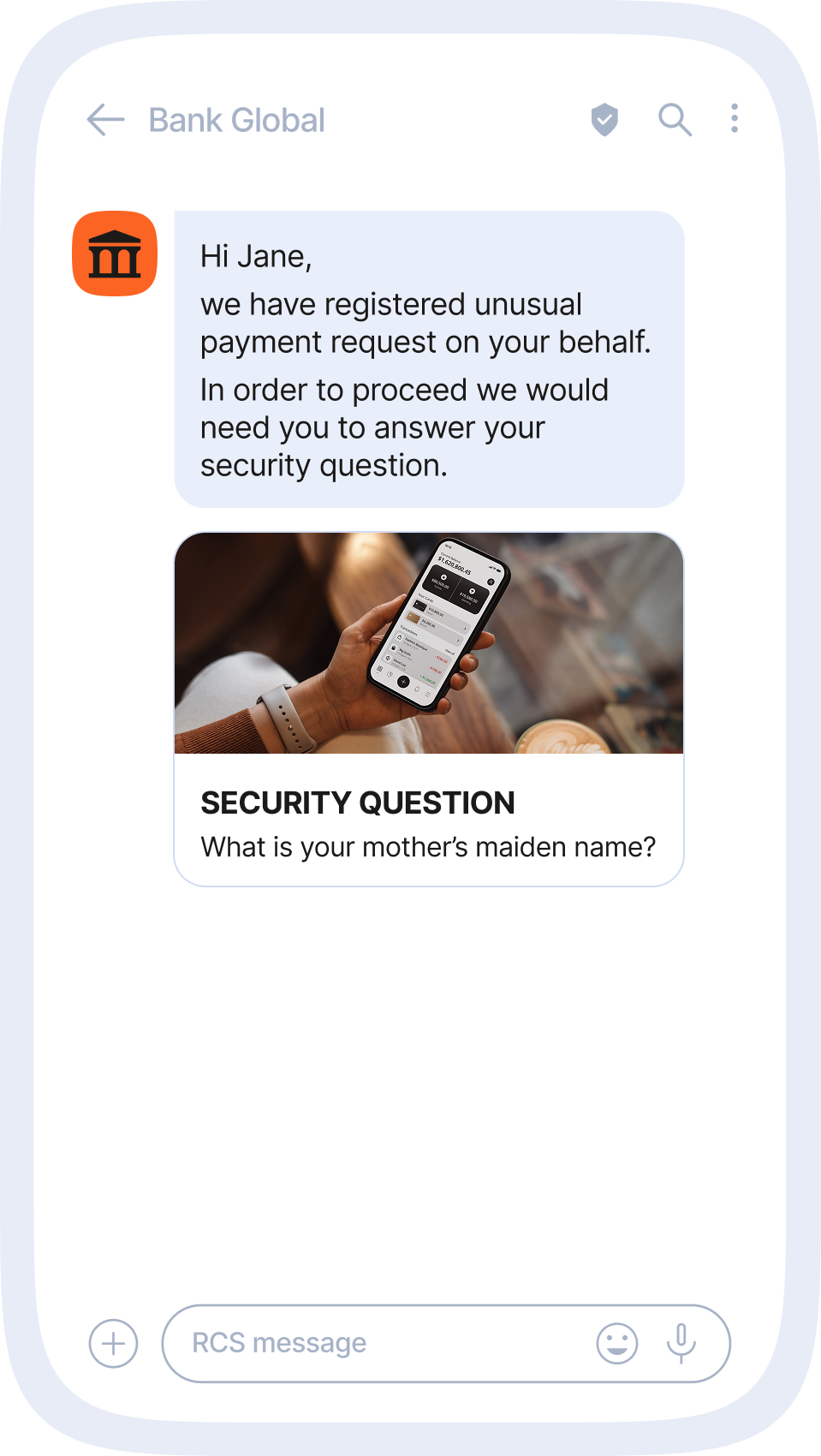
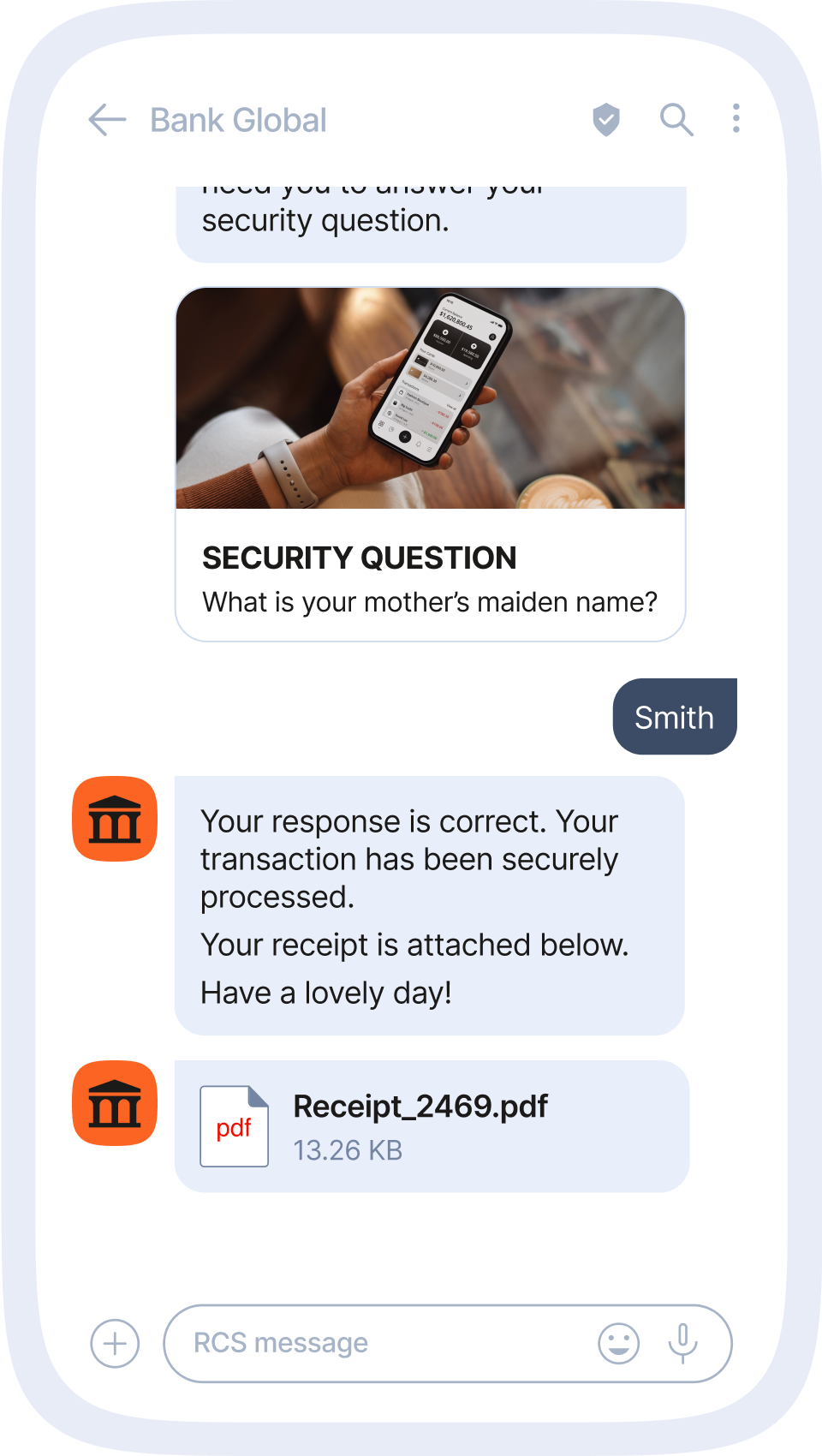
RCS message from a bank asking the customer to answer a security question to verify identity, illustrating a SIM swap scam attempt.
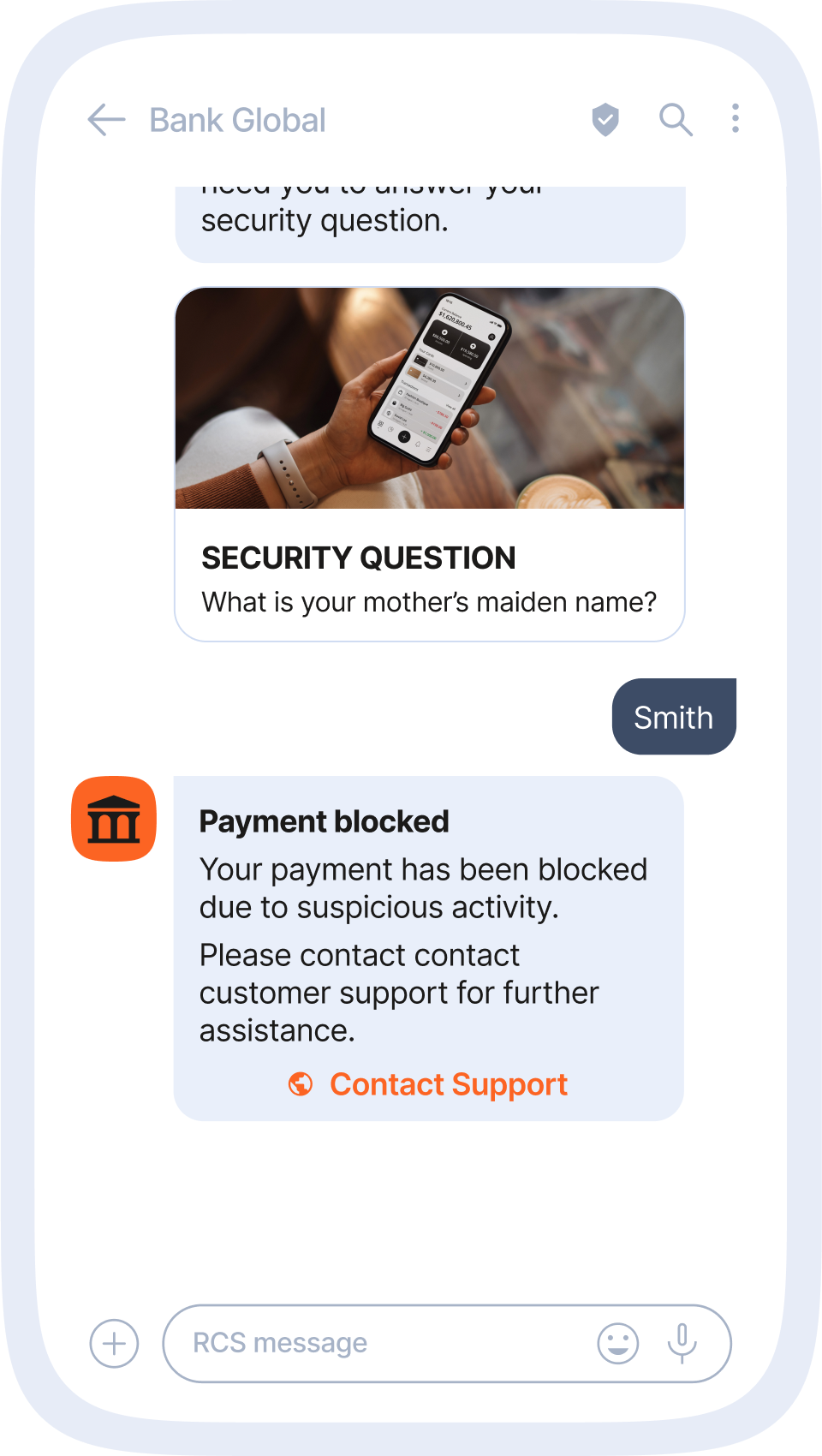
Example of a fraudulent bank message blocking a payment after receiving a security answer, highlighting SIM swap scam tactics through RCS messaging.
Scam bank message confirming a fake transaction and attaching a receipt PDF, demonstrating how SIM swap fraudsters trick users into downloading malicious files.

Strengthening fraud prevention with RCS and Network APIs

Combining Rich Communication Services (RCS) with Network APIs gives telcos and enterprises a smarter, more secure way to deliver trusted and high-impact messaging.

APIs for SIM swap detection, Silent Number Verification, Know Your Customer (KYC) checks, and device location enable businesses to build fraud protection and identity assurance directly into the messaging flow, without adding friction for users.

Delivered through RCS with verified sender profiles, these interactions feel seamless to customers while giving businesses more control and security than traditional SMS or OTT apps.

As demand for secure, high-engagement channels grows, Network APIs become a new source of value. By offering them alongside RCS as a managed service, operators can position themselves as trusted technology partners while generating new revenue through API consumption.

Infobip’s role in securing the ecosystem from SIM swap fraud

Working with businesses across industries, we can confidently say that effective SIM swap fraud prevention is never about one tool or one policy. It’s about layering the right technologies, processes, and ongoing education.

As attackers evolve their tactics, businesses must adapt, updating their strategies to protect their customers, their brand, and their bottom line.

Here’s how we help businesses stay protected:

  • Real-time network intelligence: Our SIM Swap Detection API instantly alerts you to SIM changes, so you can pause suspicious activity and require extra verification before fraud occurs.
  • Modern network firewalls: Anam Protect detects and blocks unauthorized SIM swaps and suspicious port-outs at the network edge.
  • Stronger mobile identity verification: Silent verification, device-binding, and biometrics reduce dependence on vulnerable SMS codes.
  • RCS fraud prevention: Verified RCS business messaging, complete with brand logos and sender checkmarks, ensures secure and trusted customer communication.
  • AI and behavioral analytics: We flag unusual behaviors, such as device swapping or rapid transaction patterns, allowing for fast, targeted intervention.

What sets our approach apart is a commitment to ongoing vigilance, customer education, and close collaboration with industry partners. Fraud tactics never stand still, neither do we.

Every business is a target, but you can take action!

SIM swapping fraud is not just a telecom issue or a banking risk. It is a serious threat that can lead to significant financial loss and reputational damage. However, by taking proactive measures, both individual mobile users and businesses can significantly reduce the risk and consequences.

Ultimately, staying ahead of attackers requires continuous effort, collaboration, and adaptation. Businesses that prioritize security at every level, the right technology, process, and people are best positioned to safeguard their customers, protect their reputation, and thrive in today’s mobile-first world.

Ready to safeguard your customers and brand from SIM swap and digital identity fraud?

 Contact Infobip today to learn how we can help.

How to get verified when you don’t have your phone

Being locked out of an account or prevented from making a transaction because you can’t receive a verification message can be frustrating! Find out how to avoid this CX disaster.

Dave Hitchins Senior Content Marketing Specialist
Skip to table of contents

Imagine your phone has been stolen or hacked and you need to verify your identity to change bank account passwords. But then you discover that the only way to do this is with a code sent to….you guessed it – the phone you no longer have control of.

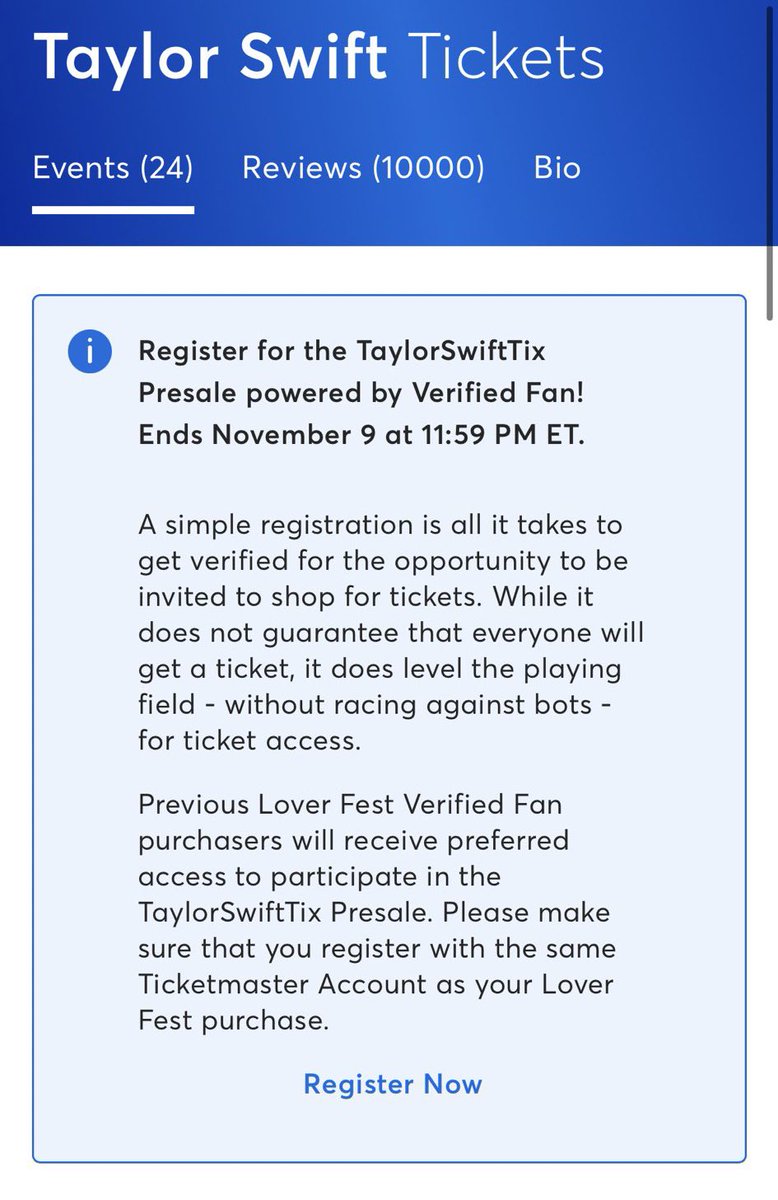
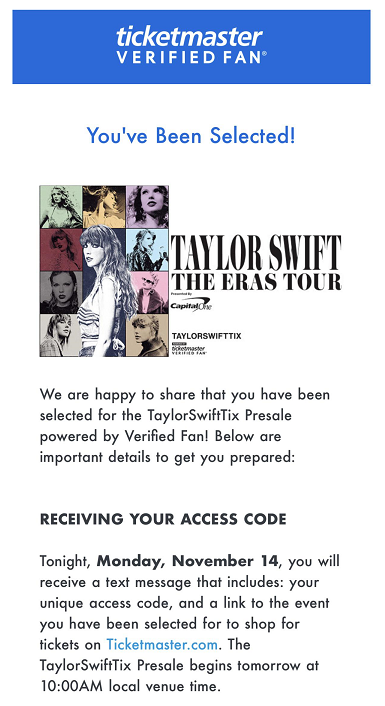
Or say you are at work registering to buy tickets for Talyor Swift’s new tour and the clock is ticking. But there is a problem – you don’t have cell signal, and you need a One-Time-Pincode (OTP) sent to you by SMS to verify that you aren’t a ticket-hogging bot.

An image of a registration process for concert tickets that requires verification by text message.
An image of a successful registration process for concert tickets that requires verification by text message.

We can tell you how to avoid getting into this situation (which we will later on), but that won’t help you right now. You want to know how to bypass the verification process or receive an OTP verification some other way.

We are here to help!

Why 2-step verification is necessary

It can sometimes seem like a hassle but remember that organizations introduce two-factor authentication to protect you! With the increased sophistication of hackers and criminals, a simple username and password isn’t enough to keep accounts secure. Two-factor authentication (2FA) becomes an important tool for stopping the majority of fraud attempts.

The problem is when the verification process is too inflexible. There are several very common scenarios where a person is unable to authenticate a transaction or log into their account.

  • They have lost their phone
  • They have internet access, but no network signal so can’t receive a code by SMS
  • They are overseas and the network they connect to blocks these types of messages

How to get a verification code without your phone?

There is no single answer to this question as two-step verification can be implemented in all sorts of ways. However, we can provide a checklist that you can use to hopefully find a solution for your specific situation.

1. Are other forms of verification available?

When you set up your account or signed up for a service you may have been asked to provide a backup phone number or an email address that could be used to verify yourself. Look for a link or prompt that offers an alternate channel for verification when you can’t receive an SMS for whatever reason.

2. Is there another device that you can use?

Even when you don’t have your phone, there may be another device that you have used to access your account previously that has cached your login credentials and is therefore deemed safe by the organization. Maybe a tablet, your work computer, or even an old phone could be used (you wouldn’t have mobile signal without a SIM card but could connect to the internet).

3. Can you use a pre-generated one-off code?

Some organizations provide a set of codes that can each be used once in place of a dynamically generated OTP message. Hopefully you saved these somewhere safe when you first set up your account, but if you didn’t you may be able to log into your account on another device and retrieve them. Be careful to keep these safe as hackers would love to get their hands on them.

4. Can you get verified using an app?

This may only be an option when you have replaced your phone, or if you have another device, but if your service has a mobile app, you may be able to use in-app notifications or push notifications to get verified.

5. Use a third-party authenticator app

If you have set up an authenticator app (like Google Authenticator, or Microsoft Authenticator) on another device, you can generate the OTP directly from the app.

6. Use a QR code for authentication (when you have your phone but no mobile signal)

Some websites and apps support verification by scanning a QR code. If you have another device with a screen, like a computer or iPad, you can use it to display a QR code from a website or app, then use your phone camera to scan the code.

7. Does the organization have a call center?

For retail and banking businesses who are motivated to provide the best possible customer experience, you can usually call a helpdesk number and speak to a human who can authenticate you manually and help you to achieve what you need to do. Calling a business may be intimidating to younger generations, but a friendly support agent would be best placed to solve your problem.

8. Can you authenticate yourself biometrically?

We have seen some businesses automate the verification process and enable customers to interact with a chatbot to authenticate themselves by uploading photos of their ID. One of our customers, the ride hailing mobility app Bolt, uses similar technology to authenticate new drivers. Check out their story here.

9. Can you get limited access to the service without getting fully verified?

In some cases, you can access limited services without going through the full verification process. For example, some banks allow you to check account balances and make payments into an account by providing your login details but not going through the full verification process. To withdraw or transfer funds you would need to be fully verified.

10. Get verified by other users

We have only seen this feature available in TikTok, but it is a brilliantly simple way of getting your identity verified by your contemporaries that is likely to go mainstream. TikTok already offers excellent account safety and recovery support but this feature goes further than most by enabling locked out users to forward verification requests to friends and other users who know them.

I’ve got my phone but I’m not receiving verification codes

There can be all sorts of reasons for not receiving codes. It could be a temporary network glitch that will rectify itself in a few minutes, or a setting on your phone that needs to be changed. Here are some options that you can check.

Did you enter your phone number correctly?

This may seem obvious, but best to check. You could have made a simple typo or the service may require the number to be entered in a particular format. For example, some international services may require the country’s dialing code and no leading zero in the number i.e. +44 (0)78555 555 555

Restart your device or toggle airplane mode on and off

Always a favorite with IT support, a simple restart can resolve temporary glitches. Alternatively, turning Airplane mode on for a few seconds can reset your network connection.

Does your phone block texts from unknown numbers?

You may need to change your phone settings if you have any SMS filters or spam blockers enabled. Sometimes a phone operating system update can introduce new settings or reset existing ones.

Did a verification email get sent to your junk folder?

If you have enabled email verification in addition to SMS then the email may have ended up in your junk folder. To avoid this happening in the future, mark the verification code sender as trusted to ensure codes go straight to your inbox.

Contact your cell provider

If none of these options work, you should contact your provider. They will know about any network outages or issues with your account that require action from their side.

What if you hit a verification brick wall?

Unfortunately, for large platforms like Google, Microsoft and others who have millions of customers, the verification process is managed by AI as it is not feasible to support it with human staff. As a result, it can sometimes appear rather inflexible.

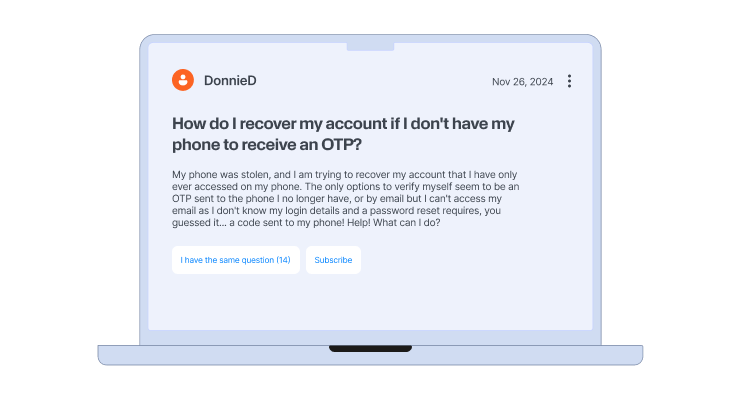
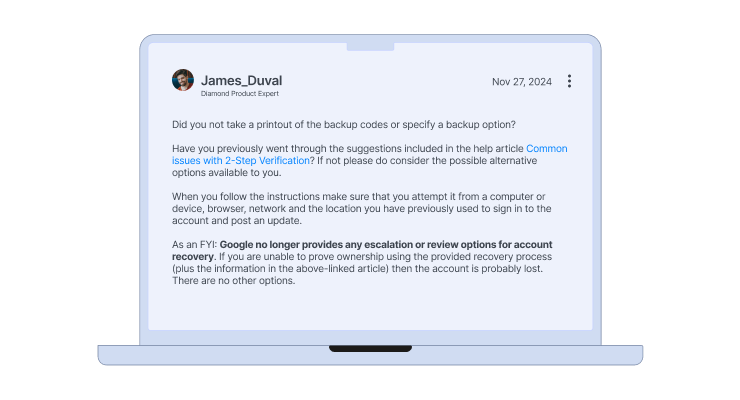
Take a look at this genuine exchange from the Google support page (we’ve changed names and removed some irrelevant detail)

An example of a real user who has been locked out of their Google account after losing their phone.

You can sense the frustration that this user is feeling, and they are not alone with internet message boards and support forums full of people in a similar predicament. However, the news isn’t always good.

A reply from an expert user providing options for resetting a Google account.

If you didn’t take the suggested precautions, you may have to accept that your account is lost, or you won’t be able to get those concert tickets that you had your heart set on.

Alternatively, you may want to try the following resources for help:

When you get your new phone, you will probably be motivated to explore the options you have to avoid getting into the situation again. If your provider doesn’t support any of these, you may be tempted to switch to one that does.

Ensuring that you can always get verified without a phone

There are lots of ways that you can avoid getting into the situation where you are unable to complete a verification process because you can’t access your phone or don’t have signal.

Not all services and apps will support these approaches, but if you live somewhere with patchy network coverage or you travel a lot then you should be aware of the available options.

1. Add a backup phone number to your account

If the service offers this option, then you should add another phone number that you can receive OTPs on. This could be a mobile device belonging to a family member, or a landline that you can use to receive verification codes by voice.

2. Add a backup verification channel

Many more services now offer the option to send verification codes by email, or messaging apps like WhatsApp, Viber, and Messenger. Take advantage of this flexibility and add your favorite channel that can be accessed via the internet for when you don’t have network signal.

3. Use a native app

Businesses will often offer incentives to customers to opt in to receiving messages via their app. This is because it is cheaper for them, and that includes OTPs and other verification messages. This is another good option to get verified when you have an internet connection but no cell signal.

4. Use a physical device

Hardware authentication devices usually come as key fobs or USB sticks that users can plug into their computer or mobile device, and they either generate OTP codes or directly confirm the person’s identity. They’re very secure but the drawback is that they are small and can be easily misplaced. We would recommend that they are used as a backup verification method along with a flexible omnichannel OTP solution.

5. Use a third-party authenticator app

If a service supports it, you can use an authenticator app like Google Authenticator or Microsoft Authenticator on your device, which you can use generate the OTP directly on your phone.

6. Go old-school and save backup codes

It may seem like a solution from the 2000’s but many services enable users to access a set of one-off OTP codes that can be downloaded when they are logged into their account. These can be saved in a secure location on your phone and/or PC and used in emergencies.

7. Use (trusted) SMS forwarding services

There are some third-party services that offer SMS forwarding to alternate numbers, but we wouldn’t recommend this due to privacy and reliability concerns. It is far better to use the options provided by your own device manufacturer or phone provider.

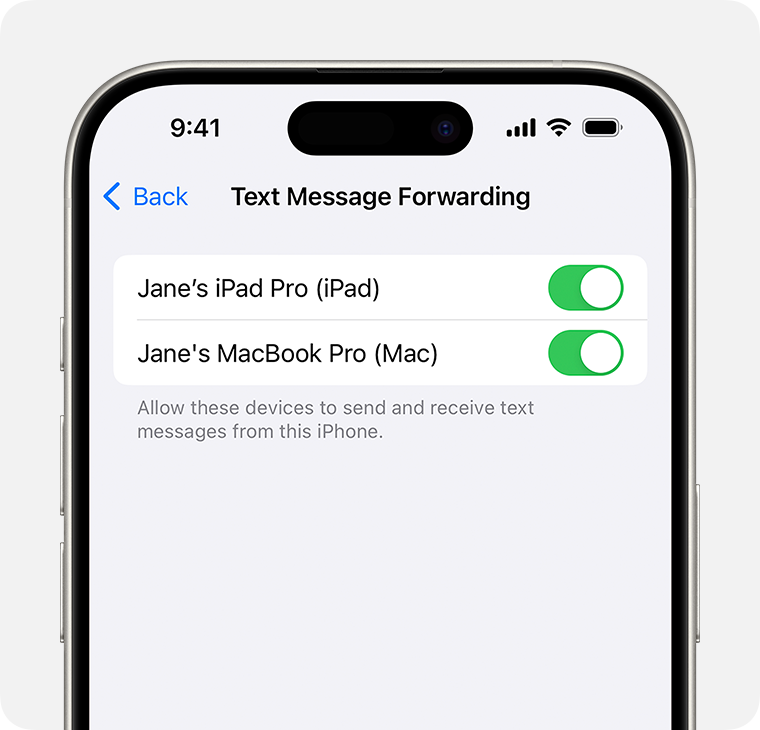
For example, Apple’s iPhone has a feature where any SMS, MMS or RCS messages that you receive can also appear on your Mac, iPad and Apple Vision Pro.

A screenshot of an iPhone settings screen where you can set up SMS forwarding to an alternate iOS device.

As you can see, you are not completely excluded from modern life when you don’t have your phone or don’t have network coverage. With a bit of forward planning and knowing the options available to you, means that you can usually still get verified for transactions and access the services you need.

For the service providers and businesses that are looking to adopt more secure verification processes, it is important to consider the user experience and provide options for users who don’t have access to their phones or don’t have network coverage.

For people that have been in the frustrating predicament of not being able to get verified, they would undoubtably be looking to switch to a provider that offered a more flexible and user-friendly verification process.

Explore the benefits of omnichannel authentication

Provide a seamless and simple authentication process for your customers.

Unlock the power of network APIs: How CAMARA transforms Telco innovation

Dive into the world of open network APIs with CAMARA and see how this game-changing project is driving innovation for Telcos.

Group Content Marketing Manager

Razan Saleh

Group Content Marketing Manager

The telecom industry is evolving with new innovations, tapping into a world of endless opportunities by connecting customer needs with open-network APIs. New technologies like 5G and the Internet of Things (IoT) are transforming the industry, making everything more connected and putting a lot of pressure on networks.

However, capitalizing on these advancements can be a challenge for telcos. With all the different fragmented APIs and inconsistent standards, developers struggle to build innovative apps that leverage the full potential of their networks.

Enter CAMARA, a game-changing project that’s building a set of standard APIs for open network integrations. These integrations will unlock a whole world of opportunities for both telcos and developers and create new revenue streams and monetization opportunities.

Read on to learn more about the CAMARA project and its impact on telco innovation. We will explore some of its potential use cases and how it paves the way for exciting new revenue streams.

What is the CAMARA project?  

As the engine for Open Gateway API development, CAMARA is an open-source project initiated by the Linux Foundation and GSMA to define, develop, and test Application Programming Interfaces (API) standards. The inspiration behind the name CAMARA comes from the Greek word for “arched roof,” symbolizing the collaboration and unity of diverse entities under a single vision.

The Open Gateway initiative

According to the GSMA, the Open Gateway initiative is a framework of common network APIs designed to provide universal access to operator networks for developers. Those APIs are defined, developed and published in CAMARA.

This  helps developers and cloud providers enhance and deploy services faster on operator networks by accessing the world’s largest connectivity platform through one single point.

To date, over 47 mobile operator groups worldwide, representing over 239 mobile networks and 65% of global connections have signed up for the Open Gateway initiative.

47

mobile operator groups

239

mobile networks

65%

global connections

The CAMARA project aims to bridge the gap between customers and Telecom network capabilities across various networks and countries. Working closely with the GSMA Operator Platform Group, the project ensures that API requirements are aligned and optimized for maximum efficiency.

But how do these open APIs work? Let’s find out.

How do open network APIs work?

Telco network capabilities have drastically improved with 5G, allowing us to gather data from the network and customize it based on our needs. These new 5G capabilities will be exposed through data service APIs which are more readily available across global telecom networks and countries, making it seamless and easy to access within a controlled and federated market. 

This process is achieved via common, northbound service APIs – supported by the CAMARA Project. CAMARA-compliant APIs provide secure, consistent and on-demand access to these capabilities, turning operator networks into powerful platforms for services.

This open API evolution opens up numerous possibilities for application-to-network integrations, which is essential for delivering enhanced customer experiences in the 5G era.

Through 5G, the CAMARA network APIs coupled with CPaaS, are creating a more integrated and powerful digital user experience. This integrated digital experience could lead to a promising future full of:

  • Personalized enriched experiences: Developers can use network APIs to create more powerful applications and services that understand the users’ intents and improve their daily lives, thus offering personalized enriched experiences.
  • Faster and reliable services: 5G capabilities through CAMARA APIs enable enhanced and more agile development with ultra-low latency and high bandwidth, resulting in faster and reliable services.
  • Greater security and privacy: Standardized security protocols in CAMARA APIs and access control features in CPaaS ensure the protection of user data and privacy.
  • Open innovation: Open Gateway fosters an open innovation ecosystem by allowing developers to access a set of tools that were previously out of reach.

By exploring the capabilities of the 5G network further, we see the immense potential of these APIs and the exciting new opportunities they bring to the telecom industry. But how can telcos benefit from this, let’s take a look.

Benefits of open network APIs

Telcos can benefit from open network APIs in many different ways. Not only do they serve as a puzzle piece connecting applications to one another, but they are critical to enterprises seamlessly tapping into 5G’s powerful capabilities for hundreds of potential use cases.

Here are the top benefits of opening your network APIs:

  • Increased revenue streams: By offering network APIs, you can create new revenue streams through partnerships with third-party developers who use their APIs to create innovative services and applications.
  • Improved user experience: Network APIs allow you to provide customers with more personalized, efficient, and convenient services, leading to higher customer satisfaction and loyalty.
  • Enhanced service offerings: By leveraging network APIs, you can quickly and easily launch new services and features, allowing them to stay competitive in a constantly evolving market.
  • Cost savings: Network APIs can streamline operations and reduce your costs by automating processes, improving efficiency, and enabling faster service development and deployment.
  • Monetization opportunities: You can monetize your network APIs by charging developers for access or by using APIs to drive traffic to your own services and offerings.
  • Increased market reach: Opening your network infrastructure through APIs allows you to reach new market segments and expand your customer base by offering services that cater to different customer needs and preferences.
  • Collaboration and partnerships: Offering network APIs can foster collaboration and partnerships with other companies in the technology and digital ecosystem, leading to opportunities for mutual growth and innovation.

The shift from “telco” to “techco”

Traditionally, telcos have focused on delivering network reliability. However, customers today, both consumers and businesses, are expecting more than just connectivity.

In an interview with Deutsche Telekom (DT) at our annual Shift Conference, Petja Heimbach, Director of Architecture & Innovation Director at DT emphasized on the needs of the industry to transition from simply providing network services to offering adjacent solutions that enhance the value of connectivity.

What we need to change in the whole industry is to get to a point where we can accompany the services we provide with services that are adjacent to it or building on top of it. Otherwise, we’ll have challenges in growth and the further financing of our networks.

Petja Heimbach

Director of Architecture & Innovation at Deutsche Telekom

This shift is particularly important in the enterprise space, where businesses require seamless integrations and security solutions that go beyond basic connectivity. By leveraging network APIs, telcos can unlock new revenue streams and stay relevant in the evolving digital landscape.

Watch the full interview below to learn more about our discussion and understand the significance of Network APIs.

The developer-centric approach

One of the biggest challenges telcos face is bridging the gap between traditional telecommunications infrastructure and modern software development. As Heimbach points out, telcos excel in building and managing networks but are not necessarily experts in software engineering. This is why partnerships with technology companies and developer communities are essential.

Where I would say we are not particularly strong is in IP engineering software development. So what we seek in partnerships is the capacity to create good software.

Petja Heimbach

Director of Architecture & Innovation at Deutsche Telekom

This highlights why telcos need to engage directly with developers. Unlike traditional B2B or B2C customers who primarily purchase connectivity, developers require APIs that enable them to build innovative applications. By offering standardized APIs through platforms like CAMARA, telcos can provide developers with easy access to network capabilities, reducing the need for workarounds and fragmented solutions.

A major pain point in the industry has been the fragmentation of APIs across multiple telcos. If a developer wants to integrate a telco feature, they often need to connect separately to multiple providers.

Infobip addresses this issue by aggregating these APIs into a single, developer-friendly interface. This not only simplifies development but also accelerates innovation in areas such as authentication, security, and connectivity management.

How can telcos monetize network APIs

To date, telcos have invested nearly $1 trillion for network upgrades, and yet they’re still struggling to monetize 5G. However, there is a growing interest in the potential of network APIs to make a difference. These APIs act as the connections that link applications to each other and to telecom networks.

Network APIs offer telcos a promising opportunity to see significant returns on their massive investments in 5G technology. In fact, it is estimated that the network API market could unlock approximately $100 billion to $300 billion in connectivity- and edge-computing and  $10 billion to $30 billion in revenue solely from APIs.

CAMARA empowers you to expose valuable network capabilities to developers, creating a thriving ecosystem of innovative applications and services. How? Using common APIs to access advanced 5G capabilities will enable you to leverage new ways to monetize 5G and quickly deliver new services on a global scale with speed.

By doing so, developers and enterprises will have the opportunity to create innovative applications and functionalities for any connected device using advanced network capabilities such as:

These capabilities are core network components that have not yet been exposed to the global developer community in a unified and easily consumable way. In turn, integrating those network features into new applications will accelerate enterprise digitalization and create new ways for operators to monetize their network investments.

As many telcos look to provide new services, Open Gateway and standardization have become crucial for monetizing subscriber data and solving key pain points and challenges for enterprise customers.

Let’s explore some of the potential 5G use cases for businesses across industries.

Potential 5G network API use cases

Network APIs are critical to enterprises tapping into 5G’s powerful capabilities for hundreds of potential use cases, such as credit card fraud prevention, glitch-free videoconferencing, metaverse interactions, and entertainment.

Other potential use cases include:

1. Real-time video streaming

Enable real-time video streaming for applications such as live video broadcasting, video conferencing, security monitoring, and more.

2. Location-based services

Provide location data and services to enable applications such as geotagging, location tracking, route optimization, and location-based advertising.

3. IoT integration

Network APIs can be integrated with Internet of Things (IoT) devices and sensors to collect data, monitor processes, and automate tasks in various industries such as smart cities, healthcare, agriculture, and more.

4. Virtual and augmented reality

Support VR and AR applications by providing real-time data transmission, low latency communication, and high-quality video streaming for immersive experiences.

5. Banking and Finance

Integrate location APIs into existing processes to optimize security, prevent fraud, and protect sensitive customer data.

6. Healthcare services

Enable telemedicine, remote patient monitoring, medical device integration, and healthcare data analytics to enhance patient care, optimize healthcare delivery, and improve outcomes.

7. Retail and marketing:

Enable personalized shopping experiences, inventory management, location-based advertising, customer engagement, and data analytics for retailers and marketers to drive sales and customer loyalty.

Launching CAMARA-compliant APIs in Brazil

Infobip has partnered with three mobile network operators (MNOs) to launch the first CAMARA-compliant Network APIs in Brazil under the GSMA Open Gateway initiative. The collaboration is part of Infobip’s CPaaS enablement solution for telcos, which allows them to easily launch and monetize their emerging services, such as their core network capabilities, exposed through CAMARA APIs.

Through our partnership, Claro Brazil, TIM Brazil, and Vivo (Telefonica Brazil) launched three CAMARA-compliant APIs focused on digital security and anti-fraud: Number Verification, SIM Swap, and Device Location.

  • The first of these APIs is Number Verify, which helps these MNOs combat identity fraud by verifying the end-user’s possession of a mobile phone number with their mobile network data connection.
  • Sim Swap API refers to the process of transferring an existing phone number to a new SIM card. 
  • Device Location API provides the option of verifying the geographical location of a given SIM-based device and validating whether it’s within a requested geographical area without spoofing or GPS theft.

This partnership enables Claro, TIM and Vivo to integrate CAMARA-compliant APIs with developers through Infobip’s cloud communications platform, one single point of access.

At MWC this year, we met with Ageu Dantas, Head of Data Analytics and Messaging at Claro Brazil to discuss the impact of open network APIs and how CAMARA will transform the telco industry. Watch the video below for more insight.

Drive network value with Infobip

As an Open Gateway channel partner, Infobip has played a pivotal role in launching CAMARA APIs for the 3 MNOs in Brazil through:

  • its global market-leading CPaaS position
  • strong developer relations
  • telco partnerships in more than 60 countries
  • fraud prevention partnerships in 120 countries
  • 800+ direct operator connections

By partnering with us, you can tap into the GSMA Open Gateway initiative and unlock the full potential of CAMARA APIs.

Infobip again named a Leader in 2025 Gartner Magic Quadrant for CPaaS

Positioned furthest for Completeness of Vision.

Get the report

This will enable you to:

  • offer new digital services
  • generate additional revenue
  • create numerous monetization opportunities

With Infobip, you will have access to a global partner network with a history of strategic telco collaborations, strong developer relationships, and extensive CPaaS knowledge and expertise.

Ready to shape the future of network APIs with CAMARA?

Partner with Infobip and tap into the Open Gateway initiative to unlock endless network innovation.

Become a partner
Jun 27th, 2024
10 min read
Group Content Marketing Manager

Razan Saleh

Group Content Marketing Manager

Dating app security: Prevent romance scams and safely connect verified users

As more and more people look to the internet to find someone special, fraudsters are evolving their tactics to take advantage. With almost half of couples in the US now meeting on dating sites, there are a massive number of potential victims. With technology being available to prevent the majority of romance fraud, it becomes the responsibility of dating sites to protect their users.

In the lead up to Valentines Day we look at some common types of romance fraud and what can be done to prevent them.

Love as a business

57.4 million

registered dating site users in the US

40%

of new couples in the US met on dating sites in 2023

$3.12 billion

annual global revenue for dating apps in 2023

5 types of romance fraud

Here are just a few ways that criminals use dating sites to commit fraud.

Catfishing

We are all familiar with this MTV favorite. What people may not realize is that there are different levels of catfishing. From genuine people using older or edited photographs of themselves in their profiles, all the way through to completely fake profiles, designed to trap unwary singles into forming an attachment with an imaginary person. Even though they have never met, by being manipulated they may end up providing personal details or sending money to the fraudsters. Dating websites should be able to protect their users from catfishing scams by properly verifying the identity of all site users.

Foreign service scams

Pretending to be a soldier posted overseas or someone working for an aid organization seems to be a very common tactic used by romance scammers. Firstly, these jobs have noble and romantic associations, they also provide a valid excuse for having patchy internet service, no webcam, and they support a number of believable scenarios where the scammer can request money – for example to pay for a webcam, additional safety equipment, or for a flight to see the victim.

The US military even publishes guidance on how to spot fake military accounts. For example, they state that any member of the US miliary will have an email address ending in “.mil.” If the person saying that they are a serving soldier is not using a .mil email address, then that should be a major red flag.

Inheritance scams

This is a variation of the infamous ‘Nigerian Prince’ scam where the fraudster sends out a mass email blast trying to persuade people that they need help moving a large amount of cash or gold out of their home country. In the romance version, the scammer will set up multiple dating site profiles and say that they stand to inherit a large sum of money, but only if they are married. In exchange for splitting the money they ask the victim to pay for a flight so that they can meet up to get married. Of course, once the money has been paid, they are never heard from again.

Blackmail

On some sites things can move very quickly and users might find themselves persuaded to exchange intimate photos or videos with the people they match with. If it is a fake account set up by a criminal, then these can be used to blackmail the victim into sending cash so that the photos are not made public.

Dating sites that require user verification are far less likely to attract criminals as they can easily be reported and traced if they try this scam.

Fake dating websites

There are a lot of dating websites available for people that are looking for that special someone, or just to meet new people. Some are well known, but others may be new and seemingly full of attractive singles looking to mingle. Beware, as these could be sites that have been set up by scammers with the sole purpose of gathering personal and financial information. This can be used to defraud victims or sold on to other scammers.

In this situation, the responsibility falls on the person to research the website before they join or provide any personal details. If you are new to the online dating scene it is recommended to stick to well-known sites that have a good reputation and have the technology in place to properly verify their users.

True romance is never a scam

According to Atlas VPN, throughout 2021, United States residents lost more than $343 million to romance scams. That represents a roughly $40 million increase on the amount reported to the Federal Trade Commission (FTC) in 2020. The FTC, an independent United States government agency whose principal mission is the enforcement of civil U.S. antitrust law and the promotion of consumer protection, reported that romance scams were among the most effective for fraudsters, accounting for 24% of all fraud damages recorded by the FTC in 2021.

Now, we realize that this all sounds scary, especially at a time when people could do with a little bit of extra love. So, with Valentine’s quickly approaching, how does your business ensure a safe and secure platform that brings people together?

How dating apps can stop romance fraud

App identity verification

The best way to ensure peace of mind for people trying to create meaningful connections through your app or service is to stop fraudsters from gaining access to it. It really is that simple.

You might already require users to submit some sort of verification or identity confirmation upon registration or login. This could include a check on details like their real first and last names, age, security questions, profile picture, and their username and password. This is a good start, but would not be enough to stop the Tinder Swindler.

Passwords can be stolen, as well as accounts and entire identities. This becomes increasingly complicated with a rising number of digital newcomers trying online dating for the first time. At the same time, you want to cater to these people and make their first online dating experience a frictionless one.

Your dating app, and users, deserve a solution that not only eliminates the complexity of getting out there with simple app registration and user experience, but also offers elevated security.

Mobile Identity – quicker, more secure access to meaningful connections

With Mobile Identity and authentication you can have your cake and eat it too. Mobile Identity uses mobile operators’ subscriber data to verify and authenticate mobile users through their mobile numbers without the need for them to take any additional steps.

As part of Mobile Identity, silent mobile verification allows your dating app to distinguish real from potentially fraudulent users based on their mobile number, which translates into secure verification that eliminates friction on service sign-up and login. Additionally, the service identifies and prevents SIM swap fraud before it can ever take place.

This represents a revolution in user account security and provides near perfect account takeover protection, ensuring conversations happening on your dating app are conducted safely and securely.

What’s even better, the entire user authentication process takes less than 5 seconds.

You, like us, are in the business of creating connections. When you’re out looking for love, the last thing on your mind should be user authentication. It’s about interactions with other people, through your already great service. It’s time to let your users enjoy it to the fullest.

This Valentine’s Day, implement quicker, more secure access to meaningful connections with mobile identity.

Mobile Authentication

The Future of Mobile Security and User Engagement

Download White Paper
Jan 16th, 2024
6 min read

Research: How mobile fraud prevention is a team effort

Join us as we look at the latest IDC Infobrief into securing mobile communications in a digital world, and what mobile fraud solutions are available to each stakeholder to help them do their part to preserve the integrity of the mobile eco-system.

Senior Content Marketing Specialist

Dave Hitchins

Senior Content Marketing Specialist

Whether you are a business owner, a mobile subscriber, or you work for a network operator, we all have at least one thing in common. Right now, our mobile phones are either in our pockets, next to us on our desks, or perhaps in our hands as we read this.


That means that we are all at risk of falling victim to mobile fraud. The next time your phone pings with an SMS or a message notification, it could be a genuine or it could be yet another attempt by a fraudster to get you to clink on a link, provide personal details, or even ask you to pay a sum of money to get a parcel delivered that you never ordered.


You may think that you are too savvy to become a victim, but fraudsters are continually evolving their tactics, using social engineering tactics to gather information that makes their approaches more believable. Or maybe you will just get unlucky – you may get that SMS asking you to arrange delivery of your parcel right after you ordered that item that you are super excited to receive. It could happen to any of us.


But what can we do about it? How can we solve a problem that is continually changing, like a Rubik’s cube whose tiles continually change color?


In this blog we take a closer look at the findings of IDC’s Infobrief Securing Mobile Communications in a Digital World and show how collaboration between all stakeholders is the only way to address the problem of mobile fraud. We also look at what mobile fraud prevention solutions are available to each type of organization.

$11.6 billion

Global spending on security in the telecom sector in 2022.

33%

The proportion of enterprise business leaders that said improved security measures were required in their organizations.

34%

The proportion of decision makers that said security and compliance was their top consideration when selecting a CPaaS provider.

What do we mean by SMS fraud?

If you are not familiar with the different types of SMS fraud that the report deals with, it is worth reading our detailed guide on SMS fraud which describes each in detail. Here is a short summary:

  • Smishing is a type of fraud where criminals contact potential victims by SMS or other type of message to trick them into providing personal information or bank account information or clicking on links that that download malware onto their phones.
  • Spoofing: SMS spoofing is a way of changing the sender information on a text so that the recipient sees whatever alphanumeric text is defined, rather than a mobile number. While not actually illegal in many regions, it is a tactic used by fraudsters to mimic messages from legitimate businesses as part of smishing attacks.
  • SIM swapping: SIM swap fraud happens when cyber criminals contact MNOs pretending to be a customer and trick them into activating a new SIM card with the customer’s phone number. Once this is done, the scammer has full access to the end-user’s phone and information. Every one-time-pin (OTP) and 2FA message that is sent to that specific number is received by the fraudster.
  • SMS pumping: Also known as artificially inflated traffic (AIT) or toll-free fraud, it is a type of SMS fraud that can radically increase your SMS bill when fraudsters artificially inflate your SMS traffic by sending you fake OTP messages. 
  • SMS grey routes: SMS grey routes represent a type of fraud committed by rogue mobile operators where A2P SMS messages, which should be charged at a premium rate, are passed off as P2P traffic for all or parts of their journey to benefit from reduced rates.
  • SMS SPAM: While the impact on mobile subscribers is perhaps not as serious as other types of fraud, SMS spam breaks compliance laws in most countries around the world and leads to an overall degradation of trust in SMS as an effective business communication channel.

What is the current state of mobile fraud prevention?

As more and more consumers become victims of messaging fraud, enterprise businesses are well aware of the potential impact on their business models. The IDC report paints a very clear picture of how companies are taking the threat seriously and ramping up their spending on preventative measures.

Just some of these include:

  • 33% of enterprise business leaders said that protection against security threats needs urgent improvement in their organizations
  • Spending on security in the telecom sector reached $11.6 billion globally and will grow at a CAGR of 13.3% during the forecast period
  • The most important consideration stated by decision makers when selecting a CPaaS provider was security and compliance capabilities at 34% – above customer support at 33%.

How each stakeholder can help solve mobile fraud

The IDC report makes it very clear that any solution to mobile fraud has to be a unified effort including all players in the mobile messaging ecosystem. This includes MNOs, enterprises, regulators, and firewall providers.


We would add to this that a shift in public awareness and increased alertness to potential SMS fraud are also of key importance. If fraudsters are not being successful, then they will stop wasting time for diminishing returns.


But what can each stakeholder actually do? And what anti-fraud solutions are available to each?

Mobile Network Operators (MNOs)

MNOs are in a difficult position as they need to adequately protect their subscribers from fraud by blocking messaging scams and SIM box fraud, but if they go too far and block legitimate traffic then they will be eroding their revenues and negatively impacting their customers who may miss out on key messages like authentication OTPs.  

The solution for MNOs is to invest in advanced SMS firewall security that uses AI to accurately detect and filter out fraudulent traffic while allowing the traffic from legitimate businesses to be delivered reliably.

In addition, by being able to identify grey route traffic and filter it through legitimate paid routes then they are able to protect their revenue and provide a better service to their partners and subscribers.

Our SMS firewall solution is one of the most advanced and sophisticated available to MNOs. The benefits are clear for all stakeholders in the messaging ecosystem:

  • Subscribers benefit by having fraudulent and SPAM messages blocked.
  • MNOs benefit from increased revenues and reduced customer complaints about valid messages being blocked.
  • Better monitoring and traffic segmentation enables tighter control of the entire messaging network, benefiting all parties.

Regulators

Regulatory agencies are in a difficult position. They play an important role in protecting the interests and privacy of individuals, but at the same time by enforcing rigid privacy regulations they may prevent MNOs from getting maximum benefit from the capabilities of SMS firewalls, for example content filtering, real-time blocking, and local-source blocking. This would in turn impact individuals by exposing them to more fraud attempts and spam traffic.

The key is to find the right balance between privacy and the effectiveness of network security measures like SMS firewalls. This requires regulatory agencies to work with MNOs and A2P vendors to ensure mobile users are protected from fraud and their privacy is not endangered.

Enterprises

For enterprises that rely on OTPs to authenticate transactions there is a critical need to protect themselves from artificially inflated OTP traffic which is when fraudsters use bots to send multiple OTP requests – causing a massive increase in their messaging costs.

The best way of doing this is to partner with a CPaaS provider who can safeguard your OTP traffic using a variety of technology-driven techniques. For example, fraudsters will often use a range of different numbers to mount an attack to remain undetected for as long as possible. Our Signals solution can automatically detect the series of numbers sending OTP requests and block them, or where a single number has sent multiple requests to a range of businesses in a short space of time it can be identified and blocked.

At Next, we are committed to protecting our customers from fraud while continuing to provide the rich, responsive, and reliable communication that they expect from us. To benefit from the latest anti-fraud technology, we partnered with Infobip to empower us to be proactive in keeping both our customers and infrastructure safe from new and emerging threats. Their AI and machine-learning powered solution Infobip Signals, helped block approximately 175,000 artificial messages per month, enabling us to maintain the reliability and security of our SMS messaging by mitigating the risk of fraudulent activity. This means that our customers always receive updates on time, and we can continue to deliver the personalized promotional messaging that they expect.

Raz Razaq,

Domain Manager, Customer Contact Experience Technology, Next

With our evolved CPaaS solution brands can also easily explore the use of different channels for the sending of authentication messages. We can ensure maximum channel flexibility with minimum engineering effect with the largest range of supported channels of any vendor, including:

Technology solution provider checklists

When evaluating technology partners, stakeholders in the messaging ecosystem need to look at a wide variety of factors beyond cost and their ability to meet service levels. With IDC research showing that the most important consideration stated by decision makers when considering a technology partner was security and compliance, here are some pointers for finding a partner that can meet your high expectations.

Firewall providers

Firewall providers need to ensure that their solutions consistently enforce the highest security and privacy standards.

  • Continually monitor for new threats and ensure their solutions can protect against them
  • Offer content processing based on machine learning to reduce the requirement for human intervention.
  • Protect end-users’ privacy by separating out metadata or anonymizing data.
  • Provide real-time protection without the delays that give fraudsters a window of opportunity.

CPaaS providers

Not all CPaaS solutions offer the same levels of security and monitoring of the traffic that passes through their infrastructure. We aim to continually evolve our solutions to combat new threats and enable businesses to protect their customers on every channel that they use.

Rather than offering a one-size-fits-all approach to the provision of cloud communication services, with CPaaS X we provide the flexibility to adapt solutions according to the requirements of each customer and use-case.

These include specific features to help combat fraud:

  • Automatic detection of fraudulent and bot-generated traffic
  • Proactive analysis of overall traffic for early identification of possible issues
  • Provide real-time alerts and immediately actionable insights

A2P messaging providers

Some providers will make promises about delivery rates and the volumes of messages that they can handle at a low price, but will often stay quiet on how they can achieve this, perhaps by utilizing grey routes or partnering with network operators with less stringent security protocols.

Here are a few guidelines for choosing a provider that can securely handle your A2P traffic.

  • They should partner with established and highly regarded network operators around the world to ensure the highest security standards and best deliverability rates for messages.
  • Maintain a global presence and uniform high levels of service with strategically placed data centers across all regions of the world.
  • Provide robust, accurate, and easy-to-access reporting capability so that potential fraud can be identified early and negated.
  • Provide 24/7 global support so that any security threats can reported and acted upon before they impact your business.

You may also be interested in

Oct 3rd, 2023
9 min read
Senior Content Marketing Specialist

Dave Hitchins

Senior Content Marketing Specialist

Challenges in the fintech industry: The problems and solutions

Senior Content Marketing Specialist

Martina Ivanović

Senior Content Marketing Specialist

Fast, secure, and personalized mobile solutions are at the top of the list for today’s digital-first consumer. As a result, we’ve witnessed a rise in financial technology (fintech) companies dominating the industry with solutions such as mobile banking.

However, challenges in providing frictionless mobile services remain – and overcoming them has become increasingly difficult. Here we highlight common fintech problems organizations face today and how the right digital-first technology can be the solution that improves your customer experience.

Fintech problems to solve

Fintechs are well known for delivering fast, secure solutions to everyday banking activities. But with global events forcing the world to go mobile, consumers are looking for even faster, more secure alternatives – and businesses are struggling to keep up.

Because of this, fintechs looking to deliver the ultimate conversational banking experience continue to encounter both business and security problems, including:

  • User acquisition: how do you make onboarding as fast and easy as possible?
  • Customer experience: how do you ensure online banking is a streamlined activity instead of a frustrating one?
  • Costs: if you upgrade your security, will you have more expenses?
  • Fraud and account takeover: how do you prevent hackers from accessing accounts or devices?

Although revenue is not a key indicator of fintech success – speed and transaction volume are. And, with the barrier of being highly regulated, fintechs looking to get ahead must have proper authentication practices set in place if they plan to increase conversion rates and reduce operating expenses.

The most challenging part for most fintechs is implementing higher security without impacting the customer experience – a key advantage they have over traditional banks.

Solutions to common fintech problems

The right digital-first technology could be the solution to most of these fintech problems.

We recently shared details about SIM swapping and how our Mobile Identity solution uses it for the greater good of protecting user information.

These fast, silent solutions can streamline most of the customer challenges we outlined above – while keeping costs relatively low and prioritizing fraud prevention. Here’s how:

Higher user acquisition

According to Business Insider, 63% of European consumers abandoned their digital banking app onboarding process in 2020. This 25% increase compared to 2019 is well attributed to consumers moving to digital solutions as a result of the pandemic, but online banking technology still struggling to meet their expectations.

Using silent mobile verification can help you provide an uninterrupted onboarding experience for your customers. Rather than receiving an email or SMS with a 5-digit code, silent mobile verification authenticates your app users in less than 5 seconds – with no further action required.

That’s not to say that SMS isn’t a great failover option – since the worst-case scenario would be for your customer to not complete the transaction at all. But giving app users fewer steps in the onboarding process also means giving them less time to abandon it – increasing the likelihood that they’ll convert into a loyal customer.

Improved customer experience

A key competitive advantage for fintechs over traditional banks is the customer experience. Fintechs entered the market with the value proposition of enabling customers to perform regular banking transactions in the palm of their hand, instead of visiting a branch or calling a contact center.

However, the more layers of security you add to your customer journey, the more you risk compromising on customer experience. Customers don’t want to leave your app to check an SMS for a confirmation code only to have to come back to your app and type it in. Silent mobile verification does this for them so all they need to do is open your app, sign in, and wait a few seconds (less than 5 to be exact) before they move on to complete their transaction.

Another way to improve your customer experience is to conduct a SIM swap check before sending sensitive messages to a customer. This will help you ensure the account-related information reaches the customer it’s intended for and eliminates potential fraud or identity theft activities.

Fraud and account takeover prevention

Regardless of the security solutions you have set in place, it seems hackers are always finding new ways to crack the code. In fact, the US Federal Bureau of Investigation states that Americans lost more than $68 million to SIM swapping attacks in 2021.

Using a combination of mobile security solutions such as silent mobile verification and SIM swap checks can decrease the chances of your authentication process being intercepted by a third party.

For one, silent mobile verification can keep customers’ information protected as the authentication process is completed entirely in the background – and isn’t visible to anyone that might be near your customer while they’re logging into their account.

SIM Swap checks, on the other hand, help verify transactions in cases when funds are transferred to a new account, the transaction amount is higher than usual, or if a new device has been detected. In this case, if it’s been detected that a SIM has been swapped, the transaction will be declined.

Key account information that you can check with the mobile network operator to prevent fraud and account takeover include:

  • The date when the SIM card was activated
  • If the phone number has been given to a new user
  • If unconditional call forward is turned on or off
  • If the phone has been reported as lost or stolen
  • The last time the SIM card was changed

Reduced costs

Security solution providers know that fraud prevention is a top priority for fintech organizations – which is why their solutions can seem to break the bank. However, since silent mobile verification and SIM swap checks use existing information and technology, there aren’t many added setup costs or ongoing expenses.

When a user signs into their account, silent mobile verification cross-checks their information with the mobile network operator (MNO). If the MNO confirms the information matches, the user is signed into their account. The entire process takes less than five seconds to complete and doesn’t require any other verification method such as usernames or passwords.

In the long run, setting up fast, silent user authentication minimizes fraud-related financial loss, customer acquisition costs, and manual security intervention costs.

Solve common fintech problems with Mobile Identity

Prioritizing fintech app security and user authentication is key in today’s digital environment. As cybercrimes surge, adding layers of security that don’t compromise on customer experience can become a competitive advantage.

Silent mobile verification and SIM swap checks are two solutions that can prevent common fraudulent activities. Built on the foundation of working with 300+ banks and financial institutions, and connected to more than 700 mobile network operators, Mobile Identity is made to help you overcome everyday fintech problems and take advantage of new opportunities.

Discover more solutions to common fintech problems

Learn about the mobile security best practices businesses are implementing

May 17th, 2023
5 min read
Senior Content Marketing Specialist

Martina Ivanović

Senior Content Marketing Specialist

Spoon Radio: 80% reduction in subscriber sign-up churn with an optimized 2FA authentication solution from Infobip

80%

reduction in subscriber churn

Challenge

Create a fast and reliable subscriber authentication process that is globally effective 

Spoon is a live-audio streaming service which has enjoyed substantial growth since launching in 2016. It enables anyone to create their own radio station and broadcast to over 1 million registered users in 20 countries around the world. With a subscriber-base consisting primarily of millennials and Gen-Zers, it is becoming a significant new communication platform.

A key part of Spoon’s business model is that subscribers can reward their favorite station with financial tokens called ‘Spoons’. This makes it even more important for the subscriber sign-up process to include secure authentication to protect the integrity of the entire Spoon ecosystem.

Spoon’s problem was that their existing 2FA authentication process was slow, unreliable, and disjointed – leading to a high drop-off rate when people were trying to sign up. This had a direct impact on the user experience and hindered Spoon’s subscriber growth – especially as there was a limit of 100K SMS messages a month imposed by the previous supplier.

Spoon needed a streamlined, reliable, and cost-effective authentication process that could support its growth in all regions, provide the highest levels of security, and ensure a positive user experience. Crucially, with subscribers spread across over twenty different countries, the process had to be effective and consistent across all territories.

Solution

An SMS authentication solution with increased reliability and delivery success rates

The most efficient way of authenticating large numbers of new subscribers is with an automated process that sends an OTP by SMS as part of a 2FA verification process. However, it is only effective if the SMS arrives quickly and the process of inputting and authenticating the OTP is both seamless and reliable.

For a fast-growing business like Spoon, the solution had to be easily scalable, with no bottlenecks or hard limits on the number of SMS messages sent. Infobip was ideally placed to help – due to our enterprise CPaaS expertise and our ability to integrate authentication seamlessly into Spoon’s sign-up process.

Where the previous registration method was a four-stage process that required the user to navigate to a separate website for the authentication step, Infobip’s 2FA solution could be completed via our SMS API so the user remained on Spoon’s sign-up page, providing a superior and brand-consistent user experience.

Before switching their authentication service, Spoon wanted to be confident that the Infobip solution met the key requirements of speed and reliability. They were able to confirm this in advance through multiple tests.

Due to the global nature of Spoon’s business, a key part of the project would be Infobip’s ability to provide help and support 24/7 during all phases of the project. This was made possible with the expertise of professional services staff from Infobip’s Korean office, supported by regional specialists from some of our 60+ global offices.

Results

80% reduction in subscriber churn with an optimized sign-up process

With a benchmark of 500 milliseconds for the transmission speed of the OTP by SMS, Infobip’s 2FA solution was able to improve on this in all twenty countries where Spoon provides a service. Despite each country having unique communication environments, Infobip’s unmatched global infrastructure and local expertise ensured that authentication messages were delivered close to real-time in all regions.

Results were immediate and impressive with an 80% reduction in subscribers dropping out of the sign-up process.

Costs were also below expected levels, especially in the key markets of South Korea and Japan, with Infobip’s SMS solution costing up to 70% less than the previous vendor in some regions.

Infobip’s certification in personal data protection means that Spoon remains compliant in all the countries it operates in, meeting demanding information protection standards like GDPR in Europe, and ensuring that future expansion of the subscriber base can take place with no issues.

Infobip’s 2FA SMS solution is highly reliable and cost efficient. Technical support was provided throughout the entire deployment process, making it easy to complete the desired service configuration. Through Infobip’s SMS authentication solution, Spoon has been able to provide fast and reliable two-factor authentication service by text message in over 20 countries. Infobip delivers authentication messages without delay in all regions, and because the authentication process is simple and optimized, the rate of users dropping out of the sign-up process during the authentication stage has been reduced to about 1/5.

Nigel Kim

Spoon Radio Product Manager

How other brands benefit from Infobip’s authentication solutions

Fast and secure Mobile Identity verification

Our leading cloud communications platform, best-in-class omnichannel security solutions, and global scale help telcos transform CX and secure the mobile ecosystem for their enterprise, small business, and consumer customers.

strava logo orange

Mobile Identity security and user experience done right

Instantly verify users with their mobile number

  • Secure verification which eliminates friction on service sign-up and login without interruption
  • Streamlines online transactions, shortening the buying cycle
  • Elevates your NET promoter score and prevents churn
  • Simple integration with existing tech stack

Identify and prevent SIM swap fraud

  • Prevents fraud before it impacts the customer, using real-time insights
  • Reduces the number of false positive verifications
  • Minimizes manual security interventions
  • Complies with PSD2 SCA & GDPR regulations

Prevent unwanted access to services with National ID number match

  • Check if the claimed user ID number matches the ID number the user registered with on his local mobile operator
  • Improve the security of your onboarding process
  • Reduces fake registrations and synthetic identity fraud

It has been fantastic working with Infobip on this project. Not only has the technology been easy to implement, the people at Infobip also use Strava. They understand how important Beacon is to our athletes.

Ethan Hollinshead

Senior Product Manager – STRAVA

Infobip is one of the biggest global messaging companies and factors such as high-quality and quick support, loyalty, and cost-efficiency which helped us to make our choice. We are satisfied with the quality of service they provide.

Nazar Kobryn

Product Manager – TTN

Boost customer experience securely

Protect customers during account activation

Easily identify the customer’s mobile number while they are activating their online account without interrupting the customer experience.

Protect customer accounts during everyday use

Use secure and simple user authentication without compromising the customer experience.

Improve the onboarding customer experience

Easily validate user information during the registration or login process, while keeping the customer flow uninterrupted.

Increase number of app users

Identify new users when activating the mobile app easily, without interrupting the customer experience.


Infobip API

Use any programmable language to easily integrate various communication channels and modules into your business workflows.

Why should you use Infobip’s all-in-one customer engagement solution?

Optimize interactions

Leverage customer data to understand your customers and send personalized messages that create meaningful interactions across the customer journey

Build loyalty and trust

From onboarding to purchase – harness the power of automation, behavioral and event triggers, and send time optimization to deliver the right messages at the right time across to boost loyalty.

Increase revenue

Boost your upsell, cross-sell and lead generation efforts with a combination of personalized campaigns and a conversational chatbot to keep customers engaged.

Enhance customer engagement

Deliver efficient and personalized customer experiences to gain a competitive advantage in today’s digital environment.

Discover more about Mobile Identity

Mobile security and user experience done right

Protect customers, improve user experience, and increase engagement with Mobile Identity.

Mobile authentication: The future of mobile security and user engagement

Mobile security and user experience done right

Mobile Identity is a mobile authentication layer that seamlessly verifies users in the background to provide an uninterrupted customer experience.

Keep your business and customers secure by providing instant and accurate user identity confirmation.

Download our white paper to find out:

  • What Mobile Identity is and how it works
  • Which cybercrime threats Mobile Identity eliminates
  • The state of mobile security
  • How businesses in key industries use Mobile Identity
  • How you can protect your business and customers with Mobile Identity