


What is branded text messaging? SMS + RCS explained
Most people ignore texts from unknown numbers. Branded text messaging puts your company name in the sender field so customers know who’s reaching out.

Branded text messaging is the difference between a message that gets opened and one that gets swiped away.
For example, you open your phone. There’s a text from 441632… Do you open it or swipe it away?
Most people ignore it. Unknown numbers and generic short codes look like spam, even when they’re not, and that’s a real problem for businesses. A delivery alert, fraud notification, or appointment reminder means nothing if the recipient cannot be sure who sent it.
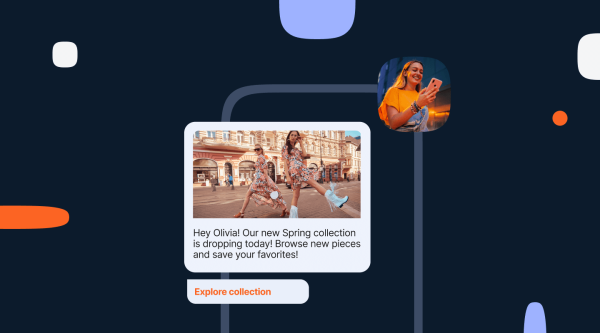
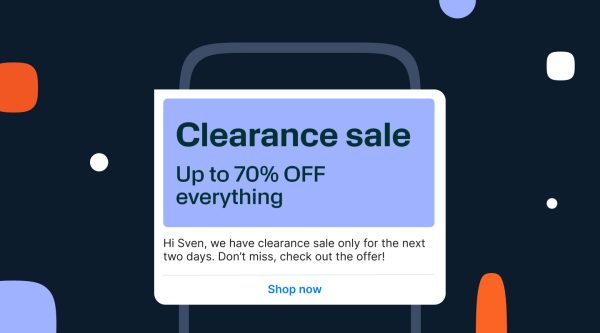
Branded text messaging restores trust at the moment it matters. Instead of a random number, your company’s name shows up in the sender field. On SMS, that means using an alphanumeric sender ID. On RCS, it means a verified Business Profile with your logo and checkmark. Both do the same thing, and that is to tell the recipient this message is from a brand they know.
Why unbranded texts get ignored
Short codes and long numbers don’t carry identity. When a customer sees 441632 or 67890, there’s no way to tell if it’s their bank, a delivery company they use, or a scammer who spoofed a number.
It’s gotten worse with smishing (SMS phishing). Consumers are being told to ignore messages from unknown senders. That’s good security advice, but it means legitimate messages get caught in the same net.
A 2024 study from the Mobile Ecosystem Forum found that 78% of mobile users had received a suspicious SMS in the past year, and nearly a third admitted to falling for a text scam. Those numbers explain why people have learned to ignore anything that doesn’t look familiar.
The fix is simple, put a recognizable name in the sender field and verify that the sender is who they claim to be. You can’t blame people for ignoring unknown numbers, but you can make sure your messages don’t look like one.
What is branded SMS messaging?
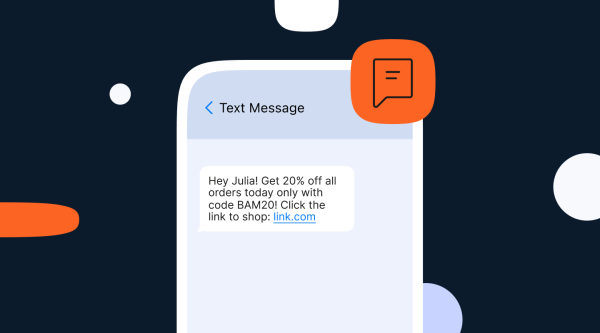
Branded SMS is a text message where the sender field shows a company name instead of a phone number. It works through something called an alphanumeric sender ID, a string of up to 11 characters that replaces the number.
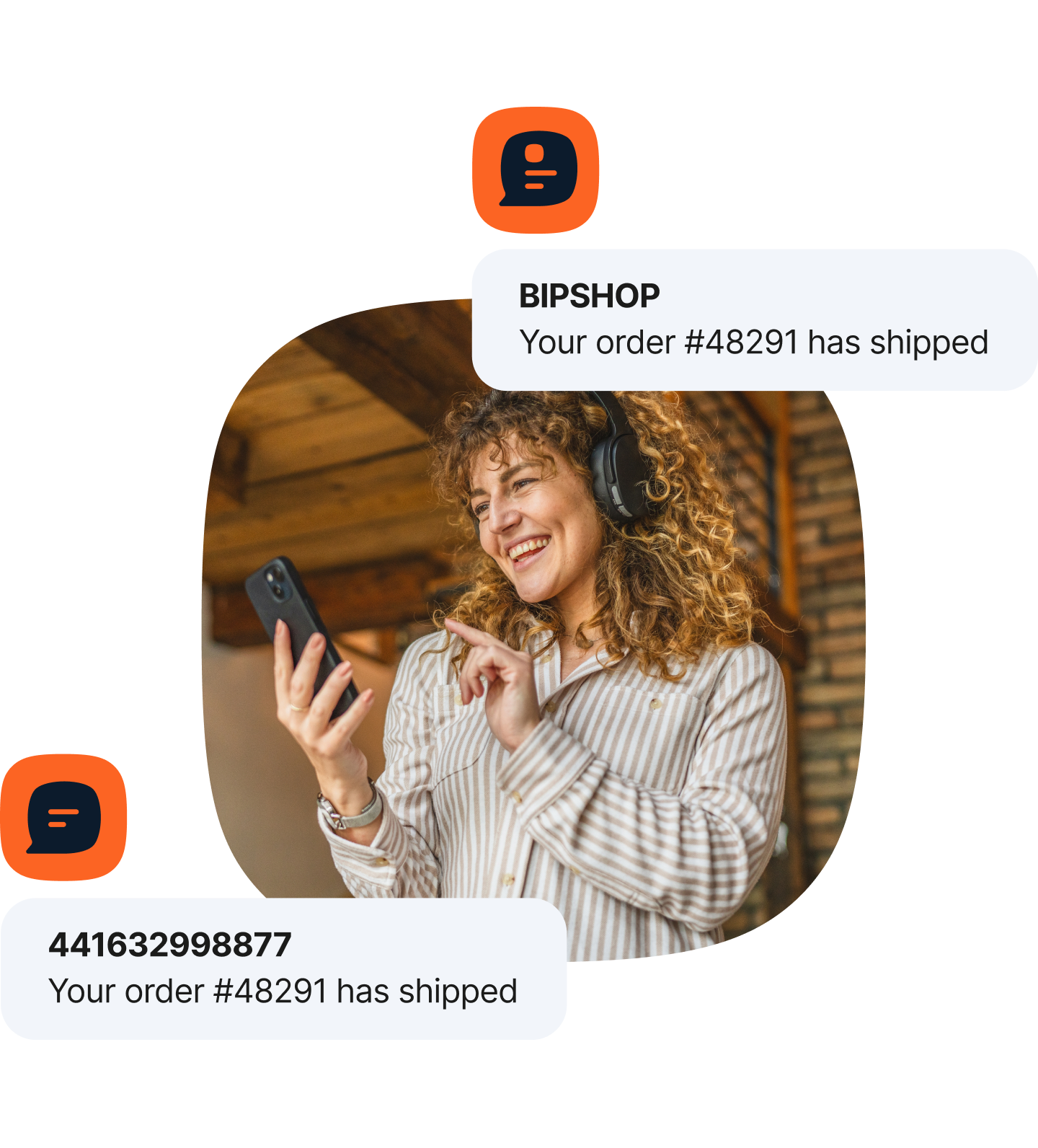
It’s a small change with a big effect. The name tells the recipient exactly who the message is from, before they even read the content.
That said, there’s a limit. Alphanumeric sender IDs are one-way. The customer can see your brand name, but they can’t reply to it. If you need two-way conversations, you’ll need a virtual number or shortcode underneath the branded sender.
There’s another catch though; not every country supports them. Some require pre-registration, while others like the US don’t allow alphanumeric sender IDs at all, but more on that below.
Alphanumeric sender ID: How to set it up
An alphanumeric sender ID is just a text string with up to 11 characters, letters and numbers only, no spaces or special characters. “BIPBANK” works. “BIP-SHOP” does not. Setting one up depends entirely on where you’re sending to:
Registration requirements by region
- United Kingdom: Pre-registration required since 2023. Carriers must approve your sender ID before you can use it.
- European Union: Varies by country. Some require registration, some don’t. France and Germany are stricter than the Netherlands or Spain.
- India: DLT (Distributed Ledger Technology) registration is mandatory. You need to register your business, your message templates, and your sender ID with the carriers.
- United States: Alphanumeric sender IDs are not supported. This is the big exception. You can’t use a text-based sender name for SMS in the US. Instead, businesses use short codes (5-6 digit numbers) or 10DLC (10-digit long codes) that go through carrier registration and brand verification.
- Rest of the world: Many countries in LATAM, APAC, and Africa support alphanumeric sender IDs with varying registration requirements.
How Infobip handles it
Infobip manages sender ID registration across 190+ countries, handling the carrier relationships and local compliance requirements so you don’t have to set up separate accounts in each market. One API, one platform, global coverage. For the US, Infobip supports short code and 10DLC as alternatives.
For the technical details, the Infobip docs on senders and numbers cover implementation specifics.
But SMS isn’t the only way to show your brand in a text message, RCS takes branded identity much further.
What is an RCS Business Profile?
RCS (Rich Communication Services) adds rich messaging capabilities on top of the existing mobile infrastructure. It’s been the default on Android for years, and since iOS 18, RCS is available on Apple too. That means the majority of global smartphone users can now receive RCS messages. For more on the adoption trends, see RCS by the numbers: key statistics for 2026.
An RCS Business Profile takes branded messaging further than SMS can. Instead of just a text name, the message arrives with:
- Your company logo
- Your brand name
- A verified checkmark
- Your brand color
- A short description
The user sees all of this before they open the message and verified identity that’s much harder to fake than an SMS sender ID.
The verification process works through local carriers. Your business entity gets reviewed, and if approved, your profile gets the verified badge. That RCS checkmark is the strongest trust signal available in business messaging today.
Plus, note that if the recipient’s device doesn’t support RCS (older phones, some regions), the message falls back to SMS automatically. But without a configured alphanumeric sender ID, that fallback SMS will show a number, not your brand name. For the strongest setup, configure both.
Branded SMS vs. RCS Business Profiles: Which one do you need?
| Alphanumeric sender ID (SMS) | RCS business profile | |
|---|---|---|
| Shows brand name? | Yes, text string (11 chars) | Yes, logo + name + checkmark |
| Requires registration? | Varies by country | Yes, telco verification |
| Supports replies? | No (one-way only) | Yes (two-way rich messaging) |
| Device support | Every phone that gets SMS | Android and iOS 18+ |
| Best for | Global transactional messaging, alerts, OTPs | Branded engagement, rich interactions, verified trust |
How to decide
- Need two-way conversations? RCS Business Profile (or a virtual number if you’re on SMS).
- Sending to global audiences? Alphanumeric sender ID where supported; virtual number or shortcode where it isn’t.
- Want the strongest trust signal? RCS Business Profile, a verified checkmark beats a text name.
- Targeting US customers? Short code or 10DLC for SMS; RCS Business Profile for verified rich messaging.
It’s not either/or. Mature messaging programs use both. They use alphanumeric sender ID for SMS and a Business Profile for RCS, so every message carries the brand identity, regardless of channel.
For a deeper breakdown of how the two technologies compare, see our full guide on RCS vs. SMS.
Talk to our team about sender ID options for your region. The right choice depends on your industry and what kind of messages you’re sending.
Use cases: Where branded text messaging delivers the most value
Branded text messaging delivers the most impact in moments where trust, speed, and clarity matter, especially when messages are time-sensitive or action-driven.
Financial services
Fraud alerts and one-time passcodes need to be immediately recognizable. A message from “BIPBANK” or a verified RCS profile tells the customer it’s real, not a smishing attempt. For OTPs especially, trust is the whole point.
Retail and eCommerce
Order confirmations, shipping updates, and delivery notifications perform better when the brand is visible in the sender field. Customers are more likely to open and read the message instead of ignoring it. The result is fewer “Where is my order?” calls and lower contact center volume.
Healthcare
Appointment reminders, test results, and prescription refill notifications work best when patients instantly recognize who is contacting them. Branded messaging increases response rates, reduces no-shows, and cuts down on manual follow-ups from administrative teams.
Travel
Boarding passes, gate changes, and check-in reminders are time-sensitive. Brand recognition speeds up action. When a message comes from an airline’s verified profile, passengers do not dismiss it. They read it and act.
How to set up branded text messaging with Infobip
You have two paths, and you can use both:
- Choose your channel. SMS with alphanumeric sender ID, RCS with Business Profile, or both.
- Register your sender identity. Infobip manages carrier registration for SMS sender IDs across 190+ countries and handles verification for RCS.
- Configure your sender. Set it up in the Infobip SMS platform or the RCS platform, or via API.
- Test across markets. Make sure your sender displays correctly in your target regions. The exact setup steps depend on your channels and countries, but in every case, Infobip handles the carrier relationships and compliance. You register once and send globally.
Branded sender identity is the difference between messages that get opened and ones that get reported as spam. Whether you’re using alphanumeric sender IDs for global SMS or verified Business Profiles for RCS, showing your brand name instead of a number is one of the simplest things you can do to improve deliverability, open rates, and customer trust.

FAQs
Branded SMS is a text message where the sender field shows a company name instead of a phone number. It works through an alphanumeric sender ID, a string of up to 11 characters that replaces the number in the sender field.
You need to set up an alphanumeric sender ID (for SMS) or an RCS Business Profile (for RCS). With SMS, you register a text string like “BIPBANK” as your sender ID. With RCS, Google verifies your business and displays your name, logo, and a verified checkmark.
An RCS Business Profile is a verified brand identity that telco attaches to messages from your business. Recipients see your company logo, brand name, verified checkmark, and brand color before they open the message. It’s available on Android and iOS 18+.
SMS branded messaging uses an alphanumeric sender ID to show a text name in the sender field. It’s one-way and available in most countries (but not the US). RCS branded messaging uses a Google-verified Business Profile with logo, checkmark, and two-way rich messaging. RCS falls back to SMS automatically on unsupported devices.