


Best omnichannel marketing platforms in 2026
Your complete guide to omnichannel marketing platforms in 2026. Compare top solutions, learn key features, AI agent capabilities, and selection criteria.

Customers do not think in channels. They expect brands to remember who they are, what they did last, and what they need next, whether they move from email to WhatsApp, from a website to a mobile app, or from a chatbot to a live agent.
That expectation defines marketing in 2026. Growth now depends on delivering connected, consistent experiences across every touchpoint. Disconnected tools and channel-by-channel campaigns make that impossible at scale.
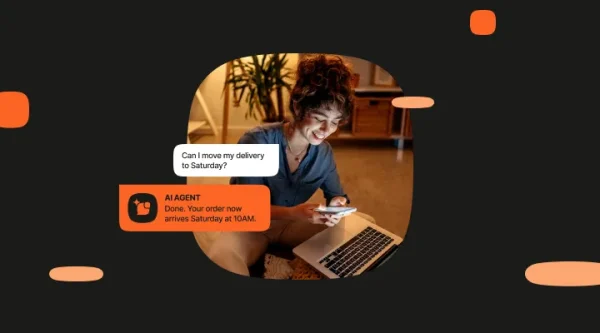
This is why omnichannel marketing platforms matter. The rise of AI agents has accelerated this shift, enabling platforms to autonomously manage customer interactions, make real-time decisions, and orchestrate personalized experiences without constant human intervention.
In this guide, we explain what omnichannel marketing platforms are, the features that define them, how to choose the right one, and which platforms stand out in 2026.
What is an omnichannel marketing platform?
An omnichannel marketing platform orchestrates synchronized customer experiences across multiple channels, email, SMS, WhatsApp, push notifications, web, in-app messaging, and social media. It connects these touchpoints so customers experience one continuous conversation with your brand, not fragmented interactions.
The platform centralizes customer data, campaign management, and analytics in one system. When a customer interacts on any channel, the platform captures that behavior and uses it to inform the next interaction, regardless of where it happens.
How omnichannel differs from multichannel
Multichannel and omnichannel sound similar but deliver vastly different results.
- Multichannel means your brand exists on multiple channels. You send emails, post on social media, run SMS campaigns, and maintain a website. Each channel operates independently with its own strategy, data, and metrics. A customer might receive an email promoting product A while simultaneously getting an SMS about product B. The channels don’t talk to each other.
- Omnichannel connects these channels into a unified system. Customer data flows between touchpoints, creating context-aware interactions. When someone browses hiking boots on your mobile app, adds them to cart but doesn’t purchase, your omnichannel platform triggers a coordinated response: a personalized email showing those exact boots, followed by an SMS reminder if the cart stays abandoned, and a WhatsApp message with a limited-time discount. Each message references the previous interaction, maintaining continuity.
Business value
Omnichannel platforms drive higher engagement by keeping messages relevant and timely. They improve conversion rates by removing friction between touchpoints. They also give marketing teams a unified view of performance, making it easier to understand what works across the entire customer journey. These improvements compound over the long term, building stronger customer relationships and sustainable competitive advantage.
Core features of an omnichannel marketing platform
The right platform needs specific capabilities to deliver truly connected experiences. Here’s what separates functional tools from platforms that drive real business results.
Centralized customer data management
Every customer interaction generates data. An omnichannel platform collects this information from all touchpoints and builds unified customer profiles that update in real time.
These profiles consolidate purchase history, browsing behavior, channel preferences, sentiment, support interactions, and engagement patterns. When a customer opens an email, clicks a link, or makes a purchase, the profile updates instantly across all channels.
Identity resolution connects the dots across devices and channels, recognizing that the person browsing on mobile, checking email on desktop, and shopping in-store is the same customer. This unified view strengthens the customer relationship by enabling consistent, personalized interactions regardless of touchpoint. AI agents leverage this unified data to make autonomous decisions about next-best actions, predict customer needs, and proactively engage customers at optimal moments.
Cross-channel campaign orchestration
Campaign orchestration coordinates messaging across email, SMS, WhatsApp, RCS, push notifications, web, in-app, and social channels. The platform maintains consistent messaging and timing, with channel fallback capabilities that automatically shift to alternate channels when the primary option fails.
Conversational Intelligence elevates orchestration beyond basic coordination:
- Send time optimization: Analyzes individual customer behavior to determine the best time to reach them, predicting when each person is most likely to engage based on historical patterns.
- Destination scoring: Protects your sender’s reputation and deliverability by evaluating recipient engagement levels, prioritizing sends to highly engaged users, and flagging risky recipients that could trigger blocks.
- Channel recommendation: Suggests the optimal channel for each message based on customer preferences and engagement history. Infobip’s platform handles 9,700+ global operator connections with built-in conversational intelligence.
Personalization at scale
Personalization means customers feel like your company knows them. They never repeat information. Conversations pick up where they left off, regardless of channel.
Dynamic content adapts based on behavior and preferences. Product recommendations reflect browsing history. Offers align with purchase patterns. Messages reference previous interactions naturally.
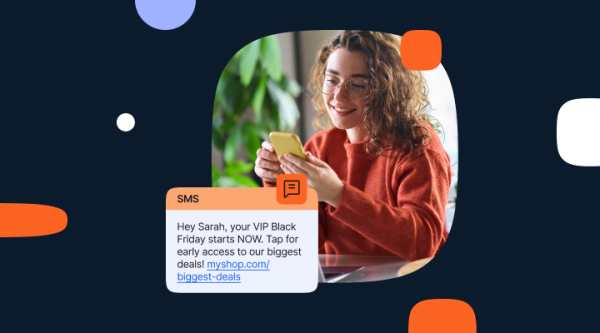
AI helps analyze behavior patterns and customer preferences to deliver more personalized experiences that feel individually crafted. A customer who abandoned a cart sees those exact products in their next email. Someone who called customer service about shipping receives proactive updates via their preferred channel.
Context continuity eliminates friction and makes interactions feel personal, not automated.
Analytics and attribution
An omnichannel platform tracks performance holistically across every channel and touchpoint.
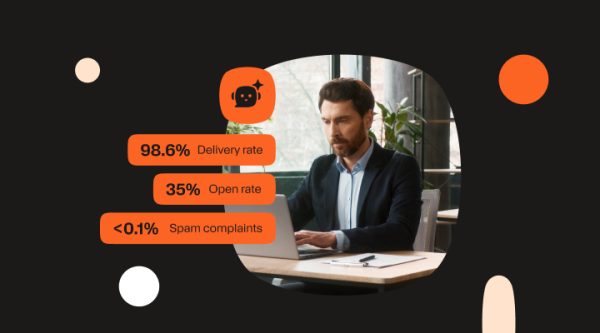
Cross-channel performance tracking shows campaign performance in unified dashboards – open rates, click-throughs, conversions, and revenue attributed to each channel.
Customer journey visualization maps actual paths customers take from awareness to purchase, revealing insights impossible to gather from single-channel analytics.
Multi-touch attribution modeling assigns credit to each touchpoint that influenced a conversion, showing which channels drive awareness versus conversion. AI agents analyze attribution data continuously to optimize future campaign decisions, automatically reallocating resources to highest-performing channels and tactics.
Real-time reporting lets you optimize on the fly, shifting budget and focus as campaigns run rather than waiting for post-campaign analysis.
Marketing automation and workflow management
Automation capabilities turn customer data and channel capabilities into responsive campaigns that run without constant manual intervention.
Trigger-based campaigns let you build automated responses based on customer behavior or lifecycle events, cart abandonment, purchases, and subscription renewals. Lifecycle stage automation adapts messaging as customers progress from prospects to active users to loyal advocates.
Advanced segmentation divides audiences based on behavior, preferences, purchase history, engagement patterns, and predicted actions.
A/B testing across channels optimizes message content, channel selection, and timing. The platform learns from results and applies insights to future campaigns, continuously improving performance. AI agents take this further by running continuous experimentation, identifying winning patterns faster, and automatically scaling successful approaches across customer segments.
Integration ecosystem
Your platform needs seamless connections with your existing technology stack.
CRM connectivity syncs customer data bidirectionally with Salesforce, HubSpot, Microsoft Dynamics, and other systems. eCommerce platform integrations with Shopify, Magento, and WooCommerce pull product data, purchase history, and browse behavior into campaigns.
Data warehouse and CDP connections incorporate data from across your business, support tickets, loyalty programs, in-store purchases, mobile app usage.
API flexibility enables custom integrations for unique business requirements, letting developers build connections to proprietary systems and create custom workflows.
Infobip’s API-first approach enables flexible integration while maintaining reliability across 40+ global data centers.
Omnichannel vs. multichannel marketing: What’s the difference?
The terms sound similar, but the execution and results differ dramatically. Understanding this distinction helps you evaluate whether a platform delivers true omnichannel capabilities or just multichannel presence.
| Aspect | Multichannel | Omnichannel |
|---|---|---|
| Data sharing | Siloed by channel | Unified across all touchpoints |
| Customer experience | Disconnected interactions | Continuous conversation |
| Campaign coordination | Independent channel campaigns | Synchronized cross-channel journeys |
| Analytics approach | Channel-specific metrics | Unified customer journey analytics |
| Technology requirements | Separate tools per channel | Integrated platform |
| Message relevance | Generic or channel-focused | Context-aware and personalized |
When multichannel suffices: Small businesses with limited resources, simple customer journeys, or audiences primarily using one channel can start with multichannel and evolve over time.
When omnichannel becomes essential: Growing businesses with customers using multiple touchpoints, complex customer journeys, competitive markets requiring differentiation, or customer expectations for personalized experiences need true omnichannel capabilities.
The question isn’t whether to adopt omnichannel, but when. Customer expectations continue rising. Competitors are investing in connected experiences. The gap between multichannel and omnichannel widens as AI and automation make sophisticated orchestration more accessible.
How to choose the right omnichannel marketing platform
Business size and growth plans
Some platforms focus on simplicity for smaller teams. Others are built for enterprise-scale messaging, data volumes, and global reach. Choose a platform that supports where your business is going, not just where it is today.
- Business size and growth plans: Some platforms focus on simplicity for smaller teams. Others are built for enterprise-scale messaging, data volumes, and global reach. Choose a platform that supports where your business is going, not just where it is today.
- Channels required: Evaluate which channels matter most to your customers, including email, SMS, WhatsApp, RCS, in-app messaging, chat, and voice. Coverage should match customer behavior, not internal preferences.
- Integration ecosystem: The platform should integrate easily with your existing tools and data sources. Limited integrations create silos that undermine omnichannel execution.
- Analytics and reporting depth: Look for journey-level reporting that shows how channels work together. Channel-only dashboards limit insight and optimization.
- Real-time personalization: Real-time data processing and decisioning are critical. Delayed updates lead to irrelevant messages and broken experiences.
- Compliance and privacy: Data protection and regulatory compliance are non-negotiable. Platforms must support GDPR, CCPA, and local telecom regulations. Infobip’s global infrastructure and compliance engine help businesses operate across markets with confidence.
- Ease of use and support: Time to value matters. Strong onboarding, documentation, and ongoing support reduce friction and speed up results. Look for platforms with intuitive interfaces, including drag and drop workflow builders that let marketers create campaigns without technical expertise.
Top omnichannel marketing platforms in 2026
Choosing the right platform requires understanding what each solution does best. This comparison covers leading solutions across the market to help you identify the best fit for your needs.
We evaluated these platforms based on channel coverage, global infrastructure, integration capabilities, AI and automation features, analytics depth, and support quality.
Infobip
Infobip is a global cloud communications platform delivering full-stack omnichannel capabilities through owned infrastructure and direct operator connections.
Best for: Businesses requiring reliable global reach with local expertise, businesses prioritizing deliverability and uptime, organizations needing conversational and agentic AI integrated with communications.
Key strengths:
- Infrastructure and reach: 9,700+ direct operator connections reach 7 billion+ people globally. Owned infrastructure across 40+ data centers ensures low latency and 99.95%+ uptime.
- Complete channel coverage: Native support for SMS, WhatsApp Business, RCS, email, voice, push notifications, chat apps (Viber, Telegram, LINE), and web chat (Live Chat).
- Conversational Intelligence: Built-in AI optimizes send times, scores destinations to protect sender reputation, recommends optimal channels per customer, and implements intelligent frequency capping.
- Unified platform: AI-native, fully managed solution that serves as the single, centralized hub for designing, executing, and optimizing real-time, contextual, omnichannel customer journeys at scale. Includes customer data platform, conversational AI (chatbots and AI agents), cloud contact center, and marketing automation. Eliminates data silos between marketing, sales, and support.
- Global presence, local expertise: 75+ offices across six continents provide regional support, local compliance knowledge, and in-market partnerships.
- Enterprise reliability: 24/7 support, dedicated customer success managers, SLA-backed uptime guarantees, and proactive monitoring.
- Compliance and security: Global compliance engine automatically enforces regional regulations including GDPR, CCPA, and country-specific requirements.
While Infobip offers enterprise-grade capabilities, we’ve invested significantly in making the platform accessible for businesses of all sizes. Our intuitive interface, comprehensive onboarding programs, and dedicated customer success teams help reduce the learning curve. We offer tiered solutions that let you start with core channels and scale as you grow, rather than requiring full platform adoption from day one. Our 24/7 support team and 75+ global offices ensure you get help when and where you need it.
Ideal use cases:
- Global retailers coordinating campaigns across multiple countries
- Financial services requiring secure, compliant communications
- eCommerce brands scaling from thousands to millions of customers
- Healthcare providers managing patient communications across channels
- Travel and hospitality companies delivering real-time updates globally
Differentiator: Only platform combining owned infrastructure, comprehensive channel support, conversational AI, and global reach with local presence.
Partner & competitive platforms
These platforms integrate well with Infobip, often handling specialized functions while leveraging Infobip’s communications infrastructure for reliable global delivery.
Salesforce Marketing Cloud
Enterprise marketing automation suite within the Salesforce ecosystem.
Enterprise marketing automation suite within the Salesforce ecosystem.
Best for: Organizations deeply invested in Salesforce CRM and related products.
Key strength: Seamless integration across Salesforce Sales Cloud, Service Cloud, and Commerce Cloud creates unified customer experiences.
Works well with Infobip for: Global SMS, WhatsApp, and RCS delivery with enterprise-grade reliability and direct operator connections.
Segment
Customer data platform specializing in collecting, unifying, and routing customer data across your tech stack.
Best for: Companies managing complex data sources and requiring robust data governance.
Key strength: Extensive integration ecosystem with 300+ pre-built connectors enables data flow across your entire martech stack.
Works well with Infobip for: Routing unified customer data to power personalized, omnichannel campaigns with reliable message delivery.
Adobe Experience Cloud
Comprehensive digital experience platform combining marketing, analytics, advertising, and content management.
Best for: Large enterprises with significant content creation and creative workflow requirements.
Key strength: Industry-leading content management capabilities paired with sophisticated analytics and personalization.
Works well with Infobip for: Extending Adobe’s digital experiences to messaging channels like SMS, WhatsApp, and RCS with global reach.
Shopify
Leading eCommerce platform with built-in marketing capabilities.
Best for: Online retailers of all sizes, direct-to-consumer brands, multi-channel commerce.
Key strength: Comprehensive eCommerce functionality with native marketing tools for email and basic SMS.
Works well with Infobip for: Expanding communication capabilities beyond basic email and SMS to WhatsApp, RCS, and advanced conversational experiences.
Twilio
Cloud communications platform offering APIs for messaging, voice, and video across multiple channels.
Best for: Developer-focused organizations building custom communication solutions, businesses prioritizing API flexibility.
Key strength: Extensive API documentation and large developer community. Strong presence in North American market.
Approach: API-first platform requiring technical resources to build and maintain communication solutions.
Sinch
Global cloud communications platform providing messaging, voice, and video APIs.
Best for: Enterprises seeking cloud-based communication services, businesses requiring voice and messaging capabilities.
Key strength: Broad channel coverage including SMS, RCS, WhatsApp, and voice services.
Approach: Cloud-based API platform with focus on mobile messaging and voice communications.
Vonage
Communications platform offering APIs for messaging, voice, and video with unified communications capabilities.
Best for: Businesses seeking combined internal communications and customer engagement tools.
Key strength: Integration of business communications (UCaaS) with customer engagement APIs.
Approach: Hybrid platform combining internal team communications with customer-facing messaging APIs.
Conclusion
Omnichannel marketing has moved from competitive advantage to customer expectation. Your audience doesn’t distinguish between channels, they expect one continuous conversation with your brand, regardless of whether they’re on email, SMS, WhatsApp, or in your store.
The right platform unifies customer data, orchestrates coordinated campaigns, and delivers personalized experiences at scale. Key capabilities separate true omnichannel solutions from multichannel tools: centralized customer profiles, cross-channel orchestration with Conversational Intelligence, AI-powered personalization that maintains context, comprehensive analytics, and seamless integrations with your existing stack.
Choosing your platform requires honest assessment of your needs. Consider which channels your customers actually use, your technical requirements and existing systems, compliance obligations in your markets, analytics depth you need, and support quality that matches your global footprint.
Infobip delivers owned infrastructure across 40+ data centers, 9,700+ direct operator connections, complete channel coverage from SMS to WhatsApp to RCS, built-in Conversational Intelligence, and local expertise through 75+ global offices. We combine communications infrastructure, customer data management, conversational AI, and marketing automation in one platform.
Your next steps:
- Audit your current approach: Map existing tools, identify gaps, calculate total costs, and document pain points preventing seamless customer experiences.
- Define what success looks like: Set specific metrics for revenue, engagement, efficiency, and customer experience that matter to your business.
- Experience platforms firsthand: Request demos with your real use cases, involve technical teams, ask hard questions, and speak with current customers.
- Start strategically: Pilot in one region or channel, validate results, then expand with confidence.
The omnichannel gap widens daily. Customer expectations evolve. Competitors invest in connected experiences. The question isn’t whether to adopt omnichannel marketing, but how quickly you can implement it effectively.
FAQs
Customer data platforms focus on collecting, unifying, and managing customer data from multiple sources. They create comprehensive customer profiles but don’t typically execute campaigns. Omnichannel marketing platforms handle campaign orchestration, message delivery, and customer engagement across channels. Many omnichannel platforms include CDP functionality, while standalone CDPs often integrate with marketing platforms for execution. Evaluate whether you need both or if an integrated solution meets your requirements.
Pricing varies significantly based on message volume, channels used, features required, and company size. Consider total cost of ownership including platform fees, per-message costs across channels, implementation services, training, and ongoing support. Request detailed pricing that accounts for your growth projections and edge cases.
Most enterprise omnichannel platforms offer native integrations with major CRMs like Salesforce, HubSpot, Microsoft Dynamics, and others. Integration depth varies, some provide bidirectional data sync, others offer basic contact import. Verify specific integration capabilities during evaluation, especially for custom or less common CRM systems. API availability enables custom integrations when pre-built connectors don’t exist.
Not necessarily. Many modern omnichannel platforms include robust customer data capabilities, unified profiles, identity resolution, segmentation, and data activation. Evaluate whether the platform’s data functionality meets your needs. Standalone CDPs make sense when you need advanced data governance, complex identity resolution across many systems, or data science capabilities beyond marketing use cases. For most marketing-focused organizations, integrated data management within the omnichannel platform suffices.
Omnichannel marketing focuses on coordinated promotional and engagement campaigns across channels. Omnichannel customer experience encompasses the entire customer journey including marketing, sales, support, and service interactions. The best platforms support both, marketing campaigns that trigger based on support interactions, sales activities that inform marketing segmentation, and unified customer context across all touchpoints. This comprehensive approach delivers superior results compared to marketing-only tools.
Read our blog on: AI orchestration explained: How to reinvent customer journeys
Small businesses benefit from omnichannel approaches when customers use multiple channels to interact with them. Many platforms offer tiered pricing and scaled features suitable for smaller operations. Start with core channels and expand as you grow. The key is choosing a platform that scales with you rather than requiring migration as your business expands. Some platforms serve enterprise clients exclusively, while others accommodate businesses of all sizes.
Modern omnichannel platforms vary significantly in complexity. Enterprise-grade platforms offer powerful capabilities but may require dedicated training and technical resources. However, leading providers now offer intuitive interfaces, visual workflow builders, pre-built templates, and comprehensive onboarding programs that reduce learning curves.
Look for platforms with:
- Visual, drag and drop campaign builders
- Pre-configured templates for common use cases
- Comprehensive documentation and video tutorials
- Hands-on training and certification programs
- Dedicated customer success support during onboarding
- Active user communities and knowledge bases
Infobip provides structured onboarding, ongoing training resources, and dedicated customer success managers to ensure your team becomes productive quickly. Our modular approach lets you start simple and add complexity as your expertise grows.
Track improvements in conversion rates, customer lifetime value, average order value, and revenue attributed to campaigns. Measure efficiency gains, time saved through automation, reduced manual tasks, consolidated tools eliminating redundant costs. Monitor engagement metrics, open rates, click-through rates, response rates across channels. Calculate cost per conversion by channel to optimize spending. Compare total cost of ownership against revenue increases and efficiency improvements. Most platforms provide attribution modeling to connect specific touchpoints to conversions.
Check out our Messaging Trends Report 2025